
Machine Gun Kelly’s gun was a .45-caliber Thompson submachine gun, and his wife bought it for him. The Machine Gun Kelly gangster legend rests on that gun. George Kelly Barnes was a bootlegger and small-time robber with little interest in weapons until Kathryn Kelly picked up a Thompson at a pawnshop, made him practice with it, and handed out his spent shell casings in underworld bars as souvenirs of “my husband, Machine Gun Kelly.” The name made him a public enemy. The strange part is the record: according to crime historian Carl Sifakis, Kelly never fired a shot at anyone and never killed anyone.
Here’s the gun, the kidnapping that brought him down, the arrest that may or may not have given FBI agents the name “G-Men,” and what a Thompson costs today.
Table of Contents
Machine Gun Kelly the Gangster at a Glance
| Real name | George Kelly Barnes, from Memphis, Tennessee; died 1954 |
| His gun | A Thompson submachine gun in .45 ACP, bought by his wife at a pawnshop |
| Who named him | Kathryn Kelly, who promoted him as a dangerous gunman |
| Big crime | The July 1933 kidnapping of Oklahoma oilman Charles Urschel, for a $200,000 ransom |
| People he shot | None, according to The Encyclopedia of American Crime |
| Caught | Memphis, September 26, 1933 |
| Sentence | Life. He served 17 years on Alcatraz, where inmates called him “Pop Gun Kelly” |
Who Was Machine Gun Kelly?
George Kelly Barnes was born in the 1890s, most often given as July 18, 1895, in Memphis, though other records say 1897 or 1898, and one account places his birth in Chicago. During Prohibition he ran liquor, got into repeated trouble with the Memphis police, and headed west, changing his name to George R. Kelly along the way. In 1928 he was caught smuggling liquor onto an Indian reservation and arrested in Tulsa, Oklahoma, and sent to Leavenworth for three years. By most accounts he was a model prisoner, and he was released early.
Then he married Kathryn Thorne, and everything about his public image changed.
The Thompson His Wife Bought Him
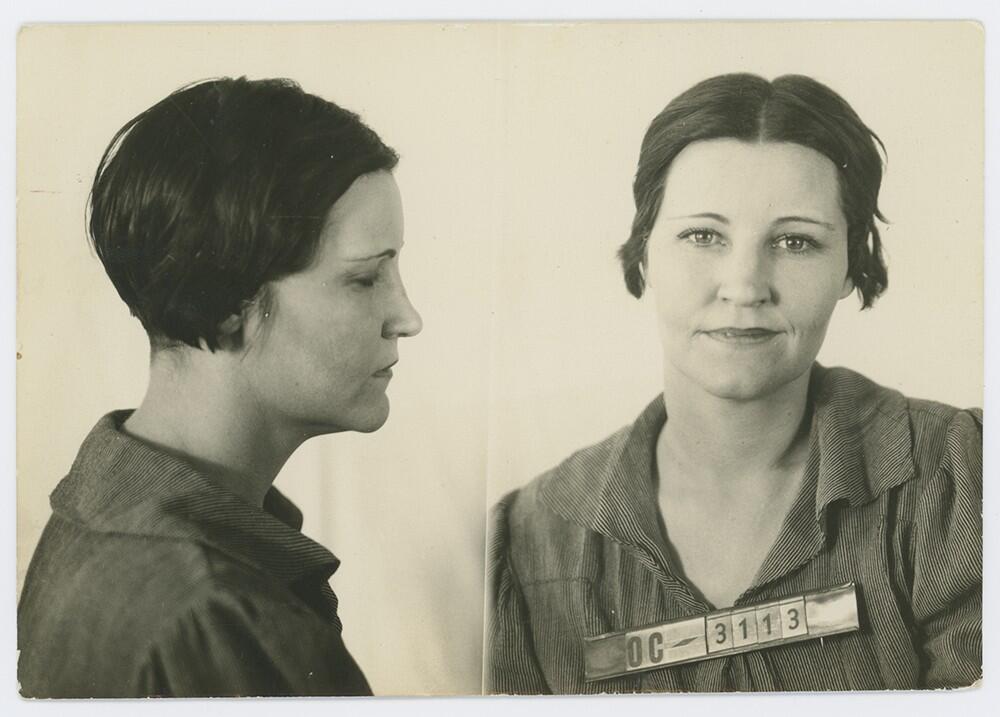
Kathryn was already an experienced criminal when she met Kelly, and she had big plans for him. She bought his first machine gun and insisted, despite his lack of interest in weapons, that he practice with it out in the countryside. According to Memphis magazine, she picked up a .45-caliber Thompson at a pawnshop and coached him to shoot walnuts off fence posts.
Then she sold the legend. Kathryn went around underworld hangouts handing out spent cartridge cases: “Have a souvenir of my husband, Machine Gun Kelly, who’s off robbing banks somewhere.” She gave him the nickname and worked hard to make sure everyone in the business knew it. It worked. By 1933 “Machine Gun Kelly” was one of the most feared names in America, attached to a man who, as far as anyone can show, never pointed his Thompson at another person and pulled the trigger.
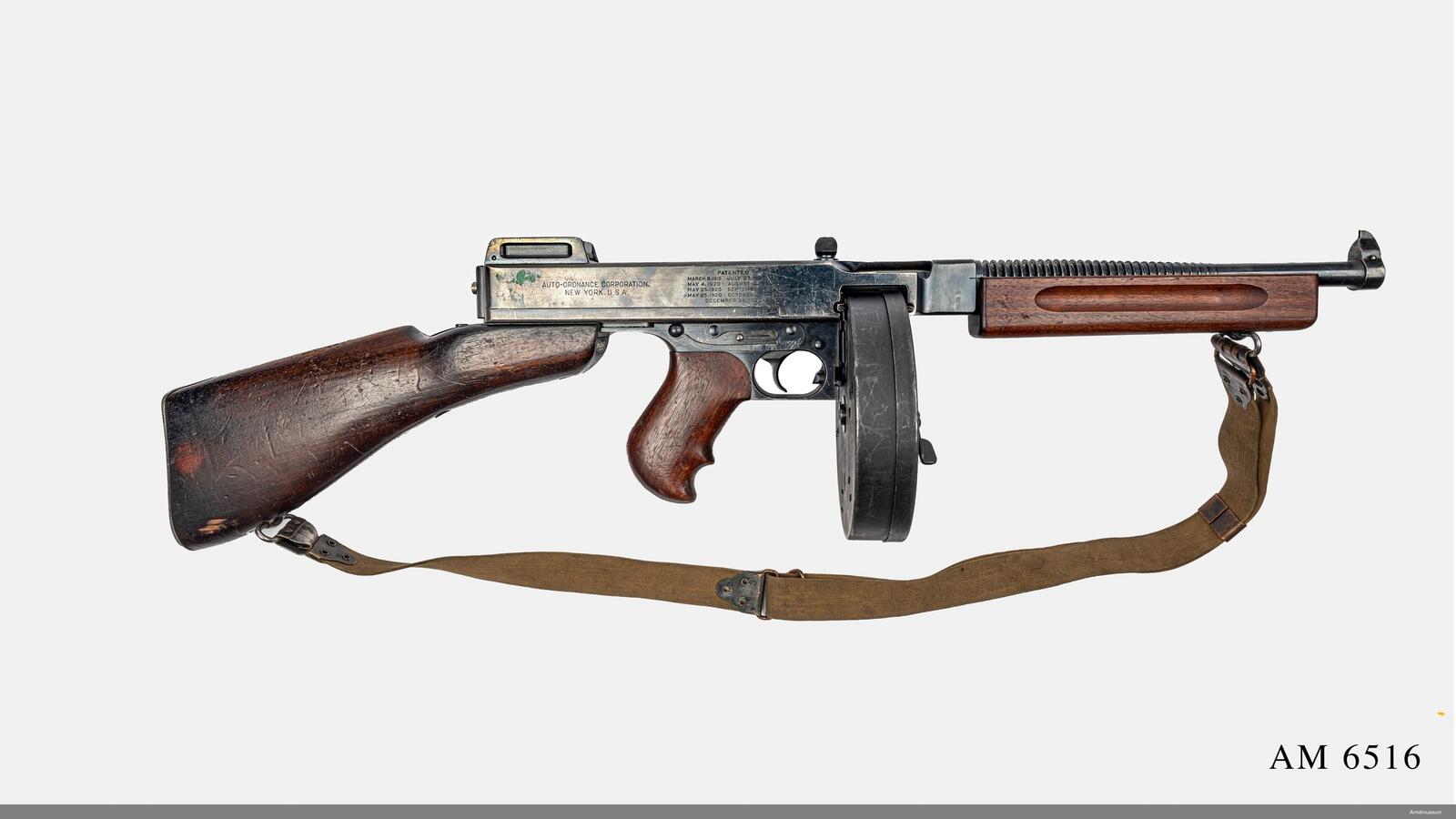
The Thompson was the gun of the moment. Designed at the end of World War I and sold commercially through the 1920s, it fired the same .45 ACP round as the Colt 1911 pistol, fully automatic, from 20-round sticks, with 30-rounders coming later, or 50- and 100-round drums. Before the National Firearms Act of 1934, a civilian could buy one over the counter, which is exactly how Kathryn got hers. Our Prohibition gangster guns guide covers how the Tommy gun became the symbol of the era.
The Urschel Kidnapping
Kelly robbed a few banks, and Memphis magazine says that after one Texas bank job he used his machine gun to shoot his last name into a signpost. But his one big crime was a kidnapping. On the night of July 22, 1933, oil millionaire Charles Urschel and his wife were playing bridge with friends on the screened porch of their Oklahoma City home. In the FBI’s account, two men walked in, “one armed with a machine gun and the other with a pistol,” and asked which man was Urschel. When nobody answered, they said, “Well, we will take both of them.” The gunmen were Kelly and his partner Albert Bates. They checked wallets in the car, let the other man go, and drove Urschel to a farm in Paradise, Texas, owned by Kathryn’s mother and stepfather.
Urschel was released after the family paid a $200,000 ransom, and he turned out to be the worst victim the Kellys could have picked. Blindfolded for most of his captivity, he counted footsteps, listened to everything, and left his fingerprints on every surface he could reach. He noticed that an airplane passed overhead at the same times every day. FBI agents used his details to pin down the farm in Paradise, and Urschel rode along on the raid.
Kelly was not there. The agents found bank robber Harvey Bailey hiding on the farm, and Bailey had Kelly’s machine gun. Kelly had left his famous Thompson behind in Texas.
The money trail finished the job. Bates was arrested in Denver, and agents later dug up $73,250 of the ransom buried in a cotton patch on a ranch near Coleman, Texas, where friends of the Kellys had hidden it. In all, the Urschel case produced 21 convictions, from the kidnappers themselves down to the men who laundered the ransom bills. It was a demonstration of what the new federal Bureau could do, and J. Edgar Hoover made sure the public knew it.
“Don’t Shoot, G-Men!” The Memphis Arrest
On the morning of September 26, 1933, agents of the Justice Department’s Division of Investigation, as the FBI was then called, and Memphis police raided the house where George and Kathryn were hiding. The famous version, which the FBI itself told for years, is that Kelly was caught without a weapon and cried, “Don’t shoot, G-Men! Don’t shoot, G-Men!”, giving federal agents the nickname they’ve carried ever since.
It may never have happened. The FBI’s earliest written account, from within days of the arrest, says Kelly was found in a corner of the front bedroom with his hands raised, covered by a Memphis police sergeant, and does not report him saying anything. A Memphis magazine history tells it differently again, with Kelly stepping out of the bathroom holding a pistol and then surrendering. Historians now treat the “G-Men” line as a legend that grew up months later. Kelly himself later said, “No, I never said that, but if they say I did I won’t argue about it,” and Memphis magazine notes the term was already in use for some years.
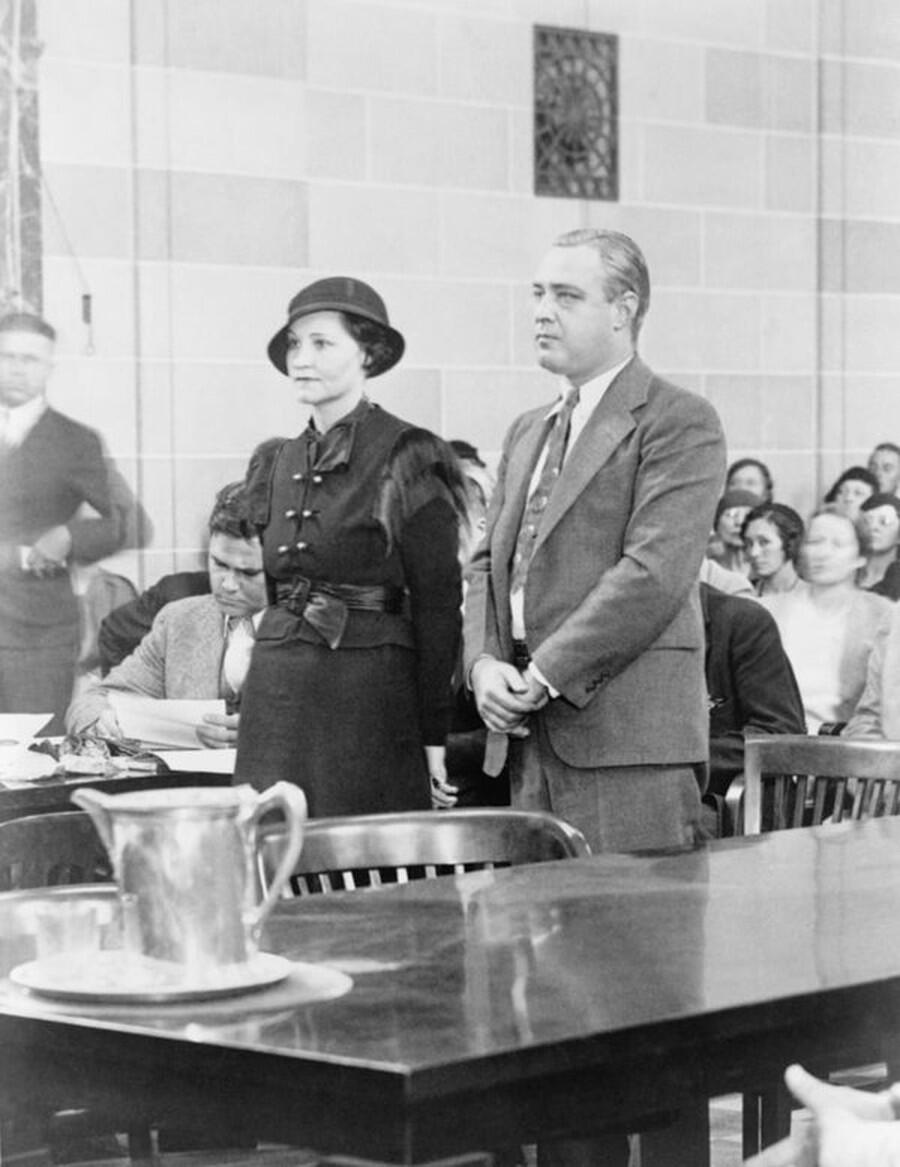
The case moved fast. It was one of the first big prosecutions under the new federal kidnapping law passed after the Lindbergh baby case, and on October 12, 1933, less than three months after the kidnapping, George and Kathryn were both sentenced to life in prison.
“Pop Gun Kelly” on Alcatraz
Kelly spent 17 years on Alcatraz as inmate No. 117. The other prisoners weren’t impressed. They called him “Pop Gun Kelly,” after the cork guns kids played with, because he told tall tales about his past and was, by all accounts, a model prisoner rather than the killer the newspapers had described. He was moved back to Leavenworth in 1951 and died there of a heart attack on July 18, 1954, his 59th birthday. Kathryn was released in 1958 and lived quietly in Oklahoma under another name until 1985. In a last twist, Charles Urschel anonymously paid for the college education of Kathryn’s daughter.
He’s buried at Cottondale Texas Cemetery, in the family plot of Kathryn’s stepfather, under a small headstone. Hollywood kept the legend going with Machine-Gun Kelly in 1958 and The FBI Story in 1959, both far kinder to the Thompson myth than the record is.
Can You Buy a Tommy Gun Today?
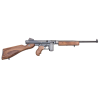
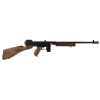
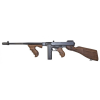
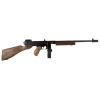
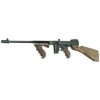
A full-auto Thompson like the one Kathryn bought over the counter is now a registered machine gun under the National Firearms Act. Only guns registered before 1986 can be sold to civilians, and they cost many times what Kathryn paid. The practical way in is Auto-Ordnance’s semi-automatic 1927A-1, which copies the 1920s look down to the finned barrel and vertical foregrip. Our guide to buying a Tommy gun walks through the legal options, including the real thing:
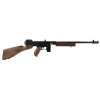
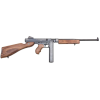
If you prefer the simpler World War II look, Auto-Ordnance also makes the semi-auto Thompson M1, the version GIs carried, without the finned barrel and foregrip:
A semi-auto Thompson is really a heavy pistol-caliber carbine, and there are lighter, cheaper ways to get a .45 or 9mm carbine for home defense, which our best PCCs for home defense guide compares. Whatever you shoot, our best .45 ACP ammo guide covers what to feed it.
Where the Singer MGK Got His Name
If you searched “Machine Gun Kelly” and expected a musician, you’re not alone. Rapper and singer Colson Baker, born in 1990, performed for years as Machine Gun Kelly, and his stage name was taken from the gangster’s nickname, and The Hollywood Reporter says the “Machine Gun” part refers to his rapid-fire rhymes. So the “Bad Things” singer owes his name, indirectly, to Kathryn Kelly’s marketing. He has since shortened it to MGK, and he uses his birth name for his film work. The original Machine Gun Kelly, the one with the Thompson, died in prison more than 35 years before the singer was born.
The Rest of the Public Enemies
Kelly was caught before the worst of the 1934 violence, and he outlived almost everyone else on the list. The others went out shooting: read about John Dillinger’s guns, Baby Face Nelson’s guns, Pretty Boy Floyd’s guns and the guns of Bonnie and Clyde. For another gangland legend built around a Tommy gun, see Ma Barker’s Tommy gun. For the women who really could shoot, see our legendary women of the gun, and for the history of full-auto weapons, see machine guns in combat.
Kelly’s story ran across Tennessee, Oklahoma and Texas, and the gun laws in all three look very different now. Our Tennessee, Oklahoma and Texas guides explain the current rules. For more history you can hold in your hands, older guns turn up on the used gun market every week, and our gun deals page tracks the best new-gun prices across more than 200 retailers.
Frequently Asked Questions
What gun did Machine Gun Kelly use?
A Thompson submachine gun in .45 ACP. His wife, Kathryn Kelly, bought it for him at a pawnshop, made him practice with it and built his reputation around it, which is where the nickname Machine Gun Kelly came from.
Did Machine Gun Kelly ever kill anyone?
No one has shown that he did. Crime historian Carl Sifakis, author of The Encyclopedia of American Crime, wrote that Kelly never fired a shot at anyone and never killed anyone, a remarkable record for a public enemy nicknamed Machine Gun.
Who gave Machine Gun Kelly his nickname?
His wife, Kathryn Kelly. She bought his first Thompson, handed out his spent shell casings as souvenirs in underworld bars, and promoted him as a dangerous gunman to build his reputation.
Did Machine Gun Kelly really say "Don't shoot, G-Men"?
Probably not. The story grew up around his September 1933 arrest in Memphis, but the earliest FBI account says he was found with his hands raised and doesn't report him speaking. Kelly himself later said he never said it, and historians treat the line as a legend that appeared months later.
Is the singer MGK named after the gangster?
Yes. Colson Baker, the rapper and singer who performed as Machine Gun Kelly, took his original stage name from the gangster's nickname, and the "Machine Gun" part also fits his rapid-fire rhymes. He now goes by MGK.
What happened to Machine Gun Kelly?
He and Kathryn were sentenced to life in prison on October 12, 1933, for kidnapping oilman Charles Urschel. Kelly spent 17 years on Alcatraz, where inmates called him Pop Gun Kelly, and died of a heart attack at Leavenworth on his 59th birthday in 1954.
Where is Machine Gun Kelly the gangster buried?
At Cottondale Texas Cemetery, in the family plot of Kathryn Kelly's stepfather, under a small headstone. He died of a heart attack at Leavenworth prison on July 18, 1954.
What movies are about Machine Gun Kelly the gangster?
He was portrayed in Machine-Gun Kelly (1958) and The FBI Story (1959), and in the 1974 TV movie Melvin Purvis: G-Man. The films lean on the Thompson legend his wife built, not the quieter record.
Featured image: George Kelly led from the Shelby County Jail in Memphis, October 2, 1933, ACME Newspictures, Library of Congress NYWT&S Collection, no known restrictions, with added text.
5,743+ Gun & Ammo Deals
Updated daily from 200+ top retailers. Filter by category, caliber, action type, and price.
Related Guides