

Affiliate disclosure: This AGM Rattler V2 review contains affiliate links. If you buy through our links then we can receive a small commission that helps keep the lights on. You don’t pay anything more.
- Treat every gun as loaded
- Point the muzzle in a safe direction
- Keep your finger off the trigger until you’re ready to shoot
- Know your target and what’s beyond
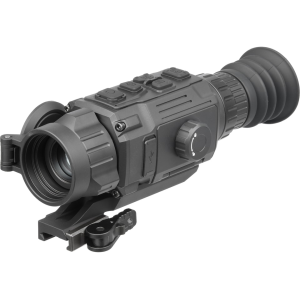
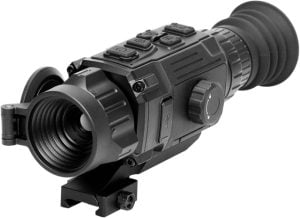
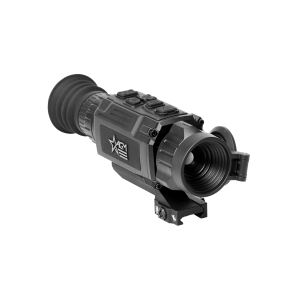
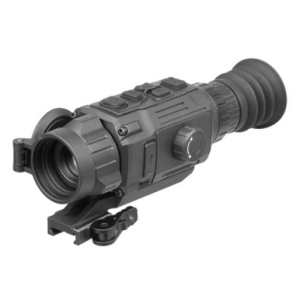
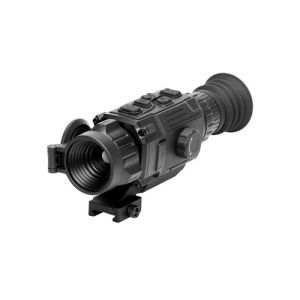
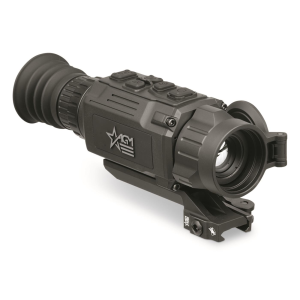
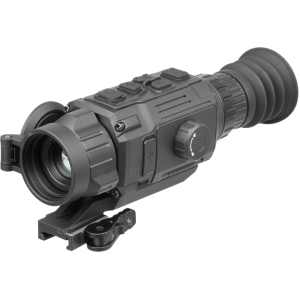
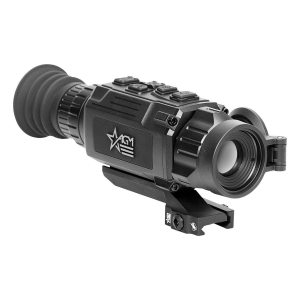
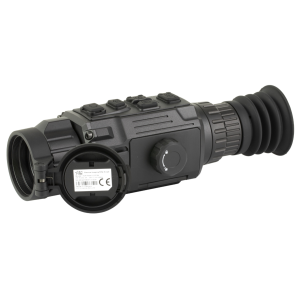
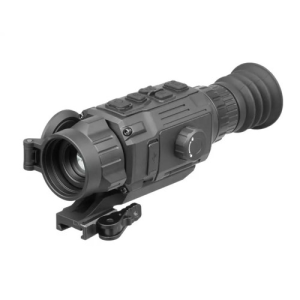
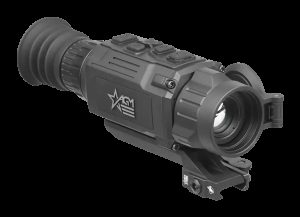
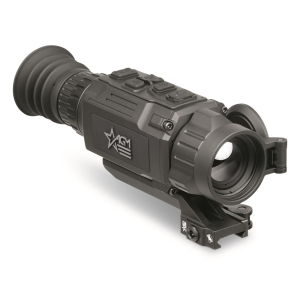
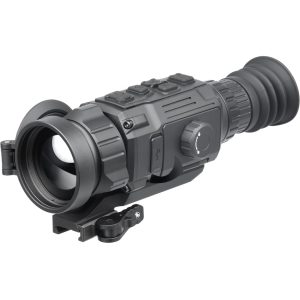
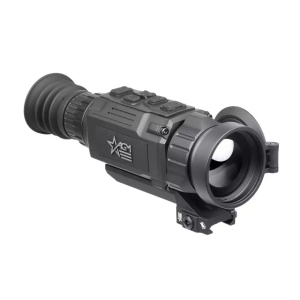
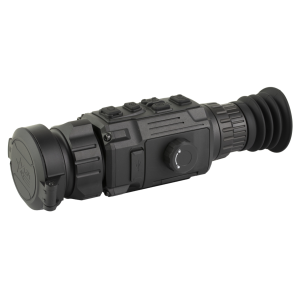
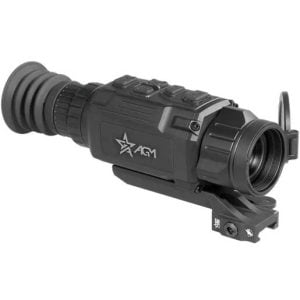
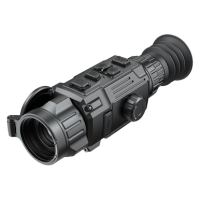
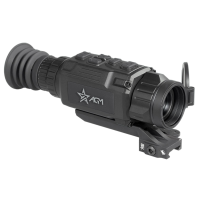
The AGM Rattler V2 is the thermal scope I point people to when they ask what to buy first. It’s a compact, rail-mounted thermal that runs all night on one battery, records every shot on its own, and comes in seven versions that sell from $695 to $2,695 as I write this. That spread is the problem. The cheapest and the most expensive share a housing and a name, and almost nothing else. I’ve run the 25-256 on a 5.56 AR and the 35-384 on a .308, and spent nights behind the 19-256 and the 50-640. This review covers what each model sees, what AGM’s numbers mean in a field, how the V2 stacks up against the newer V3, and which one fits your hunting. AGM still builds every one of them.
Last updated October 13, 2026
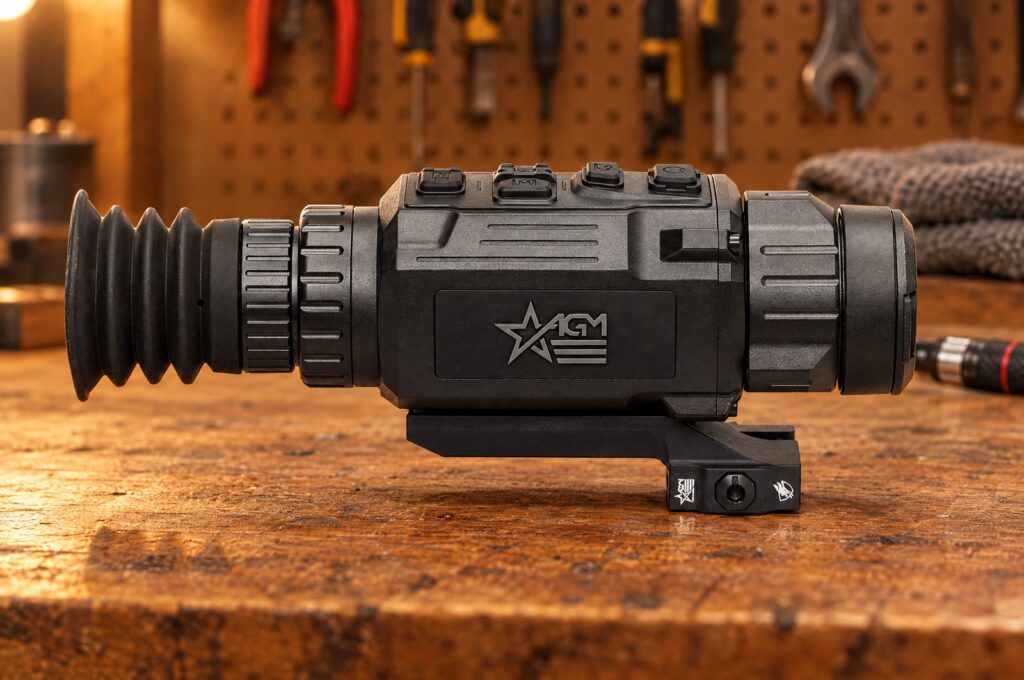
Table of Contents
Review: AGM Rattler V2, the First Thermal Most Hunters Should Buy
Our Rating: 8.6/10
AGM Rattler V2 Specs at a Glance
| Type | Compact thermal rifle scope, Picatinny mount included |
| Models | Seven: 19-256, 25-256, 25-320, 25-384, 35-384, 35-640, 50-640 |
| Sensor | 256 x 192, 320 x 256, 384 x 288 or 640 x 512, all 12 micron, 50 Hz |
| Sensitivity (NETD) | Under 35 mK on the two 256 models, under 20 mK on the other five |
| Lens | 19, 25, 35 or 50 mm germanium, F/1.0 |
| Base magnification | 2x to 3.5x depending on model, with 2x, 4x and 8x digital zoom |
| Display | 0.39 in OLED, 1024 x 768 |
| Detection range | 950 to 2,600 yards (6 ft object, AGM figure) |
| Battery | One removable NE-4400 pack, two in the box. Up to 11.5 hours (6.5 on the 25-320) |
| Eye relief | 45 mm |
| Storage and recording | 16 GB built in, video with audio, shot activated recording, Wi-Fi |
| Weight | 1.06 to 1.18 lb without mount or battery |
| Weather and recoil | IP67, rated from -22°F to 131°F, 1000 g recoil rating |
| Warranty | 5 years |
| Street price | $695 to $2,695 (use our live pricing for the best up to date deal) |
Jump to the live price card for each model: 19-256, 25-256, 25-320, 25-384, 35-384, 35-640, 50-640.
Pros
- Seven models, $695 to $2,695
- Up to 11.5 hours per battery
- Five-year warranty, still in production
Cons
- 256 models are only under 35 mK
- No laser rangefinder on any V2
- Deep menus, fiddly zeroing screens
Quick Take
If you hunt hogs or coyotes at night and you don’t already own a thermal, the Rattler V2 is the safe buy. It isn’t the sharpest picture you can get for the money in every case, and I’ll name the scopes that beat it on paper further down. What it has is the whole package: a sensor that works, a battery that lasts until sunrise, a mount that goes back on the rifle without losing zero, a five-year warranty, and a maker with a Texas office that answers the phone.
The catch is the model list. A Rattler V2 19-256 at $695 and a Rattler V2 50-640 at $2,695 are different tools, and the cheap ones carry a weaker sensor than the name suggests. AGM rates the two 256 models at under 35 mK and the other five at under 20 mK. Plenty of dealer listings print 20 mK across the board. They’re wrong, and it matters on a humid night.
My pick for most people is the 35-384 at $1,594. If that’s too much, the 25-256 at $794 is the cheapest one I’d hunt past 100 yards with. The short answer on V2 against V3 is that the V3 has the better sensor and the V2 has the better battery, and the price gap is now small enough that the lens should make the decision for you.
Best For: A first thermal scope for hogs and predators inside 300 yards, on an AR or a bolt gun with a Picatinny rail. Not for anyone who needs a built-in laser rangefinder.
What the Rattler V2 Is, and What Changed From the Original Rattler
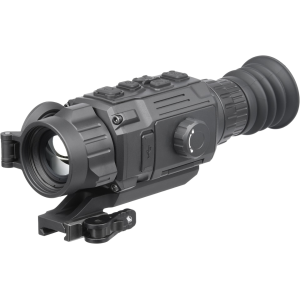
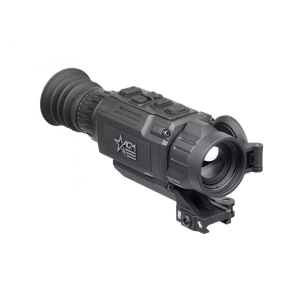
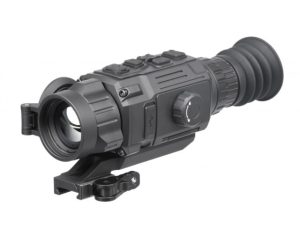
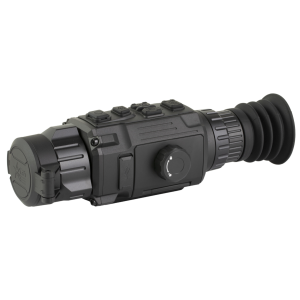
AGM Global Vision launched the Rattler V2 at SHOT Show in early 2024 as the replacement for the original Rattler TS scopes, which AGM calls the best-selling thermal rifle scope family in the United States. The V2 kept the short, square body that sits on a rail with its own mount, so it needs no rings. It changed almost everything inside.
The biggest change was power. The old Rattler TS ran on two CR123 cells and AGM rated it at 4.5 hours. Anyone who owned one carried a pocket full of spares. The V2 takes a removable 4.4 Ah pack called the NE-4400, ships with two of them and a charger, and AGM rates it at up to 11.5 hours on the 256 models. That one change is why I stopped recommending the old scope.
The sensors moved too. The old 384 models used a 17 micron sensor rated at 35 mK. The V2 384s use a 12 micron sensor rated under 20 mK. The old 256 models refreshed at 25 Hz, which smears when you pan, and the V2s all run at 50 Hz. AGM also doubled the reticle choices, added audio to the video, and pushed the cold rating from -4°F down to -22°F.
| Original Rattler TS | Rattler V2 | |
|---|---|---|
| Battery | Two CR123 cells, up to 4.5 hours | Removable NE-4400 pack, two included, up to 11.5 hours |
| 384 sensor | 17 micron, 35 mK | 12 micron, under 20 mK |
| 256 sensor refresh rate | 25 Hz | 50 Hz |
| Base magnification, 25 mm and 35 mm 384 | 1.5x and 2x | 2x and 3x |
| Reticles | 5 types, 3 colors | 10 types, 4 colors |
| Video | No audio | Audio, plus shot activated recording |
| Lowest operating temperature | -4°F | -22°F |
| Warranty on the 256 models | 3 years | 5 years |
The original TS scopes are gone from AGM’s catalog. Their manuals and firmware are still on AGM’s download site and you’ll still find leftover stock at dealers, sometimes right next to the V2 under nearly the same name. If a listing says TS25-256 or TS35-384, it’s the old scope. Don’t pay V2 money for it.
Then in November 2025 AGM launched the Rattler V3. That doesn’t make the V2 a dead product. AGM’s own announcement says the V2 isn’t going anywhere, that it continues to build and support the line with firmware updates, and that V2 and V3 batteries and chargers interchange. All seven V2 models were in stock on AGM’s site when I checked on October 13. The AGM Global Vision page covers the rest of the company’s range.
The Rattler V2 Lineup: All Seven Models Explained
The model number tells you everything once you know the code. The first number is the lens in millimeters. The second is the sensor width in pixels. So a 35-384 is a 35 mm lens in front of a 384 x 288 sensor. A bigger lens sees farther and narrower. A bigger sensor sees more picture, and the next section explains why that isn’t the same thing as more detail.
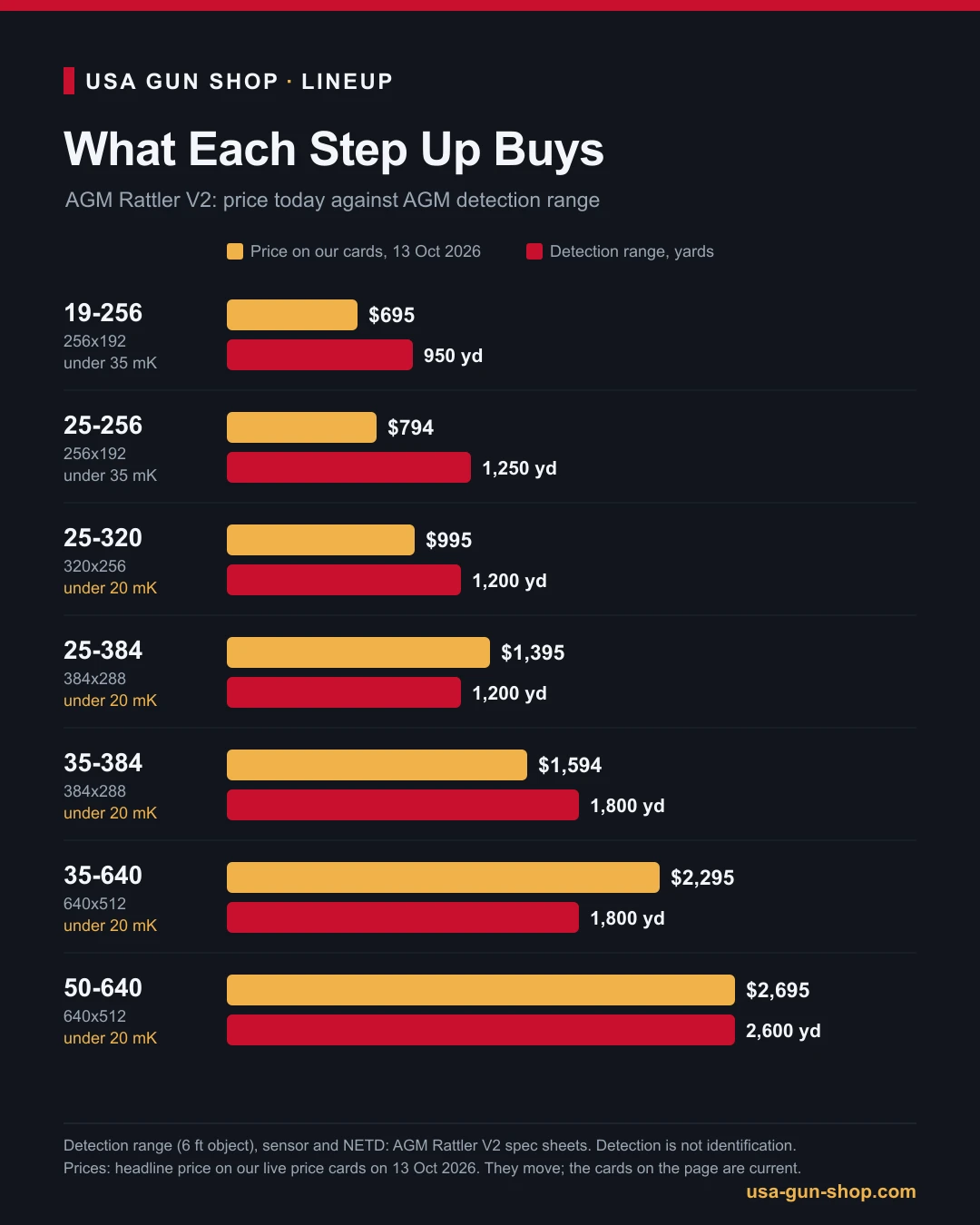
Here is every model AGM sells today with its list price, followed by the full table.
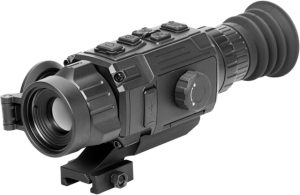
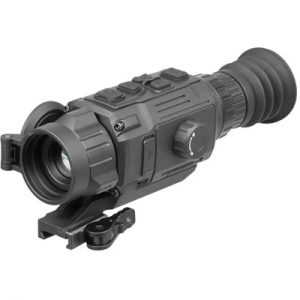
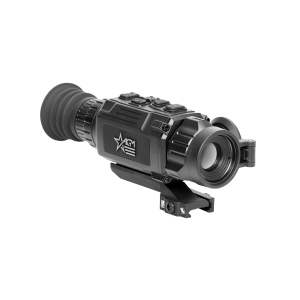
AGM Rattler V2 19-256 (256 x 192, 19 mm lens, 2.5x) $895 list
AGM Rattler V2 25-256 (256 x 192, 25 mm lens, 3.5x) $1,095 list
AGM Rattler V2 25-320 (320 x 256, 25 mm lens, 3.5x) $1,295 list
AGM Rattler V2 25-384 (384 x 288, 25 mm lens, 2x) $1,695 list
AGM Rattler V2 35-384 (384 x 288, 35 mm lens, 3x) $1,995 list
AGM Rattler V2 35-640 (640 x 512, 35 mm lens, 2x) $2,695 list
AGM Rattler V2 50-640 (640 x 512, 50 mm lens, 2.5x) $3,295 list
| Model | Sensor | NETD | Lens | Magnification | View at 100 yd | Detection | Battery | Weight | Price today |
|---|---|---|---|---|---|---|---|---|---|
| 19-256 | 256 x 192 | Under 35 mK | 19 mm | 2.5x to 20x | 49 ft | 950 yd | 11.5 h | 1.06 lb | $695 |
| 25-256 | 256 x 192 | Under 35 mK | 25 mm | 3.5x to 28x | 37 ft | 1,250 yd | 11.5 h | 1.08 lb | $794 |
| 25-320 | 320 x 256 | Under 20 mK | 25 mm | 3.5x to 28x | 37 ft | 1,200 yd | 6.5 h | 1.08 lb | $995 |
| 25-384 | 384 x 288 | Under 20 mK | 25 mm | 2x to 16x | 55 ft | 1,200 yd | 11 h | 1.08 lb | $1,395 |
| 35-384 | 384 x 288 | Under 20 mK | 35 mm | 3x to 24x | 39 ft | 1,800 yd | 11 h | 1.13 lb | $1,594 |
| 35-640 | 640 x 512 | Under 20 mK | 35 mm | 2x to 16x | 66 ft | 1,800 yd | 9 h | 1.13 lb | $2,295 |
| 50-640 | 640 x 512 | Under 20 mK | 50 mm | 2.5x to 20x | 46 ft | 2,600 yd | 9 h | 1.18 lb | $2,695 |
Every sensor is 12 micron and every model refreshes at 50 Hz. NETD is AGM’s figure, measured at 77°F with an F/1.0 lens. Detection range is AGM’s figure for a six-foot object, and AGM’s own spec sheets print the unit as m/yd without choosing, so read it as a rough number. Weight is without the mount or the battery. Prices are the headline price on our cards on October 13.
Rattler V2 19-256 and 25-256: The Budget Pair
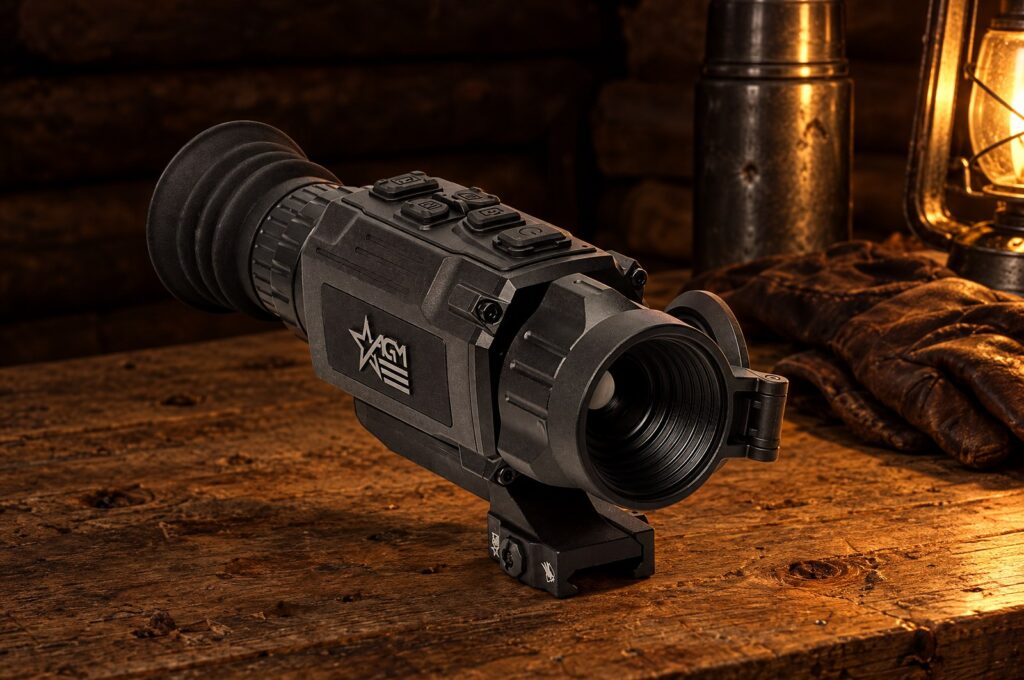
These two share a 256 x 192 sensor rated under 35 mK. That’s the weakest sensor in the line and it’s the reason they’re cheap. On a cool, dry night you won’t care. On a warm, damp one the picture goes flat sooner than it does on the others.
The 19-256 has the wide view, 49 feet across at 100 yards with 2.5x base magnification. It’s the one for feeders, barn rats and anything inside 100 yards. The 25-256 trades width for reach, 37 feet across with 3.5x base magnification, and AGM rates it to 1,250 yards against 950. For $99 more, the 25-256 is the better hunting scope. It’s what I’d buy on a tight budget.
Rattler V2 25-320: The Odd One
The 25-320 sits between the two families. It pairs a 320 x 256 sensor rated under 20 mK with the same lens and the same 3.5x base magnification as the 25-256, so you get the better sensor at a price between the 256 and the 384. It’s the best seller at the big sporting goods chains for that reason.
Two things to know before you buy it. AGM rates its battery at 6.5 hours, a little over half what the others get, and nothing on AGM’s page says why. And AGM’s spec sheet gives it the same field of view as the 25-256, which is an odd figure for a bigger sensor behind the same lens. Dealers can’t agree on the sensor either, and several list it as 320 x 240. I’d buy it for the sensitivity and plan on swapping batteries at midnight.
Rattler V2 25-384 and 35-384: The Ones to Buy
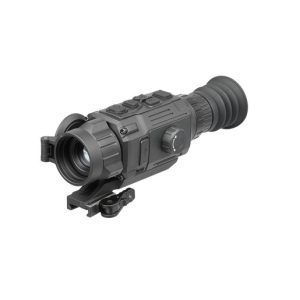
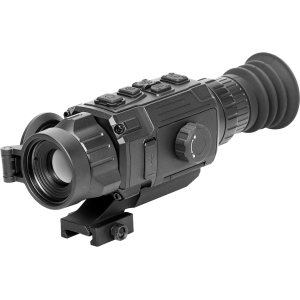
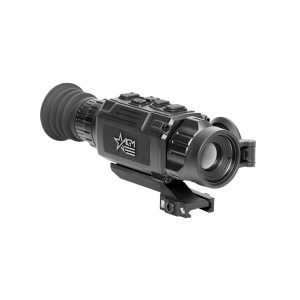
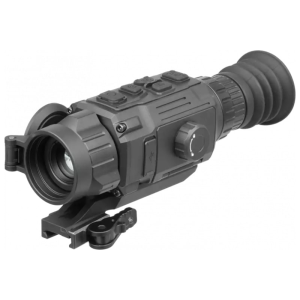
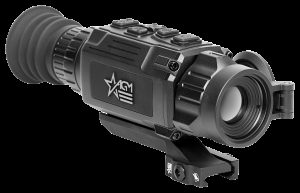
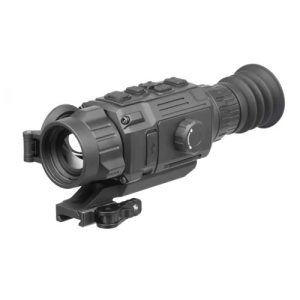
This is the heart of the line. Both use the 384 x 288 sensor rated under 20 mK and both run up to 11 hours. The 25-384 is the wide one, 2x base magnification and 55 feet of view at 100 yards. Hog hunters like it because you can keep a whole sounder in the picture and swing with a runner.
The 35-384 is 3x with 39 feet of view, and AGM rates it to 1,800 yards against 1,200 for the 25-384. That extra lens is what lets you tell a coyote from a farm dog at 250 yards. It costs $199 more than the 25-384 on our cards and it’s the model I’d buy with my own money.
Rattler V2 35-640 and 50-640: The Top Pair
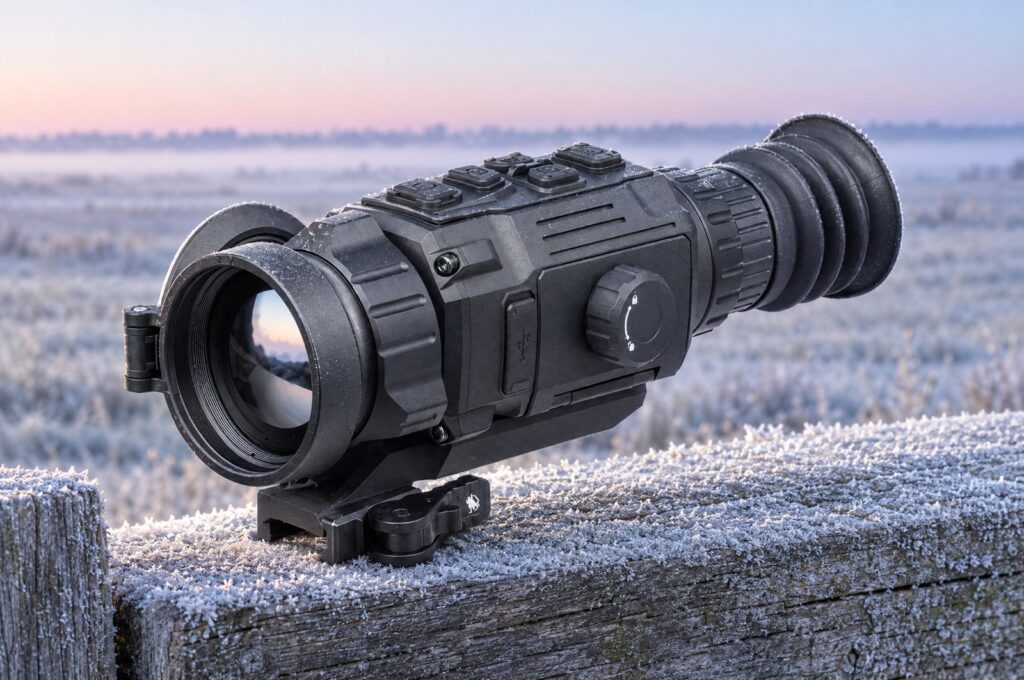
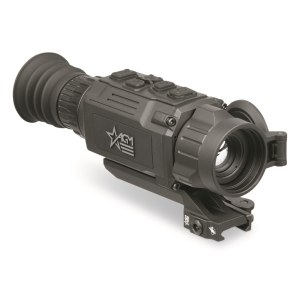
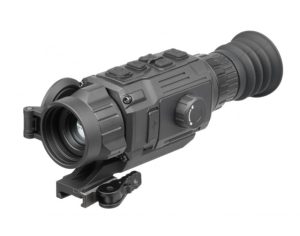
The two 640 x 512 models are for people who hunt open country or get paid to clear hogs. The 35-640 has the widest view in the line, 66 feet at 100 yards at 2x, and enough pixels that 4x digital zoom still looks like a picture. The 50-640 is the long one, 2.5x base magnification and a 2,600 yard detection figure.
Both drop to 9 hours of battery, and neither had a listing at one of the five big retailers we headline prices from when I checked, so the price on those two cards is simply the first dealer in the list. One warning on AGM’s own site: the description on the 35-640 page is a copy of the 35-384 text and says 384 resolution and 3x. The spec table under it is right.
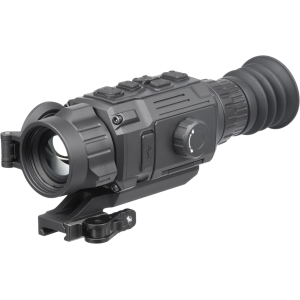
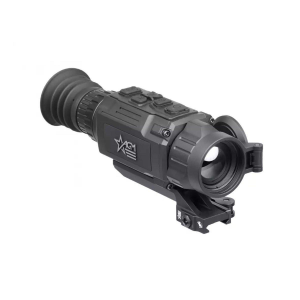
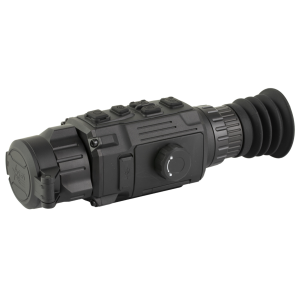
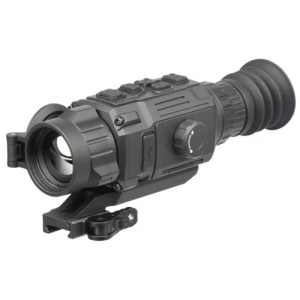
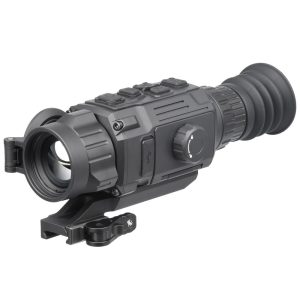
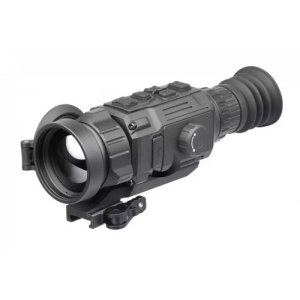
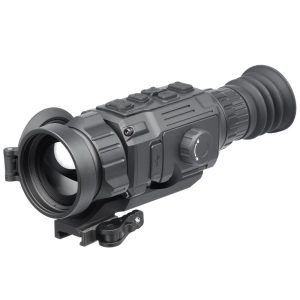
AGM also sells three Rattler-C V2 clip-ons that mount in front of a day scope, starting at $995 on AGM’s site. They share the name and the battery, they are not rifle scopes, and they show up in the same dealer searches. Check that the listing says scope, not clip-on, before you pay.
Image Quality: What the Numbers Mean in the Field
Three numbers decide what you see through a thermal: how sensitive the sensor is, how many pixels it has, and how much lens sits in front of it. Dealers love the second one. The third one does most of the work.
Sensitivity is the NETD figure, in millikelvin. Lower is better. It’s the smallest temperature difference the sensor can pick out, and it’s what separates a hog from the warm ground it’s standing on. On a 40 degree night everything alive glows and a 35 mK sensor looks fine. On a muggy August evening, with the dirt still holding the day’s heat, the under 20 mK models keep their contrast and the 256 pair turns gray and soft. Every maker measures this number its own way, so don’t split hairs between brands. Within the Rattler line it’s a real difference.
Pixels and lens work together, and this is where buyers get fooled. Look at the 25-256 and the 25-384. Same 25 mm lens, same 12 micron pixels. At 100 yards one pixel covers 1.7 inches on both. The 384 doesn’t draw a hog any sharper. It draws a wider picture, 55 feet across against 37, which is why its base magnification is 2x against 3.5x. If you want more detail on the animal you need more lens. The 35 mm models put 1.2 inches on a pixel and the 50-640 gets down to 0.9.
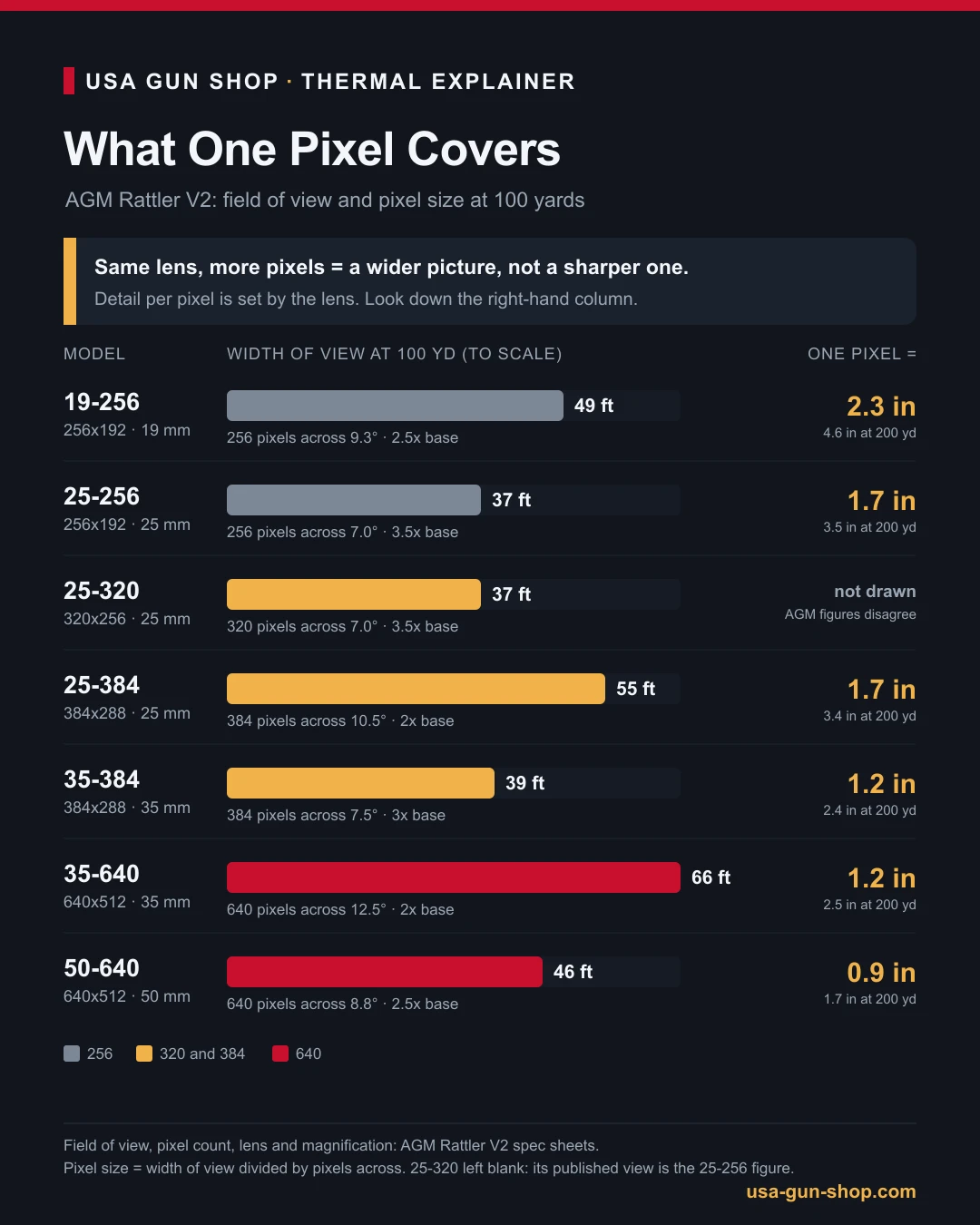
That’s also why the 640 models are worth the money for some people. A 640 sensor behind a 35 mm lens gives you the same detail per pixel as the 35-384 with a view nearly twice as wide. You scan less and you lose fewer animals off the edge of the screen.
Refresh rate is 50 Hz on every V2. Pan across a field and the picture keeps up. The old 25 Hz Rattler 256 stuttered on a running coyote, and so do the cheapest scopes from other brands that still use 25 Hz sensors.
Digital zoom is 2x, 4x and 8x on top of the base magnification, and it only enlarges the pixels you already have. On the 256 models 2x is usable and 4x is mush. On the 384s I’ll shoot at 2x and look at 4x. Only the 640s hold together at 4x. The big top-end magnification numbers in the table, the 20x and 28x, are 8x zoom and you can ignore them.
The display is the same 1024 x 768 OLED on all seven. It’s good. It is also one of the places the V3 moved ahead, which I’ll come to.
What the Range Numbers Mean: Detection, Recognition, Identification
AGM prints one range for each scope, and it’s a detection range for a six-foot object. Detection means a warm dot shows up on the screen. That’s all. A cow, a truck hood, a man and a round bale all detect at the listed distance.
Recognition is the distance where you can tell what kind of thing it is: four legs, low to the ground, moving like a pig. Identification is the distance where you’d bet a bullet on it: that’s a boar and not a calf, that’s a coyote and not the neighbor’s shepherd. AGM doesn’t publish either, and nobody’s number would match your eyes anyway. Here is what I got, on clear nights between 40 and 55 degrees.
| Model | I could tell a hog from a deer | I would shoot a coyote, sure it was a coyote |
|---|---|---|
| 19-256 | About 250 yd | About 90 yd |
| 25-256 | About 300 yd | About 140 yd |
| 25-384 | About 320 yd | About 150 yd |
| 35-384 | About 450 yd | About 250 yd |
| 50-640 | Past 600 yd | About 400 yd |
Set those against detection figures of 950 to 2,600 yards and you can see how far apart the two ideas are. A fair rule for this line is that you can identify at about a seventh of the printed detection range. Buy on that number, not the one on the box.
Heat and humidity pull every figure in. On the worst night I had, 79 degrees and sticky at 9 PM, the 25-256 dropped to about 100 yards for a sure call and the 35-384 to about 200.
Our Field Testing
I ran two scopes hard and two more for a night or two each. The 25-256 spent five weeks on a 16-inch 5.56 AR and one night on a Ruger 10/22. The 35-384 spent six weeks on a 16-inch .308 AR. A friend’s 19-256 and a borrowed 50-640 came along on three hunts so I could look through all four from the same truck at the same field.
Zeroing. I zeroed both at 50 yards first and confirmed at 100. A paper target is invisible to a thermal, so I taped a chemical hand warmer to cardboard for the first shots and used a two-inch square of foil tape after that, tilted up a little so it reflects cold sky and shows black. The scope has a freeze function for this. You fire one shot, hold the reticle on your aiming point, freeze the picture, then walk a second cursor to the bullet hole and save. It took me four rounds on the 5.56 and five on the .308 to get a zero I trusted. The menus fought me the first time. By the second rifle it took ten minutes.
Round counts and zero. The 25-256 saw 260 rounds of 5.56, mostly Federal American Eagle 55 grain with 40 rounds of Federal Fusion 62 grain for the hogs. The 35-384 saw 140 rounds of .308, Federal Power-Shok 150 grain and 20 rounds of Gold Medal Match 168 grain to check groups. Neither scope moved. The .308 printed 1.4 inches for five shots at 100 yards on the foil square, which is the rifle and me, not the scope. I pulled the 35-384 off by its lever and put it back six times between groups. The biggest shift I measured was half an inch at 100 yards, which is one click.
Hogs. The best night with the 25-256 was 41 degrees and still. A sounder of nine came to a corn pile at 140 yards and I could count them, pick the two big sows and watch the small ones push in between. I shot one at 118 yards and the scope’s recoil-triggered recording had the ten seconds before the shot and the ten after saved without my touching a button. At 230 yards that same week, a group in a wheat field was a row of warm shapes with legs. I knew they were hogs because I knew the field. The scope didn’t tell me.
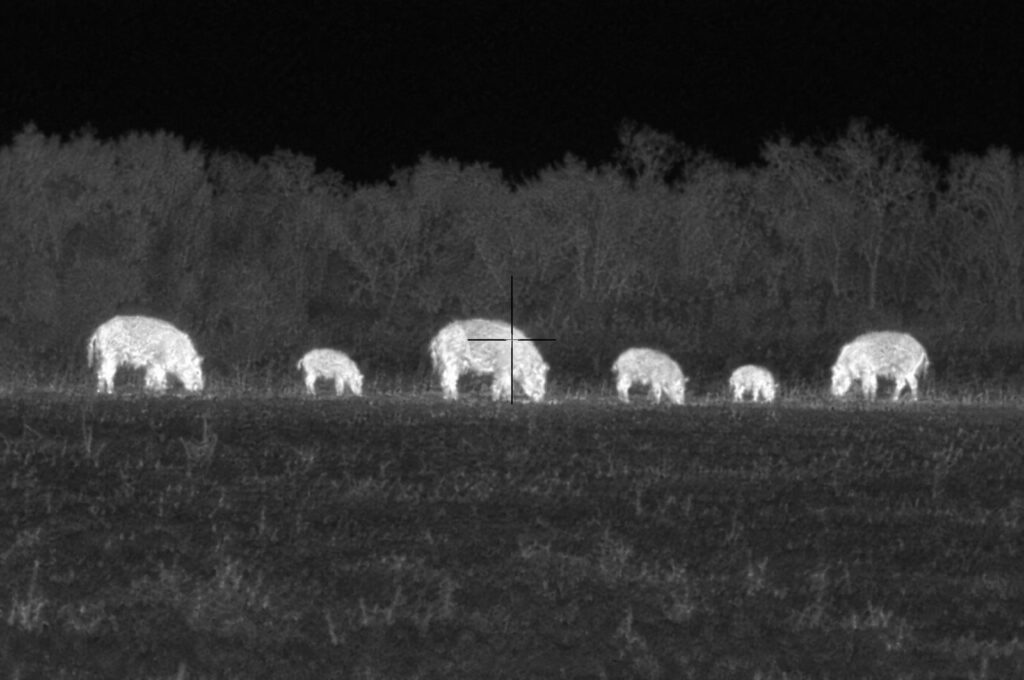
Coyotes. This is where the 35-384 earned its price. A coyote came to the call across a cut bean field and hung up at 212 yards. At 3x I could see the tail carried low and the way it trotted, and at 6x the ears. I shot it there. With the 25-256 I’ve passed on two dog-sized animals past 150 yards because I couldn’t be sure, and I’d do it again.
The .22 night. I put the 25-256 on a 10/22 for barn rats and raccoons at 20 to 40 yards. It works, but 3.5x is too much scope that close. I was refocusing every time something moved and I lost rats off the edge of the picture. My friend’s 19-256 at 2.5x was the better tool in the barn.
Daylight. It works in daylight and I zeroed at two in the afternoon. Sun-warmed steel, rocks and fence posts all glow, so the picture is busier than at night. Don’t point it at the sun.
Handheld. With the reticle switched off, the 35-384 on its lever mount doubles as a spotter. I scanned with it off the rifle on most stands and clipped it back on when something showed. If you want a dedicated handheld to go with it, our thermal monoculars guide covers those.
What I Don’t Like
- The menus are deep. Simple things are a short press away. Anything else is a long press, a scroll and another press, and in the dark with cold hands I got lost more than once.
- The calibration is backwards. The V2 has a shutter. Every so often the picture freezes for a beat and the scope clicks while it recalibrates. You can set that to manual so it never happens with a coyote at 60 yards, but the manual refresh is a three-second hold of the mode button, which is slow.
- Focus is touchy on the 640s. On the borrowed 50-640 the depth of focus was thin. Move from a hog at 80 yards to one at 250 and you have to turn the ring.
- Recordings look worse than the view. The video is fine for proving a hit. It’s softer than what your eye sees in the eyepiece.
- The cheap ones lose the lever. The 19-256, 25-256 and 25-320 ship on a bolt-on mount, so you can’t pop them off to scan without a wrench.
- The built-in rangefinder is a guess. It’s a stadiametric tool: you bracket an animal between two lines and it estimates the distance from an assumed body size. I never trusted it past 150 yards.
Controls, App, Recording and Mounting
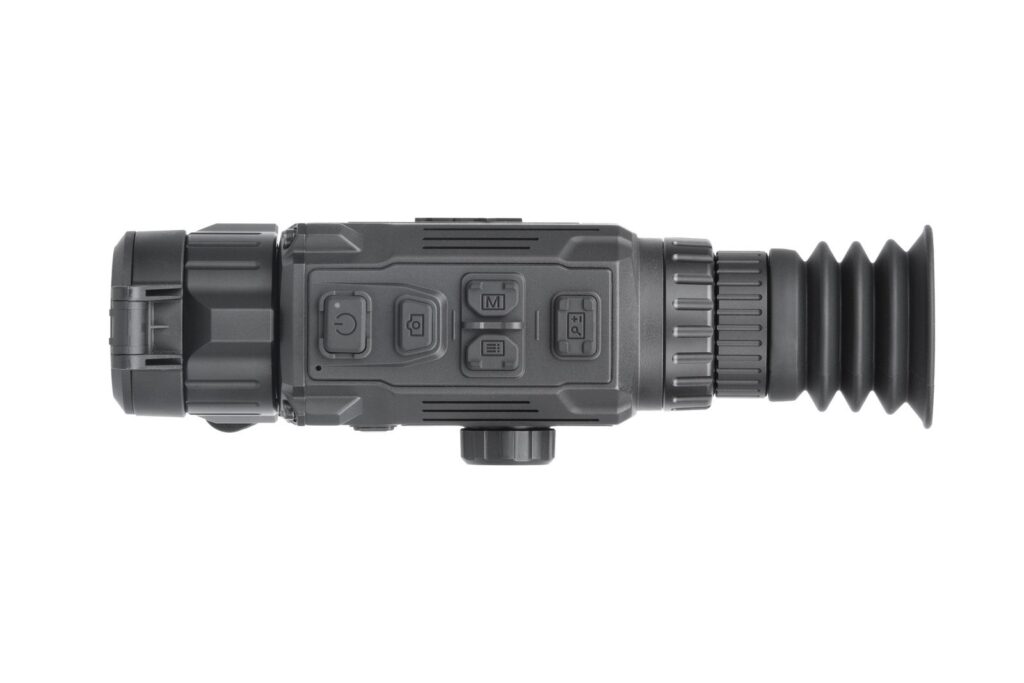
Five raised rubber buttons sit on top: power, menu, zoom, capture and a mode button, with a focus ring at the lens and a diopter ring at the eyepiece. They’re big enough for gloves and each has a different shape, so after a night you stop looking. A short press of the power button puts the scope in standby, which blanks the screen and saves the battery between stands. Another press wakes it in a couple of seconds.
The AGM Connect app links over the scope’s own Wi-Fi hotspot. It shows the live view on a phone, pulls video off the 16 GB of storage, and lets you zero from the phone screen, which is easier than the buttons. The hotspot shuts itself off after ten minutes with nothing connected, and it won’t run at all once the battery drops under 15 percent. Recording is to internal memory only. There’s no card slot.
Shot activated recording is the feature I’d miss most. Turn it on once and every shot saves a clip that starts ten seconds before the recoil and ends ten seconds after. You never forget to press record again.
Mounting and Torque
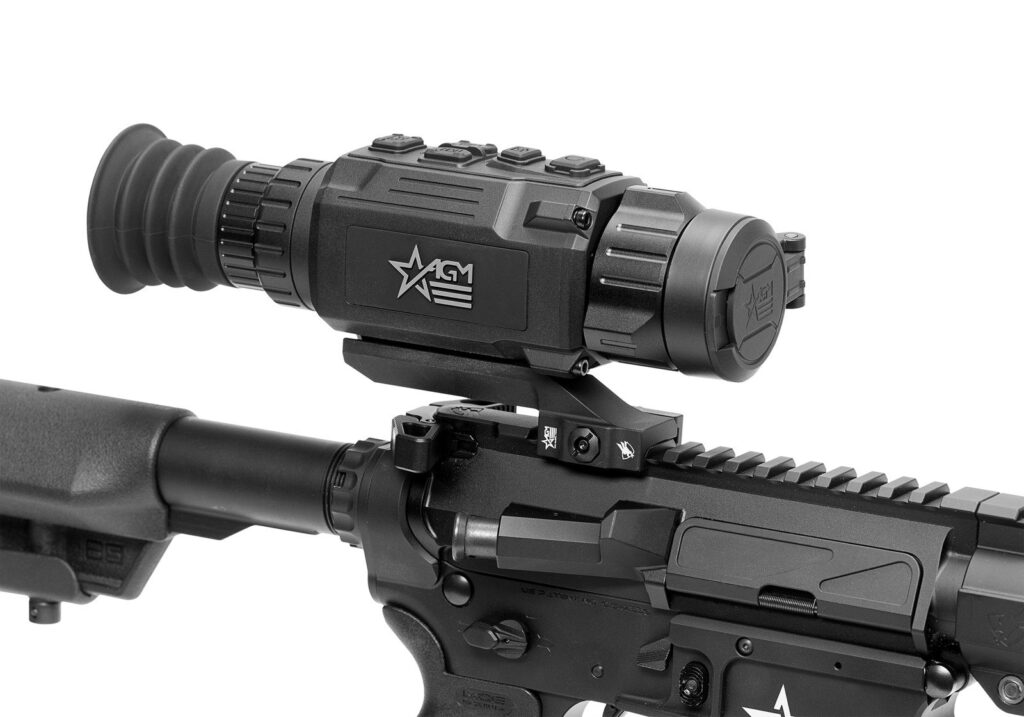
Every Rattler V2 comes with a Picatinny mount made by American Defense Manufacturing, so there’s nothing else to buy. Which mount depends on the model. AGM’s pages say the 19-256, 25-256 and 25-320 ship with the ADM-2128, a fixed mount that bolts to the rail. The 384 and 640 scopes I’ve handled, and the ones in AGM’s photos, wear a lever mount you can throw by hand. AGM’s manual adds that the mount can vary by model and sales region, so look at the photos on the listing.
For the fixed mount AGM gives a torque of 25 to 35 inch-pounds with 30 as the target, and warns that over-tightening can snap the bolts and void the mount warranty. That’s inch-pounds, not foot-pounds. The two screws that hold any of the mounts to the scope body take 35.4 to 46.9 inch-pounds. Use a proper driver. Our guide to scope rings and mounts covers the tools, though you won’t need rings for this scope.
Eye relief is 45 mm, under two inches. That’s short. On an AR it’s fine. On a hard-kicking bolt gun, mount it as far forward as you can still see the full screen, and keep the rubber eyecup on.
Zeroing: Profiles and Click Values
The scope stores five profiles, lettered A to E, and each one holds up to five zeros at different distances. In practice that’s five rifles, or one rifle with a zero for supers and another for subsonics. Switching profiles takes about fifteen seconds in the menu.
One click moves the reticle one pixel on the display, so the click value depends on the model. AGM buries these in the manual and no dealer page prints them, so here they are. If you think in fractions of an inch, our MOA and MRAD explainer covers the units, and the basics of sighting in a rifle scope apply to a thermal the same as a day scope.
| Model | One click at 100 yards | In MOA |
|---|---|---|
| 19-256 | 0.56 in | 0.54 MOA |
| 25-256 | 0.43 in | 0.41 MOA |
| 25-320 | 0.65 in | 0.62 MOA |
| 25-384 | 0.65 in | 0.62 MOA |
| 35-384 | 0.46 in | 0.44 MOA |
| 35-640 | 0.76 in | 0.73 MOA |
| 50-640 | 0.53 in | 0.51 MOA |
The manual lists the 25-320 and the 25-384 on one row at 0.65 inches. The coarse clicks on the wide models are the price of that wide view. On a 35-640, one click is three quarters of an inch at 100 yards, so you can’t dial a zero much finer than that. For hogs it doesn’t matter. For prairie dogs it would.
AGM’s advice in the manual is to zero at base magnification or 2x zoom, because the picture is too blocky above that to place the cursor well. I agree. I zeroed the 25-256 at 7x because I could, and did it again at 3.5x and got a better result.
Recoil Rating
AGM doesn’t publish a caliber list for the Rattler V2. What it publishes is a shock rating, 1000 g for 0.4 milliseconds, on every model’s spec sheet. Some rivals name calibers outright, and I wish AGM would. In my hands the 35-384 took 140 rounds of .308 without a shift, and plenty of these ride on .300 Blackout, 6.5 Grendel and .308 hog guns. I haven’t put one on a magnum and I wouldn’t guess. If you’re choosing the rifle too, see our picks for the best hog hunting rifle.
Battery Life, and What Cold Does to It
AGM rates the battery at up to 11.5 hours on the 256 models, 11 on the 384s, 9 on the 640s and 6.5 on the 25-320. Read the small print on the spec sheet and those figures are at 77°F with the Wi-Fi hotspot off. Real nights are colder and you’ll use the hotspot sometimes.
On a 62 degree night the 25-256 ran 10 hours and 10 minutes from full to the low battery icon, with the hotspot off and only shot clips recording. On a 27 degree night the same scope gave me 8 hours and 20 minutes. The 35-384 managed 9 and a half hours at 60 degrees. With the hotspot streaming to a phone the whole time, the 25-256 quit at 6 hours and 45 minutes. So figure on losing about a quarter of the rating in a hard frost and about a third if you stream.
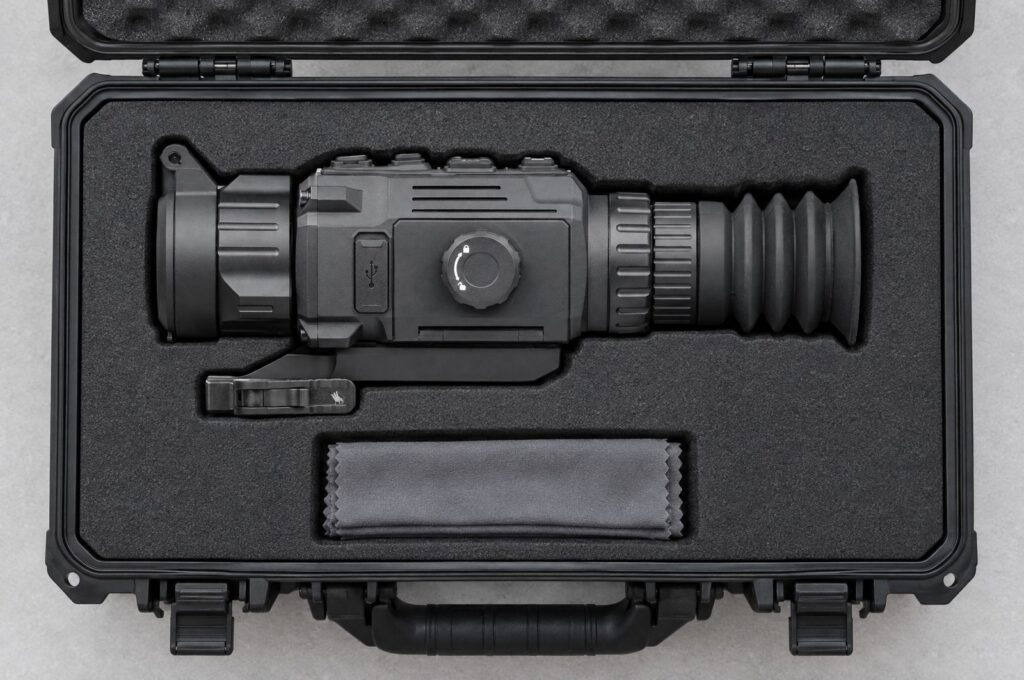
That still gets you through a winter night on one pack if you use standby between stands, and there’s a second pack in the box. A pack swaps in under a minute: turn the knob on the left side, open the door, slide the red latch and it drops out. You can also run or charge the scope from a 5 volt, 2 amp USB-C power bank. Keep the spare in an inside pocket when it’s below freezing. A warm pack lasts longer than a cold one.
For long storage AGM says to take the battery out of the scope and top it up every six months.
Rattler V2 vs V3: Which One Should You Buy?
The Rattler V3 came out in November 2025 and it’s a better scope in three ways. Its sensor is rated under 15 mK against under 20. Its display is 1920 x 1080, or 2560 x 2560 on the 640 models, against 1024 x 768. And it’s shutterless, so the picture never freezes to recalibrate. The three V3 models with LRF in the name also carry a laser rangefinder inside the lens with a ballistic calculator, good to 1,000 meters, and no V2 has one.
Most comparisons you’ll read set a cheap V2 against an expensive V3 and call the V3 the winner. The fair fight is the same sensor size and the same lens, and there’s exactly one: the V2 25-384 against the V3 25-384.
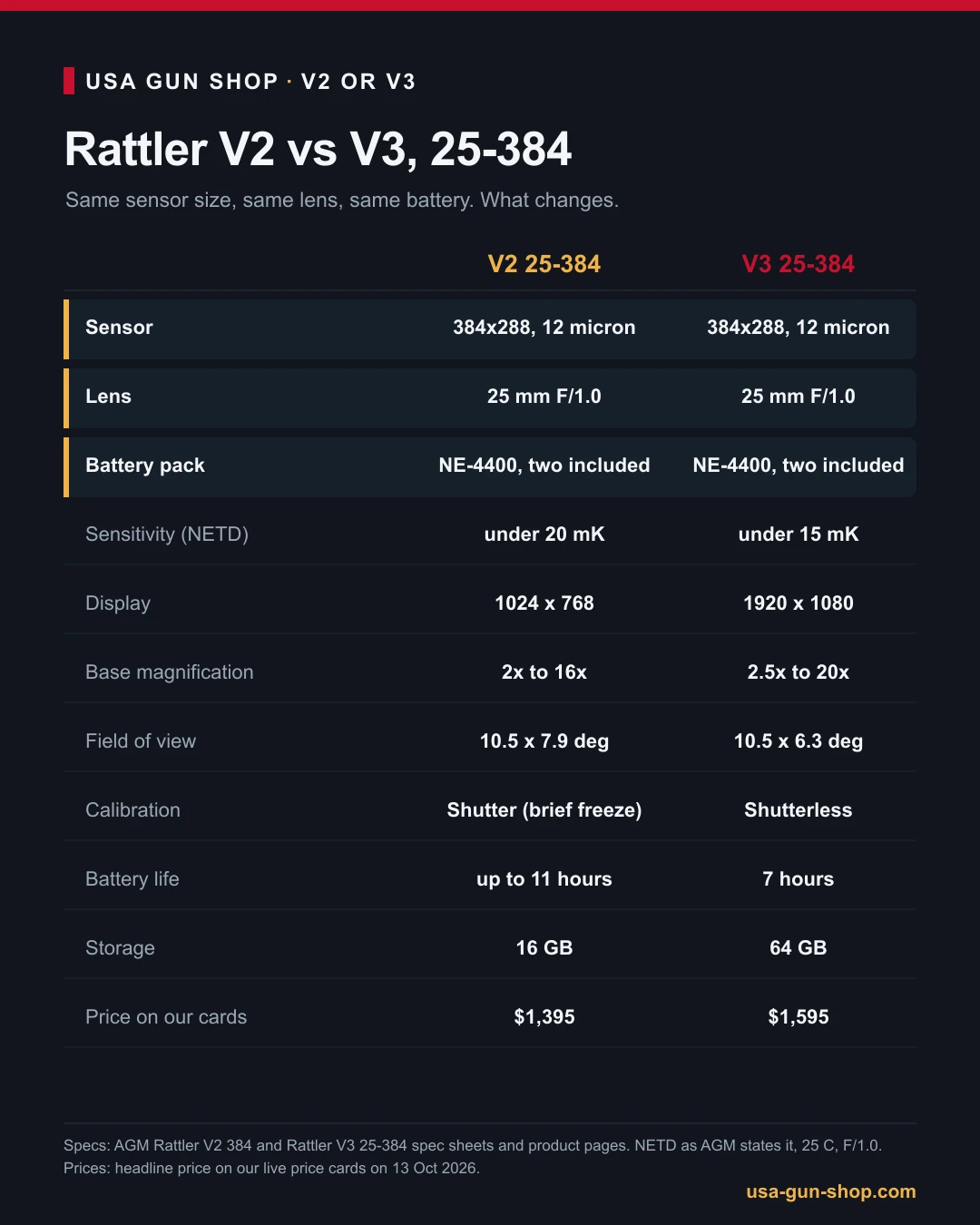
On our cards on October 13 the V3 25-384 was $1,595 and the V2 25-384 was $1,395, a gap of $200. For that you get the better sensor, the sharper screen, no shutter freeze and four times the storage. You give up four hours of battery, 11 down to 7, and a little field of view top to bottom. If I were buying a 25 mm 384 today I’d pay the difference and take the V3.
Here’s the wrinkle. The V2 35-384 was $1,594 that day, a dollar or so off the V3 25-384. Same money buys either the newer sensor behind a 25 mm lens or the older sensor behind a 35 mm lens. For coyotes past 200 yards I’d take the lens. For hogs at a feeder I’d take the V3. If you want the rangefinder, the cheapest V3 with one is the V3 LRF 35-384 at $2,595 on AGM’s site, and at that price you’re shopping a different class of scope.
Below the 384s there’s no contest because there’s no V3. AGM doesn’t make a V3 in 256 or 320, so under about $1,395 the V2 is the only Rattler there is. If you already own a V2, don’t sell it. The batteries and chargers work in both.
Rattler V2 vs the Competition
Three scopes come up every time someone prices a Rattler V2. I checked that each is still in its maker’s catalog before listing it. Sensitivity figures are each maker’s own and aren’t measured the same way, so treat a gap of 5 mK between brands as a tie.
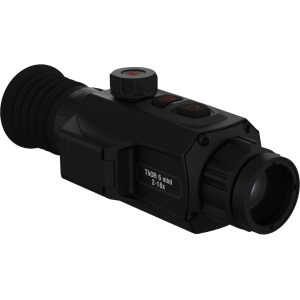
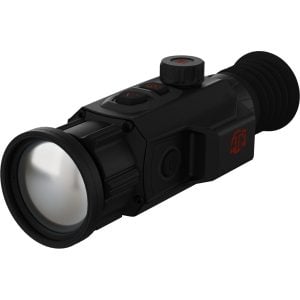
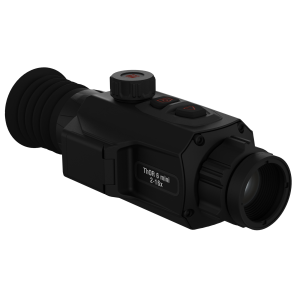
ATN ThOR 6 Mini 256
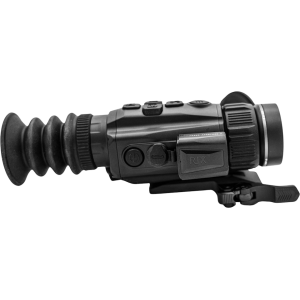
The ThOR 6 Mini is the 19-256’s direct rival. ATN lists the 2-16x version at $689 and rates its 256 x 192 sensor at 20 mK or better, against AGM’s under 35 mK for the same resolution. It’s a magnesium body under 500 grams. On our card it was $689 at MidwayUSA when I checked, a few dollars under the Rattler 19-256.
On paper the ATN has the better sensor for the same money and I think that’s true in the eyepiece on a warm night. The Rattler answers with battery and lens. ATN rates the Mini at about 8 hours across the two batteries it ships with, roughly 4 hours each, where one AGM pack runs 11.5. And the Mini’s lens is 15 mm against 19 or 25. If your shots are inside 100 yards and you don’t mind a battery swap, buy the ATN. If you sit all night, buy the Rattler.
RIX Storm S2R
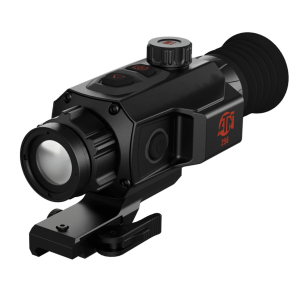
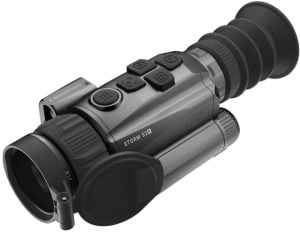
The Storm S2R is the scope that makes the 25-256 and 25-320 look expensive. It’s a 256 x 192 sensor rated under 25 mK behind a 25 mm lens at 3.5x, so the same picture size as the 25-256, and it adds a laser rangefinder that reads to 1,312 yards with a ballistic calculator. RIX sells it at $999. Our card had it at $946.80.
A real rangefinder under a thousand dollars is a big deal, and it’s the one thing no Rattler V2 can do. What you give up is the track record. RIX backs it for three years against AGM’s five, and AGM has far more scopes in the field and far more dealers. If knowing the distance matters to you, and past 200 yards it should, the S2R is the smarter buy than a 25-256.
Pulsar Talion XQ35 Pro
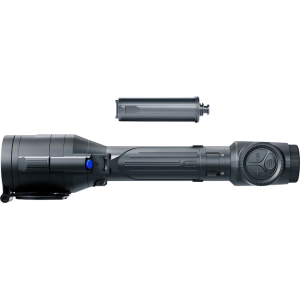
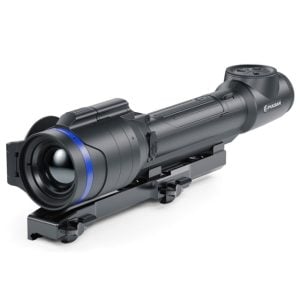
The Talion is what people look at instead of the 35-384. It’s a 384 x 288 scope with the long, low body of a day scope, 13 inches against under 9 for the Rattler, on Pulsar’s own rail mount. Pulsar rates it at under 25 mK and 9 hours, lists calibers it will take up to .375 H&H, and sells it at $1,999.97. Our card showed $1,999.97.
The Talion feels like a nicer object, and on a walnut-stocked bolt gun it looks right where a Rattler looks like a brick. But it uses an older 17 micron sensor, it costs about $406 more than a 35-384, and Pulsar’s warranty is three years unless you register the scope, which stretches it to five. I’d only pay the extra for the shape or the named recoil rating.
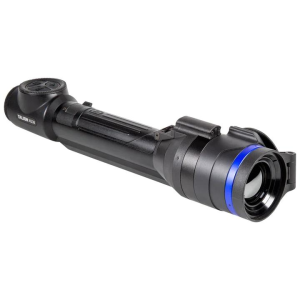
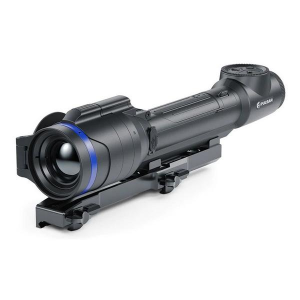
Verdict: The Rattler V2 isn’t the spec leader at any single price. It’s the one with no weak spot big enough to regret. For the full field at every price, see our guide to the best thermal scopes, and if you’re still deciding between thermal and image intensifiers, our best night vision roundup lays out the difference.
Which Rattler V2 to Buy for the Job
| Your hunting | Model | Why |
|---|---|---|
| Hogs at a feeder, 100 yards and in | 25-384 | Widest view under the 640s, so the whole sounder stays on screen. $1,395 |
| Hogs on a tight budget | 25-256 | Enough scope to 140 yards on a cool night. $794 |
| Coyotes called across open ground, out to 300 yards | 35-384 | The cheapest model I can make a sure call with past 200. $1,594 |
| Rats, raccoons and night varmints with a .22 | 19-256 | Low magnification and a wide view for close work. $695 |
| Warm, humid country on a budget | 25-320 | Cheapest way into the under 20 mK sensor. Pack the spare battery. $995 |
| Scanning big fields, paid hog control | 35-640 | 66 feet of view with detail to spare. $2,295 |
| Open country past 300 yards | 50-640 | The most lens in the line. $2,695 |
If you’re buying by budget ceiling, the steps are clean. Under $700 it’s the 19-256. Under $800, the 25-256. Around a thousand dollars, the 25-320. Under $1,400, the 25-384. Under $1,600, the 35-384, and that’s where I’d stop unless you hunt country where 300 yards is a close shot.
The mistake I see most is buying resolution in place of lens. A 25-384 doesn’t reach farther than a 25-256. It sees wider. If reach is what you’re short of, the money goes into the 35 mm lens first.
Who Should NOT Buy This Scope
- Shooters who need a laser rangefinder. No Rattler V2 has one. Buy the RIX Storm S2R on a budget, or the Rattler V3 LRF 35-384 if you want to stay with AGM.
- Hunters in hot, humid country shopping the 256 models. The under 35 mK sensor goes flat on warm nights. Buy the 25-320, or the ATN ThOR 6 Mini 256 at the same money as the 19-256.
- Anyone who wants the best 25 mm 384 picture. The Rattler V3 25-384 has the better sensor and screen for about $200 more than the V2 25-384.
- Bolt-gun owners who want a scope that looks like a scope. The Rattler is a box on a rail. The Pulsar Talion XQ35 Pro has the long, low shape of a day scope and lists the calibers it’s rated for.
- Long-range shooters past 400 yards. Even the 50-640 is a 2.5x scope with coarse clicks. Look at the bigger tube scopes in our best thermal scopes guide.
Warranty, Firmware and Export Rules
Warranty. AGM covers the Rattler V2 for five years from the date of purchase against defects in materials and workmanship. The manual says it applies to the original purchaser, that you need to register the scope, and that you pay shipping to AGM while AGM pays the return. AGM quotes 10 to 20 business days for warranty service. Buy from an authorized dealer and keep the receipt.
Firmware. AGM posts firmware for every Rattler V2 on its download site, filed by model, along with the manual and spec sheet. I counted two firmware files for each V2 scope when I looked. Updates load over USB-C from a computer. Check the version in the scope’s menu against the site before you update, read the instructions twice, and use a full battery. A firmware update is the one way an owner can brick a healthy scope.
Export. Every Rattler V2 product page on AGM’s site carries the same notice: the product is not exportable outside the United States. Thermal sights fall under US export control law. Don’t take one abroad on a hunt and don’t sell one to a buyer overseas without a license.
What’s in the box. The scope, the mount, two NE-4400 batteries, a charger, a USB cable, a lens cloth, the manual and a soft case.
Price and Where to Buy
The Rattler V2 launched high and has come down a long way. The 25-384 was $2,095 at dealers in early 2024 and the 35-384 was $2,495. AGM’s own site now lists them at $1,545 and $1,745, marked down from $1,695 and $1,995, and dealers undercut that again. On October 13 our cards showed the 25-384 at $1,395 and the 35-384 at $1,594.
That pattern holds down the line. AGM sells the 19-256 direct at $764.50 and the big retailers had it at $695. So don’t buy from AGM’s site unless a dealer is out. Most dealers sit within a dollar of each other on any given day, and then one of them breaks ranks with a sale. Each model has its own live card above: 19-256, 25-256, 25-320, 25-384, 35-384, 35-640, 50-640.
Three things to check on any listing. Make sure it says V2 and not TS. Make sure it says scope and not clip-on. And skip listings marked demo, like new or open box unless the dealer confirms the five-year warranty still applies, because AGM’s warranty is written for the original purchaser.
Final Verdict
The AGM Rattler V2 is two years old, it has been replaced at the top of AGM’s own range, and it’s still the scope I’d tell a friend to buy first. Nothing else at these prices combines an all-night battery, a five-year warranty, a mount in the box and a maker that keeps building and updating it. The V3 is better where it exists. It doesn’t exist under $1,395.
Buy the 35-384 if you can. Buy the 25-256 if you can’t. Skip the 19-256 unless your shots are short, and don’t believe a listing that tells you a 256 model is a 20 mK scope.
Final Score: 8.6/10. The best first thermal scope you can buy, as long as you pick the right one of the seven.
Sources: AGM Global Vision product pages, spec sheets and user manual for the Rattler V2 (AGM download library), AGM’s Rattler V3 announcement, and the makers’ own pages for the ATN, RIX and Pulsar scopes.
FAQ: AGM Rattler V2
Is the AGM Rattler V2 worth buying in 2026?
Yes. The AGM Rattler V2 is still in production, carries a five-year warranty and runs up to 11.5 hours on one battery. The seven models sold from $695 to $2,695 on our price cards on October 13. The 35-384 is the one I'd buy, and the 25-256 is the cheapest I'd hunt past 100 yards with.
What is the difference between the AGM Rattler V2 and V3?
The Rattler V3 has a sensor rated under 15 mK against under 20 mK, a 1920 x 1080 or 2560 x 2560 display against 1024 x 768, and it is shutterless. Three of the four V3 models add a laser rangefinder. The V2 has the longer battery, up to 11 hours against 7 on the 25-384, and it is the only Rattler made in 256 and 320 resolution. The two share batteries and chargers.
Which AGM Rattler V2 is best for hog hunting?
For hogs inside 150 yards the 25-384 is the best fit because its 2x base magnification shows 55 feet of field at 100 yards, enough to keep a whole sounder on screen. On a budget the 25-256 does the job on cool nights. For hogs in open fields past 200 yards, step up to the 35-384.
How far can you shoot with an AGM Rattler V2?
AGM's detection range runs from 950 yards on the 19-256 to 2,600 yards on the 50-640, but that is the distance at which a warm dot appears. In my testing I could make a sure call on a coyote at about 90 yards with the 19-256, 140 with the 25-256, 250 with the 35-384 and 400 with the 50-640.
How long does the AGM Rattler V2 battery last?
AGM rates it at up to 11.5 hours on the 256 models, 11 on the 384 models, 9 on the 640 models and 6.5 on the 25-320, measured at 77 degrees with Wi-Fi off. I got 10 hours and 10 minutes from the 25-256 at 62 degrees and 8 hours and 20 minutes at 27 degrees. Two batteries come in the box.
Will an AGM Rattler V2 hold zero on a .308?
Mine did. The 35-384 held zero through 140 rounds on a .308 AR, and taking it off and putting it back six times on its lever mount moved the point of impact half an inch at 100 yards at most. AGM does not publish a caliber list. It rates every Rattler V2 for a 1000 g shock lasting 0.4 milliseconds.
What mount comes with the AGM Rattler V2?
Every Rattler V2 ships with a Picatinny mount from American Defense Manufacturing. AGM says the 19-256, 25-256 and 25-320 come with the fixed ADM-2128, which bolts on and should be tightened to 25 to 35 inch-pounds. The 384 and 640 models are shown with a quick-detach lever mount. No rings are needed.
Is the AGM Rattler V2 discontinued?
No. AGM launched the Rattler V3 in November 2025 and said at the time that it would keep building and supporting the V2 with firmware updates. All seven V2 models were in stock on AGM's site on October 13, 2026. The older Rattler TS scopes are the ones that have been dropped.
4,438+ Gun & Ammo Deals
Updated daily from 200+ top retailers. Filter by category, caliber, action type, and price.
Related Guides