

Affiliate disclosure: This Federal American Eagle review contains affiliate links. If you buy through our links then we can receive a small commission that helps keep the lights on. You don’t pay anything more.
- Treat every gun as loaded
- Point the muzzle in a safe direction
- Keep your finger off the trigger until you’re ready to shoot
- Know your target and what’s beyond
This Federal American Eagle ammo review asks the only questions range ammo has to answer: how fast does it really go, how consistent is it, and how well does it group. I ran 48 chronograph strings from 27 guns, from a Glock 42 to a 16 inch AR-15, and shot groups at 15, 25, 65 and 100 yards for the loads in our group table.
In short: American Eagle is consistent, cleanly made brass-cased practice ammo, and the 9mm 115 gr held a 7 fps SD from a Canik. It is not as fast as the box from short barrels, and the .45 ran 66 to 147 fps under its box from all five pistols we chronographed. Our Federal brand page covers the company; this page is the test.
Last updated October 16, 2026
On-sale 9mm from 200+ retailers · Updated every 4 hours


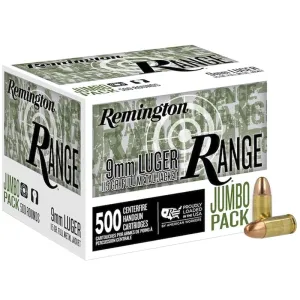
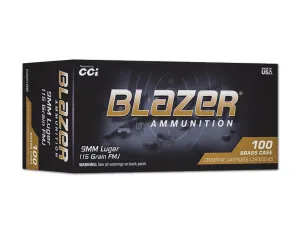
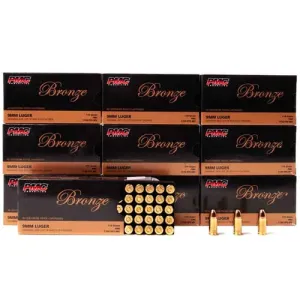
Table of Contents
Federal American Eagle Ammo Review at a Glance
This Federal American Eagle review starts with the lineup. American Eagle is the range line of Federal, founded in Anoka, Minnesota, which lists 84 current American Eagle and Syntech part numbers, 43 of them full or total metal jacket.
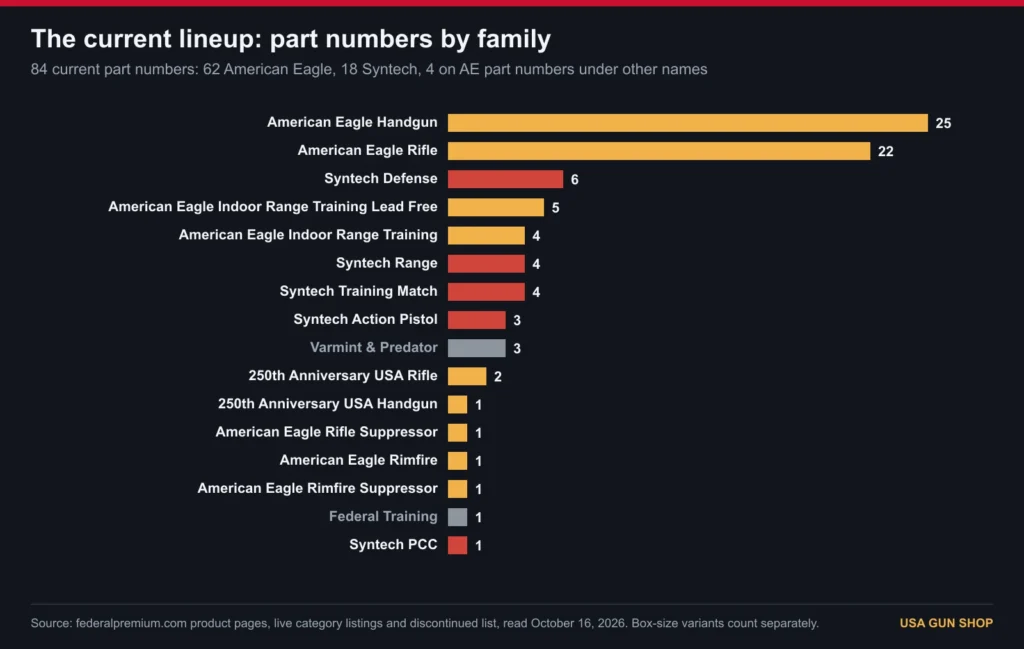
The range runs from pocket loads, covered in our .25 ACP and .32 ACP guides, to 45-70 Government. Every handgun product page lists a muzzle velocity, and all but two list the test barrel Federal used, which is what we checked our chronograph against.
American Eagle is not all FMJ. Federal also lists jacketed hollow points, such as the .44 Magnum 240 gr and the .38 Super +P 115 gr, and jacketed soft points for revolver calibers such as the .357 Magnum 158 gr.
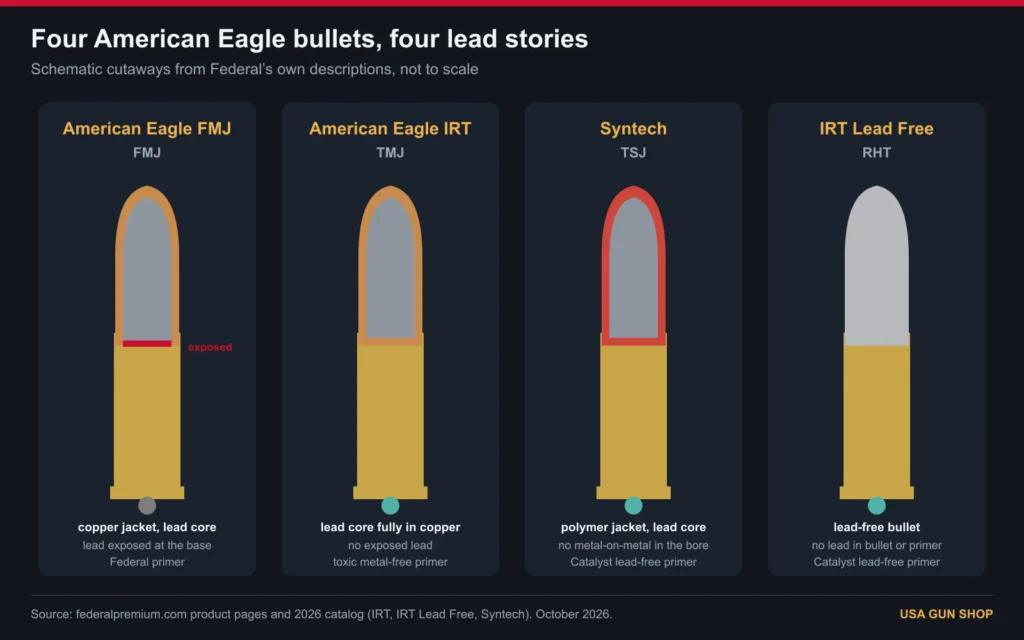
| Family | Bullet | Primer | Built for |
|---|---|---|---|
| American Eagle FMJ | Copper jacket, lead core, exposed base | Federal primer | Range, practice, matches |
| American Eagle IRT | Total metal jacket, lead fully covered | Toxic metal-free primer | Indoor ranges |
| IRT Lead Free | Lead-free bullet | Catalyst lead-free primer | Lead-restricted ranges |
| Syntech | Polymer Total Synthetic Jacket, lead core | Catalyst lead-free primer | Steel targets, clean guns, matches |
| American Eagle Rifle | FMJ, FMJ boat-tail, TMJ, OTM | Federal primer | AR-15 practice, zeroing |
Pros
- 9mm SD as low as 7 fps
- Huge lineup in reloadable brass
- Syntech grouped tighter than FMJ
Cons
- .45 runs well under its box
- Short barrels lose real speed
- .380 spread was wide
Our Rating: 8.0/10
How We Tested American Eagle
We shot American Eagle over a chronograph from ordinary carry, duty and competition guns, then for groups from a rest. Every velocity below names the gun, and the barrel and shot count wherever we logged them.
Handgun strings ran over an Oehler 35P, a Competition Electronics unit, a Shooting Chrony and a Garmin Xero. The 9mm and .45 barrel-length strings are six-shot averages from three Glocks and four .45 pistols in one session each, so the guns are the only variable.
For this Federal American Eagle review we shot handgun groups from a bench, mostly at 25 yards, and rifle groups at 65 and 100 yards. The group table gives the distance, the number of groups and the shots per group, and says where we did not log the shot count. We did not shoot American Eagle FMJ into gel: it is range ammunition, and a full metal jacket does not expand.
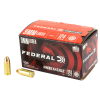
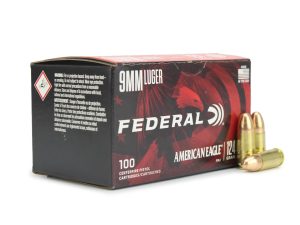
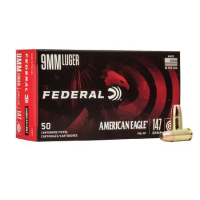
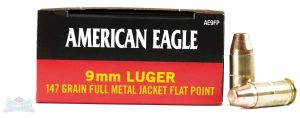
American Eagle 9mm Review: 115, 124 and 147 Grain
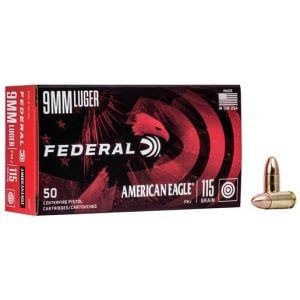
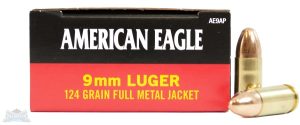
American Eagle 9mm holds most of our data: the 115 gr held a 7 fps SD, the lowest of any FMJ string on this page. From our Glocks it needed more than 4 inches of barrel to beat its box.
Federal rates the 115 gr FMJ at 1,180 fps, the 124 gr at 1,150 fps and the 147 gr flat point at 1,000 fps, all from a 4 inch test barrel. Here is what we measured.
| Load | Gun | Box fps | Our fps | vs box | SD | Shots |
|---|---|---|---|---|---|---|
| AE 9mm 115 gr FMJ | Glock 43, 3.39 in | 1,180 | 1,026 | -154 | n/a | 6 |
| AE 9mm 115 gr FMJ | Glock 19, 4 in | 1,180 | 1,146 | -34 | n/a | 6 |
| AE 9mm 115 gr FMJ | Canik Prime Radian, compensated, 3.8 in | 1,180 | 1,186 | +6 | 7 | n/a |
| AE 9mm 115 gr FMJ | Glock 34, 5.3 in | 1,180 | 1,206 | +26 | n/a | 6 |
| AE 9mm 124 gr FMJ | Beretta 92 with Wilson Combat work, 4.9 in | 1,150 | 1,140 | -10 | n/a | n/a |
| AE 9mm 147 gr FMJ flat point | 9mm test pistol with a 2-7x handgun scope | 1,000 | 880 | -120 | 7.21 | 10 |
| AE IRT 9mm 124 gr TMJ | Glock 43, 3.39 in | 1,120 | 990 | -130 | n/a | 6 |
| AE IRT 9mm 124 gr TMJ | Glock 19, 4 in | 1,120 | 1,041 | -79 | n/a | 6 |
| AE IRT 9mm 124 gr TMJ | Glock 34, 5.3 in | 1,120 | 1,083 | -37 | n/a | 6 |
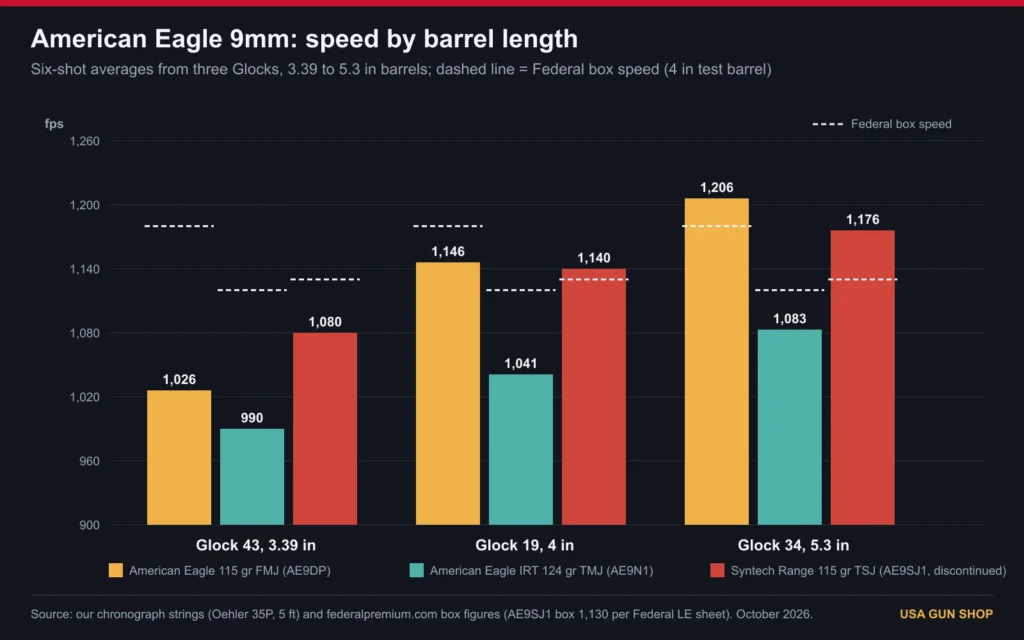
The 115 gr gained 180 fps from the 3.39 inch Glock 43 to the 5.3 inch Glock 34, and of the three Glocks only the Glock 34 beat the box; a compensated 3.8 inch Canik Prime Radian also ran 6 fps over it. From the Glock 19, the gun Federal’s 4 inch test barrel most resembles, it ran 34 fps slow.
The 147 gr flat point ran 880.3 fps from a scoped test pistol, 120 fps under the box, but its 10-shot extreme spread was only 20.2 fps with a 7.21 fps SD. Four five-shot groups at 25 yards averaged 2.15 inches, the best 1.56.
The 124 gr printed a 1.4 inch group at 25 yards from a Beretta 92 with Wilson Combat work, one group with no shot count logged, at 1,140 fps, 10 fps under its box. Our Beretta 92FS review covers the gun.
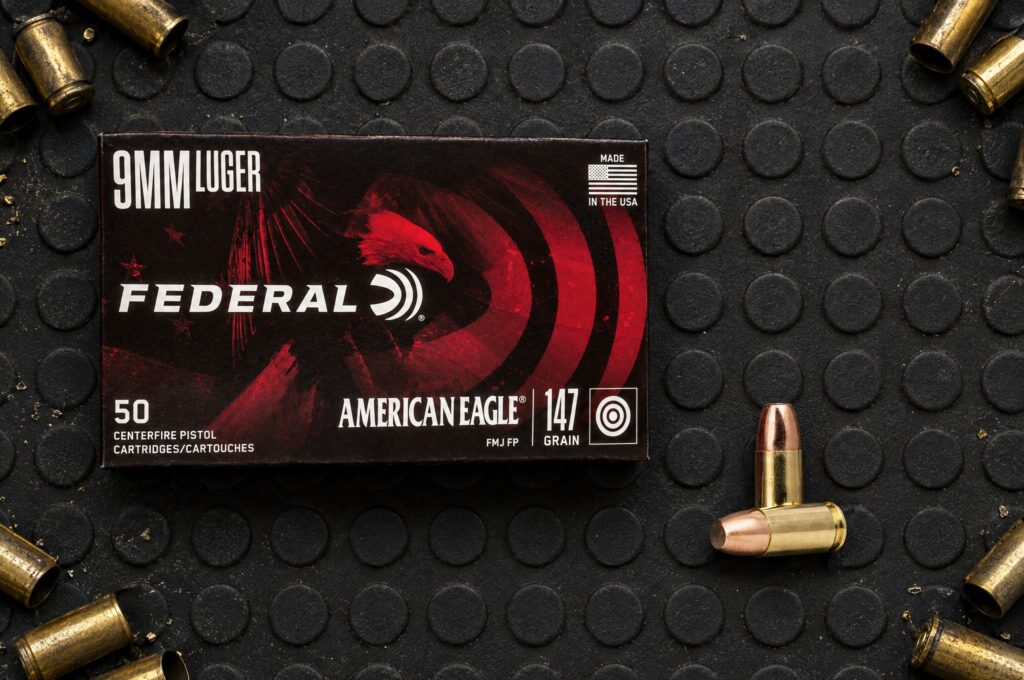
Federal American Eagle 115 vs 124: buy the 115 gr for the most data and the lowest SD we logged, and the 124 gr when you want your practice bullet weight to match a 124 gr carry load.
For carry practice, the 124 gr matches the weight of many defensive 9mm loads and the 147 gr matches the heavy ones. Our best 9mm ammo guide ranks American Eagle against the other range loads.
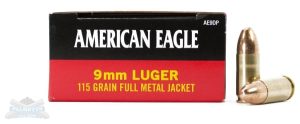
American Eagle .45 ACP: Four Pistols, One Pattern
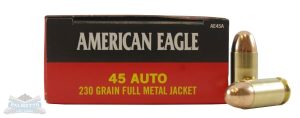
American Eagle .45 ACP 230 gr FMJ ran slower than its 890 fps box from every pistol we shot, from 66 to 147 fps under. It was faster than Syntech .45 from every gun.
| Gun, barrel | AE 230 FMJ fps | vs 890 box | Syntech 230 fps | vs 830 box |
|---|---|---|---|---|
| S&W M&P Shield 45, 3.3 in | 743 | -147 | 740 | -90 |
| SIG P320 Compact, 3.9 in | 800 | -90 | 740 | -90 |
| SIG P320, 4.7 in | 824 | -66 | 791 | -39 |
| 1911, 5 in | 813 | -77 | 766 | -64 |
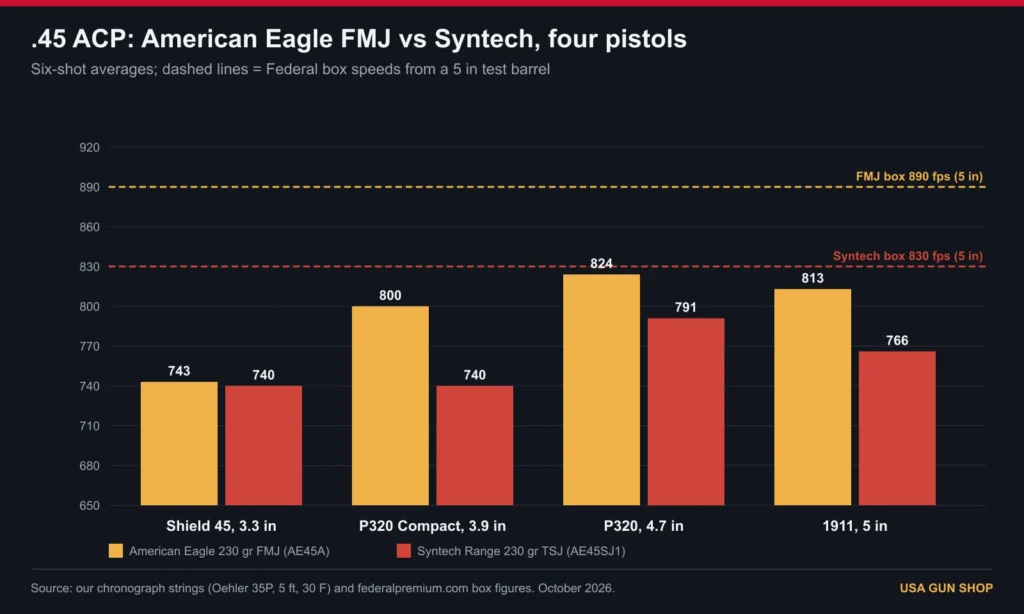
From 3.9 inches up, barrel length mattered less in .45 than in 9mm: the P320 at 4.7 inches beat the 5 inch 1911. Only the 3.3 inch Shield 45 fell well behind, 147 fps under the box.
From a SIG P220R the 230 gr FMJ ran 809 fps, 81 fps under the box, and printed a 2.0 inch group at 25 yards, one group with no shot count logged. From a Ruger P90DC, five five-shot groups averaged 3.17 inches. Our best .45 ACP ammo puts these numbers next to the defensive .45 loads.
American Eagle .380, .38 Special and .40 S&W
The pocket and revolver loads show more spread: the .380 ran 118 fps under its box from a Glock 42 with a 109 fps extreme spread, the widest of any American Eagle or Syntech string we logged.
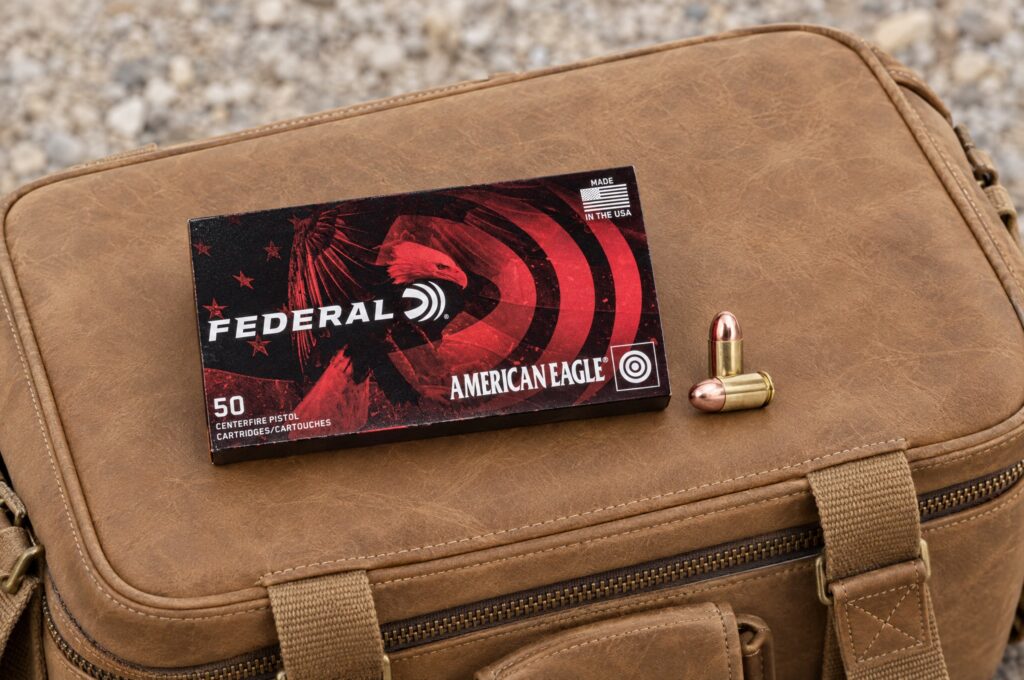
.380 ACP 95 gr FMJ
Federal rates the .380 at 980 fps from a 3.75 inch barrel. From our Glock 42, 10 shots averaged 862 fps. Every 95 gr ball load in that session ran well short of 980 fps, so treat the .380 box speed as a long-barrel number.
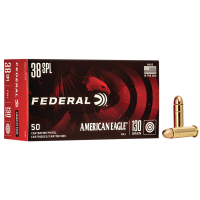
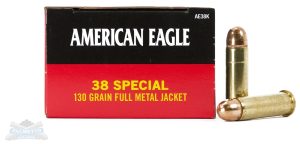
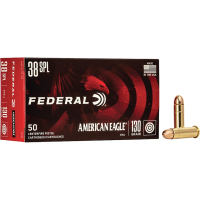
.38 Special 130 gr FMJ
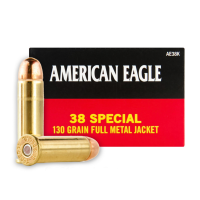
From a K-frame S&W Model 64, 10 shots of the 130 gr FMJ averaged 802 fps, with a 15 fps SD and a 50 fps extreme spread. Federal rates it at 890 fps from a 4 inch vented test barrel. The 158 gr American Eagle .38 is a lead round nose, not an FMJ.
Our .38 Special ammo guide covers defensive .38 loads for the same revolvers.
.40 S&W
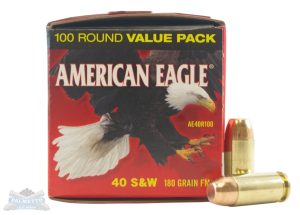
From an S&W M&P40, five five-shot groups of the 165 gr FMJ averaged 3.05 inches at 25 yards. The 165 gr Syntech from the same pistol averaged 2.78 inches. Federal still lists 155, 165 and 180 gr .40 loads; the card below tracks the 180 gr.
How Consistent Is American Eagle Ammo?
Very consistent from handguns. Across the 11 strings that report a standard deviation, handgun SD ran from 7 to 26 fps, and the three American Eagle FMJ handgun strings with an SD came in at 7 to 15 fps.
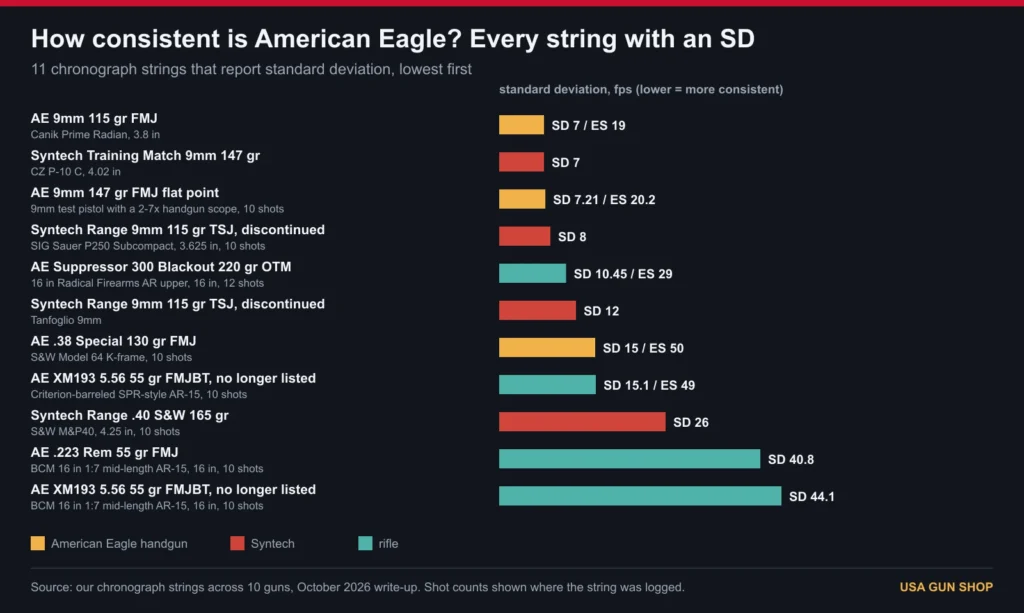
Standard deviation measures shot-to-shot speed variation; extreme spread is the gap between the fastest and slowest round. For practice ammo, an SD under 15 fps is excellent, and it means your point of impact will not wander at 25 yards.
Two strings stand out. The .380 from the Glock 42 had a 109 fps extreme spread over 10 shots, the widest of any American Eagle or Syntech string we logged. The 165 gr Syntech .40 had a 26 fps SD, high for Syntech.
All three 300 Blackout figures in this table come from the same 12 shots; we dropped two readings of 829 and 835 fps as chronograph errors.
| Load | Gun | Avg fps | SD | ES | Shots |
|---|---|---|---|---|---|
| AE 9mm 115 gr FMJ | Canik Prime Radian | 1,186 | 7 | 19 | n/a |
| Syntech Training Match 9mm 147 gr | CZ P-10 C | 992 | 7 | n/a | n/a |
| AE 9mm 147 gr FMJ flat point | 9mm test pistol with a 2-7x handgun scope | 880 | 7.21 | 20.2 | 10 |
| Syntech Range 9mm 115 gr TSJ, discontinued | SIG Sauer P250 Subcompact | 1,098 | 8 | n/a | 10 |
| AE Suppressor 300 Blackout 220 gr OTM | 16 in Radical Firearms AR upper | 1,046 | 10.45 | 29 | 12 |
| Syntech Range 9mm 115 gr TSJ, discontinued | Tanfoglio 9mm | 1,115 | 12 | n/a | n/a |
| AE .38 Special 130 gr FMJ | S&W Model 64 K-frame | 802 | 15 | 50 | 10 |
| AE XM193 5.56 55 gr FMJBT, no longer listed | Criterion-barreled SPR-style AR-15 | 3,184 | 15.1 | 49 | 10 |
| Syntech Range .40 S&W 165 gr | S&W M&P40 | 1,072 | 26 | n/a | 10 |
| AE .223 Rem 55 gr FMJ | BCM 16 in 1:7 mid-length AR-15 | 2,989 | 40.8 | n/a | 10 |
| AE XM193 5.56 55 gr FMJBT, no longer listed | BCM 16 in 1:7 mid-length AR-15 | 3,133 | 44.1 | n/a | 10 |
| Syntech PCC 9mm 130 gr | Ruger PC Carbine | 1,156 | n/a | 11 | 5 |
| Syntech PCC 9mm 130 gr | S&W M&P C.O.R.E. 9mm | 1,043 | n/a | 19 | 5 |
| Syntech PCC 9mm 130 gr | S&W M&P9 Standard | 993 | n/a | 3 | 5 |
| AE .380 95 gr FMJ | Glock 42 | 862 | n/a | 109 | 10 |
Every group we shot
| Load | Gun | Distance | Groups | Average |
|---|---|---|---|---|
| AE .223 Rem 55 gr FMJ | BCM 16 in 1:7 mid-length AR-15 | 65 yd | one group of 10 shots | 1.971 in |
| Syntech Range .40 S&W 165 gr | S&W M&P40 | 25 yd | five groups of 5 shots | 2.78 in |
| AE .40 S&W 165 gr FMJ | S&W M&P40 | 25 yd | five groups of 5 shots | 3.05 in |
| Syntech Action Pistol .40 S&W 205 gr | Para Ordnance .40 1911 | 25 yd | five groups of 10 shots | 4.04 in |
| Syntech Range .45 ACP 230 gr | SIG P220R | 25 yd | one group, shot count not logged | 1.7 in |
| AE .45 ACP 230 gr FMJ | SIG P220R | 25 yd | one group, shot count not logged | 2 in |
| Syntech Range .45 ACP 230 gr | Kimber Custom II | 25 yd | one group, shot count not logged | 2 in |
| Syntech Action Pistol .45 ACP 220 gr | S&W M&P45 Standard | 25 yd | one group of 5 shots | 2.24 in |
| Syntech Range .45 ACP 230 gr | Ruger P90DC | 25 yd | five groups of 5 shots | 2.35 in |
| Syntech Range .45 ACP 230 gr | S&W M&P45 Standard | 25 yd | one group of 5 shots | 3.1 in |
| AE .45 ACP 230 gr FMJ | Ruger P90DC | 25 yd | five groups of 5 shots | 3.17 in |
| AE Suppressor 300 Blackout 220 gr OTM | 16 in Radical Firearms AR upper | not logged | groups, count and distance not logged | 2.5 MOA |
| AE XM193 5.56 55 gr FMJBT, no longer listed | BCM 16 in 1:7 mid-length AR-15 | 65 yd | one group of 10 shots | 1.875 in |
| AE XM193 5.56 55 gr FMJBT, no longer listed | Criterion-barreled SPR-style AR-15 | 100 yd | six groups of 5 shots | 2.63 MOA |
| Syntech Range 9mm 115 gr TSJ, discontinued | SIG Sauer P250 Subcompact | 15 yd | five groups of 5 shots | 1.58 in |
| Syntech PCC 9mm 130 gr | Ruger PC Carbine | 25 yd | two groups of 5 shots | 0.87 in |
| Syntech Action Pistol 9mm 150 gr | Ruger PC Carbine | 25 yd | one group of 5 shots | 1.23 in |
| Syntech Range 9mm 115 gr TSJ, discontinued | Ruger PC Carbine | 25 yd | one group of 5 shots | 1.37 in |
| AE 9mm 124 gr FMJ | Beretta 92 with Wilson Combat work | 25 yd | one group, shot count not logged | 1.4 in |
| Syntech PCC 9mm 130 gr | S&W M&P C.O.R.E. 9mm | 25 yd | two groups of 5 shots | 2.12 in |
| AE 9mm 147 gr FMJ flat point | 9mm test pistol with a 2-7x handgun scope | 25 yd | four groups of 5 shots | 2.15 in |
| Syntech Action Pistol 9mm 150 gr | S&W M&P9 Standard | 25 yd | one group of 5 shots | 2.41 in |
| Syntech Training Match 9mm 147 gr | CZ P-10 C | 25 yd | five groups of 5 shots | 2.45 in |
| Syntech Action Pistol 9mm 150 gr | Para Ordnance 9mm 1911 | 25 yd | five groups of 10 shots | 2.67 in |
| Syntech PCC 9mm 130 gr | S&W M&P9 Standard | 25 yd | two groups of 5 shots | 2.74 in |
| Syntech Range 9mm 115 gr TSJ, discontinued | S&W M&P9 Standard | 25 yd | one group of 5 shots | 2.76 in |
| Syntech Action Pistol 9mm 150 gr | S&W M&P C.O.R.E. 9mm | 25 yd | one group of 5 shots | 2.9 in |
| Syntech Range 9mm 115 gr TSJ, discontinued | S&W M&P C.O.R.E. 9mm | 25 yd | one group of 5 shots | 3.7 in |
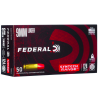
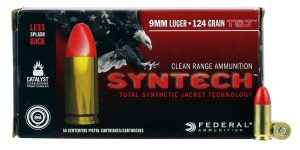
Syntech vs FMJ: Groups, Fouling and Barrel Heat
American Eagle Syntech grouped tighter than FMJ in all three same-gun pairs we shot and ran cooler in our Tanfoglio. It is slower than the FMJ in .45, so it is a different load, not a cleaner copy.
Syntech replaces the copper jacket with a polymer Total Synthetic Jacket, or TSJ, over a lead core. Federal says the coating “prevents harsh metal-on-metal contact between the bullet and bore, eliminating copper and lead fouling”, and pairs it with its Catalyst lead-free primer. Federal says Syntech “Significantly reduces the required frequency of cleaning”.
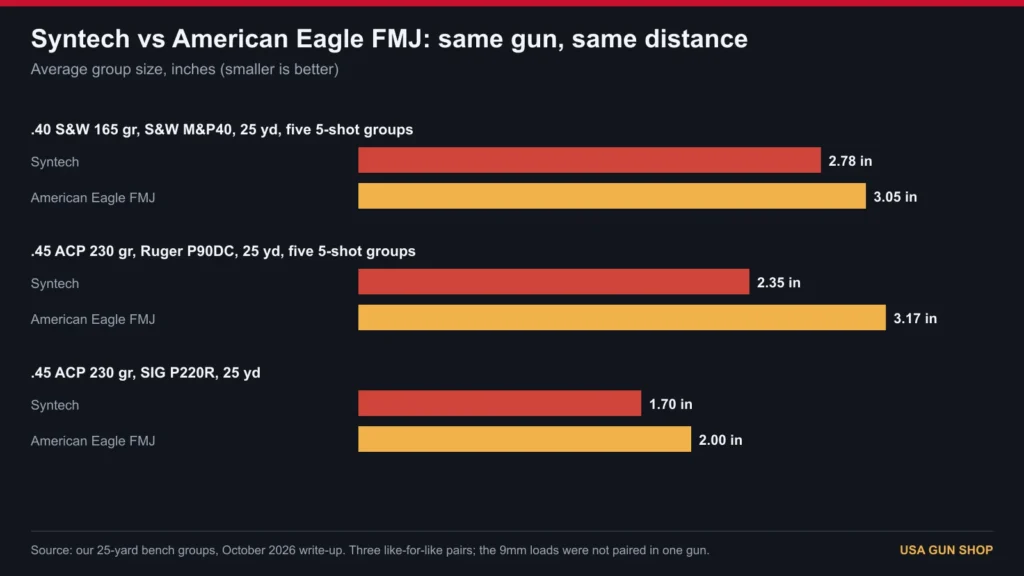
From the M&P40, Syntech averaged 2.78 inches against 3.05 for the FMJ. From the Ruger P90DC the gap was 0.82 inches, and from the SIG P220R it was 0.30 inches. Federal introduced Syntech in 2016.
Fouling and barrel heat
After 50 rounds each through the .40 and .45, our Syntech and FMJ patches were close, one cleaner each way, with no polymer buildup, and a jag and two dry patches did the job. In a Tanfoglio 9mm, the now-discontinued 115 gr Syntech left much less fouling than 147 gr FMJ, and the FMJ barrel was too hot to touch after about 30 rounds; the Syntech barrel was not.
That Tanfoglio fed 100 rounds of each with one stovepipe apiece under rapid fire. The 115 gr Syntech there averaged 1,115 fps with an SD no higher than 12. Federal also says Syntech has “Less perceived recoil” and cuts splash-back on steel targets.
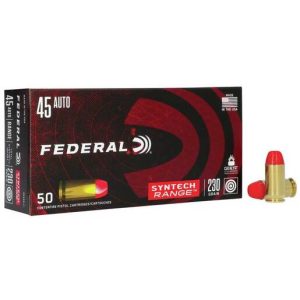
Syntech .45 is the slower load: our four-pistol strings ran 740 to 791 fps against 743 to 824 for the FMJ. From an M&P45 it ran 781 fps, and from a Kimber Custom II it ran 799 fps with a 2.0 inch group, one group with no shot count logged.

Syntech Action Pistol and power factor
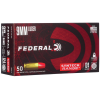
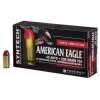
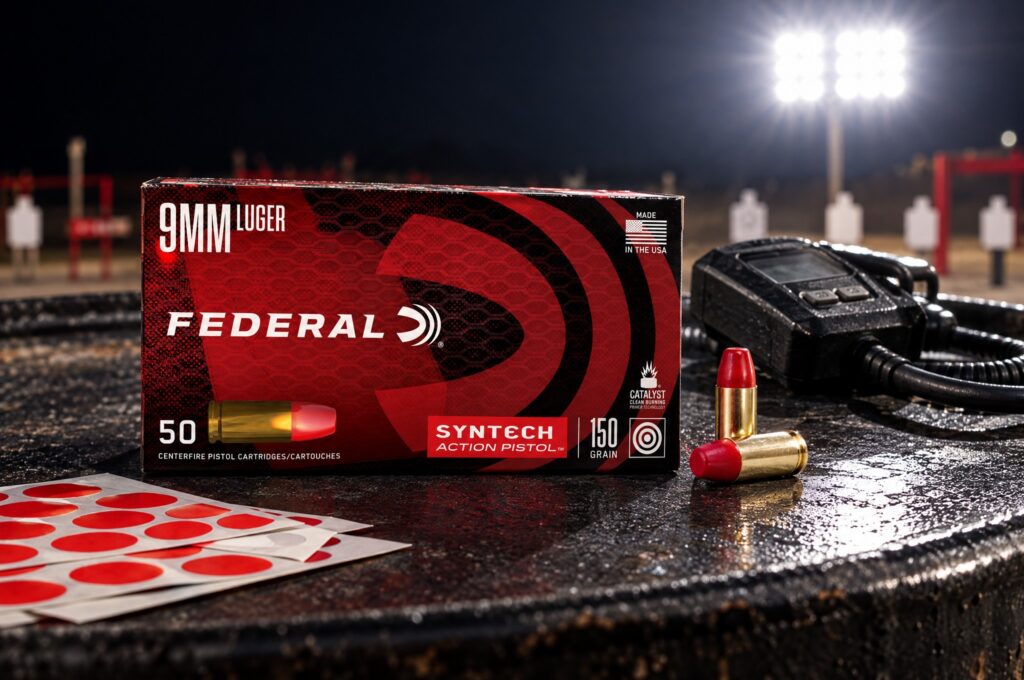
Syntech Action Pistol is loaded for USPSA and IDPA power factor, bullet weight times velocity divided by 1,000. The 150 gr 9mm needs 125 for Minor. From a Glock 19 it ran 870 fps, a 130.5 power factor, and from an M&P9 it ran 895 fps, 134.3. At 890 fps on the box it is a subsonic load.
In a Ransom Rest, 50 shots of the 9mm load spread only 25 fps and five 10-shot groups averaged 2.67 inches at 25 yards. From a Ruger PC Carbine it printed 1.23 inches. Federal says the line has “as much as 14 percent less muzzle rise than comparable target loads.”
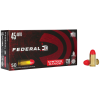
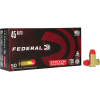
The .45 Action Pistol 220 gr ran 755 fps from the M&P45, a 166.0 power factor, just over the 165 Major floor, and grouped 2.24 inches. Our competition ammo guide covers match loads in more depth.
Syntech PCC and Training Match
Syntech PCC is a 130 gr 9mm rated from a 16 inch barrel. From our Ruger PC Carbine it averaged 1,156 fps over five shots and grouped 0.87 inches at 25 yards; from a 4.25 inch M&P9 it ran 993 fps.
Syntech Training Match is built to shoot like HST. From a CZ P-10 C, the 147 gr averaged 992 fps with a 7 fps SD, and five groups averaged 2.45 inches at 25 yards.
Is American Eagle Syntech worth it over FMJ? For steel targets and indoor ranges, yes. Syntech Defense is the one defensive Syntech load, a segmenting hollow point; for carry, read our Federal HST review first.
American Eagle IRT and Lead Free
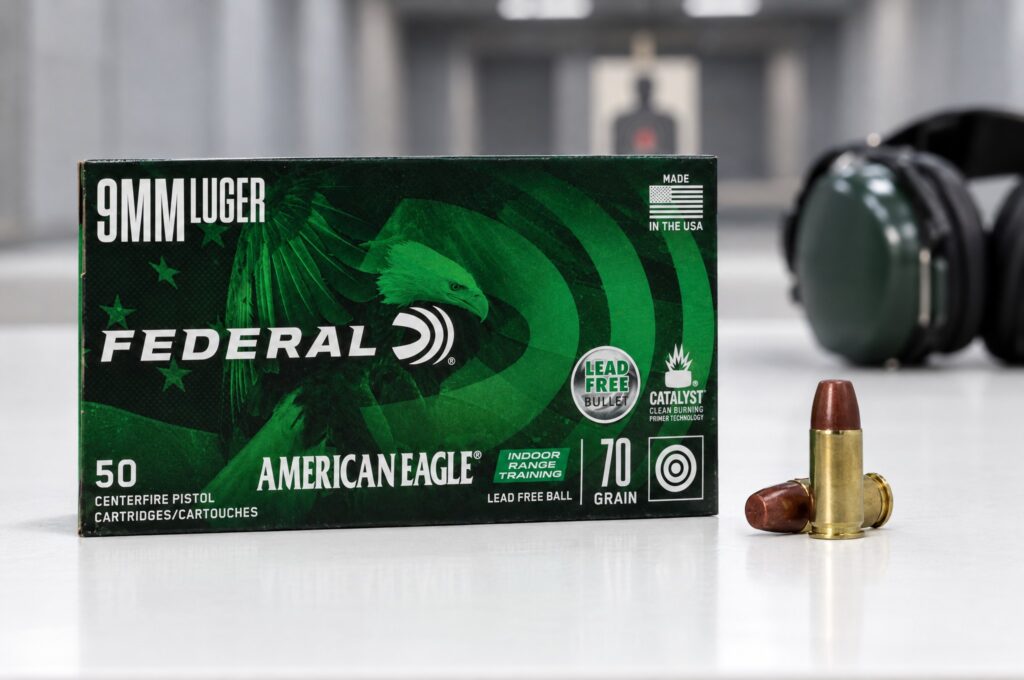
American Eagle Indoor Range Training, or IRT, is the indoor line: the TMJ version covers the lead core in copper and uses a toxic metal-free primer, and IRT Lead Free removes lead from bullet and primer.
Federal says IRT “has a reduced-lead bullet fully encapsulated in copper for safer, economical training.” and that it “is the ballistic equivalent of self-defense rounds”. In our three-Glock test the 124 gr IRT ran 990, 1,041 and 1,083 fps, 37 to 130 fps under its 1,120 fps box.
IRT Lead Free uses light bullets, so it is not a ballistic match: the 9mm is a 70 gr bullet at 1,625 fps, and the .45 is 137 gr at 1,200 fps. Federal says its Catalyst primer has “Identical ballistics as conventional lead styphnate primers with the same reliability and shelf life”.
Federal calls IRT Lead Free “More reasonably priced than other lead-free options”. We have no chronograph data on the Lead Free loads, so we list Federal’s figures only.
Is American Eagle Federal’s Law Enforcement Training Ammo?
Partly. Federal lists American Eagle and American Eagle IRT on its law enforcement site among its training and duty loads, and it builds Syntech Training Match to land with its Tactical HST duty ammunition.
On that site Federal writes that “American Eagle was designed for the high volume shooter with Full Metal Jacket bullets and top quality components.” and that you will find “reliable-feeding, accurate and full-power loads in the most popular law enforcement calibers.” It describes IRT as carrying a toxic metal-free primer “and is the ballistic equivalent of duty rounds for realistic training.”
Federal’s retail page says Syntech Training Match offers “the same velocity, trajectory and point of impact as equivalent Federal Premium Personal Defense HST and Tactical HST duty ammunition”. From a Springfield Armory Hellcat Pro, the 124 gr Training Match ran 1,178.5 fps against 1,150.6 for the 124 gr HST, and the two landed very close together at 10 yards.
Federal does not say any agency issues American Eagle, so we do not either. Our Federal HST review and HST vs Gold Dot test cover the duty load itself.
Brass, Primers and Reloading
American Eagle uses Federal brass cases with a single central flash hole, the Boxer layout that standard reloading dies expect. Federal calls its rifle cases reloadable brass, and its handgun product pages list Federal primers and brass.
Federal says the rifle loads “feature quality bullets, reloadable brass cases and dependable primers.” Federal also says that if stored properly, “loaded ammunition and reloading components have a 10-year shelf life.”
Is American Eagle plated? No: its centerfire FMJ is a copper jacket over a lead core, which Federal lists as full metal jacket. Plated bullets appear only among its 22 LR loads.
Syntech and IRT Lead Free use the Catalyst lead-free primer. Federal says it is non-hygroscopic, unlike DDNP lead-free primers, and claims the same reliability and shelf life as a lead styphnate primer.
American Eagle Rifle Ammo: .223, 5.56 and 300 Blackout
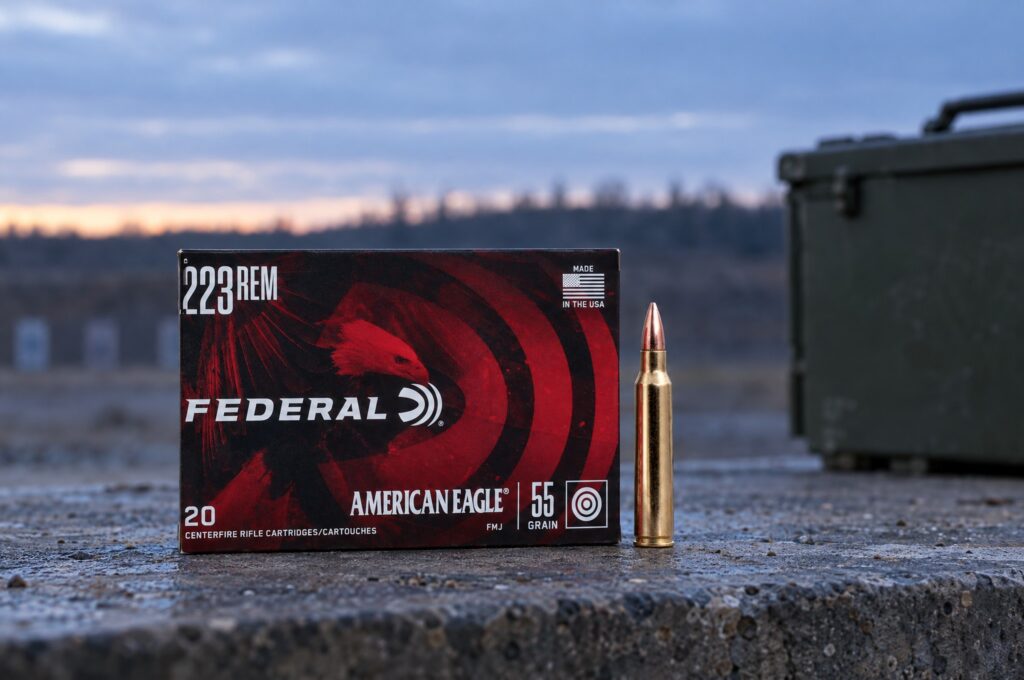
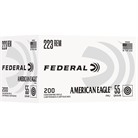
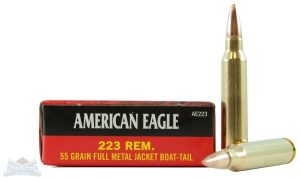
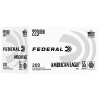
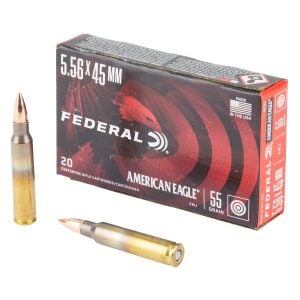
American Eagle .223 is a true .223 Remington load, and it ran 251 fps under its box from a 16 inch barrel. XM193 5.56 ran 144 fps faster from the same rifle, so buy 5.56 for a 5.56 AR.
| Load | Rifle | Box fps | Our fps | SD | Groups |
|---|---|---|---|---|---|
| AE223 .223 Rem 55 gr FMJ | BCM 16 in, 1:7 | 3,240 | 2,989 | 40.8 | 1.97 in at 65 yd, 10 shots |
| XM193 5.56 55 gr FMJBT, no longer listed | BCM 16 in, 1:7 | 3,165 | 3,133 | 44.1 | 1.88 in at 65 yd, 10 shots |
| XM193 5.56 55 gr FMJBT, no longer listed | Criterion SPR build | 3,165 | 3,184 | 15.1 | 2.63 MOA average, six 5-shot groups at 100 yd |
| Suppressor 300 BLK 220 gr OTM | 16 in AR upper, 12 shots | 1,000 | 1,046 | 10.45 | about 2.5 MOA, distance and shot count not logged |
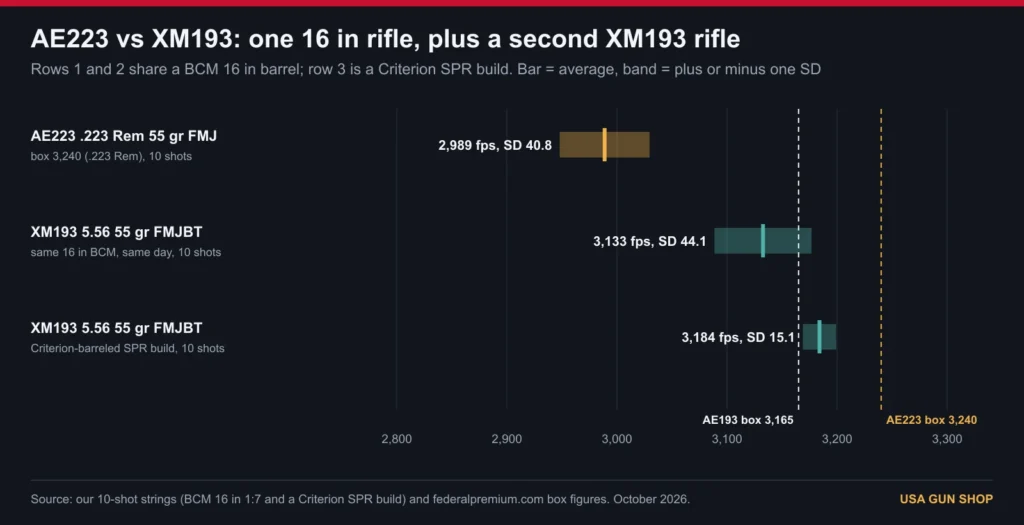
Federal’s site no longer lists an XM193 part. Its current American Eagle 5.56 load is AE193, a 55 gr FMJ boat-tail rated 3,165 fps, the same box speed Federal printed for XM193. Federal’s FAQ says “You can shoot 223 Rem. ammunition in a 5.56x45mm chamber, but not the other way around due to these pressure variances.”
The Criterion-barreled build held a 15.1 fps SD with XM193, and six five-shot groups at 100 yards averaged 2.63 MOA. That is ball accuracy, not match accuracy. Our AR-15 ammo guide compares it with the other AR loads.
The American Eagle Suppressor 300 Blackout 220 gr OTM is the subsonic load. From a 16 inch upper, 12 good shots averaged 1,046 fps, 46 over the box, with a 29 fps spread and a 10.45 fps SD; we dropped two readings of 829 and 835 fps as chronograph errors.
Federal’s current American Eagle .223 list also has a 62 gr FMJ boat-tail and a 75 gr TMJ, and no part Federal names XM855 or green tip. We have no chronograph or group data for those two, or for the American Eagle 7.62x39, .308, 6.5 Creedmoor, 30-06, .450 Bushmaster, 30 Carbine or 22 LR loads, so we give Federal’s figures and do not rate them. Our 7.62x39 ammo guide and .308 ammo guide cover those calibers.
| Cartridge | Load | Box fps | Our data |
|---|---|---|---|
| 223 Rem | 75 gr Total Metal Jacket | 2,775 | Federal figure only |
| 223 Rem | 62 gr Full Metal Jacket Boat-Tail | 3,020 | Federal figure only |
| 7.62x39 | 124 gr Full Metal Jacket | 2,350 | Federal figure only |
| 308 Win | 150 gr Full Metal Jacket Boat-Tail | 2,820 | Federal figure only |
| 6.5 Creedmoor | 120 gr Open Tip Match | 2,900 | Federal figure only |
| 30-06 Springfield | 150 gr Full Metal Jacket | 2,740 | Federal figure only |
| 450 Bushmaster | 260 gr Full Metal Jacket Round Nose | 2,040 | Federal figure only |
| 30 Carbine | 110 gr Full Metal Jacket | 1,990 | Federal figure only |
| 22 LR | 38 gr Copper Plated Hollow Point | 1,260 | Federal figure only |

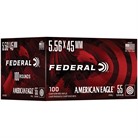
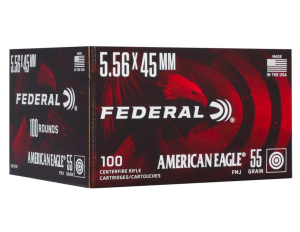
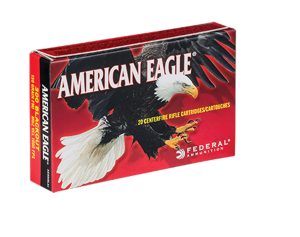
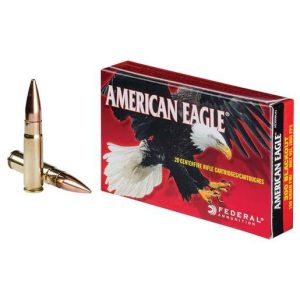
American Eagle vs Blazer Brass, Speer Lawman and Winchester
Against rivals shot from the same guns, American Eagle was the fastest .45 load from every gun, split the 9mm results on speed and ran fourth of the five .380 loads in our table.
American Eagle 115 gr 9mm was faster than Blazer Brass from the Glock 19 and 34 but slower from the Glock 43, and slower than Speer Lawman 115 from the Glock 43 and 19.
| 9mm load | Glock 43 | Glock 19 | Glock 34 |
|---|---|---|---|
| American Eagle 115 gr FMJ | 1,026 | 1,146 | 1,206 |
| Blazer Brass 115 gr FMJ | 1,050 | 1,104 | 1,156 |
| Blazer Aluminum 115 gr FMJ | 1,101 | 1,142 | 1,181 |
| Speer Lawman 115 gr TMJ | 1,121 | 1,175 | 1,190 |
| Speer Lawman 124 gr TMJ | 1,010 | 1,085 | 1,103 |
| .45 ACP load | 1911 | P320 | P320 Compact | Shield 45 |
|---|---|---|---|---|
| American Eagle 230 gr FMJ | 813 | 824 | 800 | 743 |
| Blazer Brass 230 gr FMJ | 735 | 749 | 700 | 667 |
| Blazer Aluminum 230 gr FMJ | 720 | 723 | 711 | 665 |
| Black Hills 230 gr FMJ | 778 | 750 | 756 | 721 |
| .380 load, Glock 42, 10 shots | Avg fps | ES |
|---|---|---|
| American Eagle 95 gr FMJ | 862 | 109 |
| Blazer Brass 95 gr FMJ | 872 | 49 |
| Winchester White Box 95 gr FMJ-FP | 910 | 34 |
| PMC 90 gr FMJ | 889 | 69 |
| Speer Lawman 95 gr TMJ | 799 | 26 |
In .380, Winchester White Box was the fastest load in our table at 910 fps with a 34 fps spread, and PMC 90 gr ran 889 fps with a 69 fps spread. Speer Lawman had the tightest spread, 26 fps, but was the slowest. American Eagle ran 862 fps with a 109 fps spread.
From the Canik, American Eagle 115 gr ran 1,186 fps with a 7 fps SD, against 1,112 fps and 20 fps SD for AAC 115 gr and 1,046 fps and 11 fps SD for Blazer Brass 124 gr.
Federal Champion is another Federal range line; Federal calls it affordable and says it has reloadable brass, quality target bullets and consistent primers and propellant. We have no Champion strings from the same guns, so we do not rank it. Our Federal vs Winchester page compares the two companies.
American Eagle vs Federal HST
They do different jobs. American Eagle FMJ is for practice; HST is the hollow point Federal builds for carry and duty. Train with the same bullet weight as your HST load, or with Syntech Training Match, and read our Federal HST review and Critical Defense review for the carry side.
What Federal Dropped From the Line
Two American Eagle family loads are on Federal’s discontinued list today: the 115 gr Syntech Range 9mm and the 5.7x28 40 gr FMJ. Six Varmint and Predator loads on American Eagle part numbers are no longer listed.
The 115 gr Syntech Range was the original Syntech 9mm, and much of our Syntech 9mm data comes from it; Federal now sells a 124 gr Syntech Range 9mm rated 1,110 fps. Federal’s 2026 catalog prints 1,050 fps for that 124 gr load, so the two Federal figures disagree.
Federal no longer lists the American Eagle 5.7x28, so treat any box you find as old stock; our ammo buying guide covers how to shop for range ammo.
Which American Eagle Load for Which Gun
Match the load to the barrel and the job. Short pistols lose the most speed, carbines gain it, and competition shooters should pick by power factor, not by the box.
| Gun | American Eagle load | Why |
|---|---|---|
| Pocket .380, Glock 42 class | .380 95 gr FMJ | Ran 862 fps from our Glock 42; expect less than the box |
| Compact 9mm, Glock 43 to Glock 19 | 9mm 124 gr FMJ or 115 gr FMJ | 115 gr ran 1,026 to 1,146 fps |
| Full-size 9mm and 1911 9mm | 9mm 115 gr FMJ | Beat the box from the Glock 34 |
| USPSA and IDPA 9mm | Syntech Action Pistol 150 gr | Made Minor from a Glock 19 at 130.5 |
| 9mm carbine | Syntech PCC 130 gr | 1,156 fps and 0.87 in groups from a PC Carbine |
| .45 pistols of any length | .45 230 gr FMJ | 743 to 824 fps from five pistols |
| AR-15 in 5.56 | AE193 5.56 55 gr | Same 3,165 fps box as XM193, which ran 144 fps faster than AE223 in one rifle |
| Indoor range with lead limits | IRT Lead Free | Lead-free bullet and primer |
Carry a 9mm Glock? Our concealed carry ammo picks and PDX1 Defender review cover the defensive loads to pair with this practice ammo.
Federal American Eagle Variants
These are the American Eagle and Syntech loads we would shortlist, with Federal’s box speed and box count. Every one is current on federalpremium.com, and the 9mm 115, .45 and 5.56 also come in 100-round packs.
Who Should NOT Buy American Eagle
American Eagle is solid range ammunition with a huge lineup. It is the wrong buy for four kinds of shooter, and each of them has a better choice on our site.
- Anyone shopping for carry ammo. FMJ does not expand; buy Federal HST or Speer Gold Dot for the gun you carry.
- Pocket .380 owners who want box speed. Our Glock 42 ran 118 fps slow with a 109 fps spread; read our .380 ammo guide.
- Precision rifle shooters. The XM193 averaged 2.63 MOA at 100 yards; buy match ammo from our AR-15 ammo guide.
- Shooters who only want the lowest price. American Eagle pays for brass and consistency; compare its card with the range loads in our 9mm ammo guide.
Price and Where to Buy
Per round, 9mm is the cheapest American Eagle handgun load on our cards, and .38 Special and .45 cost the most. On October 16, 2026 our .45 card cost about twice the most expensive American Eagle 9mm FMJ card.
Prices on the cards update from our dealers, and we print none in this review. Where your card shows a 100-round box, compare it per round with the 50-round box before you buy.
The bulk 9mm rail near the top of this page shows larger packs from several stores, and the ammo buying guide compares box and bulk buying.
Federal American Eagle Ammo Review: The Verdict
Federal American Eagle is very good practice ammunition: consistent, accurate enough for any pistol and made in reloadable brass. Buy the 9mm and 5.56 by the case, and expect the .45 and .380 to run under the box.
Is American Eagle ammo good? Yes. The 9mm 115 gr held a 7 fps SD, American Eagle FMJ grouped 1.4 to 3.17 inches at 25 yards from our pistols, and Syntech shot tighter still. The weak spot is the box speed in .45 and .380.
So is American Eagle ammo good value? Yes: it is consistent brass-cased ball from a major American maker, worth its price as long as you judge it by our chronograph and not by the box. Our Federal HST review covers Federal’s defensive line, and our Underwood review covers a premium defensive load from another maker.
Federal American Eagle FAQ
Short answers, from our data and Federal’s own pages.
Is Federal American Eagle ammo good?
Yes, for practice and matches. Our 9mm 115 gr held a 7 fps SD and American Eagle FMJ pistol groups ran 1.4 to 3.17 inches at 25 yards. It runs under the box from short barrels, and the .45 ran 66 to 147 fps under it from five pistols.
How consistent is American Eagle 9mm?
Very. The 115 gr held a 7 fps SD and 19 fps extreme spread from a Canik, and the 147 gr held a 7.21 fps SD over 10 shots.
Is American Eagle the same as Federal law enforcement training ammo?
Federal lists American Eagle and American Eagle IRT on its law enforcement site as training loads, and builds Syntech Training Match to match Tactical HST. It does not say any agency issues American Eagle.
Is Syntech cleaner than FMJ?
Syntech has no copper jacket, so it leaves no copper fouling. In our Tanfoglio it left much less fouling than FMJ and ran cooler; in our .40 and .45 test the patches were close, one cleaner each way. It also grouped tighter in all three same-gun pairs we shot.
Is American Eagle ammo reloadable?
Yes. It uses Federal brass cases with Boxer primers, and Federal calls its rifle cases reloadable brass. Syntech and IRT Lead Free use the Catalyst lead-free primer in the same kind of brass case.
Is American Eagle IRT lead-free?
Only the IRT Lead Free version. Standard IRT has a lead core fully covered in copper and a toxic metal-free primer; IRT Lead Free uses a lead-free bullet and the Catalyst lead-free primer.
Is American Eagle 5.56 the same as XM193?
Federal no longer lists an XM193 part. Its current American Eagle 5.56 is AE193, a 55 gr FMJ boat-tail rated 3,165 fps. American Eagle .223 is a separate, slower load: XM193 ran 144 fps faster from the same rifle.
How fast is American Eagle 9mm from a short barrel?
The 115 gr ran 1,026 fps from a Glock 43, 154 fps under its 1,180 fps box, and 1,146 fps from a Glock 19. Of the three Glocks only the 5.3 inch Glock 34 beat it; a compensated 3.8 inch Canik ran 6 fps over.
Where is American Eagle ammo made?
Federal makes it; the company began in Anoka, Minnesota, in 1922, and the boxes say made in the USA.
Federal American Eagle vs Champion: which should I buy?
Federal sells Champion as an affordable range line with reloadable brass. We have chronograph data for American Eagle, not Champion, so we do not pick between them; American Eagle FMJ handgun SD ran 7 to 15 fps in our strings. Compare the cards for price.
3,984+ Gun & Ammo Deals
Updated daily from 200+ top retailers. Filter by category, caliber, action type, and price.
Related Guides