

Last updated October 2026
Some of the links below are affiliate links, meaning at no additional cost to you, we may earn a commission if you click through and make a purchase.
- Treat every gun as loaded
- Point the muzzle in a safe direction
- Keep your finger off the trigger until you’re ready to shoot
- Know your target and what’s beyond
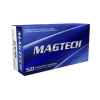
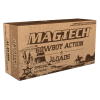
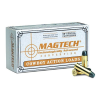
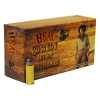
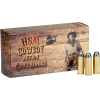
Yes, .44-40 ammo is still made. Magtech, HSM, Hornady, Black Hills, Fiocchi, Choice, Grizzly and Buffalo Bore all had .44-40 Winchester ammo at our dealers when we checked on October 1, 2026, and our price cards showed 50-round boxes as low as $42.22.
That’s 84 cents a round. Nearly every box on the shelf is a slow lead-bullet load built for cowboy action matches, which is fine for steel targets and no help to a deer hunter.
The trap with .44-40 ammo isn’t a hot load. We found none sold as +P or above the SAAMI limit. The trap is fit and power: one cartridge, barrels cut to two different sizes, and two very different speed classes sold under the same name.
This guide covers who makes .44-40 ammo, what it costs per round, what’s safe in which gun, and why old boxes marked High Velocity stay out of revolvers. New to buying online? Our ammo buying guide covers the basics.
Quick answer
For a modern rifle or revolver, buy Magtech or HSM 200-grain lead loads in boxes of 50. They’re the cheapest .44-40 ammo our dealers carry. For deer, you need one of the faster loads, and for a revolver made before 1900 you need a gunsmith and black powder, not a box off the shelf.
- Price on October 1, 2026: $0.84 to $1.68 a round for lead cowboy loads, $2.45 and up for Buffalo Bore
- Also sold as: .44-40 Winchester, .44-40 WCF, .44 WCF and .44 Winchester
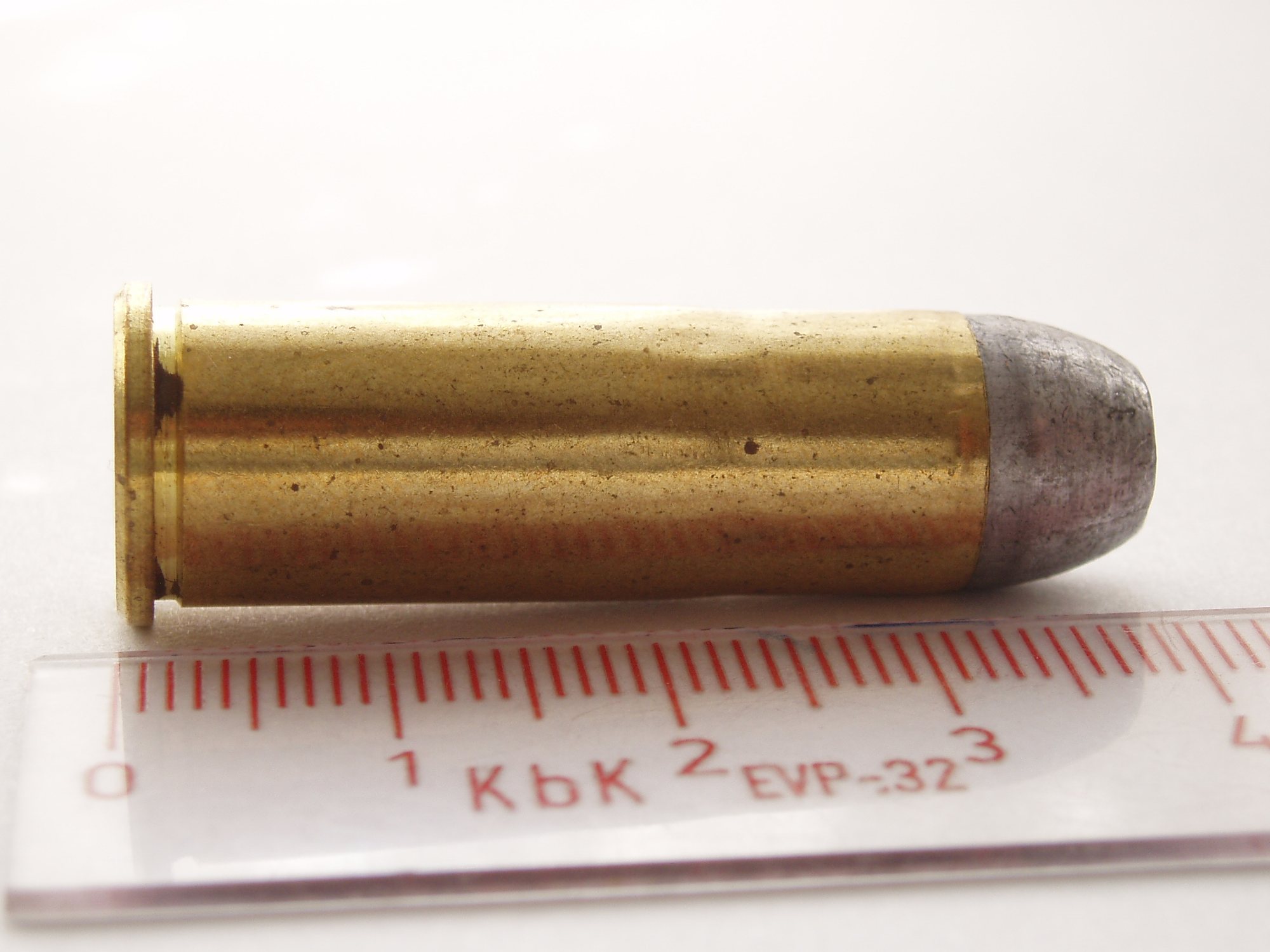
- Bullet: 185 to 225 grains, .427 in. by the standard, in a rimmed case with a slight bottleneck
- Not the same thing: .44 Special, .44 Magnum, .44 Russian and .45 Colt are different cartridges
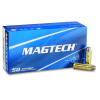
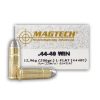
How we tested: Every pick here is ranked against our testing methodology. Minimum round counts, accuracy and reliability protocols, the failures that disqualify a gun.
.44-40 Winchester at a Glance
The .44-40 Winchester is a rimmed, slightly bottlenecked cartridge that Winchester introduced in 1873, firing a 200-grain bullet of .427 inch. SAAMI limits it to 13,000 CUP, lower than the .38-40, the .32-20 and the .45 Colt.
| Spec | .44-40 Winchester |
|---|---|
| Names | .44-40 Winchester, .44-40 WCF, .44 WCF, .44 Winchester, .44 Largo. SAAMI calls it 44-40 Winchester |
| Bullet | 185 to 225 gr, most of them 200. The SAAMI drawing gives .427 in. |
| Rim diameter | .525 in. |
| Barrel | SAAMI groove diameter .4285 in. Real barrels have measured from .424 to .434 in. |
| Case | Rimmed, slight bottleneck, 1.305 in. long, with a thin neck |
| Overall length | 1.540 to 1.592 in. |
| SAAMI pressure limit | 13,000 CUP by crusher, 11,000 psi by transducer |
| Where SAAMI files it | The rifle standard only. The pistol and revolver standard has no entry |
| C.I.P. pressure limit | 1,100 bar by transducer |
| Rifling | 6 grooves, 1 turn in 36 in. by the SAAMI drawing |
| Introduced | 1873, with the Winchester Model 1873 |
| Guns | Winchester 1873 and 1892, Marlin 1889 and 1894, Colt Lightning, Colt Single Action Army, Remington 1875, and today’s replicas |
| Status | In production |
.44-40 Ammo: The Good and the Bad
Eight makers had new .44-40 ammo at our dealers in October 2026, from $42.22 for a box of 50, and one box feeds both a rifle and a revolver. The bad news is price, slow target loads and barrels that don’t agree on a size.
Pros
- Eight makers at our dealers
- One box feeds rifle and revolver
- Mild recoil in any gun
- Reloadable, with new brass from Starline
- New guns still chambered for it
Cons
- From 84 cents a round
- Most boxes are slow target loads
- Barrel sizes vary gun to gun
- No Winchester or Remington at our dealers
- Pre-1900 Colts are black powder guns
Table of Contents
Who Still Makes .44-40 Ammo in 2026
Nine makers listed .44-40 Winchester ammo on their own sites in October 2026: Winchester, Hornady, Magtech, HSM, Black Hills, Fiocchi, Buffalo Bore, Grizzly Cartridge and Choice. Eight of them had boxes at our dealers. Winchester was the one that didn’t.
So is 44-40 ammo still made? Yes. The table shows who makes .44-40 ammo and what each maker’s own page listed, with the test barrel beside every velocity where the maker gives one.
| Maker and load | Bullet | Listed velocity | Test barrel | Box |
|---|---|---|---|---|
| Winchester Super-X X4440 | 200 gr Power-Point soft point | 1,190 fps, 629 ft-lb | Not stated | 50 |
| Winchester USA4440CB | 225 gr lead flat nose | 750 fps, 281 ft-lb | Not stated | 50 |
| Hornady Cowboy 9075 | 205 gr swaged lead | 725 fps, 239 ft-lb | 7.5 in. vented | 20 |
| Magtech 4440A | 200 gr lead flat nose | 840 fps, 313 ft-lb | 4 in. vented | 50 |
| Magtech 4440B | 225 gr lead flat nose | 755 fps, 285 ft-lb | 4 in. vented | 50 |
| Magtech 4440C | 200 gr lead flat nose | 725 fps, 232 ft-lb | 4 in. vented | 50 |
| Black Hills Cowboy Action | 200 gr RNFP lead | 800 fps | 5.5 in. | 50 |
| Fiocchi Cowboy Action 4440CA | 210 gr lead flat point | 725 fps | Not stated | 50 |
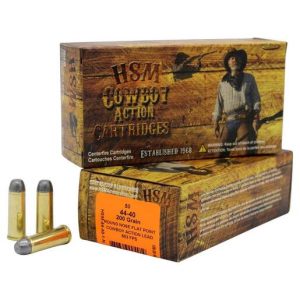
| HSM Cowboy Action | 200 gr RNFP hard lead | Not on the maker’s page | Not stated | 50 |
| Choice | 200 gr RNFP coated lead | 505 fps from 4.5 in., 786 fps from 24 in. | Both stated | 50 |
| Grizzly Cartridge | 200 gr RNFP lead | 1,050 fps, 490 ft-lb | Not stated | 50 |
| Buffalo Bore Heavy | 200 gr hard cast | 1,050 fps, 490 ft-lb | Revolver figure | 20 |
Read the barrel column before you compare. Magtech tests in a 4-inch vented barrel and Hornady in a 7.5-inch one, so their figures are revolver speeds. A rifle adds a couple of hundred feet per second to the same load.
The one jacketed soft point is Winchester’s Super-X, listed at 1,190 fps. None of the dealers in our catalog had it or Winchester’s cowboy load when we checked, so the 44-40 Winchester ammo you can buy today mostly carries a Magtech or HSM label, not Winchester’s.
Some names on older lists weren’t there. We found no current .44-40 listing on Remington’s site, and Ten-X’s site carries no ammunition catalog now. A small shop called Old South also lists a load with 40 grains of black powder, on backorder when we checked.
Two labels deserve a second look. HSM’s page marks its load for rifle use, while dealers sell it as a cowboy action load for both. And Grizzly calls its load a cowboy load, yet lists it at 1,050 fps, well above what the others publish. RNFP on a box means round nose flat point, the lead bullet shape most of these loads share.
What .44-40 Ammo Costs in 2026
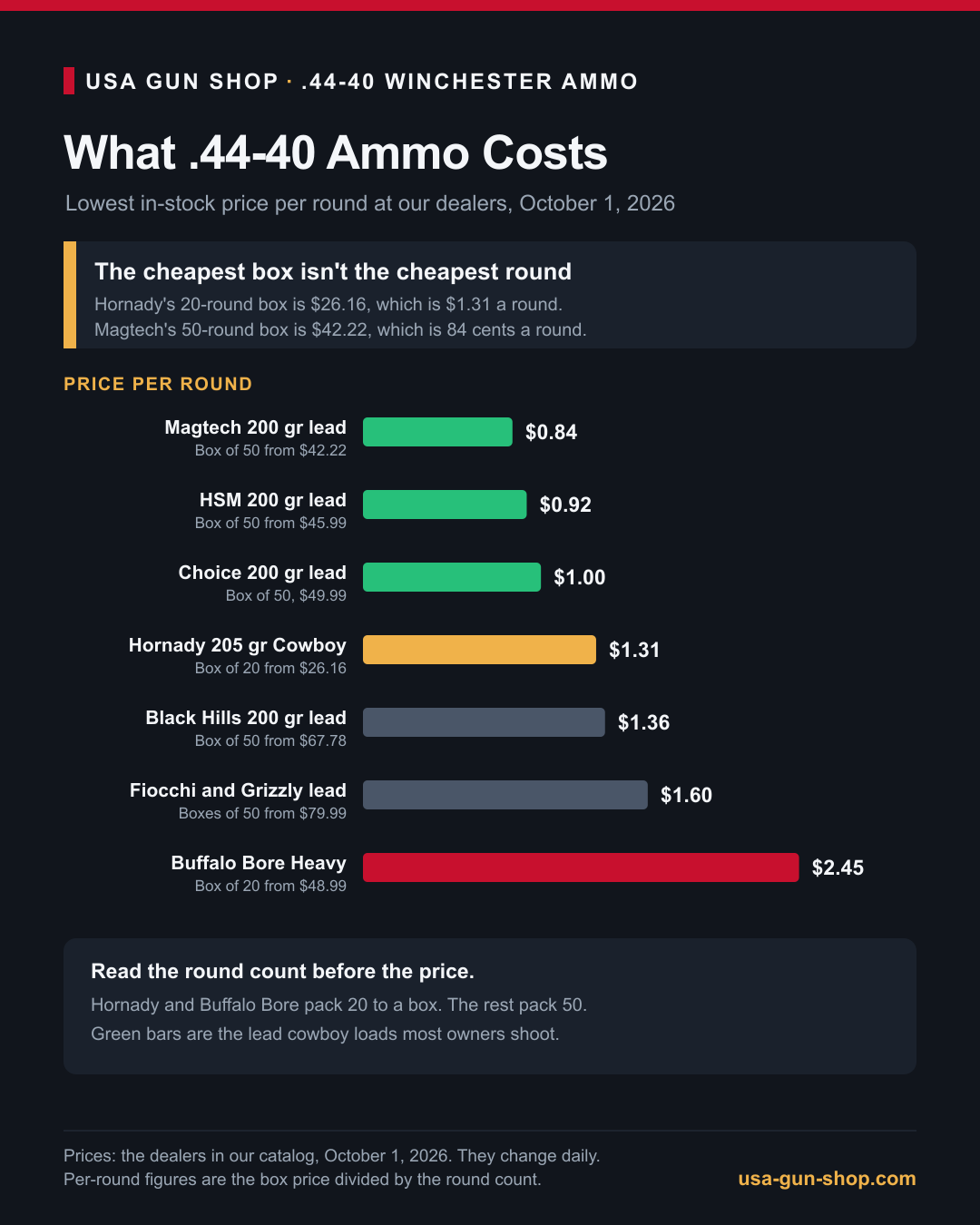
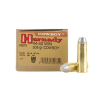
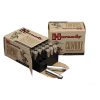
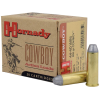
The .44-40 ammo price at our dealers ran from $0.84 a round for Magtech lead loads to $2.90 a round for Buffalo Bore on October 1, 2026, with HSM from $0.92 and Hornady’s box of 20 from $1.31 a round.
Prices are from the dealers in our catalog that day. The live cards search more dealers, so you may see a lower price there. Prices move, and so does availability.
| Load | Box | Box price | Per round |
|---|---|---|---|
| Magtech 200 gr and 225 gr lead | 50 | $42.22 to $69.99 | $0.84 to $1.40 |
| HSM 200 gr lead | 50 | $45.99 to $69.99 | $0.92 to $1.40 |
| Choice 200 gr lead | 50 | $49.99 | $1.00 |
| Hornady 205 gr Cowboy | 20 | $26.16 to $30.99 | $1.31 to $1.55 |
| Black Hills 200 gr lead | 50 | $67.78 to $71.99 | $1.36 to $1.44 |
| Grizzly 200 gr lead | 50 | $79.99 | $1.60 |
| Fiocchi 210 gr lead | 50 | $80.03 to $83.91 | $1.60 to $1.68 |
| Buffalo Bore 200 gr and 185 gr | 20 | $48.99 to $57.99 | $2.45 to $2.90 |
Watch the box size. Sort any dealer’s .44-40 ammo page by price and Hornady’s 20-round box lands on top at about $26. It’s the cheapest box and one of the priciest rounds, at $1.31 each against 84 cents for Magtech in a box of 50.
That’s why our headline card shows 50-round boxes only. Buffalo Bore also packs 20 to a box, so its $48.99 sits beside Magtech’s 50-round price and costs almost three times as much per shot.
Is 44-40 ammo hard to find? In a store, yes. Owners on the Colt Forum describe going years without seeing a box on a shelf, and one of them dates a production gap from early 2020 to about late 2023. Online it’s a different story, and a dozen dealers in our catalog listed it in early October.
For comparison, our .32-20 ammo guide found that caliber starting just under $42 a box, and our ammo price report tracks the common calibers.
44-40 Winchester Ammo: What’s Safe in Your Gun
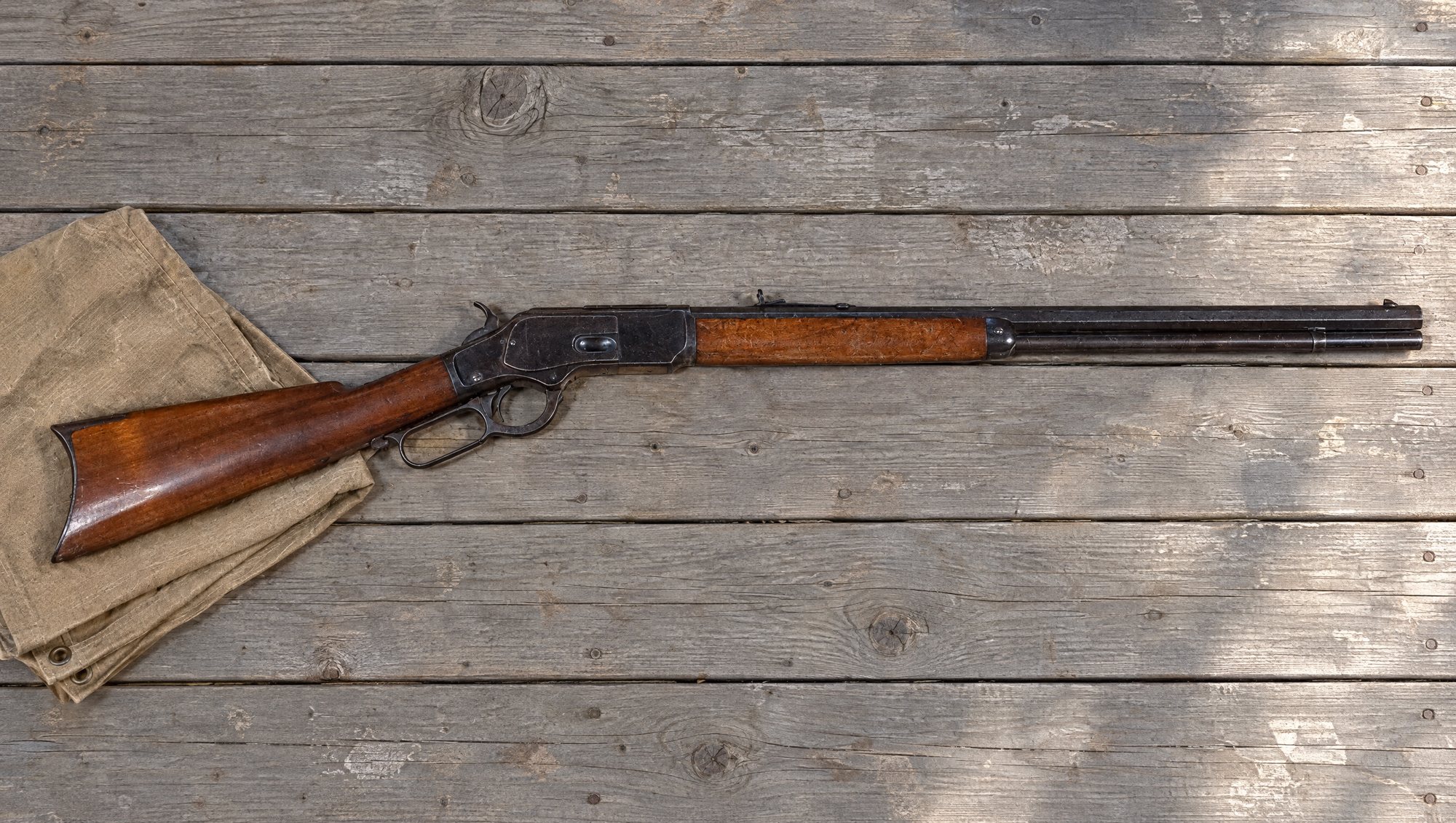
The .44-40 began as a black powder cartridge in 1873, and many guns chambered for it were built for black powder only. Find yours in the table, because the age and the action decide more than the brand on the box.
| Gun | Action and era | What the sources say | Check first |
|---|---|---|---|
| Winchester 1873, original | Toggle link, 1873 to the early 1920s. Iron frame, steel after 1884 | A black powder era design. Owners split on mild factory smokeless. No old High Velocity boxes | Gunsmith check. Many owners shoot black powder only |
| Uberti-made 1873 replicas, sold by Uberti, Cimarron and Taylor’s | Toggle link, modern steel | Uberti’s manual calls for commercial ammunition loaded to SAAMI or C.I.P. standards | Read the manual. Drop-test a new box for fit |
| Winchester 1892, original | Browning locking lugs, from 1892 | A stronger action. The old High Velocity loads were made for it, and they’re collectibles now | Gunsmith check on any rifle this old |
| Current Winchester 1873 and 1892 rifles, built by Miroku | Modern steel | Follow the maker’s manual | Slug the bore if accuracy matters |
| Colt Lightning and other early rifles | 1880s designs | Black Powder Cartridge News keeps High Velocity loads out of them | Gunsmith check |
| Colt Single Action Army below serial 192,000 | Made before 1900 | A black powder gun, per Handloader. Buffalo Bore says none of its load in any revolver made before 1900 | Gunsmith check. Black powder only |
| Colt Single Action Army above serial 192,000 | Made from 1900 | Handloader’s line for smokeless. One writer wants serial 203,000 or higher | Gunsmith check |
| Remington 1875 and 1890, Smith & Wesson Frontier models | Black powder era revolvers | Black powder era guns, per Handloader | Gunsmith check. Black powder only |
| Uberti, Cimarron and Taylor’s revolvers | Modern steel | Uberti’s manual: commercial ammunition, never a box marked High Velocity | Drop-test every chamber |
| Any .44 Special, .44 Magnum or .45 Colt gun | Different chamber | Wrong cartridge | Buy what the barrel says |
The Colt rows need a caveat. Writers give at least six different serial numbers for the first smokeless Single Action Army, because they’re measuring different things. Serial 164,100 of 1896 marks a frame change, about 165,000 is the figure most collectors cite, and 192,000 of 1900 is the line Handloader uses.
The cross-pin frame doesn’t prove anything by itself. John Taffin quotes a study of Colt’s shipping records that found guns numbered 175,000 to 180,000 were not guaranteed for smokeless powder. He reads 180,000 of 1898 as the start of the smokeless guns, and keeps his own smokeless loads for revolvers numbered 203,000 and up.
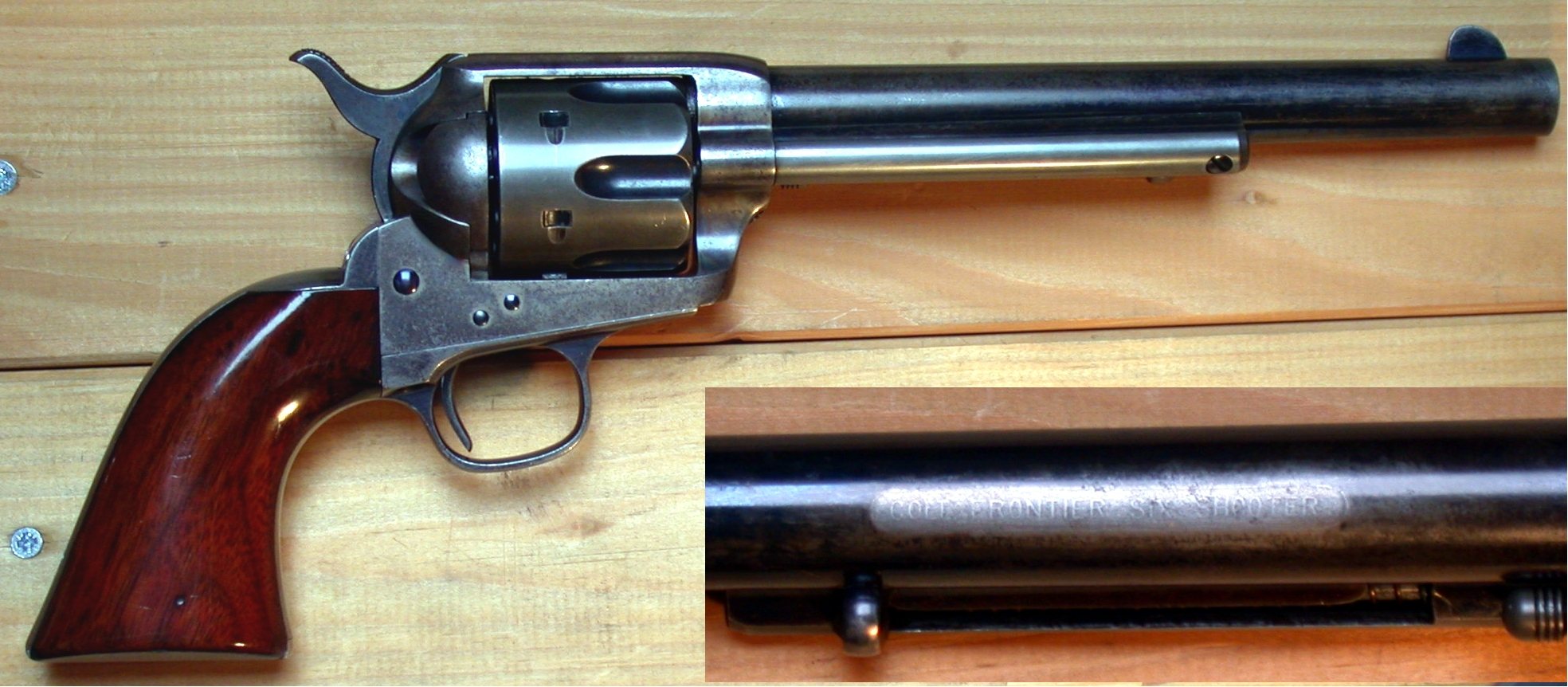
Buffalo Bore prints the plainest rule of any maker: “please do not shoot this modern 44-40 ammo through any revolver made before 1900.” It also says to “have any questionable revolvers checked by a competent gunsmith.”
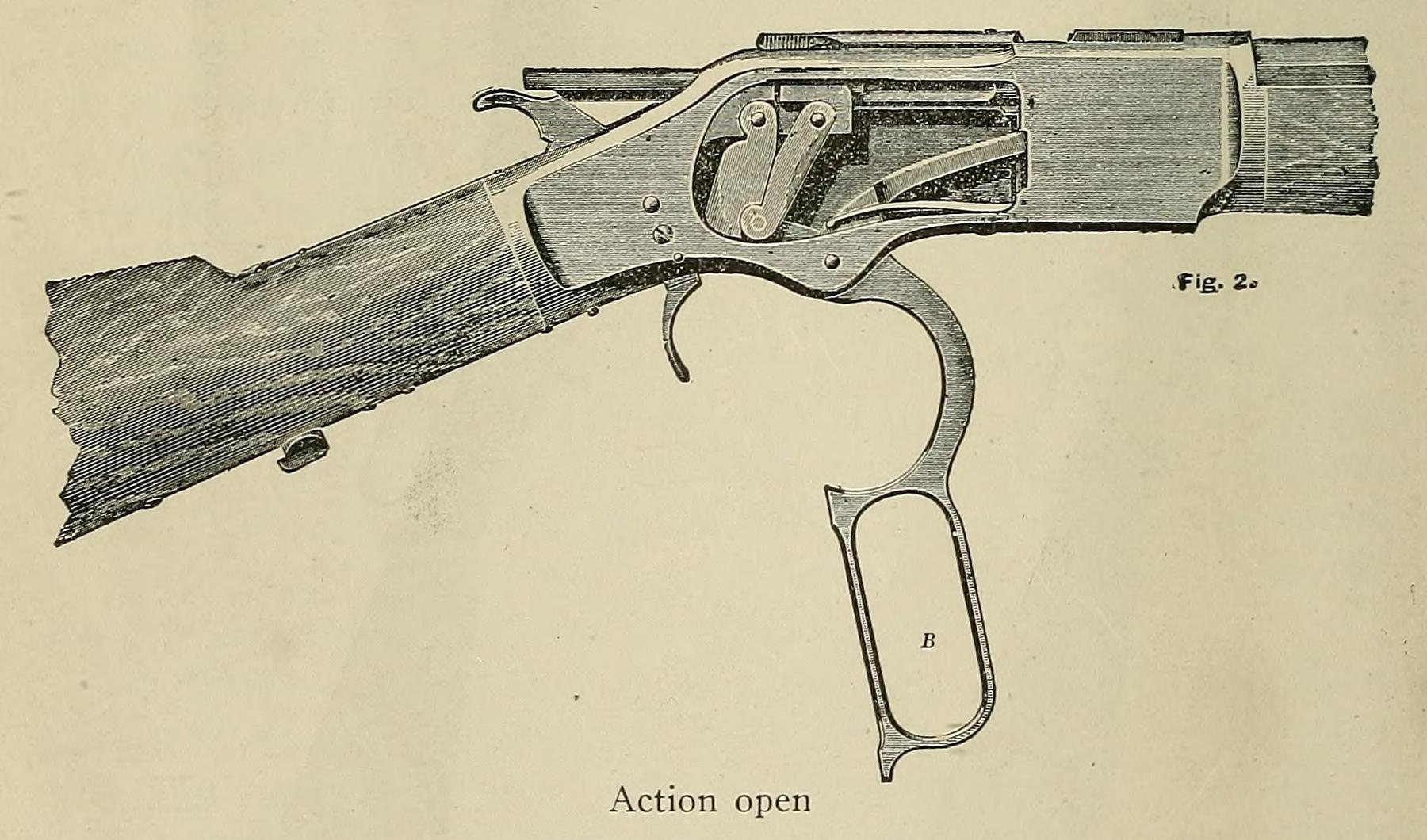
The 1873 rifle is where owners disagree. On the forums we read, about half shoot mild factory smokeless in an original that a gunsmith has passed, and half stick to black powder. We’d take the cautious half’s side on an iron-framed rifle made before 1884.
One report is worth knowing if you own a Spanish copy of the Model 1892, sold as the El Tigre. An owner wrote that after about 200 rounds of factory ammunition the headspace had stretched until cases split on every shot. It’s one report, and it’s the only one like it we found.
Replicas have their own rule book. Uberti’s manual says to use only commercially loaded cartridges, never one marked High Speed or High Velocity, and not to use old ammunition at all. Our Colt Single Action Army guide and Uberti 1873 rifle review cover the guns.
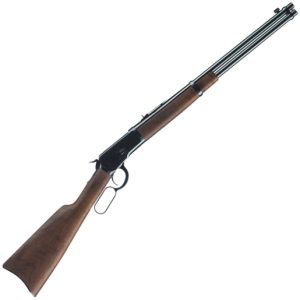
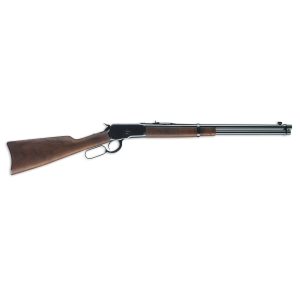
New rifles are still made for it. Henry lists its New Original Henry in .44-40 WCF with a 24.5-inch barrel and 13 rounds, and American Rifleman notes that Winchester’s current Model 1873 is built by Miroku.
Why .44-40 Loads Are Mild: The 13,000 CUP Limit
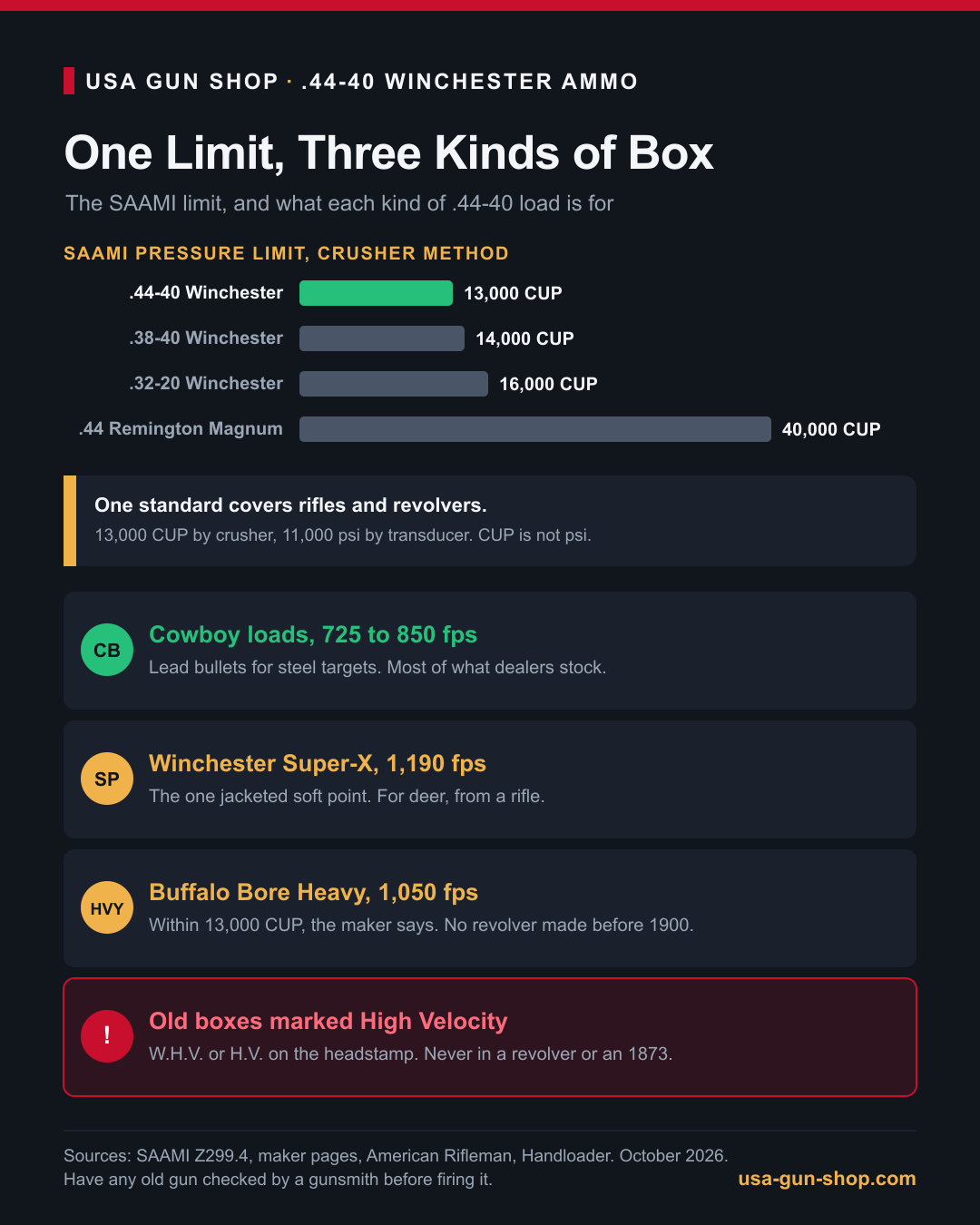
SAAMI limits the 44-40 Winchester to 13,000 CUP by the crusher method and 11,000 psi by transducer, with a 200-grain bullet at 1,175 fps from a 24-inch test barrel. Those are two measurements of one limit, and CUP isn’t psi.
The surprise is where the SAAMI standard files it. The .44-40 sits in the rifle standard only. SAAMI’s pistol and revolver standard has no entry for it at all, so one set of figures covers every gun.
| Cartridge | SAAMI limit, crusher | SAAMI limit, transducer |
|---|---|---|
| .44-40 Winchester | 13,000 CUP | 11,000 psi |
| .38-40 Winchester | 14,000 CUP | Not established |
| .44 Special | 14,000 CUP | 15,500 psi |
| .45 Colt | 14,000 CUP | 14,000 psi |
| .32-20 Winchester | 16,000 CUP | Not established |
| .30-30 Winchester | 38,000 CUP | 42,000 psi |
| .44 Remington Magnum | 40,000 CUP | 36,000 psi |
The .44-40 has the lowest limit in that group. The reason is the guns. Handloader’s Brian Pearce points out that the bottleneck case leaves revolver chamber walls thinner, and the standard has to protect 150 years of rifles and revolvers at once.
Europe’s C.I.P. sheet for the 44-40 Win. gives 1,100 bar by transducer. It’s a different test from SAAMI’s, so don’t convert one into the other.
The .44-40 Trap: Fit, 44-40 Cowboy Loads and the Word Heavy
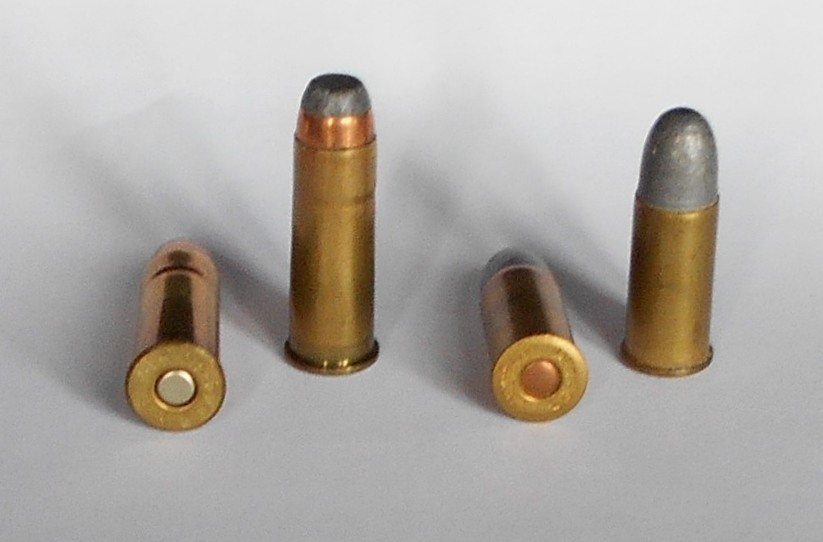
Three things catch .44-40 buyers: factory bullets are .427 inch while many modern barrels measure .429, most boxes are slow cowboy loads, and the one box labeled Heavy isn’t a high-pressure load. None of the three is printed on the shelf tag.
Will it fit and will it shoot?
SAAMI’s drawing gives a .427 inch bullet and a .4285 inch groove. Real barrels wander. Shooting Times reports groove diameters from .424 to .434 inch over the cartridge’s history, and Pearce measured about .424 on pre-1900 Colts.
Modern rifles lean large. A current Model 1892 in a Handloader test slugged at nearly .430 inch, and Taffin uses .429 to .430 inch bullets in modern lever guns. A .427 bullet in a .430 barrel will shoot, just not always well.
Chambers are the other half. Some owners of Uberti-made revolvers and rifles report tight or short chambers that stop even new factory rounds, while others report hundreds of rounds with no trouble. A different brand won’t cure a tight chamber. A gunsmith’s reamer will.
So test new .44-40 ammo before a match or a hunt. Drop every round of a new box into each revolver chamber, and cycle five through the rifle by hand with the muzzle in a safe direction.
What 44-40 cowboy loads are
44-40 cowboy loads are lead-bullet target loads built for cowboy action shooting, where mild recoil and fast follow-up shots win matches. The cowboy action 44-40 ammo for sale from Hornady, Fiocchi, Black Hills and Magtech is listed at 725 to 850 fps. Our cowboy action shooting guide explains the sport.
They’re a long way from the original. The black powder load of 1873 sent a 200-grain bullet at about 1,245 fps from a rifle, and Winchester advertised 1,300. Pearce chronographed Winchester factory loads from five decades in one 7.5-inch Colt and watched them fall from 992 fps to 810.
The faster class of .44-40 ammo is short. Winchester lists its Super-X soft point at 1,190 fps, and Buffalo Bore and Grizzly list 200-grain loads at 1,050 fps. Even those figures need care: one owner clocked the Super-X at 1,055 fps from a 24-inch Marlin.
Is Buffalo Bore Heavy too hot for an old gun?
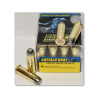
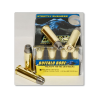
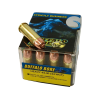
The label reads like a warning and isn’t one. Buffalo Bore says its Heavy .44-40 loads work “while staying within the black powder pressures of 13,000 CUP as a maximum average pressure.” That’s the SAAMI limit, not above it.
What you get is the old black powder performance from smokeless powder. Buffalo Bore measured its 200-grain load at 1,350 fps from a 20-inch Winchester 1892 and 1,034 fps from a 7.5-inch Ruger Vaquero.
We found no current .44-40 ammo sold as +P or above the SAAMI limit, though Buffalo Bore is the only maker that states a pressure. Its real limits are about the gun: no revolver made before 1900, and a gunsmith’s opinion on anything questionable.
It goes further on black powder guns. “Frankly, I would not fire any ammo from any firearm that was made of steel for black powder use,” the maker writes. That covers a lot of original rifles as well as revolvers.
Old Boxes: W.H.V., H.V. and High Velocity
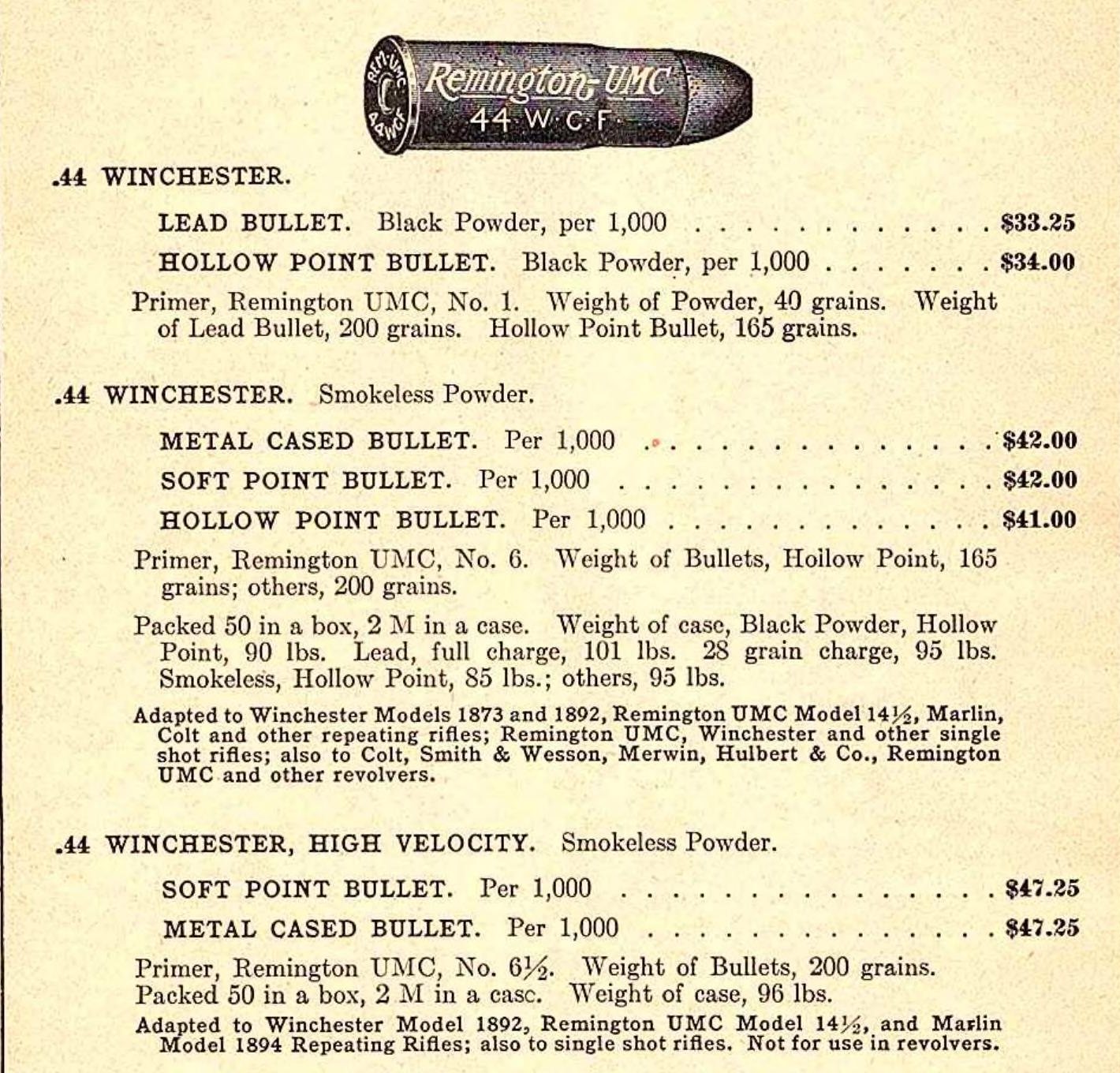
In 1903 Winchester added a High Velocity .44-40 load for the stronger Model 1892, with a 200-grain jacketed bullet at about 1,500 to 1,570 fps. Its packaging said the load wasn’t for Model 1873 rifles or for revolvers, and that still holds.
American Rifleman says the cases were headstamped with the letters W.H.V. and M92 after the caliber, and that UMC loaded its own version marked H.V. Peters made one too. The makers dropped these loads after World War II.
SAAMI still warns about them. Its sheet of unsafe firearm and ammunition combinations lists 44-40 Winchester High Velocity as a cartridge not to use in guns chambered for 44-40 Winchester. Black Powder Cartridge News adds the Colt Lightning and other early rifles to the list of guns to keep them out of.
If you find a box or a headstamp marked W.H.V., H.V. or High Velocity, it’s a collectible. Don’t shoot it in anything.
Other old .44-40 ammo has its own problems. Cases made before about World War II were the balloon-head type, which Pearce says “should not be used.” Early primers were corrosive, and until just before World War I many were mercuric too, which ruins brass for reloading.
If an old round clicks and doesn’t fire, keep the muzzle downrange and wait. The NRA’s range safety guidance says at least 60 seconds before you open the action. And if a shot sounds weak, stop and check the bore for a stuck bullet before you fire again.
44 WCF Ammo, .44 Largo and the .44s That Look Right but Aren’t
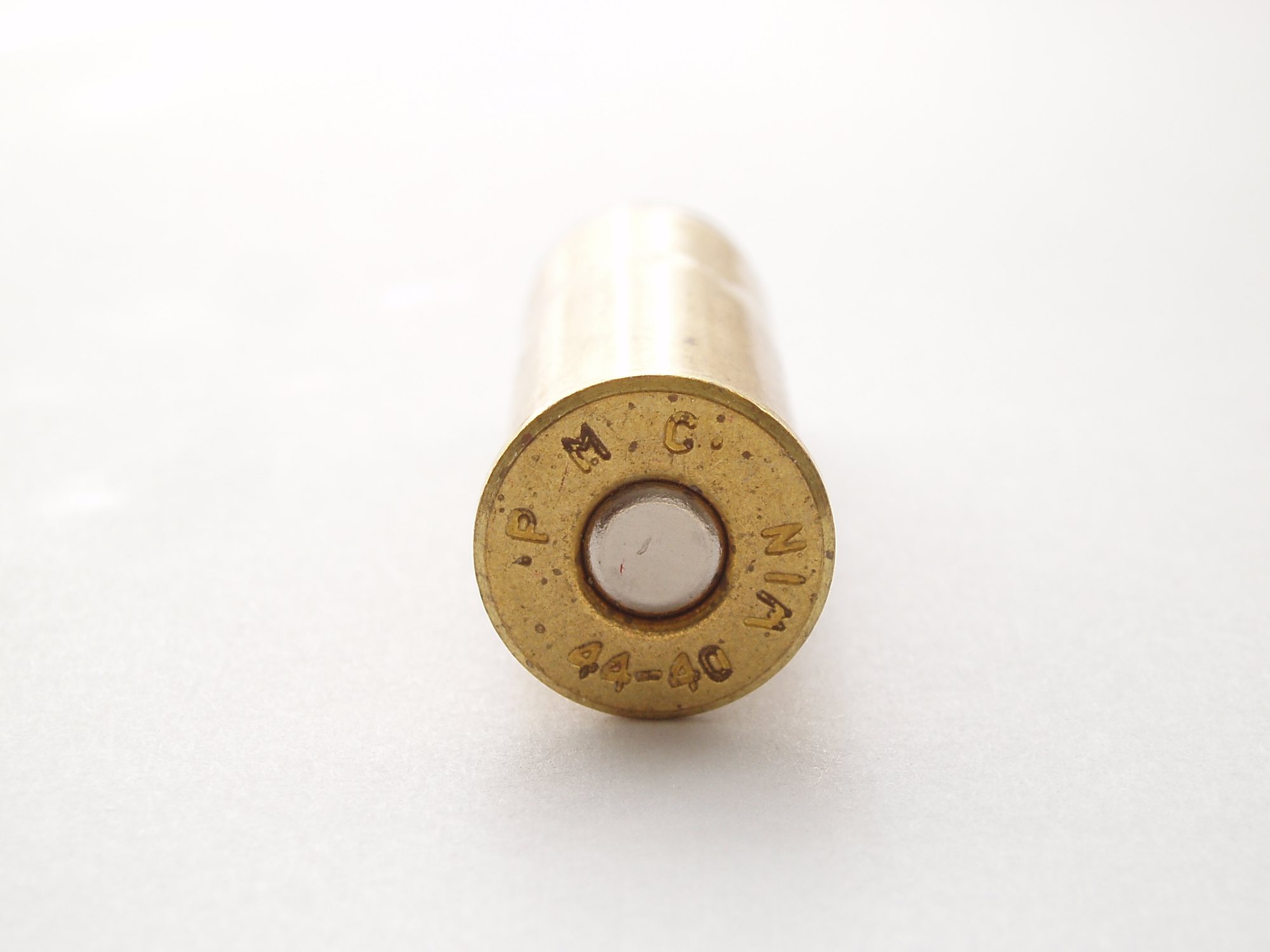
44 WCF ammo and .44-40 ammo are the same thing. WCF stands for Winchester Center Fire, the 40 is the 40 grains of black powder in the original load, and a rival gave the round its modern name.
That rival was the Union Metallic Cartridge Company. It didn’t want Winchester’s name on its boxes, so it called the round the .44 C.F. and later the .44-40, and Winchester adopted the name in the end. Modern headstamps read 44-40, so a box of 44 WCF ammo and a box of .44-40 fit the same guns. SAAMI’s own abbreviation is 44-40 WIN.
| On the box or barrel | What it is | Fits a .44-40 gun? |
|---|---|---|
| .44-40 Winchester, .44-40 WCF, .44 WCF, .44 Winchester | The same round under four names | Yes |
| .44 Largo | The Spanish name, used on the El Tigre carbine | Yes, it’s the same round |
| Colt Frontier Six Shooter | Colt’s name for the Single Action Army in .44-40 | Yes. It’s a gun marking, not a cartridge |
| .38-40 Winchester | The .44-40 case necked down to a .401 in. bullet | No |
| .44 Special | A straight case with a .429 in. bullet, from 1907 | No |
| .44 Remington Magnum | The .44 Special lengthened and loaded far hotter | No |
| .44 Russian and .44 Colt | Older straight-cased revolver rounds | No |
| .44 Henry | The rimfire round the .44-40 replaced | No |
| .45 Colt | A straight case with a .452 in. bullet | No |
None of the others interchange with it. One cowboy action shooter described a .44 Special fired in a .44-40 rifle by mistake, and the brass came out swollen at the base. SAAMI’s unsafe-combinations sheet also lists the 44-40 among rounds that must never go in a .45 Colt gun.
Convertible revolvers get around this with a second cylinder. If yours came with two, match the cylinder to the box every time. Our .44 Magnum guide covers the modern .44.
44-40 Ballistics and What the Round Is Good For
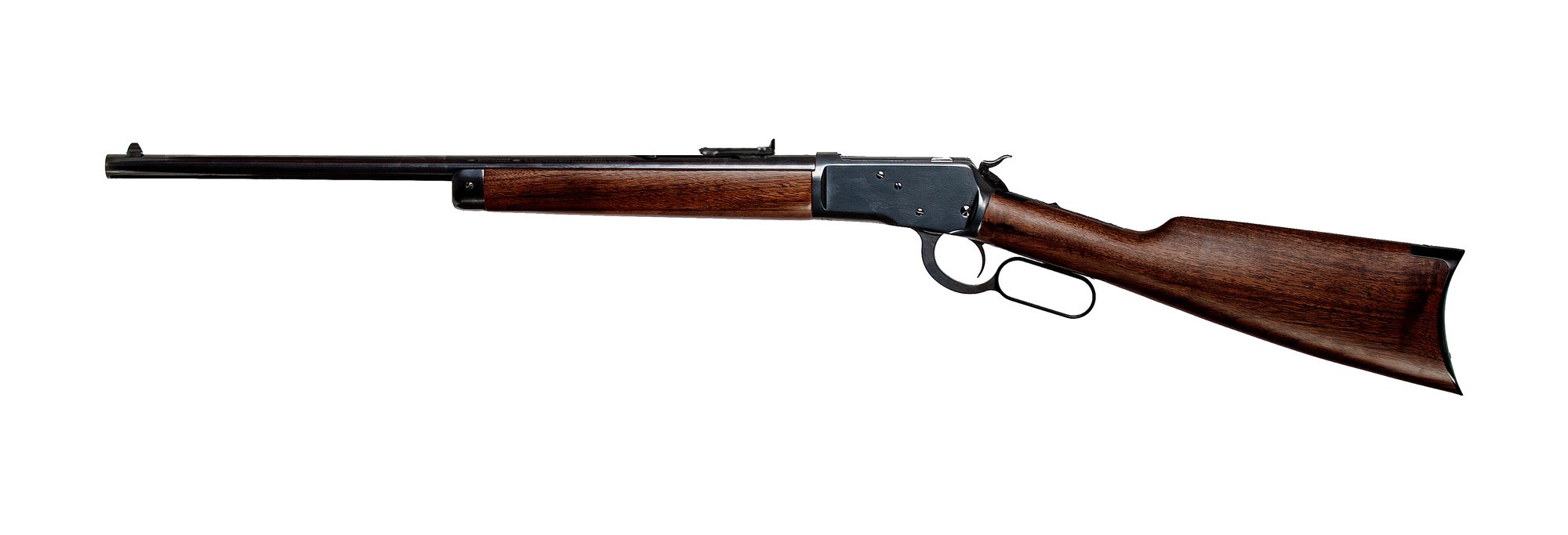
Winchester lists its .44-40 Super-X load at 1,190 fps and 629 foot-pounds with a 200-grain bullet. That’s about a third of the energy of a .30-30 and well under half that of a .44 Magnum from the same maker’s pages.
| Cartridge, Winchester factory load | Bullet | Muzzle velocity | Muzzle energy |
|---|---|---|---|
| .44-40 Winchester Super-X | 200 gr soft point | 1,190 fps | 629 ft-lb |
| .44-40 Winchester cowboy load | 225 gr lead | 750 fps | 281 ft-lb |
| .38-40 Winchester | 180 gr soft point | 1,160 fps | 538 ft-lb |
| .45 Colt | 250 gr lead | 900 fps | 450 ft-lb |
| .44 Remington Magnum | 240 gr hollow soft point | 1,760 fps | 1,650 ft-lb |
| .30-30 Winchester | 170 gr soft point | 2,200 fps | 1,827 ft-lb |
So is a .44-40 more powerful than a .30-30? No. On Winchester’s own figures the .30-30 makes 1,827 foot-pounds against 629. Winchester doesn’t state a test barrel for the .44-40 figure.
Against the .45 Colt it’s the other way around on paper. Winchester lists 629 foot-pounds for the .44-40 Super-X and 450 for its 250-grain .45 Colt lead load.
The cowboy row tells the other half of the 44-40 ballistics story. At 750 fps and 281 foot-pounds, a cowboy load carries less than half the energy of the soft point, and Hornady’s own table has its 205-grain load down to 655 fps at 100 yards. Magtech lists its 4440A load at 840 fps at the muzzle and 775 fps at 100 yards.
44-40 ammo for deer
The .44-40 has a long deer record, second only to the .30-30 by reputation. That’s folklore more than a count, but writers who’ve used it agree on the range. American Rifleman’s Dave Campbell calls it “a fair rifle round out to 100 yds.”
Pearce writes that he has used it “to take deer cleanly with a single shot, in spite of critics claiming that it is too puny.” Nobody we read reports doing that with a cowboy load. Check your state’s rules for legal deer cartridges before you plan a hunt around one.
How far will a .44-40 shoot? One Handloader writer found a Model 1892 accurate enough at 150 to 200 yards with practice. For deer, the energy is the limit, not the sights.
If you want 44-40 ammo for deer, look at the Winchester soft point or one of the 1,050 fps loads, from a rifle, inside 100 yards. Our best deer hunting rifles roundup covers the modern options.

.44-40 Myths vs. the Truth
The first .44-40 ammo myth to drop is that nobody makes it: nine makers listed loads in October 2026 and eight had boxes at our dealers, from $42.22 for 50 rounds. Here are the other claims that come up on the forums.
| The myth | The truth |
|---|---|
| “Nobody makes .44-40 anymore.” | Nine makers list it. It’s an online purchase now, not a shelf item. |
| “The cheapest box is the best deal.” | The cheapest box holds 20 rounds. Per round it costs half again as much as Magtech. |
| “Buffalo Bore Heavy is a hot load.” | The maker says it stays within 13,000 CUP, the SAAMI limit. |
| “The bullet is .429, like a .44 Special.” | SAAMI and C.I.P. give .427 in. Many modern barrels measure .429. |
| “It’s a straight-walled case.” | It has a slight bottleneck, with a shoulder of about 4 degrees. |
| “You can shoot .44 Special in it.” | No. They’re different cases and SAAMI lists no such pairing. |
| “It hits like a .44 Magnum from a rifle.” | Winchester lists 629 ft-lb for the .44-40 and 1,650 for the .44 Magnum. |
| “Any Colt with the cross-pin frame is safe with smokeless.” | Colt’s own records exclude some of those guns. Handloader’s line is serial 192,000. |
| “Cowboy loads will do for deer.” | They’re target loads, most listed at 725 to 850 fps. Hunters use the faster loads from a rifle. |
Our Range Notes: Five Loads in an 1892 Carbine and a Model P
We shot five factory .44-40 Winchester ammo loads through a Winchester 1892 carbine with a 20-inch barrel and a Cimarron Model P with a 5.5-inch barrel over two September mornings, 360 rounds in all over a chronograph.
| Load | Listed velocity | 1892 carbine, 20 in. | Model P, 5.5 in. | Rifle group, 50 yd | Revolver group, 25 yd |
|---|---|---|---|---|---|
| Magtech 4440A 200 gr | 840 fps from 4 in. | 1,072 fps | 826 fps | 2.2 in. | 3.1 in. |
| HSM 200 gr | Not stated by the maker | 1,038 fps | 781 fps | 2.4 in. | 2.9 in. |
| Hornady 205 gr Cowboy | 725 fps from 7.5 in. | 902 fps | 694 fps | 1.9 in. | 2.6 in. |
| Black Hills 200 gr | 800 fps from 5.5 in. | 1,011 fps | 788 fps | 2.0 in. | 2.7 in. |
| Buffalo Bore 200 gr | 1,050 fps | 1,341 fps | Not fired | 2.3 in. | Not fired |
Groups were the best of three five-shot groups from a rest. The carbine added about 200 to 260 fps to every cowboy load, and the Buffalo Bore came within 10 fps of the maker’s own 1,350 fps figure for a 20-inch Model 1892.
We kept the Buffalo Bore out of the revolver. The Model P is a modern gun and the maker tests that load in a Ruger Vaquero, but the cowboy loads were what we’d come to compare in it.
Every round of every box dropped freely into all six chambers, and all five loads fed through the carbine without a stoppage. We slugged both barrels first. The carbine’s grooves measured .4290 inch and the revolver’s .4275.
And the soft Hornady bullet shot the tightest groups from both guns, in a carbine barrel two thousandths over its bullet. Don’t assume a .427 bullet can’t shoot in a .429 barrel. Test it.
A Short History of the .44-40
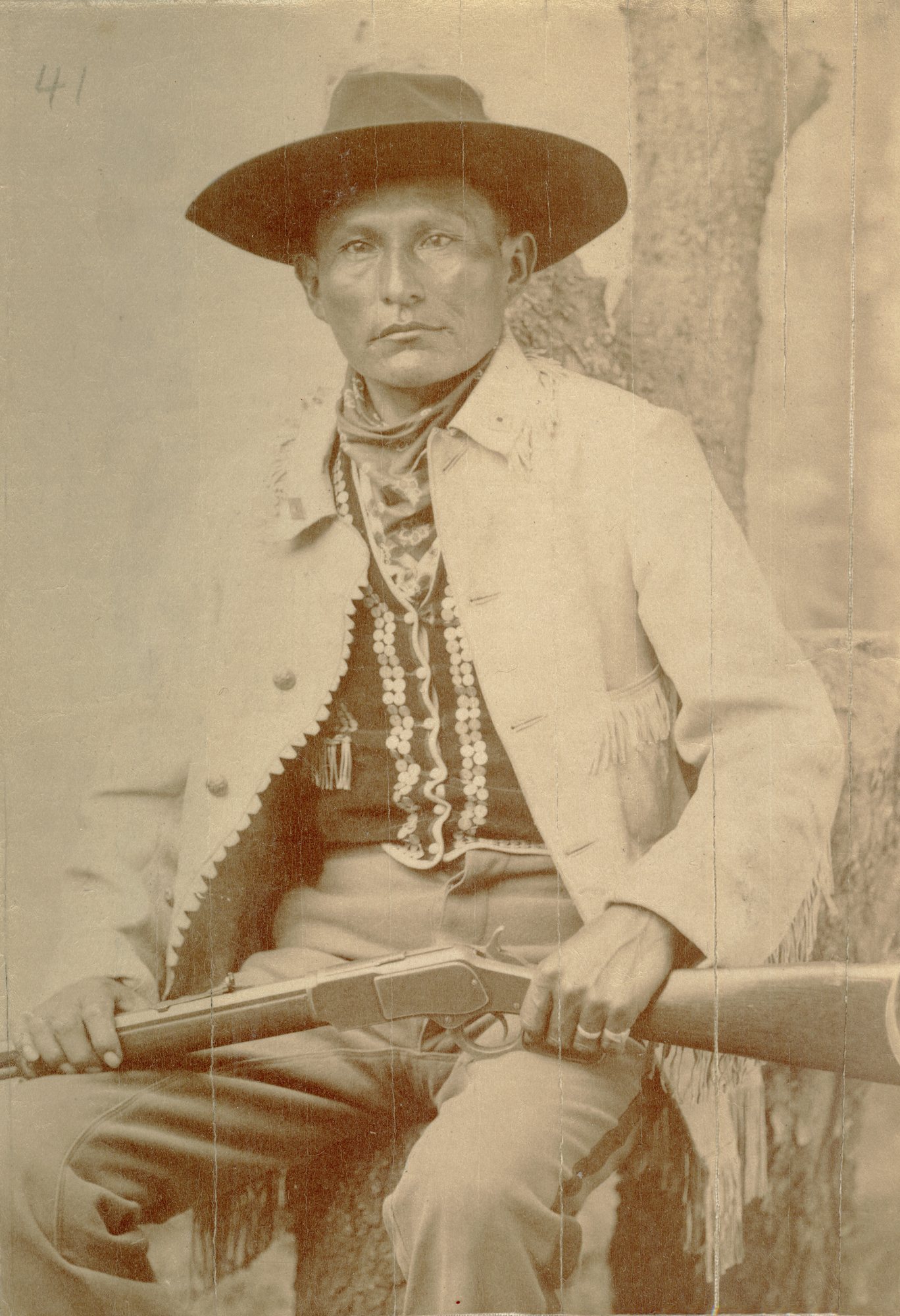
Winchester introduced the .44-40 in 1873 with the Model 1873 rifle, as the company’s first centerfire cartridge. It replaced the .44 Henry rimfire, and the original load put a 200-grain lead bullet over 40 grains of black powder.
Colt made the idea famous. It chambered the Single Action Army for the round and called that version the Frontier Six-Shooter, with the first guns shipped in late 1877 and general sale by 1878. One box now fed the rifle on the saddle and the revolver on the belt.
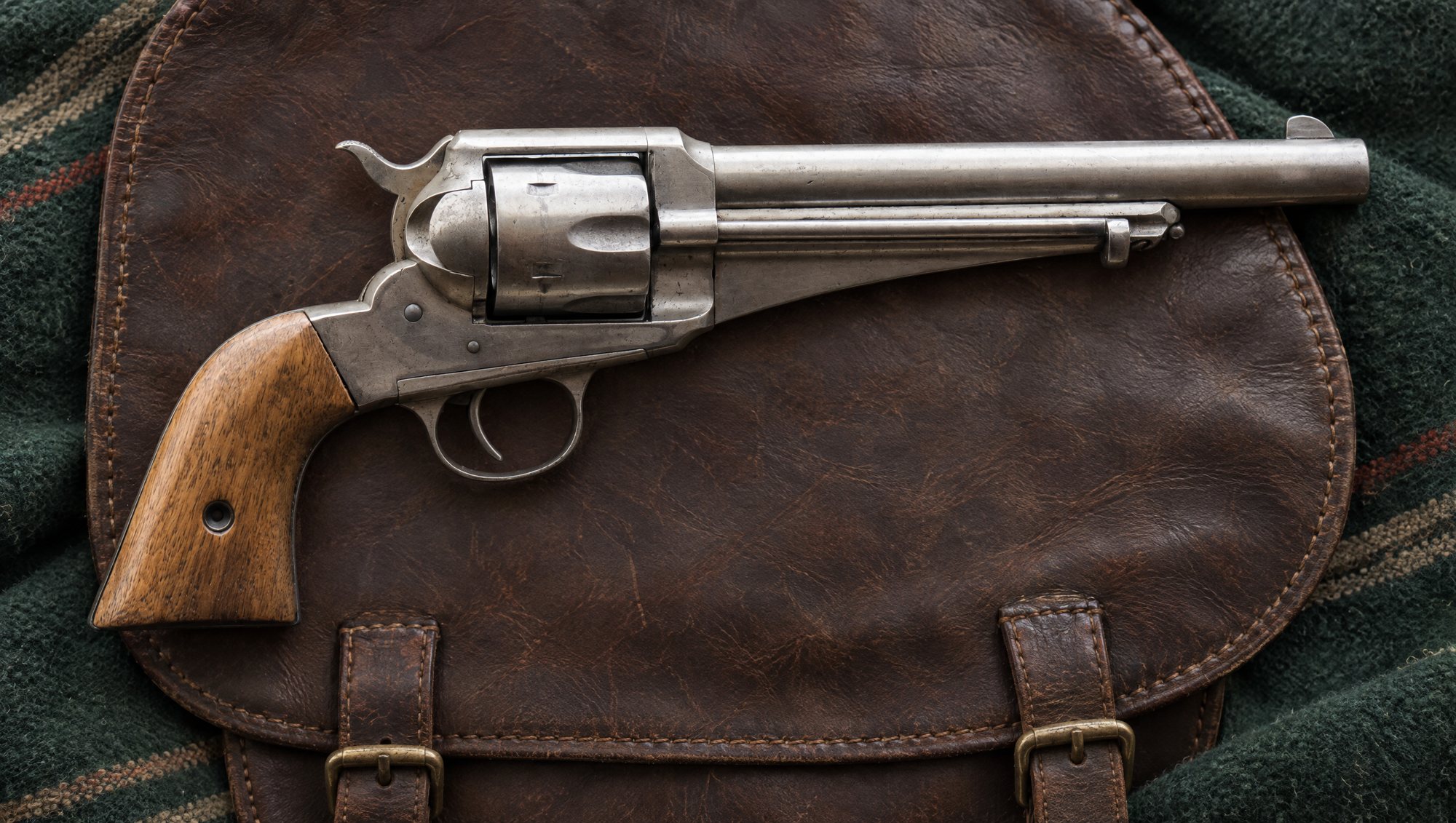
Marlin, Remington and Smith & Wesson followed, and Colt added the Lightning slide-action rifle in the mid-1880s. Winchester made 720,610 Model 1873s, and John Browning’s Model 1892 was designed as a smaller Model 1886 around this cartridge.
Smokeless factory loads arrived in the mid-1890s. By the 1940s the round had faded. It came back with Colt’s New Frontier of 1961, then with Italian replicas, and then with cowboy action shooting. Our Winchester 1892 review covers the rifle Browning built for it.
A Note on Reloading
The .44-40 case neck is about .007 inch thick, thinner than a .44 Magnum’s, and Starline lists its own brass at .0065 inch, so necks crumple easily during bullet seating and crimping. Most .44-40 shooters handload anyway, Pearce writes.
Starline sells new cases with a large pistol primer pocket and calls its brass stiffer than other brands. Cast bullets come in .427, .429 and .430 inch, so slug your bore before you order, and remember that Uberti accepts no liability for reloads in its guns.
We don’t publish load data on this page. Use a current manual from a bullet or powder maker, and start with our beginner’s guide to reloading if you’re new to it.
Bottom Line: Which .44-40 Ammo to Buy
For most owners the .44-40 ammo to buy is a 50-round box of Magtech or HSM 200-grain lead, which cost $0.84 to $1.40 a round at our dealers on October 1, 2026. The gun and the job decide the rest.
- For cowboy action matches: Magtech or HSM by the case. Hornady and Black Hills if your gun groups them better.
- For an original Winchester 1873: a gunsmith first. Owners split between black powder only and mild lead factory loads. We’d stay with black powder in an iron-framed rifle, and never an old High Velocity box.
- For a Colt or Remington made before 1900: black powder only, after a gunsmith has checked the gun. Old South lists a load with 40 grains of black powder, which was on backorder when we checked.
- For deer inside 100 yards: Winchester Super-X if you can find it, or a 1,050 fps load, from a rifle.
- For a new replica: a current factory box loaded to SAAMI or C.I.P. standards, as Uberti’s manual asks, after a drop test in every chamber.
If you’re shopping for the gun too, the best lever action rifles roundup covers what’s for sale now.
We’ve done the same job for other old calibers: the 8mm Mauser ammo guide, the .30-40 Krag ammo guide, the .303 British ammo guide and the 7.62×25 Tokarev ammo guide.
Lead image: composite based on a photo of a Winchester Model 1892 by Hmaag, CC0, and photos of a .44-40 cartridge by Malis, public domain, all from Wikimedia Commons.
.44-40 Ammo FAQ
Is 44-40 ammo still made?
Yes, 44-40 ammo is still made, and it isn't hard to find online. Nine makers listed loads in October 2026, and Magtech, HSM, Hornady, Black Hills, Fiocchi, Choice, Grizzly and Buffalo Bore had boxes at our dealers. Boxes of 50 started at $42.22 on our price cards.
Is a 44-40 the same as a .44 Magnum?
No. The .44-40 is a bottleneck case with a .427 inch bullet, held to 13,000 CUP. The .44 Magnum is a straight case with a .429 inch bullet at 40,000 CUP. They don't interchange, and SAAMI lists no pairing between them.
Is a 44-40 more powerful than a 30-30?
No, it isn't. Winchester lists its 200-grain .44-40 load at 1,190 fps and 629 foot-pounds, and its 170-grain .30-30 at 2,200 fps and 1,827 foot-pounds. The .30-30 makes about three times the energy.
What is a 44-40 good for?
Cowboy action shooting, plinking and short-range deer hunting from a rifle. Most factory loads are mild lead-bullet target loads at 725 to 850 fps. It's also the right ammunition for a great many original and replica Old West guns.
Can you hunt deer with a 44-40?
Yes, with the right load and inside about 100 yards from a rifle. American Rifleman calls it a fair rifle round out to 100 yards. Cowboy loads aren't hunting loads, so pick Winchester's soft point or a 1,050 fps load, and check your state's rules.
Is 44 WCF the same as 44-40?
Yes, they're the same cartridge. WCF stands for Winchester Center Fire, and .44 WCF, .44-40 WCF, .44 Winchester and .44-40 Winchester all name it. SAAMI lists 44 WCF as another name for the 44-40 Winchester.
Is Buffalo Bore Heavy 44-40 safe in a Winchester 1873?
Buffalo Bore says the load stays within 13,000 CUP, the SAAMI limit, and it lists a 1997 Uberti 1873 among its test guns. But the maker also says it wouldn't fire any ammunition in a firearm made of steel for black powder use. We'd keep an original 1873 on black powder after a gunsmith's check.
Can I shoot modern 44-40 ammo in an old Colt?
Not if it was made before 1900. Handloader says Colts below serial 192,000 are black powder guns that shouldn't be used with smokeless loads, and Buffalo Bore says the same of any revolver made before 1900. Other writers draw the line anywhere from serial 164,100 to 203,000, so have a gunsmith check any first-generation Colt.
5,470+ Gun & Ammo Deals
Updated daily from 200+ top retailers. Filter by category, caliber, action type, and price.
Related Guides