

Last updated October 27th 2026
Some of the links below are affiliate links, meaning at no additional cost to you, we may earn a commission if you click through and make a purchase.
By Nick Hall
There are two families of gun sights. Iron sights are the metal or polymer front and rear sights that come on most guns: notch and post, aperture or peep, ghost ring, buckhorn and the shotgun bead, plus the fiber optic and tritium night sight versions of them. Optical sights put an aiming point in a window or a tube: red dots, holographic sights, prism scopes, magnified rifle scopes and LPVOs. Laser sights sit off to one side as their own thing.
I’ve shot every one of these, on pistols, carbines, hunting rifles and shotguns. Below you’ll find how each type works, what it’s good and bad at, the sight radius math nobody shows you, how long a tritium sight really glows, and a real example of each type with live prices from our 200+ retailers on October 27, 2026.
Table of Contents
How we tested: Every pick here is ranked against our testing methodology. Minimum round counts, accuracy and reliability protocols, the failures that disqualify a gun.
Types of Gun Sights at a Glance
| Type | How you aim | Battery | Speed | Best for | Example on this page |
|---|---|---|---|---|---|
| Notch and post | Line up front post in rear notch | No | Medium | Pistols, backup | XS R3D |
| Aperture or peep | Look through a ring, put post on target | No | Medium | Rifles, AR-15 backup irons | Magpul MBUS Pro |
| Ghost ring | Look through a wide thin ring | No | Fast | Defensive shotguns | Magpul MBUS Pro |
| Fiber optic | Glowing dot in daylight | No | Fast | Competition, hunting | Williams Fire Sight |
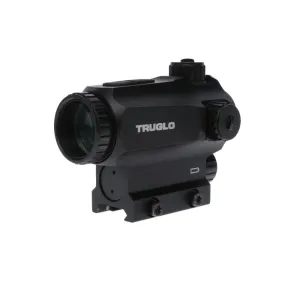
| Tritium night sights | Glowing dots in the dark | No | Medium | Carry and home defense pistols | TruGlo TFX Pro |
| Red dot | Put the dot on the target | Yes | Fastest | Carbines, carry pistols | Aimpoint PRO |
| Holographic | Dot inside a ring | Yes | Fastest | Carbines, shotguns | EOTech HWS 512 |
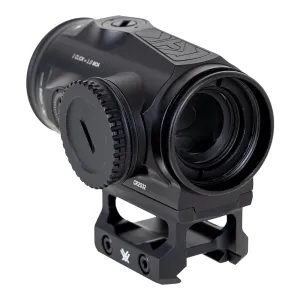
| Prism | Etched reticle, often 1x to 5x | Only to light it | Fast | Astigmatism, carbines | Vortex Spitfire |
| Rifle scope | Crosshair at 3x to 25x | Only to light it | Slow up close | Hunting, long range | Vortex Diamondback |
| LPVO | True 1x up to 6x, 8x or 10x | Only to light it | Fast to medium | General purpose AR-15 | Vortex Strike Eagle |
| Laser | Put the projected dot on target | Yes | Fast up close | Point shooting, low light | Crimson Trace Laserguard |
Iron Sights
Iron sights are the oldest and simplest type, and most guns still ship with a set. There’s no battery to die, no glass to fog, and nothing to break in a drop. The catch is that your eye can only focus on one distance at a time. With irons you’re juggling three things, the rear sight, the front sight and the target, and the right technique is to keep the front sight sharp and let the other two blur. That’s easy at 20 and gets hard past 40.
Notch and Post
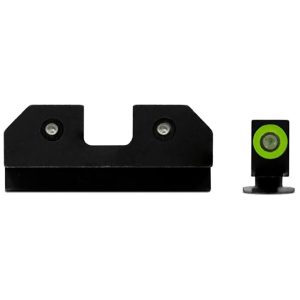
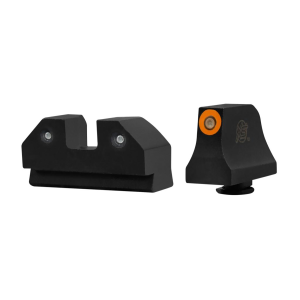
This is the standard pistol setup: a square or U-shaped notch at the rear and a post up front. You center the post in the notch with equal light on each side and the tops level. Most factory pistols add white dots to speed that up. The common patterns are:
- Three-dot: two dots on the rear, one on the front, and you line up all three. The most common factory pattern.
- Big dot or bar-dot: one large front dot sits in a shallow V or over a vertical bar on the rear, like a lollipop. Faster to pick up, a little less precise at distance. XS made it famous.
- Blacked-out rear: a plain black rear with a bright front, so your eye goes straight to the front sight. Popular with competition shooters.
- U-notch: the white outline rear on factory Glocks. It’s plastic, which is why it’s one of the first parts people replace.
Pistol sights fit into a dovetail cut across the slide, and the cuts aren’t universal. A Glock rear will not fit a Sig, and Sig uses more than one cut. Buy sights listed for your exact model. Our best Glock sight upgrades covers the options for the most common pistol in America.

Aperture and Peep Sights

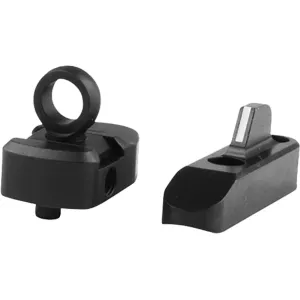
An aperture or peep sight swaps the rear notch for a small round hole close to your eye. You do not try to focus on it. Your eye centers itself in the ring without any effort, so all you do is put the front post on the target. That’s why the military moved to peeps on the M1 Garand and has used them ever since, and why every AR-15 backup sight is a peep. It’s the most accurate iron sight there is.
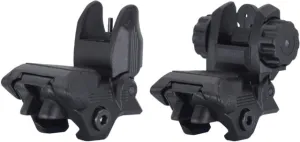
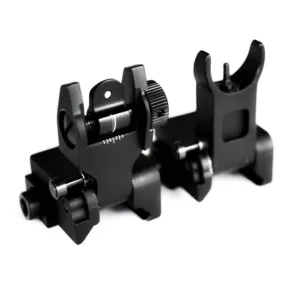
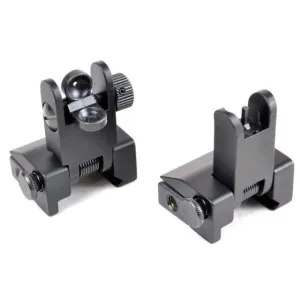
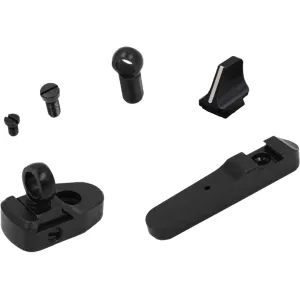
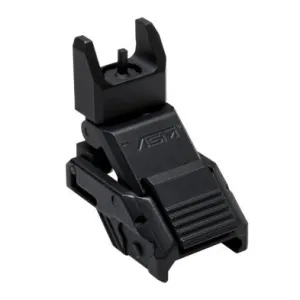
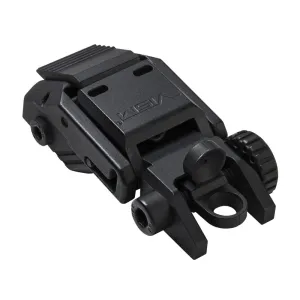
Flip-up backup iron sights, or BUIS, fold flat under an optic and pop up when the battery dies. The Magpul MBUS Pro is the steel version of the most common polymer set. On a lever gun or hunting rifle, a receiver-mounted peep like a Skinner or Williams is the classic upgrade over the factory buckhorn.
Ghost Ring Sights

A ghost ring is a peep with a big hole and a thin rim. At speed the rim fades to a ghost and you just see the front post floating on the target. It gives up a little precision for a lot of speed, which is the right trade on a defensive shotgun firing slugs. The Benelli M4 and Mossberg 590A1 both ship with them. See our types of shotguns for the rest of the setup.
Buckhorn, Express and Shotgun Beads
A buckhorn rear has tall curved ears that wrap around the front bead, and you’ll find it on old lever actions and some hunting rifles. It’s fine for deer in the woods and covers a lot of the target, which is why most people swap it for a peep. An express sight is a shallow wide V with a big front bead, built for fast shots at dangerous game on heavy double rifles.
A shotgun bead isn’t really a sight at all. On a bird gun your eye is the rear sight, and the bead just confirms the gun is mounted straight. That’s why you look at the bird, not the bead. Many sporting guns add a smaller mid-rib bead so you can check you’re looking straight down the rib.
Sight Radius: Why Longer Is More Forgiving
Sight radius is the distance between the front and rear sight. A longer radius makes any small misalignment matter less, and you can put a number on it. If your front post sits just 0.01 in off center in the rear notch, the error at the target is that 0.01 in multiplied by the distance and divided by the sight radius. Here’s what that one hundredth of an inch costs you:
| Sight radius | Example | Off at 25 yd | Off at 50 yd | Off at 100 yd |
|---|---|---|---|---|
| 4 in | Pocket pistol | 2.2 in | 4.5 in | 9.0 in |
| 6 in | Compact or full-size pistol | 1.5 in | 3.0 in | 6.0 in |
| 15 in | Short carbine or lever gun | 0.60 in | 1.2 in | 2.4 in |
| 20 in | Rifle-length AR-15 with irons | 0.45 in | 0.90 in | 1.8 in |
So the same tiny wobble that costs 2.25 in at 25 yards on a pocket pistol costs under half an inch on a rifle. It’s the real reason a snubby feels inaccurate, and why a red dot, which has no sight radius to misalign, made pocket guns so much easier to shoot well. It’s also why I want a peep on a rifle mounted as far back as it will go.
Fiber Optic and Night Sights
Fiber Optic Sights

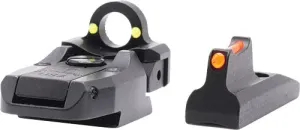
A fiber optic sight runs a short rod of colored plastic through the front sight. It gathers ambient light along its length and glows at the end, so in daylight you see a bright red, green or orange dot that jumps out at you. That’s why every competition pistol and most turkey and deer shotguns have one. In the dark it’s just a black post, and the thin rods can break if you drop the gun on them, so carry a spare.
Tritium Night Sights

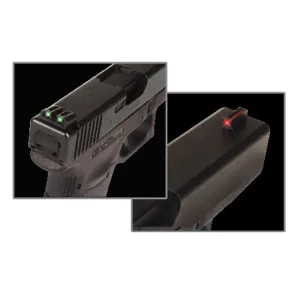
A night sight seals a tiny glass vial of tritium gas inside each dot. Tritium is radioactive hydrogen, and its beta decay makes a phosphor coating glow green or yellow with no battery and no light source. It’s the same principle as the glowing exit signs in office buildings. The dose to you is nothing to worry about, and every set is sealed.
What nobody on the product page tells you is that the glow fades. Tritium has a half-life of 12.3 years, per the EPA, so a set of night sights is half as bright about 12 years after the tritium was made, and a quarter as bright after about 25. If your carry gun has its original night sights and was built 10 or more years ago, go into a dark closet and look. Replacing them costs less than a box of good defensive ammo per year of service.
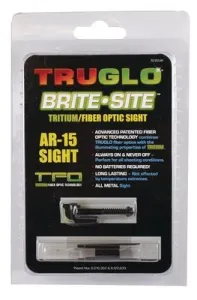
Most current night sights pair the tritium with a bright painted or photoluminescent ring around the front dot for daylight. The TruGlo TFX Pro goes further and runs a fiber optic rod in front of the tritium, so it glows in daylight and in the dark. Our best night sights for concealed carry covers the field.
Suppressor-Height Sights
Suppressor-height sights are extra tall, so you can see over a suppressor or, more often today, through the window of a pistol red dot. When the irons show through the lower part of the dot’s window, they’re co-witnessed, and if the battery dies you still have sights. The XS R3D above comes in suppressor height for most popular pistols.
Iron, Fiber and Night Sight Deals Under $100
Best-scored accessories across 200+ retailers · Updated every 4 hours
Red Dot Sights
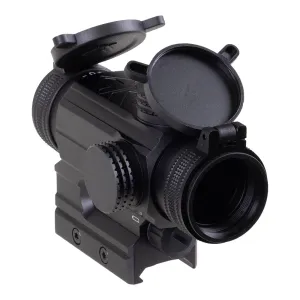
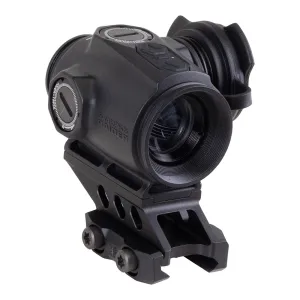
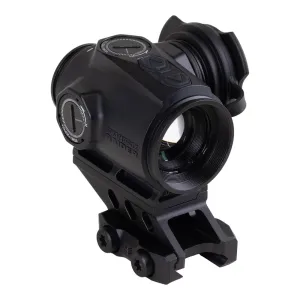
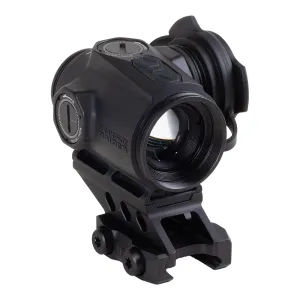
A red dot uses an LED to project a dot onto a coated lens, and you look through the lens and put the dot on the target. There’s only one focal plane, the target, so you keep both eyes open and look where you want to hit. It’s the biggest step up in speed and accuracy most shooters will ever buy. Dot size is given in MOA, and 1 MOA covers about 1 in at 100 yards, so a 2 MOA dot covers 2 in at 100 and half an inch at 25.
Tube Red Dots
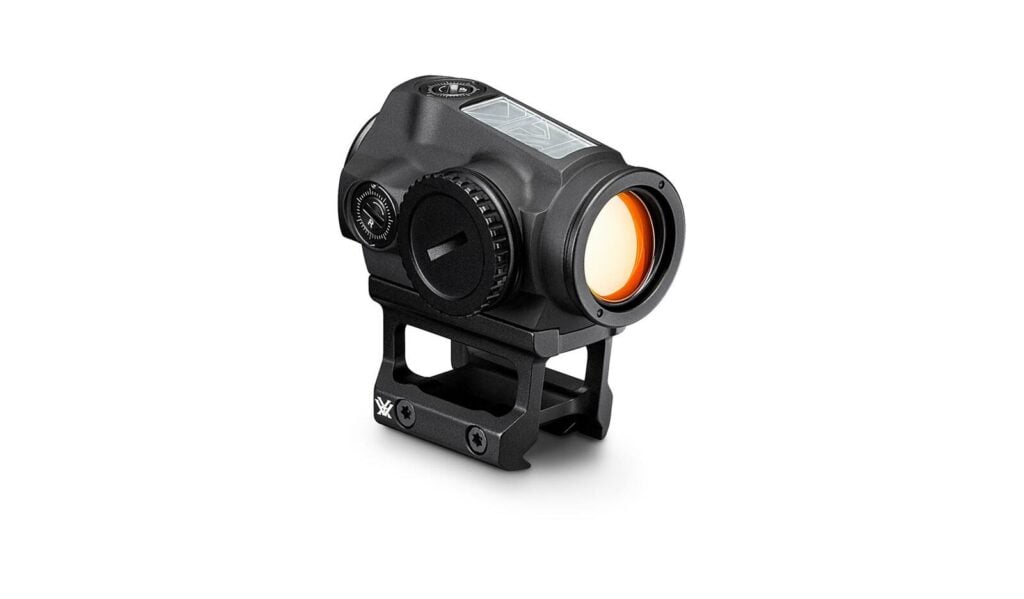
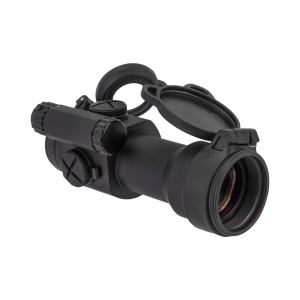
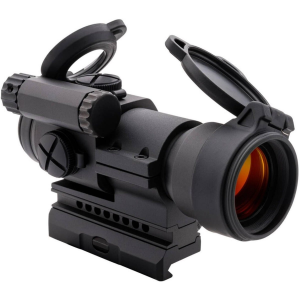
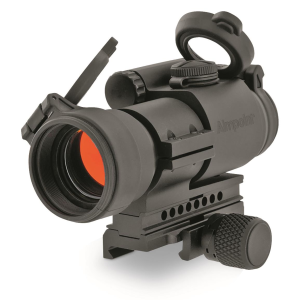
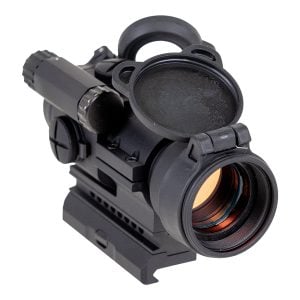
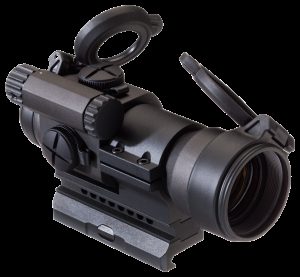
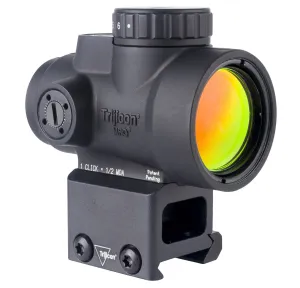
A tube red dot looks like a short scope with a lens at each end. The tube protects the emitter and the glass, and it’s the standard on AR-15s, PCCs and shotguns. Battery life is the headline feature. Aimpoint rates the Patrol Rifle Optic at 30,000 hours, more than three years left on, on setting 7 of its 10 brightness settings. You turn it on, leave it on, and change the battery on your birthday every few years. The Vortex SPARC is the budget starting point.
Pistol Red Dots: Open and Enclosed Emitters
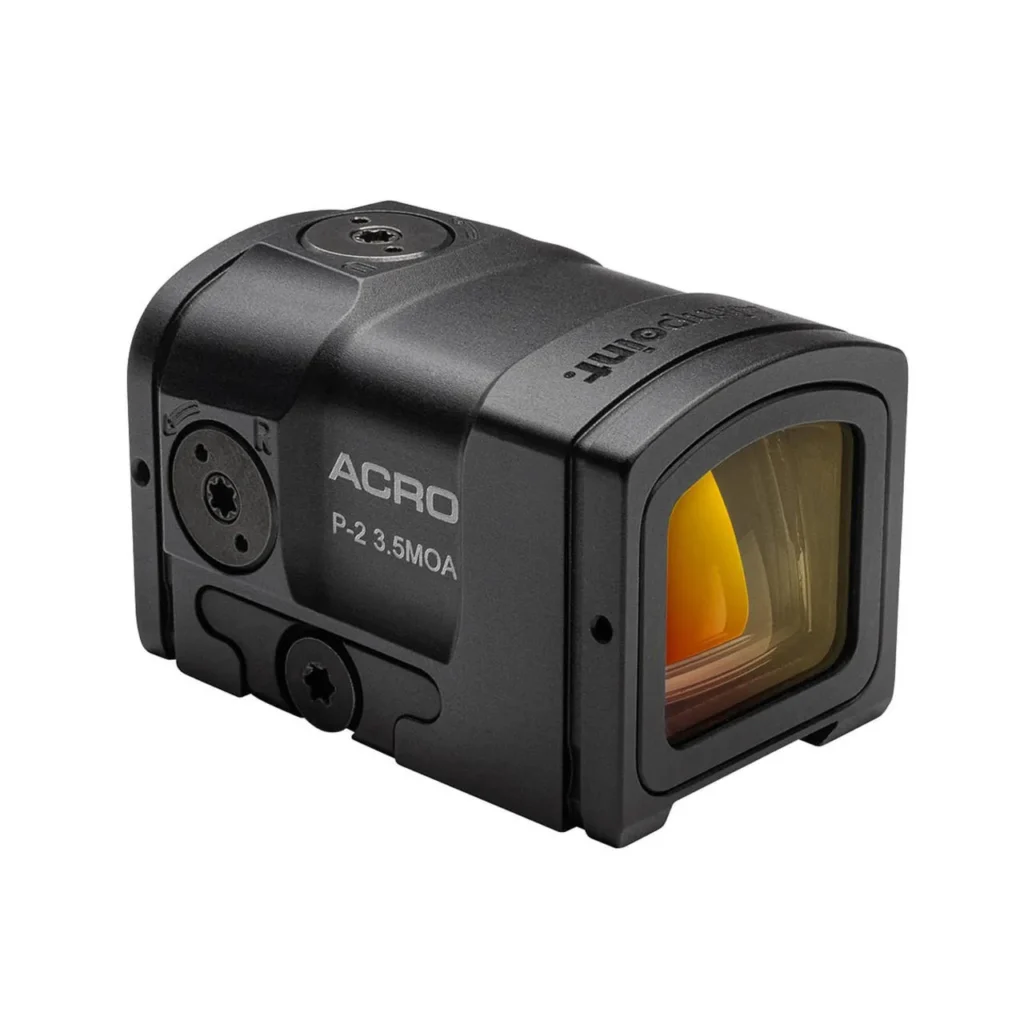
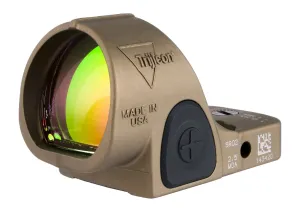
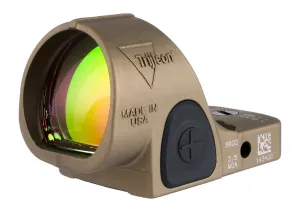
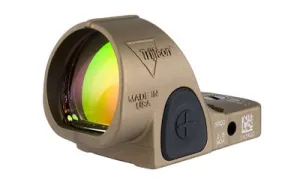
Pistol red dots, also called reflex sights or micro red dots, are small enough to mount on a slide. An open emitter like a Trijicon RMR or Holosun 507C has the LED sitting exposed on the slide, and a raindrop, mud or lint on the emitter can block the dot. An enclosed emitter like the Aimpoint ACRO or Vortex Venom wraps the whole thing in a sealed box. That’s better for an appendix carry gun that lives against a sweaty shirt.
Pistol dots mount to an optics cut, and the screw patterns, called footprints, differ. RMR, RMSc, DeltaPoint Pro and ACRO are the big four, and they are not interchangeable without a plate. Check the footprint of your slide before you buy. Our best pistol red dots, best red dots for concealed carry and best optics-ready pistols cover the pairings, and our best AR-15 red dots covers rifles.
Red Dot and Prism Deals $100 to $300
Best-scored accessories across 200+ retailers · Updated every 4 hours



Holographic Sights
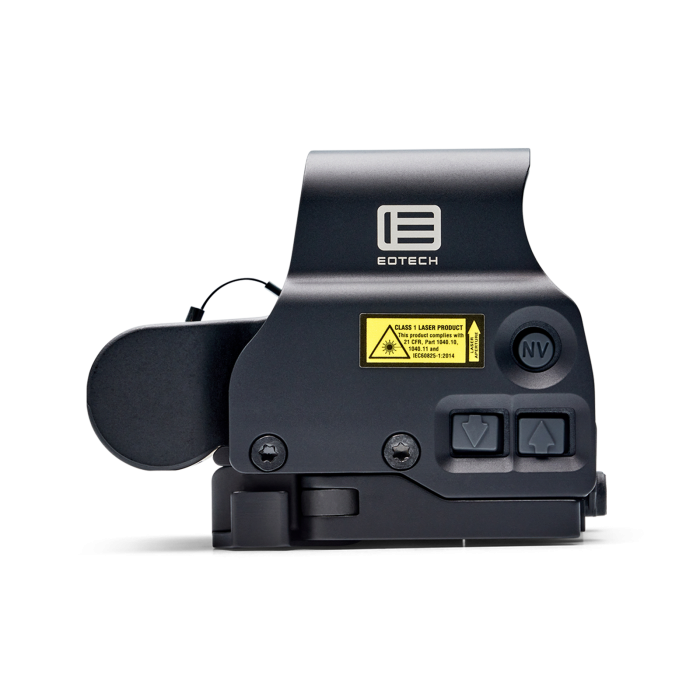
A holographic sight looks like a red dot but works differently. A laser diode lights a hologram of the reticle that’s recorded in the viewing window, and your eye sees the reticle out at the target. EOTech is the name everyone knows, and the standard reticle is a 1 MOA dot inside a 68 MOA ring. The ring is huge and fast for close work, and the dot is fine enough for 200 yards.
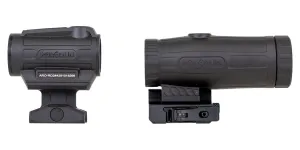
The hologram has two real advantages. It still shows the full reticle if part of the window is covered by mud or a hand, and many shooters with astigmatism see a crisper reticle than they get from an LED dot. The price is battery life. EOTech rates the EXPS3 at about 600 hours on a CR123 at brightness setting 12, against 30,000 for the Aimpoint, which is why EOTechs shut themselves off after eight hours. Our best holographic sights tests the field, and best red dot magnifiers covers the flip-to-side 3x units that pair with both.
Prism Sights
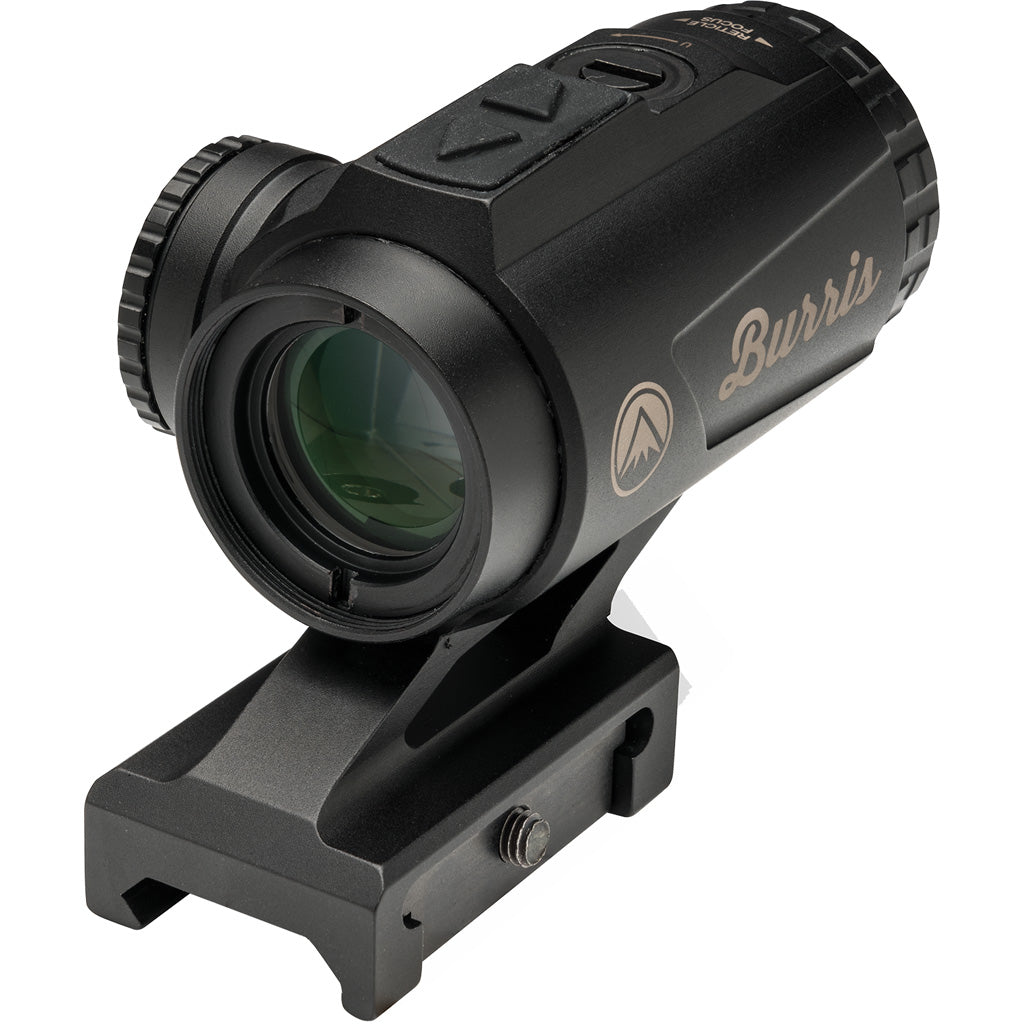
A prism sight is a short, compact scope that folds the light path through a glass prism instead of a long tube of lenses. The big difference from a red dot is that the reticle is etched into the glass. The illumination needs a battery, but when the battery dies the black reticle is still there. Most come at 1x, 3x or 5x.
A prism is the sight to try if your red dot looks like a starburst or a comma. That smear is astigmatism, and because a prism’s reticle is etched glass rather than a reflected LED, it stays sharp. Many prisms also have a diopter ring to focus the reticle to your eye. The downsides are eye relief and eyebox: you have to put your head in about the same place every time, which is slower than a red dot. Our best prism scopes covers the ones I’d buy.
Rifle Scopes and LPVOs
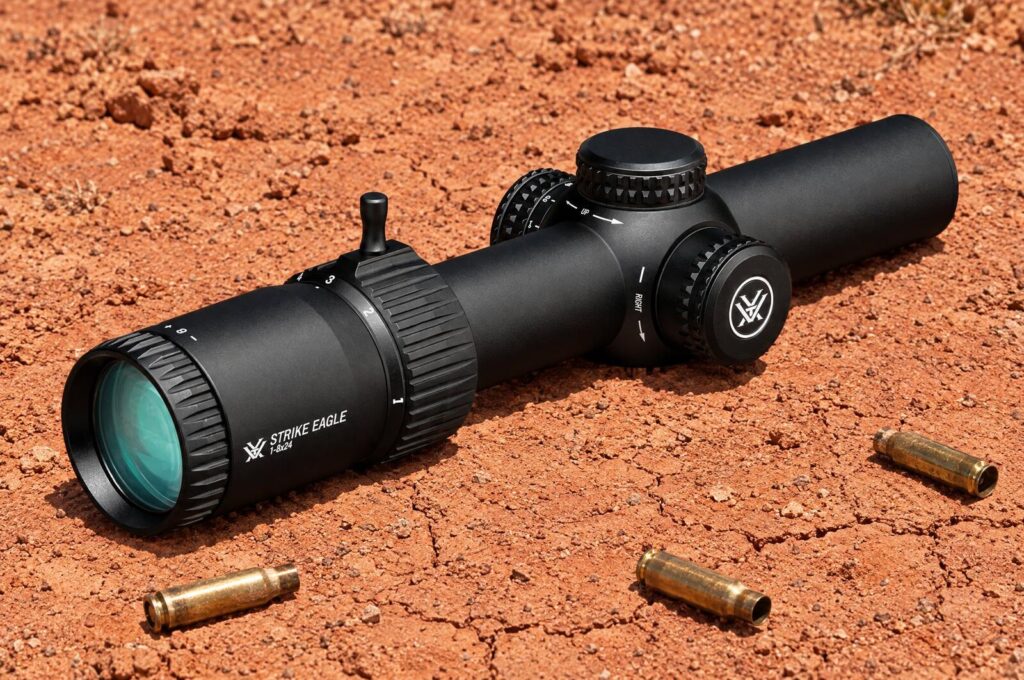
A rifle scope magnifies the target and puts a crosshair, or reticle, on it. A fixed scope has one power, and a variable scope zooms, written as a range like 3-9×40: three to nine power with a 40 mm objective lens. A 3-9×40 is still the most popular deer scope in America. Above 10x you’re into long-range and varmint scopes with turrets you dial for distance.
The reticle can sit in the first focal plane, where it grows with magnification and its marks stay accurate at every power, or the second focal plane, where it stays the same size and the marks are only correct at one power. Our MOA vs MRAD guide covers how scopes measure adjustments.
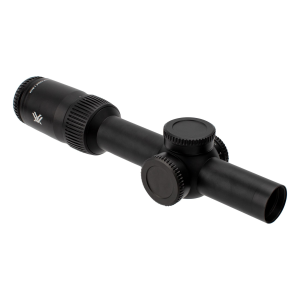
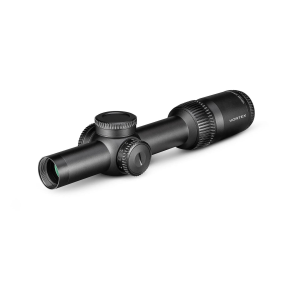
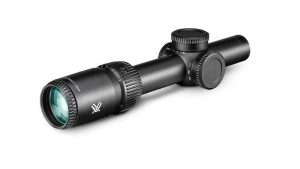
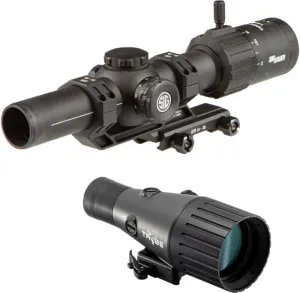
A low power variable optic, or LPVO, is a scope that starts at a true 1x and zooms to 6x, 8x or 10x. At 1x with the illumination on it acts like a red dot, and cranked up it reaches out to 500 yards and beyond. It’s heavier than a red dot and slower than one inside a room, but it’s the one-optic answer for a general purpose AR-15. See our best LPVO scopes, best rifle scopes and how to sight in a rifle scope.
Holographic, LPVO and Scope Deals $300 and Up
Best-scored accessories across 200+ retailers · Updated every 4 hours



Laser Sights
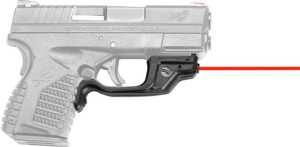
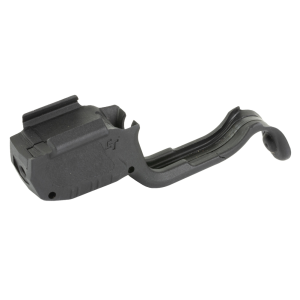
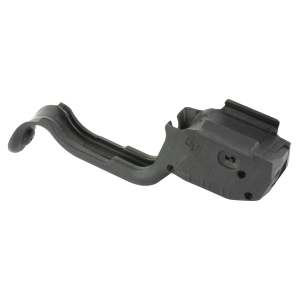
A laser sight projects a red or green dot onto the target itself. It mounts under the barrel, on the trigger guard or in the grip, and the Crimson Trace Laserguard and Lasergrips are the best known. A laser lets you aim from awkward positions where you can’t get the gun up to your eye, and green lasers stay visible in brighter light than red ones. In daylight past a few yards, though, you will lose the dot, and chasing a dot on a moving target is slower than using your sights. I treat a laser as an add-on to good sights, never a replacement.
Co-Witnessing Iron Sights With an Optic
Co-witness means your iron sights line up with the dot in your optic, so you can switch to irons if the optic fails without moving your head. On an AR-15 there are two standard heights:
- Absolute co-witness: the irons sit dead center in the optic window, under the dot. The optic sits about 1.41 in over the rail. It’s the most intuitive, but the irons clutter the window if you leave them up.
- Lower 1/3 co-witness: the irons sit in the bottom third of the window, with the optic about 1.535 in over the rail. It gives you a cleaner view and a more heads-up position, and it’s what most shooters run today.
Flip-up irons let you fold them out of the window entirely and only raise them when you need them. On a pistol, suppressor-height sights do the same job through the dot’s window. Our AR-15 optics guide covers mounts and heights.
Red Dot vs Holographic vs Prism
| Red dot | Holographic | Prism | |
|---|---|---|---|
| Reticle | LED dot reflected on a lens | Laser-lit hologram, dot inside a ring | Etched in the glass, lit by an LED |
| Battery life | Up to 30,000+ hours | About 600 to 1,000 hours | Long, and works dark with a black reticle |
| Magnification | None | None | 1x, 3x or 5x |
| With astigmatism | Can look smeared | Often crisper | Sharp, with a diopter on many |
| Eyebox | Very forgiving | Very forgiving | Tighter, fixed eye relief |
| Best for | Almost everyone, carry pistols | Fast carbine work, night vision | Astigmatism, 100 to 300 yards |
For most people the answer is a red dot. Pick a holographic if you shoot fast at close range and can live with changing batteries, and a prism if your eyes smear a dot or you want a little magnification in a compact package. Our gun optics guide walks through picking one for each platform.
Which Type of Gun Sight Should You Buy?
- Carry or home defense pistol: a pistol red dot with suppressor-height night sights co-witnessed, or a good set of tritium night sights if your slide isn’t cut for an optic.
- AR-15 for home defense and range: a tube red dot with flip-up backup irons.
- One AR-15 for everything out to 500 yards: an LPVO.
- Shotgun for slugs and buckshot: ghost ring irons or a red dot.
- Deer rifle: a 3-9×40 scope.
- Astigmatism: a prism sight.
- Competition pistol: a fiber optic front, or a red dot in the Carry Optics division.
Whatever you choose, practice with it before you trust it. For the guns these sights go on, see our types of guns, types of handguns and types of rifles, and our parts of a gun for where everything sits.
Frequently Asked Questions
What are the main types of gun sights?
Gun sights split into iron sights and optical sights. Iron sights include notch and post, aperture or peep, ghost ring, buckhorn and shotgun beads, plus fiber optic and tritium night sight versions. Optical sights include red dots, holographic sights, prism scopes, rifle scopes and LPVOs. Laser sights are a separate type.
What are the most accurate iron sights?
Aperture or peep sights. Your eye centers itself in the rear ring without any effort, so you only have to put the front post on the target. That is why military rifles and AR-15 backup sights use them.
How long do tritium night sights last?
Tritium has a half-life of 12.3 years, so night sights are about half as bright 12 years after the tritium was made and a quarter as bright after about 25. They do not stop glowing all at once, but a set older than about 10 to 12 years is worth checking in a dark room.
What is the difference between a red dot and a holographic sight?
A red dot reflects an LED dot off a coated lens. A holographic sight uses a laser to light a hologram of the reticle recorded in the window. Holographic sights still show the reticle with part of the window blocked and often look crisper with astigmatism, but battery life is about 600 to 1,000 hours against up to 30,000 or more for a red dot.
Are prism scopes better for astigmatism?
For many shooters, yes. A prism reticle is etched into the glass instead of reflected from an LED, so it stays sharp where a red dot can look like a starburst, and many prisms have a diopter to focus the reticle to your eye.
What does co-witness mean?
It means your iron sights line up with the aiming point of your optic, so you can use the irons through the optic window if it fails. Absolute co-witness puts the irons dead center, and lower 1/3 co-witness puts them in the bottom third of the window.
What is sight radius?
Sight radius is the distance between the front and rear iron sights. A longer radius makes small misalignments matter less. A 0.01 inch misalignment on a 6 inch pistol sight radius puts you 1.5 inches off at 25 yards, while the same error on a 20 inch rifle sight radius costs less than half an inch.
Are laser sights worth it?
As an add-on, they can be. A laser lets you aim from awkward positions and helps in low light, but the dot washes out in daylight past a few yards. Use one alongside good sights, not instead of them.
3,979+ Gun & Ammo Deals
Updated daily from 200+ top retailers. Filter by category, caliber, action type, and price.
Related Guides