

Last updated October 2026
Some of the links below are affiliate links, meaning at no additional cost to you, we may earn a commission if you click through and make a purchase.
- Treat every gun as loaded
- Point the muzzle in a safe direction
- Keep your finger off the trigger until you’re ready to shoot
- Know your target and what’s beyond
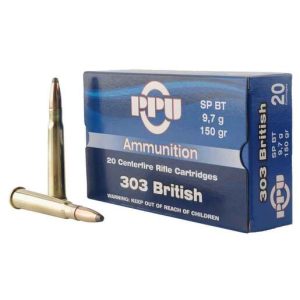
Yes, 303 British ammo is still made. Prvi Partizan, Sellier & Bellot, Hornady, Federal, Remington, Winchester and HSM all load it, and on October 1, 2026, boxes of 20 started under $24 on our price cards.
That’s about $1.20 a round for the Serbian and Czech loads and about $2 and up for American hunting ammunition. You won’t see much of it on a local shelf, which is why so many owners think the round is dead.
The trap with 303 British ammo isn’t in the rifle. It’s in the cheapest box on the search results page: military surplus that’s sixty years old, corrosive, and known for hangfires. New 303 British ammo costs more per round and has none of those problems.
This guide covers who makes 303 British ammo, what it costs per round, what’s safe in which rifle, and what the headspace scare is really about. New to buying online? Our ammo buying guide covers the basics.
Quick answer
Buy new PPU or Sellier & Bellot ammunition for the range and a 180-grain soft point for hunting. SAAMI caps the cartridge at 49,000 psi, and we found no source that names a current factory load as unsafe in a sound Lee-Enfield. Skip old military surplus. Have a gunsmith check the rifle once, headspace included, before the first shot.
- Price in October 2026: about $1.18 to $1.60 a round for Sellier & Bellot and PPU, $1.97 to $3.92 for Federal, $2.05 to $2.60 for Hornady
- Also sold as: 303 British, .303 Mk VII and 7.7x56R
- Bullet: .311 to .312 in., in a rimmed bottleneck case
- Not the same thing: .303 Savage, 7.7 Japanese, .30-40 Krag and 7.62x54R will not work in a .303 British rifle
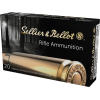
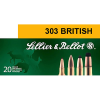

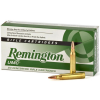
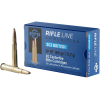
How we tested: Every pick here is ranked against our testing methodology. Minimum round counts, accuracy and reliability protocols, the failures that disqualify a gun.
.303 British at a Glance
The .303 British is a rimmed, bottleneck rifle cartridge that Britain adopted in 1888 with the Lee-Metford, firing .311 to .312 inch bullets at a SAAMI limit of 49,000 psi. By the older crusher method that limit is 45,000 CUP.
| Spec | .303 British |
|---|---|
| Names | .303 British, 303 British, 7.7x56R. Mk VII is the 174 gr service load of 1910 |
| Bullet diameter | .311 to .312 in. The .303 is the bore, measured across the lands |
| Case | Rimmed, bottleneck, 2.222 in. long. It headspaces on the rim |
| Overall length | 2.915 to 3.075 in. |
| US pressure limit | 49,000 psi by transducer, 45,000 CUP by copper crusher |
| European pressure limit | 3,650 bar by transducer |
| Common factory loads | 150 gr at about 2,690 fps, 174 gr at about 2,460 fps, 180 gr at 2,460 fps |
| Rifling | 5 grooves, 1 turn in 10 in., left hand, with a .314 in. groove |
| Adopted | 1888, with the Lee-Metford |
| Rifles | Lee-Enfield No. 1, No. 4 and No. 5, Pattern 1914, Ross, Lee-Metford, Martini-Enfield, Winchester Model 1895, Ruger No. 1 |
| Status | In production |
303 British Ammo: The Good and the Bad
Prvi Partizan, Sellier & Bellot, Hornady, Federal, Remington, Winchester and HSM all load 303 British ammo in 2026, and new boxes of 20 start under $24. The bad news is mostly about old surplus and short brass life.
Pros
- Seven makers still load it
- New ammo from about $1.20 a round
- Enough for deer, bear and moose
- Milder recoil than a .308
- Fits sound No. 1, No. 4, No. 5
Cons
- American loads cost about double
- Rare on local store shelves
- Old surplus is corrosive and unreliable
- Brass life is short in Enfields
- Rims can lock in the magazine
Table of Contents
Who Still Makes 303 British Ammo in 2026
Seven companies make 303 British ammo in 2026: Prvi Partizan and Sellier & Bellot in Europe, and Federal, Remington, Winchester, Hornady and HSM in the United States. Steinel sells two more loads direct.
So is 303 British ammo still made? Yes, on two continents. The table shows who makes 303 British ammo and what each maker’s own page or catalog listed when we checked in October 2026.
| Maker and load | Bullet | Listed velocity | Listed energy |
|---|---|---|---|
| PPU | 150 gr soft point boat tail | 820 m/s, about 2,690 fps, from a 24 in. barrel | about 2,410 ft-lb |
| PPU | 174 gr full metal jacket boat tail | 750 m/s, about 2,461 fps | about 2,339 ft-lb |
| PPU | 180 gr soft point boat tail | 750 m/s, about 2,461 fps | about 2,420 ft-lb |
| Sellier & Bellot | 150 gr soft point | 809 m/s, about 2,654 fps | about 2,341 ft-lb |
| Sellier & Bellot | 180 gr soft point | 726 m/s, about 2,382 fps | about 2,274 ft-lb |
| Sellier & Bellot | 180 gr full metal jacket | 755 m/s, about 2,477 fps | about 2,460 ft-lb |
| Federal Power-Shok | 150 gr jacketed soft point | 2,690 fps | 2,410 ft-lb |
| Federal Power-Shok | 180 gr jacketed soft point | 2,460 fps | 2,418 ft-lb |
| Hornady Custom | 150 gr InterLock soft point | 2,685 fps from a 24 in. barrel | 2,401 ft-lb |
| Remington Core-Lokt | 180 gr Core-Lokt soft point | 2,460 fps | 2,418 ft-lb |
| Winchester Super-X | 180 gr Power-Point | 2,460 fps | 2,418 ft-lb |
| HSM | 174 gr Sierra MatchKing hollow point | Not published | Not published |
| HSM Game King | 180 gr Pro-Hunter soft point | Sold through dealers. Not on HSM’s own site | Not published |
| Steinel | 174 gr full metal jacket | 2,150 fps from a 21 in. barrel | Not published |
The American 180-grain 303 British ammo loads are triplets. Remington, Winchester and Federal all publish 2,460 fps and 2,418 foot-pounds. Hornady and Federal are just as close with their 150-grain loads.
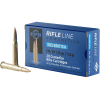
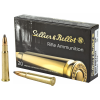
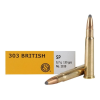
The two European makers cover the range side. PPU loads a 174-grain full metal jacket that matches the weight of the old Mk VII service bullet, and Sellier & Bellot sells a 180-grain full metal jacket. Our dealers also carry a 174-grain Remington UMC range load.
HSM describes its 174-grain Sierra MatchKing load as made for target shooting and long-range accuracy. No maker’s page says which rifles its load is or isn’t for. Steinel comes closest, with a load it describes as made “for your Enfield or other classic rifle.” We couldn’t confirm current 303 British ammo from Norma, Wolf or Buffalo Bore.
Check the barrel length before you compare velocities. PPU’s own catalog lists all three of its loads as boat-tails, and it measures them from a 24-inch barrel. Most American makers don’t state a barrel length at all, so compare muzzle velocity within one maker’s column and not across them.

What 303 British Ammo Costs in 2026
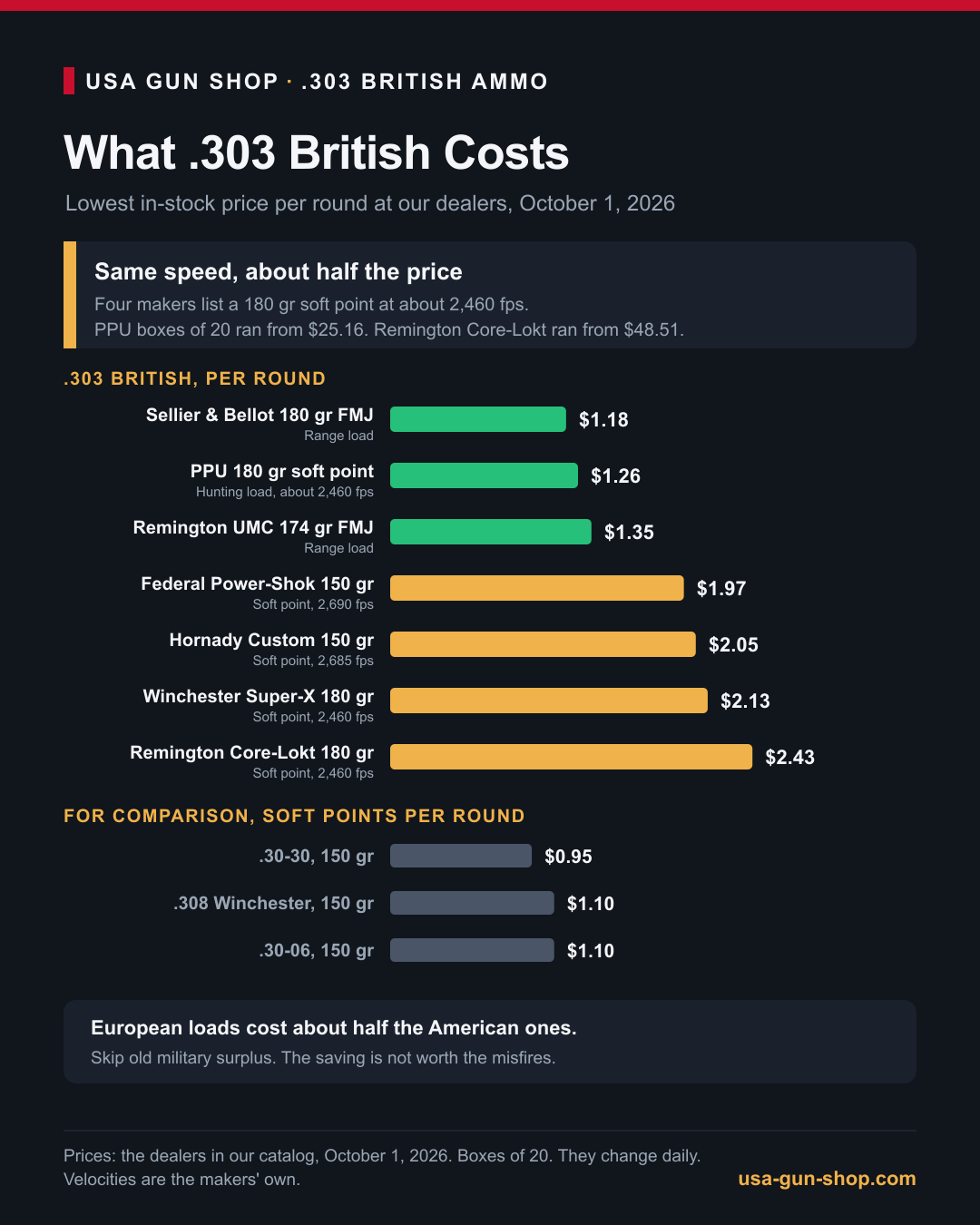
The 303 British ammo price at our dealers ran from $1.18 a round for Sellier & Bellot full metal jacket to $3.92 a round for the priciest Federal box on October 1, 2026, with PPU soft points from $1.26.
Prices are for a box of 20, from the dealers in our catalog that day. The live cards search more dealers, so you may see a lower price there. Prices move, and so does availability.
| Load | Box of 20 | Per round |
|---|---|---|
| Sellier & Bellot 180 gr FMJ | $23.51 | $1.18 |
| Sellier & Bellot 150 gr soft point | $24.79 to $31.49 | $1.24 to $1.57 |
| PPU 150 gr and 180 gr soft point | $25.16 to $31.99 | $1.26 to $1.60 |
| PPU 174 gr FMJ | $26.69 to $28.99 | $1.33 to $1.45 |
| Remington UMC 174 gr FMJ | $26.95 to $38.49 | $1.35 to $1.92 |
| HSM 180 gr soft point | $38.48 to $62.49 | $1.92 to $3.12 |
| Federal Power-Shok 150 gr | $39.49 to $66.99 | $1.97 to $3.35 |
| Hornady Custom 150 gr | $40.99 to $51.99 | $2.05 to $2.60 |
| Winchester Super-X 180 gr | $42.55 to $67.99 | $2.13 to $3.40 |
| Federal Power-Shok 180 gr | $45.64 to $78.49 | $2.28 to $3.92 |
| Remington Core-Lokt 180 gr | $48.51 to $68.49 | $2.43 to $3.42 |
Two things stand out in 303 British ammo prices. A PPU 180-grain soft point lists the same velocity as the Federal, Remington and Winchester 180-grain loads and costs about half as much. And the makers’ own sites listed far more than the street price when we checked, at $85.99 for Federal and $86.99 for Remington.
Watch for the false bargain too. The cheapest thing a search for 303 British ammo turns up may be a blank, a snap cap or old surplus. Our cards filter those out.
Against its neighbors, 303 British ammo costs a little more. On the same day .308 Winchester and .30-06 soft points started at about $1.10 a round on our cards, and .30-30 at $0.95. Our ammo price report tracks the common calibers.

Lee-Enfield Ammo: What’s Safe in Your Rifle
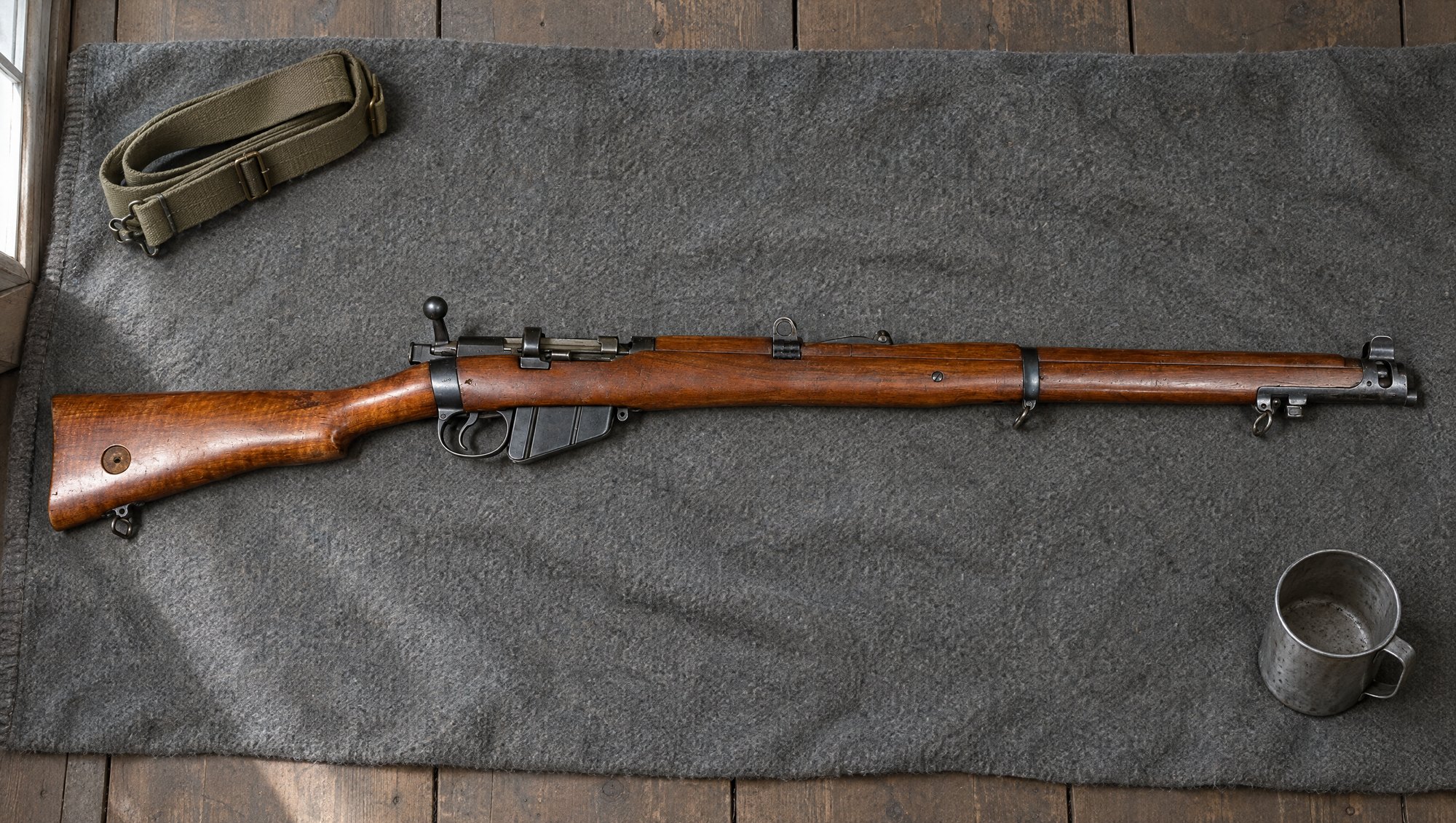
SAAMI caps the .303 British at 49,000 psi, well below the 60,000 psi of a .30-06, and we found no source that names a current factory load as unsafe in a sound Lee-Enfield. The rifle’s condition is what needs checking.
Lee-Enfield ammo is the same .303 British across every Mark from the 1890s on. Find your rifle in the table.
| Rifle | Action and era | Current factory loads | What to do first |
|---|---|---|---|
| Lee-Enfield No. 1 Mk III and Mk III*, the SMLE | Rear-locking bolt, from 1907 | No source names one as unsafe in a sound rifle | Gunsmith check with a headspace gauge. Its bolt heads aren’t numbered |
| Lee-Enfield No. 4 Mk I, Mk I* and Mk 2 | Rear-locking bolt, from 1939 | No source names one as unsafe in a sound rifle | Gunsmith check with a headspace gauge. Bolt heads are numbered 0 to 3 |
| Lee-Enfield No. 5, the Jungle Carbine | Rear-locking bolt, 1944 to 1947 | No source names one as unsafe in a sound rifle | Same check as the No. 4 |
| Pattern 1914 Enfield | Bolt action, first accepted 1916 | No source names one as unsafe in a sound rifle | Gunsmith check |
| Ross Mk III | Straight-pull bolt, 1910 | Chambered for it | Gunsmith who knows Ross rifles |
| Lee-Metford and the Long Lee-Enfield | Rear-locking bolt, 1888 to the early 1900s | No maker says either way | Gunsmith first. Metford rifling was made for black powder |
| Martini-Metford and Martini-Enfield | Martini-Henry actions rebarreled to .303 | No maker says either way | Gunsmith first. Khyber Pass copies can be dangerously unsafe |
| Winchester Model 1895 | Lever action, in .303 from 1898 | Chambered for it | Gunsmith check on an original |
| Ruger No. 1 and Uberti Courteney | Modern single shots | Yes | Read the maker’s manual |
| Ishapore 2A and 2A1 | Lee-Enfield pattern, from 1963 | No. Wrong cartridge | These are 7.62 NATO rifles, not .303 |
For the oldest rifles there’s one useful published remark. American Hunter notes that factory ammunition is, in many cases, loaded to lower pressures and velocities “in deference to the weaker metallurgy of the earliest rifles.” That’s a reason the loads are mild. It isn’t a clearance for any one Lee-Metford or Martini.
Two rows need a note. British ordnance declared the No. 5 obsolete in 1947 over a wandering zero, though modern owners haven’t reported a confirmed case of it. And wartime No. 4 Mk I* rifles were also made with two-groove barrels.
The Winchester Model 1895 is the American oddity. Winchester added .303 British to its box-magazine lever action in 1898, and Uberti sells a new single shot in the caliber today.
The Ishapore row catches people. India built .303 No. 1 rifles at Ishapore, then built the 2A and 2A1 in 7.62 NATO from 1963 with improved steel. Read the receiver, not the factory name.
Our Lee-Enfield buyer’s guide covers the rifles themselves, and the best military surplus rifles roundup compares them with the Mausers and Mosins. This card shows what our dealers have in .303 right now.
The Standards: 49,000 psi, 45,000 CUP and 3,650 bar
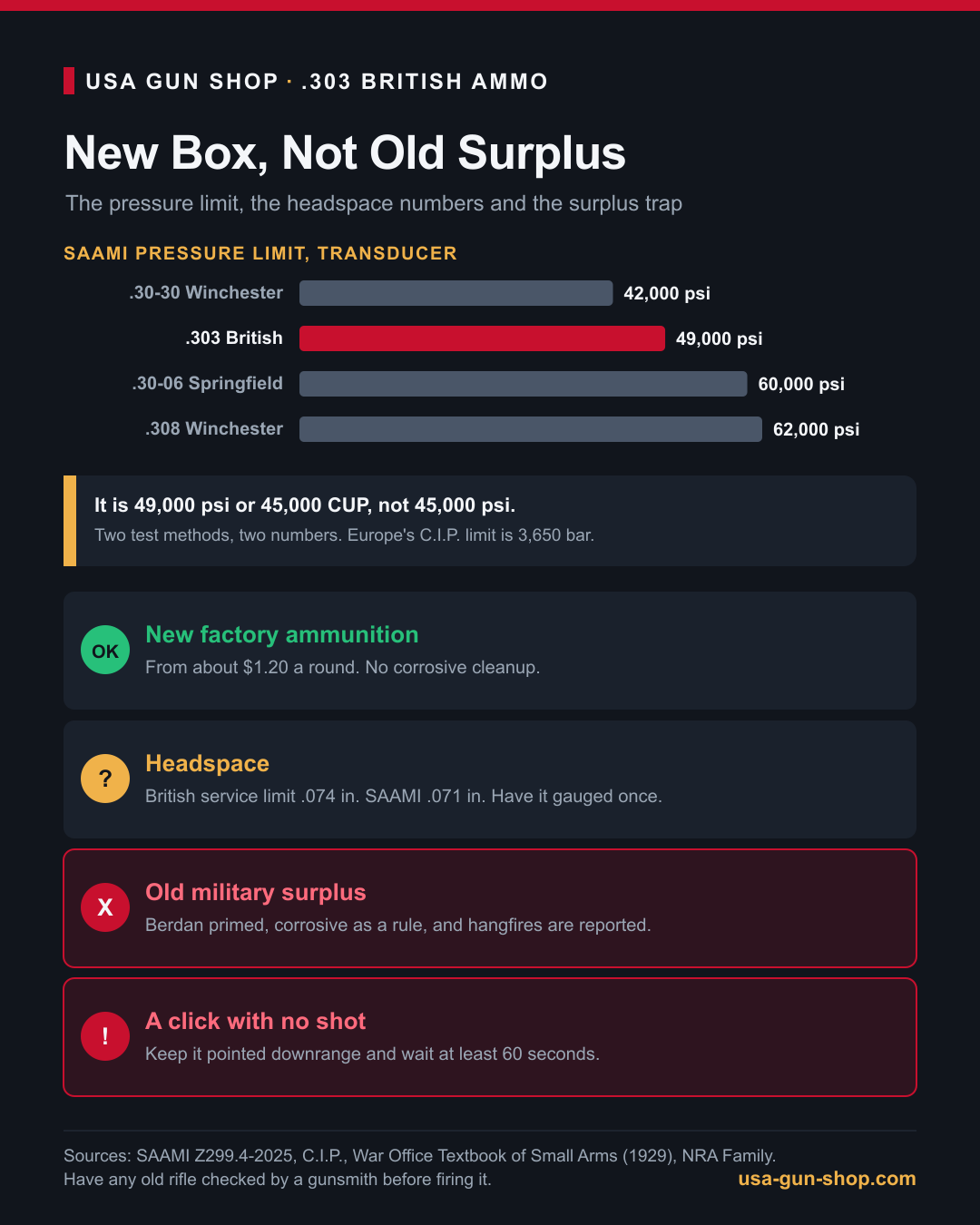
SAAMI lists the 303 British at a maximum average pressure of 49,000 psi by transducer and 45,000 CUP by copper crusher, and Europe’s C.I.P. sets 3,650 bar. Those are three numbers from three methods, and they don’t convert into each other.
That matters because “45,000 psi” is printed on more than one page that ranks for this cartridge. It’s the crusher figure with the wrong unit. You can read the row yourself in the SAAMI rifle standard, Z299.4, and the European figure on the C.I.P. sheet.
| Cartridge | SAAMI crusher limit | SAAMI transducer limit |
|---|---|---|
| .30-30 Winchester | 38,000 CUP | 42,000 psi |
| .30-40 Krag | 40,000 CUP | Not established |
| .303 British | 45,000 CUP | 49,000 psi |
| .30-06 Springfield | 50,000 CUP | 60,000 psi |
| .308 Winchester | 52,000 CUP | 62,000 psi |
So the .303 sits between the .30-40 Krag and the .30-06, a long way under the .308. Old British figures in tons per square inch came from a different test again, and they can’t be set beside any of these.
The same documents settle an old argument about oversize bores. Both SAAMI and C.I.P. draw the groove at .314 inch against a bullet of .3125 inch at most. A bullet a little smaller than the groove is the design, not a defect in your rifle.
303 British Surplus Ammo, Hangfires and the Headspace Scare
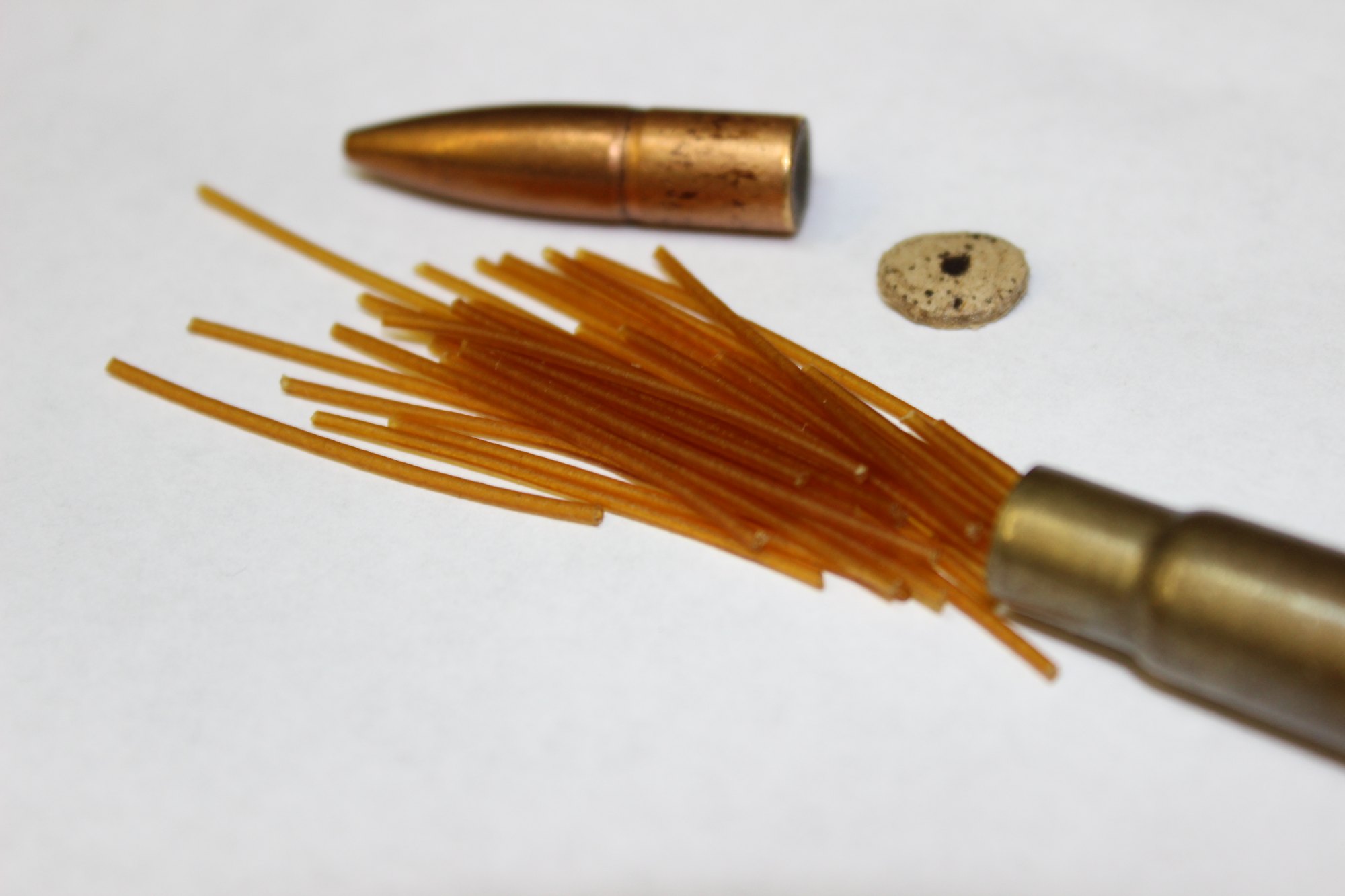
Old 303 British surplus ammo is the trap with this cartridge: it’s Berdan primed, corrosive in most cases, and decades past its best, and one published test of a Pakistani lot found that nearly every shot hung fire.
The cheap box
British service ammunition was loaded with cordite from 1891 into the 1960s. A chuckhawks.com guest article says surplus rounds are corrosively primed as a rule, and that the bore has to be cleaned very thoroughly to save it from rust.
The lot to know by name is POF, from the Pakistan Ordnance Factory. GunsAmerica Digest tested one lot in 2016, got a hangfire on nearly every shot plus some duds, and called it “actually fairly dangerous.” That’s one test of one lot. Owners on the forums report the same thing from other crates.
Corrosive doesn’t mean the ammunition eats the barrel as you shoot. The primer leaves salts in the bore that attract water, and the rust comes later if you don’t flush them out. That’s a cleaning chore with every range trip.
A hangfire is a delay between the click and the shot. If a round clicks, keep the muzzle downrange and wait. The NRA’s range safety guidance says at least 60 seconds before opening the bolt.
New PPU or Sellier & Bellot costs about $1.20 to $1.60 a round. Surplus is cheaper per round, and the saving buys you the cleaning and the misfires.
303 British headspace: the scare and the numbers
The second half of the trap is the diagnosis. A new owner finds a stretched or split case, reads that Lee-Enfields have bad headspace, and starts shopping for bolt heads.
Here’s what the documents say. The .303 headspaces on its rim, so the gauge is a rim-thickness gauge.
The War Office Textbook of Small Arms of 1929 gives the British service limits as .064 inch minimum and .074 inch maximum. SAAMI’s gauge table is tighter, at .064 to .071. That gap is the whole 303 British headspace argument.
So a rifle that passes the military gauge can fail an American commercial one and still be serviceable. What the looser chamber costs you is brass. The Lee action locks at the rear of the bolt, and Shooting Times explains that the bolt body compresses under firing while the case stretches just ahead of the rim.
If you don’t reload, that stretch costs you nothing. The case is fired once and thrown away. Reloaders feel it, and most of the case separations owners describe on the forums involve reloaded brass.
The textbook is clear that there’s a real limit all the same. It warns that an unsupported case “may burst,” and that’s what the field gauge is there to prevent.
The check to ask for
- Take the rifle to a gunsmith who has Lee-Enfield gauges, and ask for a headspace check against the .074 military field gauge.
- Keep the rifle with its own bolt. A bolt from another rifle changes the headspace.
- On a No. 4 or No. 5, bolt heads are numbered 0 to 3, and each step is about .003 inch longer. Fitting one is a gunsmith’s job, because the head has to be measured and gauged again.
- Watch your fired cases. Sticky extraction or a bright ring just ahead of the rim means the brass is close to separating.
And if you see that bright ring? Nick Harvey’s advice to an owner whose SMLE showed it was short: “Don’t shoot it again in its present condition.” Have the rifle gauged before the next round.
Rim Lock, Chargers and Boat-Tail Bullets
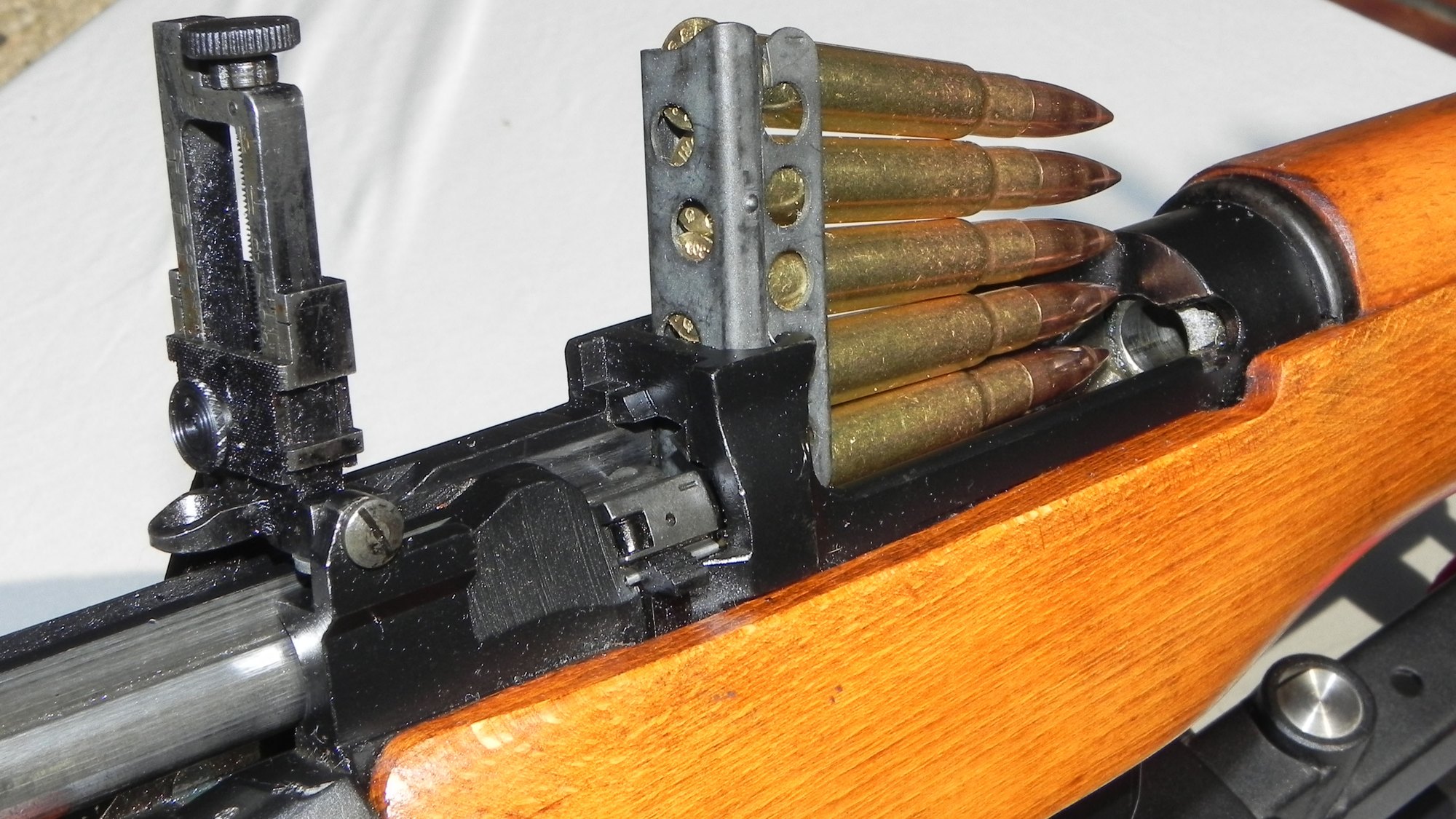
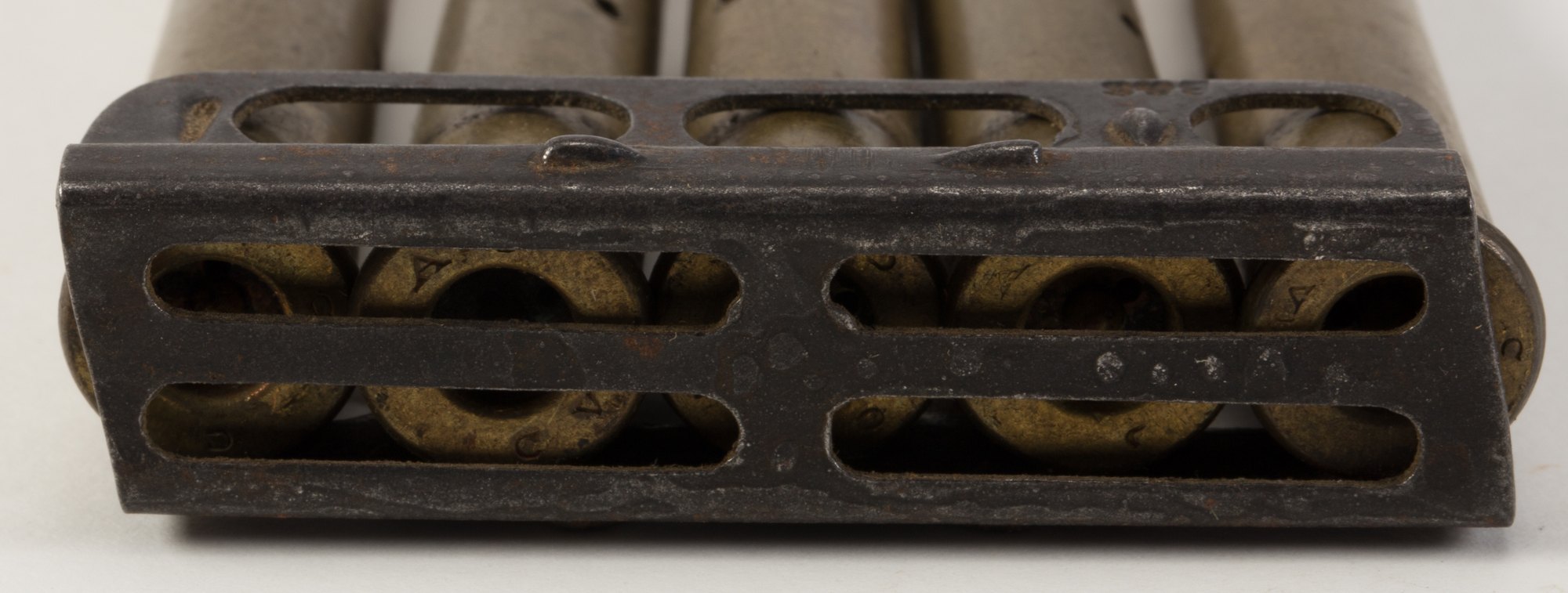
Rim lock is a feeding jam that happens when the rim of the top cartridge sits behind the rim of the one below it, so the bolt can’t push the round forward. It’s a nuisance in a Lee-Enfield’s 10-round magazine, and it’s avoidable.
The rule for any rimmed military cartridge is that each rim rests ahead of the rim beneath it. In a five-round charger that means rims down, up, down, up, down. Forgotten Weapons describes it as rounds 2 and 4 sitting on top of the rims of rounds 1, 3 and 5.
Load the magazine from two chargers of five, or single rounds with each rim placed ahead of the last. Military cases had beveled rims to help them slide past each other.
Boat-tails are an accuracy question. All three PPU loads are boat-tails, and some owners of rifles with cordite-worn throats report sideways holes from them. If yours does that, try another load before you blame the rifle.
7.7x56R, .303 Savage and the Names That Look Right but Aren’t
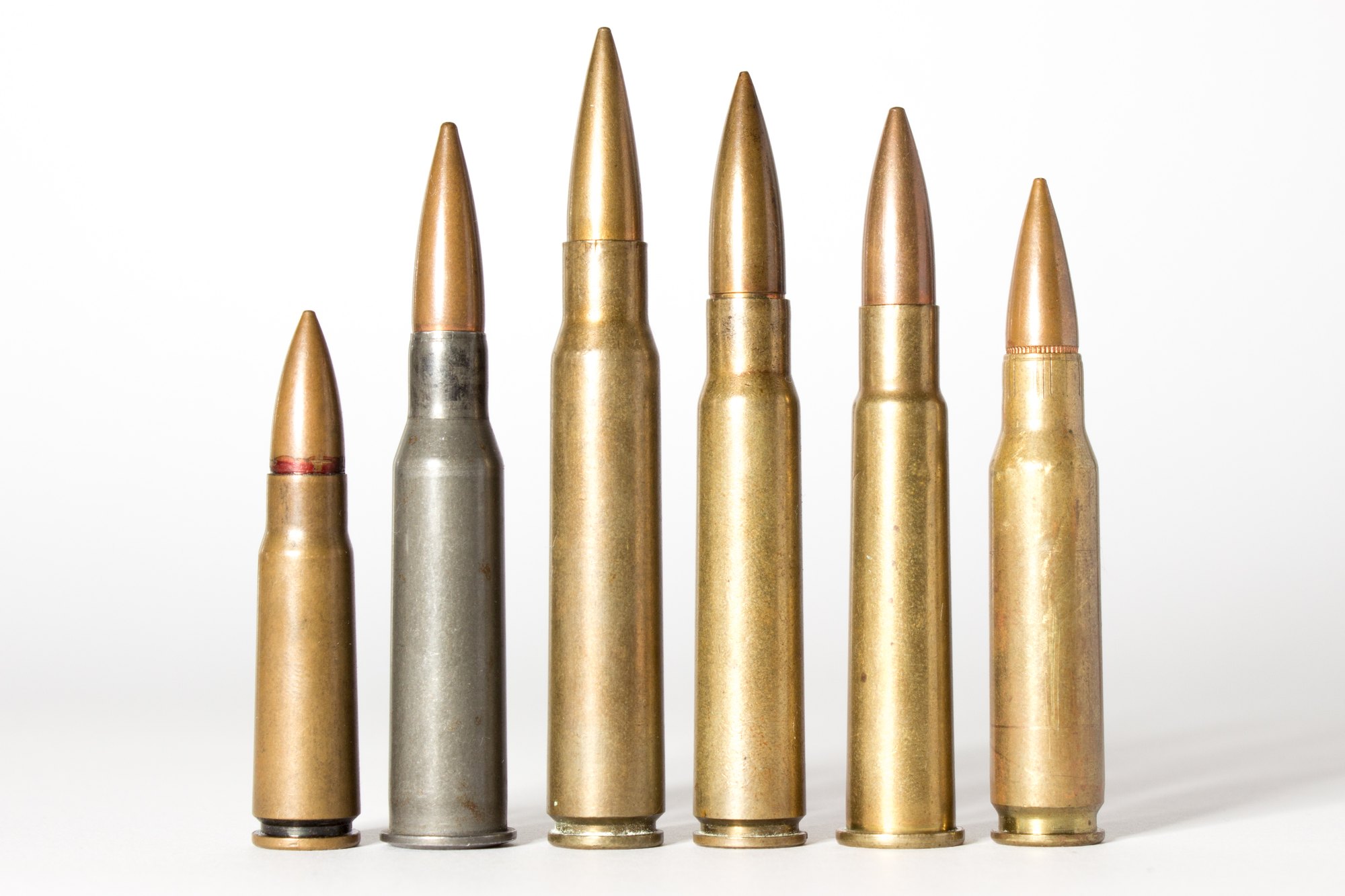
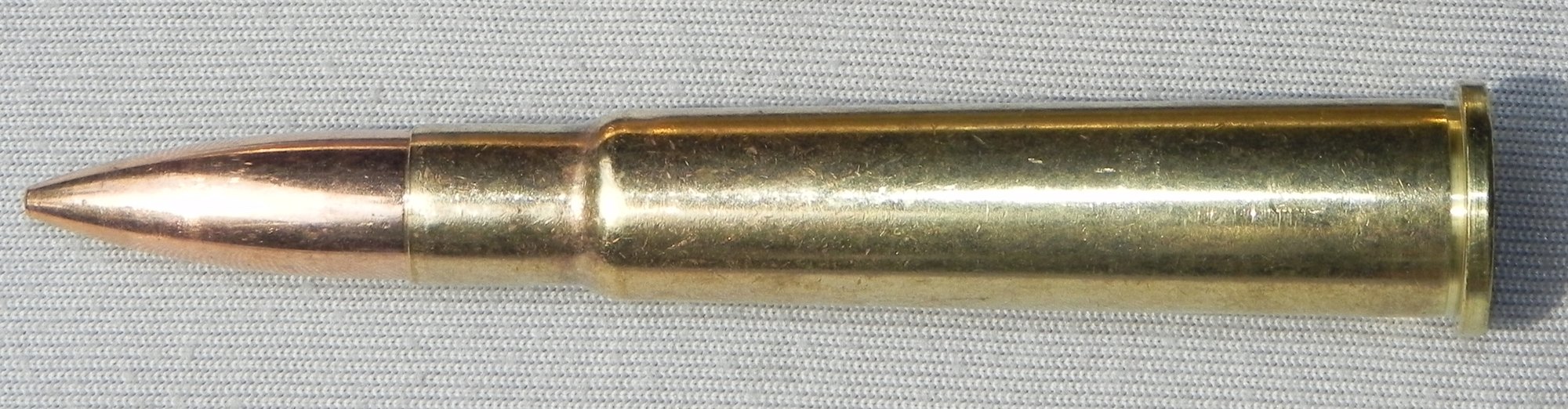
The .303 British and the 7.7x56R are the same cartridge under two names, and a military box marked Mk VII holds the 174-grain service load of 1910. The trouble starts with the other .303s and 7.7s on the shelf.
303 British vs 303 Savage is the naming trap we see most. The .303 Savage is a different, smaller case with a .308 inch bullet, and the two don’t interchange.
| On the box | What it is | Fits a .303 British rifle? |
|---|---|---|
| .303 British, 303 British, 7.7x56R | The same rimmed round | Yes |
| .303 Mk VII, Mk VIIz | The 174 gr military ball load. A z means nitrocellulose powder in place of cordite | Yes, but it is old surplus |
| .303 Savage | A smaller American case with a .308 in. bullet, for the Savage 99 | No |
| 7.7×58 Arisaka, 7.7 Japanese | A rimless Japanese round that shares only the bullet diameter | No |
| .30-40 Krag | A similar rimmed round. SAAMI says never to use .303 British in a Krag chamber | No |
| 7.62x54R | The rimmed Russian round, in a different case | No |
| .30-30 Winchester and .32 Winchester Special | Both are on SAAMI’s do-not-use list for .303 British chambers | No. Never |
| 7.62 NATO | What an Ishapore 2A or 2A1 fires | No |
Headstamps on military rounds carry a maker’s code, the Mark and a year. The ones American buyers meet most are RG for Radway Green, POF for Pakistan, HXP for Greece and DI for a Canadian wartime plant. PPU’s older cases are stamped nny.
Old Stock: Cordite, Corrosive Primers and Mk VIIIz
Military Mark VII cases have two flash holes, which makes them Berdan primed and a poor bet for reloading, and the 1929 War Office textbook describes cap compositions of mercury fulminate and potassium chlorate. Treat any military round as corrosive.
The British Army’s own cleaning drill still works. Its 1937 rifle pamphlet orders 5 or 6 pints of boiling water poured through the bore from the breech with a funnel, then drying and oiling. After that, clean with bore solvent as normal, and look again the next day.
You’ll also see Mk VIIIz, a 175-grain boat-tail at about 2,550 fps that was approved in 1938 for the Vickers machine gun. The Vickers MG Association says it “was for sole use in the Vickers but could be used in other weapons in exceptional circumstances.”
None of our sources calls it unsafe in a rifle. The wartime finding was about wear: a barrel fed cordite Mk VII and then nitrocellulose Mk VIIIz eroded faster. It’s machine gun ammunition, so it’s a poor first choice for a collectible rifle.
Wartime rounds are also collectibles now. If a sealed can or a bandolier came with the rifle, it may be worth more on a shelf than at the range.
303 British Ballistics for Deer, Black Bear and Moose
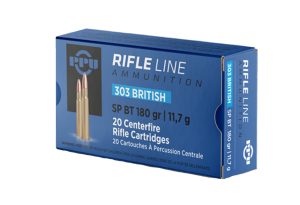
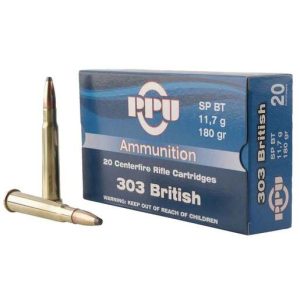
Factory 303 British ballistics run from a 150-grain bullet at 2,690 fps and 2,410 foot-pounds to a 180-grain bullet at 2,460 fps and 2,418 foot-pounds, which puts it ahead of the .30-40 Krag and about 325 foot-pounds behind a .308.
| Load | Muzzle | 100 yards | 200 yards | 300 yards |
|---|---|---|---|---|
| Federal Power-Shok 150 gr | 2,690 fps, 2,410 ft-lb | 2,442 fps, 1,987 ft-lb | 2,208 fps, 1,624 ft-lb | 1,988 fps, 1,316 ft-lb |
| Hornady Custom 150 gr | 2,685 fps, 2,401 ft-lb | 2,441 fps, 1,985 ft-lb | 2,211 fps, 1,628 ft-lb | 1,993 fps, 1,323 ft-lb |
| Federal Power-Shok 180 gr | 2,460 fps, 2,418 ft-lb | 2,206 fps, 1,944 ft-lb | 1,966 fps, 1,545 ft-lb | 1,744 fps, 1,215 ft-lb |
| Remington Core-Lokt 180 gr | 2,460 fps, 2,418 ft-lb | 2,125 fps, 1,805 ft-lb | 1,818 fps, 1,321 ft-lb | 1,545 fps, 954 ft-lb |
Those 303 British ballistics are the makers’ own figures. Hornady adds a trajectory for its 150-grain load: zeroed at 200 yards it’s 2.2 inches high at 100 and 9.3 inches low at 300.
Is it enough for deer? Yes, with a soft point. If you’re buying 303 British ammo for deer, either the 150 or the 180 works. For black bear and moose we’d take a 180-grain soft point, and Federal says its Power-Shok loads suit a wide variety of medium and big game.
How far? With iron sights we treat it as a 200-yard rifle. Federal’s 180-grain load still carries 1,545 foot-pounds at 200 yards and 1,215 at 300, so the cartridge has more reach than most of us can use without a scope.
Canadians have hunted moose with it for a century, and there’s an old saying there that the .303 has taken more moose than everything else combined. It’s a saying and nobody has counted. Our best moose rifles and best bear hunting rifles roundups cover the modern options.

303 British vs 308
303 British vs 308 is the comparison people ask about most, and the .308 wins on paper. Winchester lists its 180-grain Power-Point at 2,460 fps in .303 British and 2,620 fps in .308, a gap of 160 fps and 325 foot-pounds.
| Cartridge, Winchester Power-Point | Bullet | Muzzle velocity | Muzzle energy |
|---|---|---|---|
| .30-30 Winchester | 170 gr | 2,200 fps | 1,827 ft-lb |
| .30-40 Krag | 180 gr | 2,430 fps | 2,360 ft-lb |
| .303 British | 180 gr | 2,460 fps | 2,418 ft-lb |
| .308 Winchester | 180 gr | 2,620 fps | 2,743 ft-lb |
| .30-06 Springfield | 180 gr | 2,700 fps | 2,913 ft-lb |
The .303 kicks a little less for it. Chuck Hawks’ recoil table puts a 180-grain .303 load in an eight-pound rifle at 15.4 foot-pounds, against 17.5 for a .308 and 20.3 for a .30-06. Our .308 vs .30-06 comparison and the best deer hunting cartridges guide put those numbers in context.
303 British Myths vs. the Truth
The first 303 British ammo myth to drop is that nobody makes it: Prvi Partizan, Sellier & Bellot, Hornady, Federal, Remington, Winchester and HSM all list a current load. Is 303 British ammo still made? Yes, by all seven. Here are the other claims that come up on the forums.
| The myth | The truth |
|---|---|
| “It’s dead. Nobody makes it.” | Seven makers load it. You’ll find it online more easily than on a local shelf. |
| “Cheap surplus is fine, it’s just corrosive.” | One published test of a Pakistani lot found hangfires on nearly every shot. New ammunition costs more and spares you that. |
| “A wartime Enfield with loose headspace is dangerous.” | British service limits ran to .074 inch. A long chamber shortens brass life. Have it gauged once. |
| “Just fit the next numbered bolt head.” | Only No. 4 and No. 5 rifles have numbered heads, and each one has to be measured and gauged. |
| “The limit is 45,000 psi.” | It is 45,000 CUP, or 49,000 psi. The two units aren’t the same. |
| “Enfield bores are oversize, so factory bullets won’t shoot.” | SAAMI and C.I.P. both draw the groove at .314 inch. A slightly smaller bullet is the design. |
| “Mk VIIIz will wreck a rifle.” | It was machine gun ammunition, and the wartime concern was barrel wear. No source we found calls it unsafe. |
| “A .303 Savage is a .303 British.” | No. It’s a smaller American case with a .308 inch bullet. |
| “An Ishapore Enfield is a .303.” | Some are. The 2A and 2A1 are 7.62 NATO rifles. |
Our Range Notes: Four Loads in a No. 4 and an SMLE
We shot four factory 303 British ammo loads through a 1943 No. 4 Mk I and a 1917 SMLE over two mornings in September, 160 rounds in all over a chronograph. Both rifles had passed a gunsmith’s check with a .074 field gauge.
| Load | Listed velocity | No. 4 Mk I | SMLE | No. 4 group | SMLE group |
|---|---|---|---|---|---|
| PPU 174 gr FMJ | about 2,461 fps | 2,418 fps | 2,396 fps | 2.6 in. | 3.4 in. |
| Sellier & Bellot 150 gr SP | about 2,654 fps | 2,611 fps | 2,587 fps | 3.1 in. | 3.8 in. |
| Hornady Custom 150 gr | 2,685 fps | 2,648 fps | 2,629 fps | 2.4 in. | 3.2 in. |
| Federal Power-Shok 180 gr | 2,460 fps | 2,407 fps | 2,385 fps | 2.9 in. | 3.6 in. |
Groups were five shots at 100 yards from a rest, with the aperture sight on the No. 4 and the open sight on the SMLE. Every load ran a little under its listed speed in both rifles. The Hornady shot tightest and the PPU full metal jacket was close behind at about two-thirds the price.
The PPU boat-tails printed round holes from both barrels. That’s two rifles, so test your own before you buy a case.
We watched the brass. Fired cases came out longer than new ones from both rifles, as expected with a rear-locking action. None showed a bright ring ahead of the rim and none stuck in the chamber.
Rim lock showed up once. We filled ten chargers with the rims stacked down, up, down, up, down and they stripped cleanly. One charger filled in a hurry jammed on the third round, and a firm push on the bolt cleared it.
A Short History of the .303 British
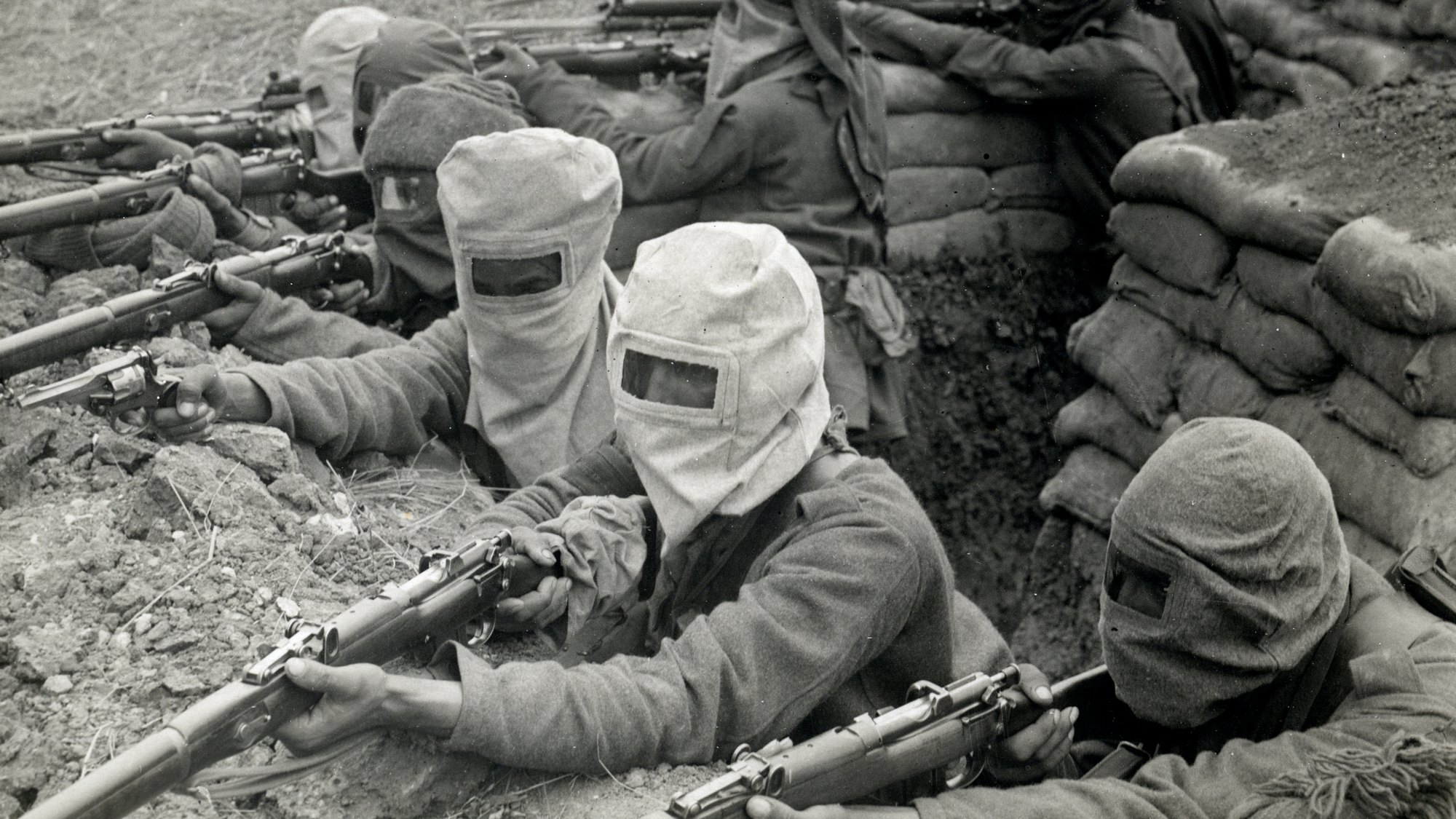
Britain adopted the .303 in 1888 with the Lee-Metford, firing a 215-grain round-nose bullet over 70 grains of compressed black powder at about 1,850 fps until cordite replaced it in 1891. Some references date the cartridge’s introduction to February 1889.
The Lee-Enfield arrived in 1895 with deeper rifling to stand up to cordite, and the short rifle, the SMLE, followed in the early 1900s. In 1910 the Mark VII load brought a 174-grain pointed bullet at 2,440 fps, and it stayed the standard ball round for the rest of the cartridge’s service.
The No. 4 was adopted on November 15, 1939, and Savage built them in the United States from 1941. The No. 5 Jungle Carbine followed in 1944. British ordnance declared it obsolete in 1947 for a fault it called “inherent in the design.”
The 7.62 NATO replaced the .303 in British service in 1957. More than 17 million Lee-Enfields were built in all, and the Canadian Rangers were still carrying the No. 4 when its replacement began in 2015.
American factories built for it too. Winchester, Remington and Eddystone made the Pattern 1914 Enfield for Britain during World War I, and the first rifles were accepted in February 1916.
A Note on Reloading
The .303 British takes .311 or .312 inch bullets, with bullet weights from 123 to 215 grains, and PPU catalogs new Boxer-primed brass for it. Case life is the catch, and Shooting Times warns not to expect more than about two full-power firings from a case in a Lee-Enfield.
Writers recommend neck sizing only. Service bores ran large as well. Stephen Redgwell puts the drawing tolerance at .313 to .316 inch across the grooves, so slugging the bore of a surplus rifle is worth the trouble.
We do not publish load data on this page. Use a current manual from a bullet or powder maker, stay inside the SAAMI limit, and start with our beginner’s guide to reloading if you’re new to it.
Bottom Line: Which 303 British Ammo to Buy
For most owners the 303 British ammo to buy is new PPU or Sellier & Bellot, which cost $1.18 to $1.60 a round at our dealers on October 1, 2026. The job decides the rest.
- For the range with a wartime Lee-Enfield: PPU 174-grain or Sellier & Bellot 180-grain full metal jacket, after one headspace check.
- 303 British ammo for deer, black bear and moose: a 180-grain soft point. PPU’s costs about half what the American loads do, and Federal, Remington and Winchester are the easy ones to find in a store.
- For a Lee-Metford or a Martini: a gunsmith first. No maker rates its load for those rifles.
- For the surplus that came with the rifle: keep it as a collectible and shoot new 303 British ammo.
If you shoot other old military rifles, our 8mm Mauser ammo guide does the same job for the Mauser, and the .32-20 ammo guide covers an older Winchester round. A curio and relic license makes buying the rifles simpler.
We’ve done the same job for other old calibers: the 7.62×25 Tokarev ammo guide, the .44-40 ammo guide and the .45 Colt ammo guide.
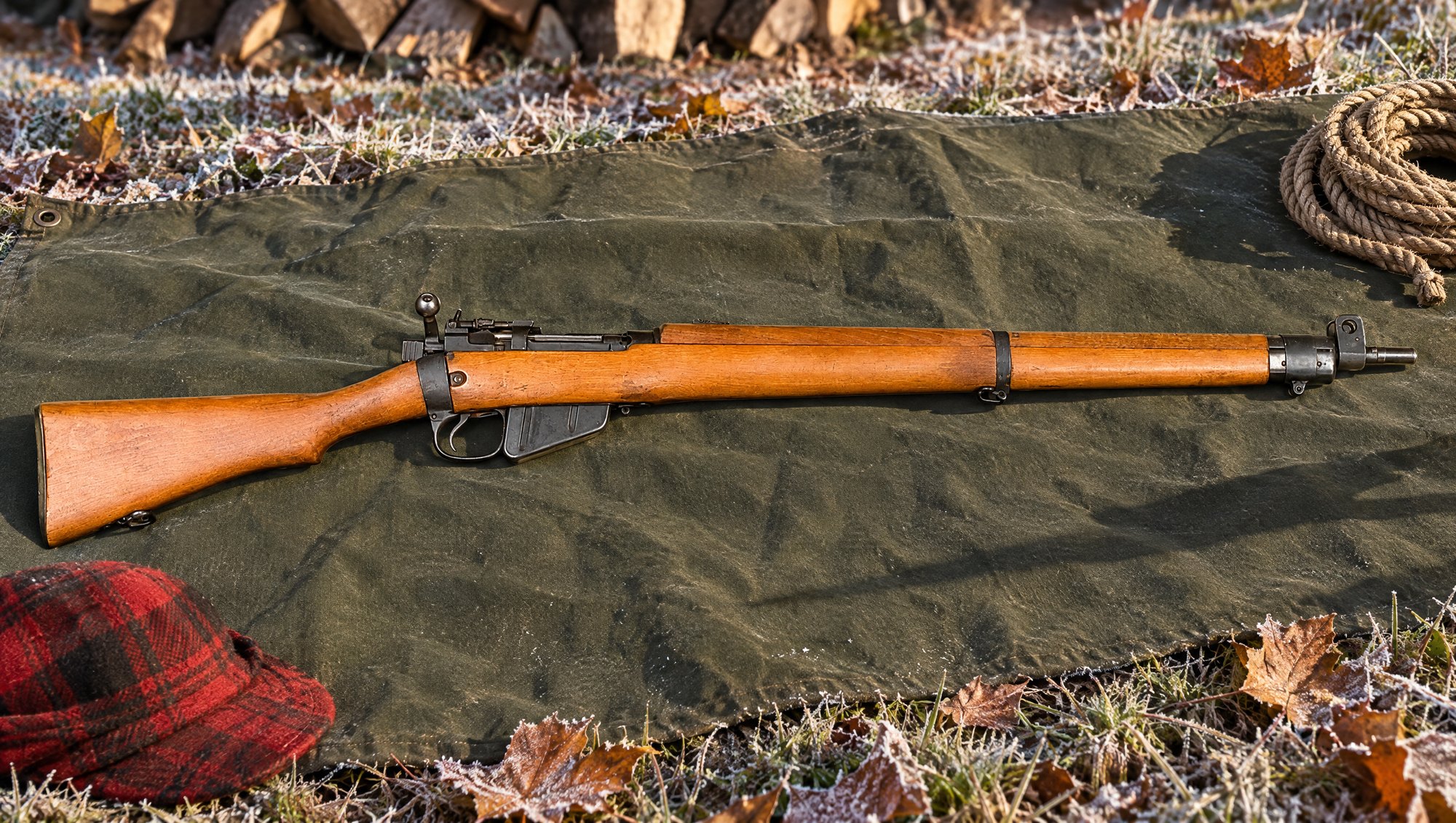
Lead image: composite based on a CC0 photo by Lograsset. The round-nose bullets are an early mark of .303.
303 British Ammo FAQ
Can you still buy 303 British ammo?
Yes, 303 British ammo is still made and sold: Prvi Partizan, Sellier & Bellot, Hornady, Federal, Remington, Winchester and HSM all list a current load. Boxes of 20 started under $24 on our price cards when we checked on October 1, 2026. It's easier to find online than on a local shelf.
Is a .303 more powerful than a .308?
No. With the same 180-grain Winchester Power-Point bullet, the .303 British is listed at 2,460 fps and 2,418 foot-pounds and the .308 at 2,620 fps and 2,743 foot-pounds. The SAAMI pressure limits are 49,000 psi for the .303 and 62,000 psi for the .308.
Is .303 British the same as .303 Savage?
No. The .303 Savage is a smaller American cartridge with a .308 inch bullet, made for the Savage 99. The two aren't interchangeable, and the names are the only thing they share.
Is .303 the same as 7.7 mm?
The .303 British is the same cartridge as the 7.7x56R, which is its metric name. The 7.7x58 Japanese Arisaka round is a different, rimless cartridge and won't work in a .303 British rifle.
Is surplus 303 British ammo safe to shoot?
We'd skip it. Military surplus is Berdan primed and in most cases corrosive, and one published test of a Pakistani lot found hangfires on nearly every shot. If a round clicks, keep the muzzle downrange and wait at least 60 seconds. New PPU or Sellier & Bellot costs more per round, and we think it's worth it.
What is the best bullet weight for 303 British?
For the range, a 174-grain or 180-grain full metal jacket matches what the rifles were built around. For deer, a 150-grain or 180-grain soft point works. For black bear and moose, we'd pick a 180-grain soft point.
Do I need to check headspace on a Lee-Enfield?
Yes, once, at a gunsmith with Lee-Enfield gauges. British service limits ran from .064 to .074 inch, so a sound rifle can fail a tighter American gauge. A long chamber mostly shortens brass life, but a bright ring ahead of the rim on fired cases means stop and have the rifle gauged.
Is an Ishapore 2A1 a .303?
No. The Ishapore 2A and 2A1 are 7.62 NATO rifles built from 1963 with improved steel. Ishapore also made .303 British No. 1 rifles before that, so read the markings on the receiver rather than going by the factory name.
5,470+ Gun & Ammo Deals
Updated daily from 200+ top retailers. Filter by category, caliber, action type, and price.