
Last updated May 2026 · By Nick Hall, Sig P320 shooter who has carried both with and without a manual safety
Some of the links below are affiliate links, meaning at no additional cost to you, we may earn a commission if you click through and make a purchase.
- Treat every gun as loaded
- Point the muzzle in a safe direction
- Keep your finger off the trigger until you’re ready to shoot
- Know your target and what’s beyond
Quick Answer: The Sig Sauer P320 with Manual Safety is the same proven P320 platform with an external thumb safety added, intended for carriers who prefer a manual safety as a backup to the trigger-disconnect and as a hedge against the uncommanded-discharge incidents that have driven the ongoing P320 lawsuits.
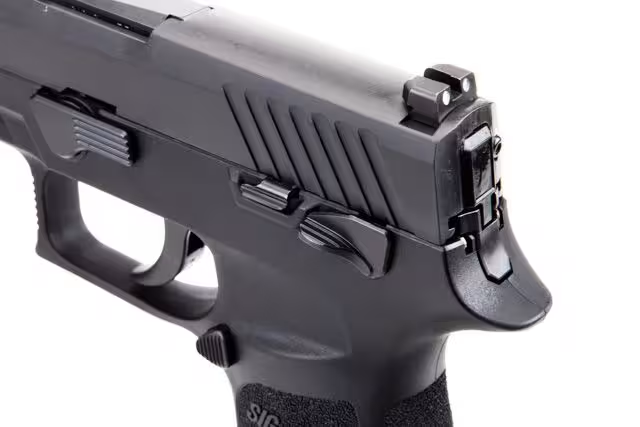
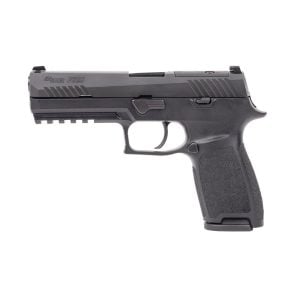
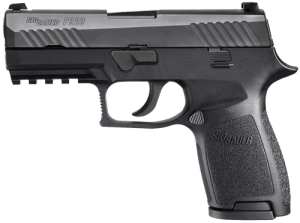
The manual-safety variant is mechanically identical to the standard P320 except for the thumb safety lever. It works like a 1911-style safety: down to fire, up to safe. The safety adds approximately 1 ounce of weight and roughly 0.1 inches to grip height. All standard P320 holsters and accessories fit.
The biggest mistake P320 manual-safety carriers make is assuming the safety alone resolves the platform’s legal exposure. The thumb safety is a meaningful additional layer, but it does not address the trigger-system claims at issue in the lawsuits. Whether you should carry one is now both a mechanical and legal-risk decision; the manual safety is a reasonable mitigation but not a complete answer.
Table of Contents
How we tested: Every pick here is ranked against our testing methodology. Minimum round counts, accuracy and reliability protocols, the failures that disqualify a gun.
I Called This the Perfect EDC. Here’s What Changed.
I wrote the original version of this article praising the Sig Sauer P320 with a manual safety as the perfect concealed carry gun. I meant every word of it at the time. The modular design, the excellent trigger, the military pedigree. It checked every box I cared about in a carry pistol.
I still think the P320 is fundamentally a good gun. But a lot has happened since then, and I owe you an honest update. The uncommanded discharge lawsuits, agencies stepping away from the platform, Sig’s response to the controversy. Ignoring all of that would be doing you a disservice.
This is not a hit piece on Sig Sauer. I own a P320 and I still carry one. But the conversation around this gun has changed dramatically, and if you’re considering a P320 for concealed carry in 2026, you need the full picture before you spend your money. You deserve more than a cheerful product review that ignores the elephant in the room.
So let’s get into it. What’s changed, what hasn’t, and whether the P320 with a manual safety still deserves a spot on your hip. I’ll cover the controversy honestly, give you my current recommendation on which version to buy, and lay out some alternatives if you decide the P320 isn’t for you anymore.
The Sig P320 Manual Safety: What It Is and Why It Matters More Now
The Sig Sauer P320 is available in two configurations: with and without a manual thumb safety. For years, the “without” version was the default and the more popular choice. Plenty of shooters (myself included) argued that a quality striker-fired trigger and proper holster discipline were all you needed. The uncommanded discharge controversy has forced a lot of us to reconsider that position.
The P320’s manual safety is a frame-mounted, ambidextrous thumb safety. It sits just above the grip on both sides of the frame, right where your thumb naturally rests. Sweep it down to fire, push it up to safe. It’s not a slide-mounted safety like you’d find on a Beretta 92 or many 1911 clones. The frame-mounted design means it doesn’t interfere with your slide manipulation at all, and it stays out of the way when you’re running the gun at the range.
The safety has a positive click in both directions. You’ll feel it engage and disengage, which is important for a carry gun. There’s no ambiguity about whether the safety is on or off. The lever is also textured, so you can feel its position through a t-shirt or cover garment without looking.
Disengaging the safety is intuitive. With a little practice, sweeping the safety off during your draw stroke becomes second nature. I’ve timed it, and the difference between drawing with and without the safety is about a tenth of a second after a few hundred reps. That’s a tradeoff I’m willing to make for the added security.
One thing I want to address: some shooters argue that a manual safety on a striker-fired gun is “training wheels” or a crutch. I’ve heard this from instructors, forum warriors, and range buddies. I used to lean that direction myself. But the manual safety on the P320 isn’t there because you can’t be trusted with a loaded gun. It’s there because mechanical devices can and do fail, and redundancy in a safety system is engineering, not weakness. Your car has a seatbelt and an airbag. Your gun can have multiple safeties.
Here’s the part that matters: the M17, which is the U.S. military’s official sidearm based on the P320 platform, comes standard with a manual safety. The Army specifically required it during the Modular Handgun System (MHS) competition. If the Department of Defense decided that a manual safety was a necessary feature on this gun, that tells you something worth listening to.
The Uncommanded Discharge Controversy: What Happened
The P320’s problems didn’t start with lawsuits. They started with a drop test failure. In 2017, the Dallas Police Department and several other agencies reported that the P320 could discharge when dropped at a specific angle. Sig responded with a “voluntary upgrade” program (they were careful not to call it a recall). The upgrade included a lighter trigger, a mechanical disconnector, and other internal changes designed to prevent the gun from firing when dropped.
That should have been the end of it. It wasn’t.
Starting around 2022 and continuing through 2026, hundreds of lawsuits were filed against Sig Sauer alleging that P320 pistols fired without anyone pulling the trigger. These weren’t just drop-fire incidents. Plaintiffs described guns discharging while holstered, while being carried, while sitting on a table. Law enforcement officers, military personnel, and civilians all reported similar experiences. Some resulted in serious injuries.
The legal and institutional response escalated quickly. In 2024, the New Jersey Attorney General filed a lawsuit against Sig Sauer, alleging the company concealed a known defect. The lawsuit claimed Sig knew about the issue and failed to adequately warn consumers or recall the affected pistols. It was the first state-level legal action against Sig over the P320, and it sent shockwaves through the industry.
U.S. Immigration and Customs Enforcement (ICE) temporarily paused the use of P320-based duty pistols while reviewing the issue. Several other federal and local law enforcement agencies either dropped the P320 or began transitioning to other platforms. The Canadian military, which had also been evaluating P320-based pistols, took notice as well. These are not conspiracy theorists making claims on internet forums. These are institutions with liability exposure, weapons testing infrastructure, and legal counsel making calculated real-world decisions based on risk assessment.
Sig Sauer has denied the allegations consistently. Their position is that every reported incident was caused by user error, holster interference, or aftermarket modifications. They point to the millions of P320s in service that function without issue, and they note that the military’s M17 program has not reported systemic problems. Sig has also argued that many of the incidents involved pre-upgrade pistols or guns with third-party trigger components.
It’s worth noting that the P320’s internal safety system relies on a striker safety (a small plunger that blocks the striker from moving forward until the trigger is pulled). Critics have argued that certain conditions, such as jarring impacts or specific internal wear patterns, could theoretically cause the striker safety to disengage without a trigger press. Sig disputes this. Independent experts have weighed in on both sides. The engineering debate remains unresolved in the public sphere, and the courtroom battles may ultimately produce the technical answers the gun community has been waiting for.
I’m not going to tell you who’s right here. The litigation is ongoing, and there hasn’t been a definitive engineering analysis made public that settles the question one way or the other. What I will tell you is that the volume and consistency of the reports is hard to dismiss entirely. Hundreds of people across different demographics, different serial number ranges, and different usage scenarios are describing the same thing. That’s worth taking seriously.
Should You Still Carry a P320?
Let me give you the honest answer: it depends, and here’s how I think about it.
Millions of P320s are in service around the world. The vast majority of them function perfectly every single day. The M17 and M18 have been the standard-issue sidearms of the United States military since 2017, and there have been no systemic uncommanded discharge issues reported through military channels. That’s not nothing. The military runs these guns hard, in conditions most of us will never subject a pistol to.
But the civilian reports are also real, and they cannot all be explained away as holster problems or user error. When a trained law enforcement officer with a properly holstered duty weapon reports an uncommanded discharge, that deserves more than a press release saying “it’s impossible.” Whether the issue is a manufacturing defect affecting a subset of guns, a design vulnerability under specific conditions, or something else entirely, the pattern exists.
If you’re going to carry a P320, get the manual safety version. Full stop. The safety adds a physical barrier that prevents the striker from reaching the primer unless the safety is disengaged. Even if the internal safeties failed (which is the alleged mechanism in the lawsuits), the manual safety provides an additional layer of protection. It’s cheap insurance against a worst-case scenario.
If you carry a P320 without a manual safety, you absolutely must use a quality Kydex holster that fully covers the trigger guard. No leather holsters that can collapse into the trigger guard. No Uncle Mike’s universal nylon holsters. A rigid, gun-specific holster from a reputable maker like Tier 1 Concealed, Tenicor, or ANR Design. This is good advice for any striker-fired pistol, but it’s especially important for the P320 given the controversy.
Also make sure your P320 has gone through the voluntary upgrade. If you bought yours before 2018 and never sent it in, do that now. Sig still honors the upgrade at no charge. You can check your serial number on Sig’s website to see if your gun is eligible. The upgraded trigger group, lighter trigger, and revised disconnect are meaningful safety improvements regardless of where you stand on the uncommanded discharge debate.
I still own a P320. I carry the manual safety version now. I did not always. I switched after reading enough reports to convince me the extra step was worth it. Your mileage may vary, but that’s where I landed.
P320 With Safety vs Without: Which to Buy
The Case for the Manual Safety
The P320 with a manual safety gives you everything the standard model offers, plus a physical safety lever. There’s no meaningful weight or size increase. The safety itself is low-profile enough that it doesn’t snag during the draw and doesn’t change the grip ergonomics. With practice, sweeping the safety off becomes an automatic part of your draw stroke.
Given the uncommanded discharge controversy, the manual safety adds genuine peace of mind. It’s the same safety configuration the military chose for the M17. If you’re new to the P320 platform and you’re buying one for the first time, this is the version to get. There is no practical downside.
The Case for No Safety
The non-safety P320 has a simpler manual of arms. Draw, point, press the trigger. There’s no chance of forgetting to disengage a safety under stress. Some experienced shooters prefer this simplicity, especially if they’ve trained extensively on other striker-fired guns without safeties (Glock, Walther PDP, etc.).
The counter-argument is that a safety you train with isn’t a liability. Thousands of people carry 1911s with manual safeties and would never consider it a disadvantage. But if you’ve been carrying without a safety for years and your muscle memory is deeply ingrained, switching can require a real training investment.
My Recommendation
Get the safety. In 2026, with everything we know about the P320 controversy, there is no good reason to buy the version without one. The safety adds zero bulk, zero weight, and the draw speed penalty disappears with a few range sessions. If the manual safety prevents even one uncommanded discharge, it’s the best $0 in extra cost you’ll ever spend (the safety and non-safety models are priced identically).
If you already own a P320 without a manual safety, you have options. Sig sells the manual safety conversion kit, and it’s a relatively straightforward installation. You can also have a gunsmith do it for you. The kit includes the safety lever, a new takedown lever, and the necessary springs. Total cost including installation is typically under $100. Given the controversy, that’s money well spent.
The P320 Is Still a Good Gun
I want to be clear about something: despite the controversy, the P320 platform is genuinely excellent. The trigger is one of the best you’ll find on any striker-fired pistol. Flat-faced, clean break, short reset. It outperforms the Glock trigger by a wide margin and hangs with guns costing twice as much. The modular fire control unit (FCU) system is unlike anything else on the market. One serialized FCU can be dropped into compact, full-size, or subcompact grip modules with different barrel lengths. It’s a platform, not just a gun.
The military chose the P320 over submissions from Glock, Beretta, FN, and others during the Modular Handgun System competition. That selection process was rigorous, with extensive reliability testing, accuracy standards, and ergonomic evaluation. The P320 won on merit. The gun has real strengths that the controversy shouldn’t erase from the conversation. Accuracy out of the box is impressive, the sights are good, and the optics-ready variants make mounting a red dot straightforward.
Where Sig has fallen short is in their handling of the situation. Instead of taking the reports seriously and conducting a transparent investigation, they’ve been dismissive and combative. They’ve blamed users, blamed holsters, blamed aftermarket parts. That approach has eroded trust with a lot of gun owners, including some who were (and still are) fans of the platform. A voluntary upgrade program and honest communication would have gone a lot further than press releases calling every incident “user error.”
If the uncommanded discharge issue is real, it’s most likely a manufacturing defect affecting a subset of pistols, not a fundamental design flaw. That’s actually good news for the platform long-term, because manufacturing issues can be identified and corrected. But until Sig acknowledges the possibility and acts accordingly, the cloud over the P320 isn’t going anywhere. For a deeper look at the platform, check out our full Sig P320 review. If you want the complete controversy breakdown, read our Sig P320 problems guide. And if you’re weighing the P320 against its biggest competitor, see our P320 vs Glock 19 comparison.
Alternatives to Consider
If the P320 controversy gives you pause, I understand. You have excellent alternatives that don’t come with any asterisks. Every gun on this list is a proven concealed carry platform with no uncommanded discharge history, strong track records across law enforcement and civilian use, and wide aftermarket support for holsters, sights, and accessories.
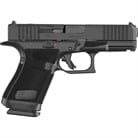
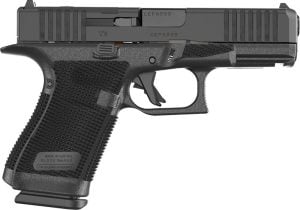
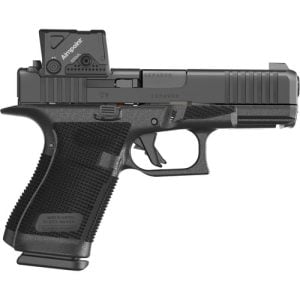
Glock 19 Gen 6
The Glock 19 is the most proven compact handgun on the planet. It has been carried by more law enforcement officers, military personnel, and civilians than any other pistol in its class. The Gen 6 brings a reversible magazine release, a front rail that accommodates lights without adapters, a slightly refined grip texture, and the same legendary reliability Glock has delivered for decades. No controversy, no lawsuits, no drama. Street price runs around $600 to $635.
The trade-off is the trigger. The Glock trigger is functional and safe, but it’s nowhere near as good as the P320’s. If you’re coming from a P320, you’ll notice the difference immediately. But “boring and reliable” is exactly what you want in a carry gun. Check current prices below.
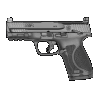
Smith & Wesson M&P 2.0 Compact
The M&P 2.0 Compact is the best value in the compact 9mm market right now. Street prices run from about $425 to $630, and you get an optional thumb safety if you want one. The 2.0 trigger is a major improvement over the original M&P, and the aggressive grip texture is one of the best in the business.
Smith & Wesson has a spotless track record for safety and reliability. The M&P line is carried by thousands of law enforcement agencies with zero controversy. If you want a P320 alternative that offers an optional manual safety at a lower price, this is the one.


Walther PDP Compact
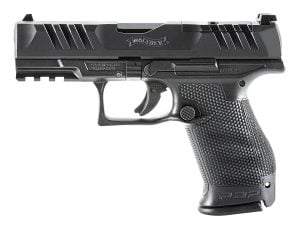
If trigger quality is your top priority, the Walther PDP Compact is the gun to beat. The Performance Duty Trigger lives up to its name. It’s the best factory striker-fired trigger I’ve ever used, and yes, I’m including the P320 in that comparison. The PDP also comes optics-ready from the factory with multiple adapter plates included.
Street prices run around $600 to $700. The PDP doesn’t offer a manual safety option, but Walther’s internal safety systems are proven and the gun has zero controversy attached to it. It’s a no-drama alternative with a best-in-class trigger.
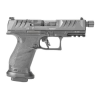
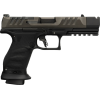
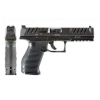
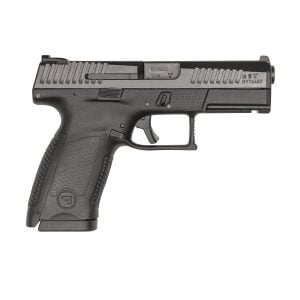
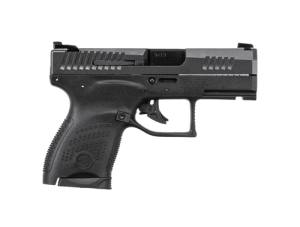
CZ P-10 C
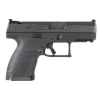
The CZ P-10 C is the sleeper pick in this category. It doesn’t get the marketing push that Glock and Sig get, but the gun itself is outstanding. The ergonomics are the best in the compact 9mm class. The trigger is excellent. Reliability has been flawless in my experience and across every review I’ve read. Street prices sit around $380 to $440, making it the most affordable option here.
CZ’s reputation for quality is well-earned, and the P-10 C has been quietly adopted by several European law enforcement agencies. The suppressor-ready version with a threaded barrel and tall sights is also available if that’s your thing. If you want a reliable compact 9mm that flies under the radar and saves you money, this is a fantastic choice.

Quick Comparison
Here’s how these alternatives stack up against the P320 Compact on the specs that matter most for concealed carry:
| Gun | Capacity | Weight (oz) | Street Price | Manual Safety Option |
|---|---|---|---|---|
| Sig P320 Compact | 15+1 | 25.8 | $443-$500 | Yes |
| Glock 19 Gen 6 | 15+1 | 23.6 | $598-$635 | No |
| S&W M&P 2.0 Compact | 15+1 | 24.0 | $425-$630 | Yes |
| Walther PDP Compact | 15+1 | 24.0 | $599-$700 | No |
| CZ P-10 C | 15+1 | 26.0 | $380-$437 | No |
Where to Buy
You can find the Sig P320 with manual safety and all the alternatives listed above at these trusted retailers:
- EuroOptic (excellent inventory of Sig Sauer pistols)
- Brownells (parts, accessories, and complete guns)
- Palmetto State Armory (competitive pricing on all major brands)
FAQ: Sig P320 Manual Safety and EDC
Related Guides
Want to keep researching before making your decision? These guides go deeper on the P320 platform and your concealed carry options:
- Sig Sauer P320 Review: Full Breakdown
- Sig P320 Problems: The Complete Controversy Guide
- Sig P320 vs Glock 19: Which Is Better?
- Top 10 Sig Sauer Pistols
- Best Concealed Carry Handguns
Frequently Asked Questions
Is the Sig P320 safe to carry?
Current production P320s with the voluntary upgrade pass all standard drop-safety tests. The M17/M18 military variants have been in service since 2017 with no systemic issues. However, hundreds of lawsuits allege uncommanded discharges on civilian models. The manual safety version adds a physical barrier and is the recommended configuration for carry in 2026.
Does the P320 manual safety slow your draw?
Not with practice. The frame-mounted ambidextrous safety sweeps off naturally during a proper firing grip draw. Most shooters report no measurable difference in draw-to-first-shot time after a few hundred practice reps. The US military trains with the M17 safety engaged and does not consider it a speed liability.
Should I get the P320 voluntary upgrade?
If your P320 was manufactured before August 2017, absolutely. Contact Sig Sauer with your serial number. The upgrade is free, adds a lighter trigger, enhanced disconnector, and improved mechanical safety features. There is no reason not to get it done.
What is the P320 uncommanded discharge issue?
Multiple lawsuits allege that P320 pistols have discharged without the trigger being pulled. Sig Sauer denies a design defect, attributing incidents to user error or holster interference. The NJ Attorney General sued Sig in 2024. ICE temporarily paused P320 use. The legal situation remains unresolved as of 2026.
Is the Glock 19 safer than the Sig P320?
The Glock 19 has a longer track record (40+ years) with no comparable controversy about uncommanded discharges. The Glock design is simpler with fewer parts. Whether the P320 is inherently less safe is legally disputed and unproven. If the P320 controversy concerns you, the Glock 19 Gen 6 is the most proven alternative.
Can I add a manual safety to my existing P320?
Yes. Sig Sauer sells a manual safety conversion kit for existing P320 pistols. Installation requires fitting a new FCU (Fire Control Unit) or modifying the existing one. A qualified gunsmith can do this, or you can send it to Sig. The parts cost approximately $50 to $75 plus installation.
Does the Sig P320 have a manual safety?
It is offered both ways. Most P320s ship without a manual safety, relying on internal safeties and trigger discipline like other striker-fired guns, but Sig also sells models with a frame-mounted manual thumb safety. Buyers who want one can choose that configuration, while most opt for the no-safety version.
Is the Sig P320 a good EDC gun?
Yes, especially in the compact and carry sizes. The P320 offers a clean trigger, high capacity, optics-ready slides and modular sizing, all strong points for everyday carry. Carry it in a quality holster that fully covers the trigger, as you should with any striker gun, and it makes an excellent daily companion.
3,976+ Gun & Ammo Deals
Updated daily from 200+ top retailers. Filter by category, caliber, action type, and price.
Related Guides
I see this sig p320 compact coming with the thumb saftey but can I get the p320 subcompact with it also?
Yes… my buddy learned the hard way with a striker fired Glock with no thumb safety …several hand surgeries!
How can you add a thumb safety to a p320 that came without one?
abprototype can mill the grip and FCU for manual safety, they also offer the parts
It’s not about whether its a hammer fired or striker fired gun, it’s about whether its a trigger fired gun, and if it has a light trigger, it needs a safety.
I added one to my P365 and now it’s the same manual of arms as the duty guns I used in the military. One method for them all means less confusion and fewer ND’s . Until we replace humans with AI powered Robocops we then have to protect ourselves from our own errors. Handguns are lethal, and we don’t casually let them go off aimed at parts of our own anatomy. Even Glock bids contracts requiring a thumb operated safety and has fulfilled them.
What I don’t understand is how we believed that a toggle in the middle of the trigger was inherently safer.
Great post. I own three striker fired Sig pistols, a 365 XL, a 320 full size, and a 320 carry. All three are very pleasant to shoot, very accurate, and very reliable.
Sometimes, striker fired pistols do remind me of carrying a 1911 with a round chambered with the safety off. Unlike my old P229 that I would sometimes carry in the pocket of my over coat, I only carry these striker fired pistols in a quality holster.