
Last updated and checked October 29, 2026 · By Nick Hall
- Treat every gun as loaded
- Point the muzzle in a safe direction
- Keep your finger off the trigger until you’re ready to shoot
- Know your target and what’s beyond
Optics can make or break your shooting. Whether you’re picking a first red dot for your AR-15, an LPVO for competition, or night sights for your carry gun, the right optic is out there, and so is a better price on it than the first one you find.
We pull live optics pricing from Brownells, Optics Planet, Primary Arms, MidwayUSA and 200+ other retailers. Filter by type (scopes, red dots, holographic, magnifiers, prism, mounts, iron sights), brand, price range and platform. Every link goes straight to the retailer. Below the finder, I’ve laid out how to pick the right type, with battery and price figures checked on each maker’s own site.
 -63%
March Scopes Flip Caps For Rifle Scope 42mm Objective Black
 -38%
Carson MagniFlip 3x Flip-Open Pocket Magnifier Loupe with Built-in Case
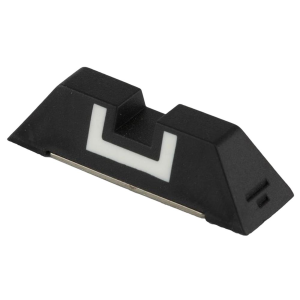
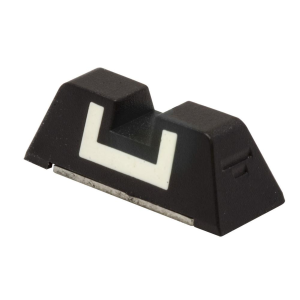
Glock 42 / 43 Factory Standard Polymer 6.1 Fixed Rear Sight

 -67%
OpticsPlanet Blaze Orange Hunting Safety Vest Blaze Orange Chest 38-48in
 -37%
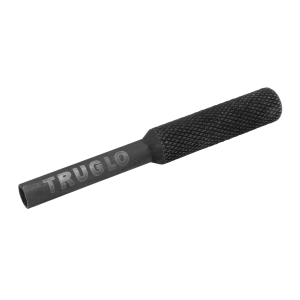
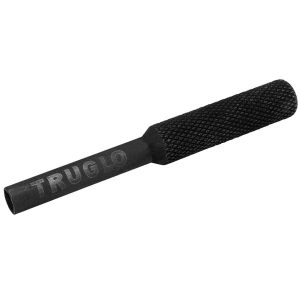
TruGlo Steel Compact Glock Sight Installation Tool, Front - TG970GF
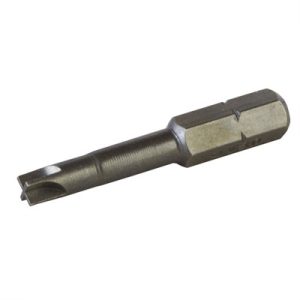
Magna-TipA(R) Millett Rear Sight Bit - Magna-Tip Millet Rear Sight Bit
 -60%
 -15%
Ruger Weaver-Style Aluminum Combination 10/22 Rifle Scope Base Adapter Blued Powder Coat 1-piece
Table of Contents
Which Optic Type Do You Need?
| Type | How it works | Best for |
|---|---|---|
| Red dot | An LED dot reflected off a coated lens, 1x | AR-15s, pistols, home defense |
| Holographic | A laser diode lights a holographic reticle, 1x | Fast close work, use with a magnifier |
| Prism | Fixed power, etched reticle through prisms | Shooters with astigmatism, battery-free aim |
| LPVO | True 1x up to 6x, 8x or 10x, etched reticle | Do-everything AR, 3-gun |
| Riflescope | Higher magnification, adjustable turrets | Hunting, precision, PRS |
| Magnifier | Flip-to-side 3x behind a dot | Adding reach to a red dot |
| Night sights | Battery-free tritium lamps | Carry and duty pistols |
Vortex’s own one-line definition of a red dot is the clearest I’ve seen: a small LED shines, and a lens reflects it back to your eye. Everything else on this list is a variation on how the reticle gets there and how much it magnifies. For the long version, read our gun optics guide and the AR-15 optics guide.
Red Dots for Rifles
A 2 MOA red dot on a 1.41-inch mount is still the default AR-15 optic, and battery life has stopped being a reason to hesitate. Holosun rates the HS507C X2 at up to 50,000 hours on setting 6, and its new-for-2026 HS507C X3 at up to 100,000 hours. Vortex rates the Crossfire at 50,000 hours ($219.99 MSRP), SIG rates the ROMEO5X at 50,000 hours on one AAA ($219.99), and Primary Arms’ SLx MD-25 runs 50,000 hours at $159.99.
Two things changed this year that older buying guides miss. The Holosun HS403B, HS403C and HS503C no longer appear on Holosun’s site, and the original SIG Romeo5 has been replaced by the ROMEO5 GEN II ELITE (40,000 hours, $199.99) and ROMEO5X. If a deal looks too good on an older model, that’s why. Our picks: best AR-15 red dot sights, best competition red dots and best home defense optics.
Pistol Red Dots and Footprints
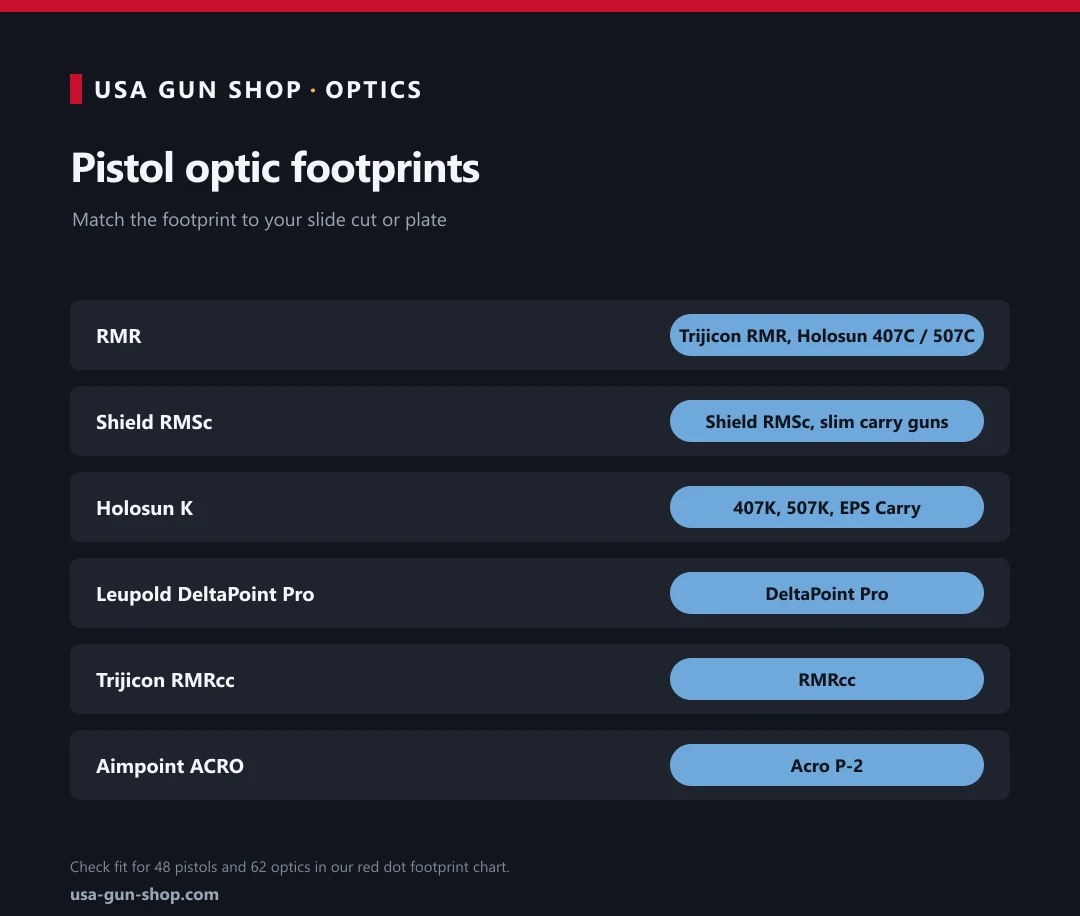
On a pistol, the first question isn’t brand, it’s footprint: the screw and recoil-lug pattern under the optic that has to match your slide cut or plate. Get that wrong and nothing else matters. The common ones:
- RMR: Trijicon RMR Type 2 ($779 retail), Holosun HS407C X2 ($288.22) and HS507C X2 ($364.69). Holosun calls RMR the “industry standard” footprint.
- Shield RMSc: the slim single-stack footprint, used on many micro carry guns.
- Holosun K: HS407K X2 ($264.69), HS507K X2 ($348.22) and the enclosed EPS Carry ($388.22), which ships with an RMSc-to-K adapter plate.
- Leupold DeltaPoint Pro: the DeltaPoint Pro ($449.99) and its own mount line.
- Trijicon RMRcc: the slimmer carry version of the RMR ($734).
- Aimpoint ACRO: the enclosed Acro P-2 and its clones.
Our red dot footprint chart matches 48 pistols to 62 optics, so you can check fit before you buy. Then see best red dots for pistols, best red dot for concealed carry and our Holosun EPS Carry review.
Dot Size: 2 MOA, 3 MOA or 6 MOA?
Dot size is the spec people skip and then regret. A 2 MOA dot covers 2.09 inches at 100 yards, which is why it’s the AR-15 standard: small enough for precise shots at distance, bright enough to find fast up close. On a pistol, a bigger dot is faster to pick up as the gun comes out of the holster. Holosun’s HS407K X2 uses a 6 MOA dot for exactly that reason, while Trijicon’s RMR Type 2 comes in a 3.25 MOA adjustable LED.
If you can’t decide, buy a multi-reticle sight. Holosun’s 507-series units let you switch between a 2 MOA dot, a 32 MOA circle, or both together, so the same optic works for slow precise shots and fast close ones. I run the circle-dot on carry pistols and the plain dot on rifles.
How Much Should You Spend?
Using the makers’ own prices from this page, the tiers fall out like this. Under $250 buys you a proven 50,000-hour rifle dot: the Primary Arms SLx MD-25 ($159.99), the Holosun ARO-CORE ($188.22), the SIG ROMEO5X ($219.99) or the Vortex Crossfire ($219.99). Between $250 and $400 is the pistol dot sweet spot: the Holosun HS407K X2 ($264.69), HS507K X2 ($348.22), HS507C X2 ($364.69) and the enclosed EPS Carry ($388.22).
Above $500 you’re paying for duty-grade durability and glass: the EOTech HWS 512 ($569), Trijicon RMRcc ($734) and RMR Type 2 ($779), and the EOTech EXPS3 ($859). For an LPVO, $350 to $560 buys a solid Primary Arms or Vortex Strike Eagle, and $1,300+ buys a Trijicon Credo. Street prices run under these lists, which is what the finder at the top of the page is for.
Holographic vs Red Dot
EOTech’s holographic sights use a laser diode instead of an LED, and EOTech makes three claims for it that hold up at the range: the 1 MOA center dot stays 1 MOA under a magnifier, the reticle appears projected out at the target so you’re not refocusing, and the sight keeps working “when the sight window is partially shattered or obscured by snow or mud.”
The cost is battery life. EOTech rates the EXPS3 at 1,000 continuous hours on one CR123 and the HWS 512 at 2,500 hours on lithium AAs, against 50,000 hours for many red dots. EOTech also notes that no red dot or holographic sight is truly parallax free. If you’ll run a magnifier and want the cleanest reticle, holographic wins. If you want to leave it on for years, buy a red dot. More in best holographic sights and EOTech vs Aimpoint.
LPVOs: One Optic for Close and Far
A low power variable optic starts at a true 1x and tops out at 6x, 8x or 10x, and Vortex points out the big advantage: the reticle is etched in the glass, so you still have a point of aim if the battery dies. Maker list prices: the Primary Arms SLx 1-6×24 SFP Gen 4 at $349.99, the Vortex Strike Eagle 1-6×24 at $499.99 and 1-8×24 at $559.99, and the Trijicon Credo 1-6×24 SFP at $1,338. See best LPVO scopes and best AR-15 LPVOs.
Riflescopes: MOA vs MRAD and Focal Planes
Two choices confuse new scope buyers more than any others. First, the unit. One MOA is 1.047 inches at 100 yards (Leupold), so most shooters round it to 1 inch. One MRAD, or mil, is 3.6 inches at 100 yards (Primary Arms). Neither is better; just match your reticle to your turrets.
Second, the focal plane. In a first focal plane scope the reticle sits in front of the magnification system, so it grows with the target and its holdovers work at every power. In a second focal plane scope the reticle stays the same size, so its holdovers are correct at one power, which on Leupold scopes is the highest. For hunting at known ranges SFP is fine; for PRS, go FFP. Our best rifle scopes, best rifle scopes under $500, best PRS scopes and scope reticle types guides go deeper.
Magnifiers and Prism Scopes
A magnifier sits behind your red dot and flips aside when you want 1x. The Holosun HM3X ($235.28), Vortex Micro3X ($449.99) and EOTech G33 ($559 to $679) are all 3x. Vortex warns that its Micro3X works with red dots but “will not work with prism scopes.”
Prism scopes are fixed power with an etched reticle, and Vortex calls them “a great solution for shooters with an astigmatism” because the reticle isn’t a projected dot. See best red dot magnifiers and best prism scopes.
Mounts and Co-Witness Heights
Co-witness means you can see your iron sights through the dot, so a dead battery doesn’t leave you without sights. On an AR-15, a 1.41-inch optical center height is an absolute co-witness: the irons line up with the dot. Lower 1/3 mounts sit taller so the irons fill the bottom of the window, and there’s no single industry height: SIG’s ROMEO5X riser lists 1.63 inches for lower 1/3. Check the spec of your mount before you buy. Our best scope rings and mounts guide covers the rest.
Iron and Night Sights
Tritium night sights glow with no battery, and they fade on a clock: tritium has a half-life of 12.3 years (EPA), so the lamps lose half their brightness in that time. Trijicon warrants the green and yellow lamps in its Bright & Tough night sights for 12 years from the date of manufacture, and the dual-illuminated RMR’s tritium lamp for 15 years. If your night sights are older than that, they’re due. See best night sights for concealed carry.
Facts and Figures

- Longest rated battery life: Holosun HS507C X3, up to 100,000 hours, per Holosun
- Shortest: EOTech EXPS3 holographic, 1,000 continuous hours on one CR123, per EOTech
- AR-15 absolute co-witness height: 1.41 inches; SIG’s lower 1/3 riser is 1.63 inches
- 1 MOA = 1.047 inches at 100 yards; 1 MRAD = 3.6 inches at 100 yards
- Tritium half-life: 12.3 years; Trijicon warrants night sight lamps for 12 years
Our Optics Guides
- Gun optics guide
- AR-15 optics guide
- Best AR-15 red dot sights
- Best red dots for pistols
- Best holographic sights
- Best LPVO scopes
- Best thermal scopes
- Best rangefinders
- How to sight in a rifle scope
Frequently Asked Questions
What is the difference between a red dot and a holographic sight?
A red dot uses an LED: the LED shines, and a coated lens reflects the dot back to your eye. A holographic sight such as an EOTech HWS uses a laser diode instead of an LED to light a holographic reticle. EOTech says the HWS still works when the window is partly shattered, and its 1 MOA dot stays 1 MOA under a magnifier. The trade-off is battery life. An EOTech EXPS3 is rated for 1,000 continuous hours on one CR123. A Holosun HS507C X2 is rated for 50,000 hours.
How long does a red dot battery last?
That depends on the model and the brightness setting. Makers rate the Holosun HS507C X2, HS407K X2 and ARO-CORE at up to 50,000 hours on setting 6, and the new HS507C X3 at up to 100,000 hours. They rate the Aimpoint CompM5 at 50,000 hours, the Aimpoint Duty RDS at 30,000 hours on setting 6, and the SIG ROMEO5 GEN II ELITE at 40,000 hours. Trijicon rates the RMR Type 2 at over 4 years of continuous use on setting 4 of 8. Holographic sights run much shorter: EOTech rates the HWS 512 at 2,500 hours on lithium AA batteries.
What does "footprint" mean on a pistol optic?
The footprint is the screw and recoil-lug pattern on the bottom of the optic. It has to match your slide cut or plate. The common ones are RMR (Trijicon RMR, Holosun HS407C X2 and HS507C X2), Shield RMSc (Shield RMSc and many slim carry guns), Holosun K (HS407K X2, HS507K X2, EPS Carry), Leupold DeltaPoint Pro, Trijicon RMRcc, and Aimpoint ACRO (Acro P-2, an enclosed sight).
What is an LPVO?
LPVO stands for low power variable optic. An LPVO starts at a true 1x and tops out at 6x, 8x or 10x. Its reticle is etched in the glass, so you still have a point of aim if the battery dies. Examples at maker list price: the Primary Arms SLx 1-6x24 SFP Gen 4 ($349.99), the Vortex Strike Eagle 1-6x24 ($499.99) and 1-8x24 ($559.99), and the Trijicon Credo 1-6x24 SFP ($1,338).
First focal plane or second focal plane?
In a first focal plane (FFP) scope, the reticle sits in front of the magnification system. It grows and shrinks with the target, so its holdover marks are correct at every power. In a second focal plane (SFP) scope, the reticle sits behind the magnification system and stays the same size. Its holdover marks are correct at one power only, which on Leupold scopes is the highest.
MOA or MRAD?
One MOA (minute of angle) is 1.047 inches at 100 yards. Most shooters round it to 1 inch. One MRAD (milliradian, or "mil") is 3.6 inches at 100 yards, or 10 cm at 100 meters. Pick the system that matches your reticle and your turrets.
What does co-witness mean on an AR-15?
Co-witness means you can see your iron sights through the red dot. On a 1.41 inch mount, an absolute co-witness, the irons line up with the dot. On a lower 1/3 mount, the irons sit in the bottom third of the window. SIG lists 1.41 inches for absolute and 1.63 inches for lower 1/3 on the ROMEO5X riser. Lower 1/3 heights vary by mount maker, so check the spec for your mount.
How long do tritium night sights glow?
Tritium has a half-life of 12.3 years (EPA), so the lamps lose half their brightness over that time. Trijicon warrants the green and yellow lamps in its Bright & Tough night sights for 12 years from the date of manufacture.
3,568+ Gun & Ammo Deals
Updated daily from 200+ top retailers. Filter by category, caliber, action type, and price.