

Affiliate disclosure: This article contains affiliate links. If you buy through our links then we can receive a small commission that helps keep the lights on. You don’t pay anything more.
Quick Answer: Minnesota is a “shall-issue” concealed carry state in 2026 with no constitutional carry. Permits to Carry are issued through county sheriffs at age 21+, with state-approved training and a 0 fee. The permit is valid for 5 years.
Minnesota has no statewide assault weapon ban, no magazine capacity limit, and no waiting period for long guns. Minnesota passed universal background checks in 2023 (private sales must use an FFL or NICS check) and red-flag laws (Extreme Risk Protection Orders).
The biggest mistake new Minnesota carriers make is forgetting that open carry is legal with a permit; Minnesota’s Permit to Carry authorizes both concealed and open carry. Minnesota honors out-of-state CCW permits from states with similar requirements. Carry is prohibited in K-12 schools, courthouses, federal facilities, and posted private property.
Last updated July 2026 · By Nick Hall, CCW instructor familiar with Minnesota’s Permit to Carry and Permit to Purchase system, the 2024 red flag law, and the post-court-ruling age 18 Permit to Carry eligibility
Disclaimer: This is an editorial round-up of Minnesota gun laws. We do our best to make sure it’s correct, but do not rely on this as legal advice. If you’re unsure about anything, consult a lawyer.
Best-priced firearms across 200+ retailers · Updated every 4 hours
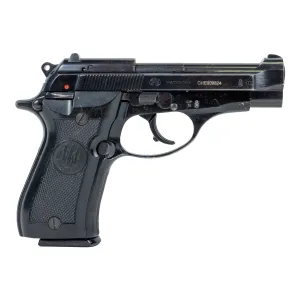
Looking for a brick-and-mortar shop in Minnesota? See our best gun stores in Minnesota guide for verified FFL dealers, ranges, and gunsmiths near you.
Best-priced ammunition across 200+ retailers · Updated every 4 hours


Table of Contents
Intro
TL;DR: Minnesota gun laws in 2026 sit in the middle of the regulatory spectrum. Minnesota is a shall-issue state with a Permit to Carry (PTC) required for concealed or open carry of handguns. A separate Permit to Purchase (PTP) is required for handguns and semi-automatic military-style rifles unless you buy through an FFL. 2023 legislation added universal background checks on those firearm categories and a red flag law (ERPO) effective January 1, 2024. No magazine cap, no assault weapons ban, duty to retreat outside the home.
Minnesota gun laws have a layered permit structure that distinguishes the state from most of the Midwest. Handguns and semi-automatic “military-style” rifles require either a Permit to Purchase (issued by your local chief of police or sheriff) or a transfer through an FFL with background check. Carrying a handgun in public requires a separate Permit to Carry. Minnesota is firmly in the shall-issue column on both permits.
The 2023 legislature expanded Minnesota gun laws with two major bills that took effect January 1, 2024 under Governor Tim Walz: universal background checks on private transfers of pistols and semi-auto military-style weapons (expanded from handguns only), and the Extreme Risk Protection Order (ERPO) red flag law. Federal court rulings in 2024 and 2025 lowered the Permit to Carry age from 21 to 18 following similar Second Amendment age-discrimination rulings in other states.
One other feature worth noting: Minnesota is a duty-to-retreat state outside the home. Stand Your Ground is not the law here.
Minnesota Gun Laws: The Highlights
TL;DR: Minnesota gun laws include a shall-issue Permit to Carry at 18+, Permit to Purchase for handguns and semi-auto military-style rifles, universal background checks (on regulated categories), red flag law effective Jan 1, 2024, no magazine limit, no AWB, duty to retreat outside home, strong state preemption.
- Shall-issue Permit to Carry (PTC) under Minn. Stat. § 624.714. Requires state-approved handgun training, application to county sheriff, fingerprints, background check. Valid 5 years. Age 18+ (lowered from 21 following federal court ruling).
- Permit to Purchase (PTP) under Minn. Stat. § 624.7131 required for handguns and semi-automatic military-style rifles unless acquired through an FFL with background check.
- Universal background checks on all private transfers of pistols and semi-automatic military-style weapons (2023 law, effective August 2023).
- Red flag law (Extreme Risk Protection Order) effective January 1, 2024. Family members, household members, and law enforcement can petition courts under Minn. Stat. § 624.7171 et seq.
- No state magazine capacity limit, no assault weapons ban, no firearm registration.
- Duty to retreat outside home under common law. Castle Doctrine applies within your dwelling.
- Strong state preemption under Minn. Stat. § 471.633. Local governments cannot enact firearm ordinances stricter than state law on most matters.
- Open carry of handguns legal with a Permit to Carry (PTC authorizes both concealed and open carry).
For the official state PTC resource, see the Minnesota BCA Permit to Carry page.
Key Information at a Glance
Key Information: Minnesota Gun Laws at a Glance (2026)
Fast answers first, with official sources at the bottom.
| Permitless Carry | No, Permit to Carry required |
|---|---|
| Open Carry | Legal with Permit to Carry only, 18+ |
| Concealed Carry | Shall-issue Permit to Carry, 18+ |
| Permit to Purchase (PTP) | Required for handguns and semi-auto military-style rifles |
| Background Checks | Universal on handguns and semi-auto military-style rifles |
| Waiting Period | None (other than PTP processing time) |
| Purchase Age | 21+ handguns at FFL, 18+ long guns, 18+ Permit to Carry |
| Firearm Registration | Not required |
| Magazine Capacity Limits | None |
| Assault Weapon Ban | No |
| Red Flag Law | Yes (effective January 1, 2024) |
| Stand Your Ground | No, Duty to Retreat outside home |
| Castle Doctrine | Yes (in home) |
| State Preemption | Yes (Minn. Stat. § 471.633) |
| NFA Items (Suppressors/SBRs) | Legal with federal ATF approval |
Official Minnesota Resources
Permit to Purchase (PTP): The Handgun Purchase Requirement
TL;DR: Minnesota requires a Permit to Purchase (PTP) under Minn. Stat. § 624.7131 for handguns and semi-automatic military-style rifles unless the transfer goes through an FFL with background check. Issued by your local chief of police or county sheriff. 7-day processing window, no fee.
The Permit to Purchase is the entry-level license for handgun and regulated long gun acquisition in Minnesota. You need one unless you’re buying through an FFL with a background check. The PTP covers:
- All pistol (handgun) transfers
- All semi-automatic “military-style” rifle transfers (as defined in Minnesota’s older semi-auto category)
To apply:
- Visit your local chief of police or county sheriff’s office
- Complete the PTP application (no fee)
- Undergo background check (typically completed within 7 days)
- Receive the PTP, valid for one year
PTC holders don’t need a separate PTP; their Permit to Carry itself is sufficient for handgun purchases. Many Minnesota gun owners apply for a PTC in part because it eliminates the repeated PTP process.
Permit to Carry (PTC): Minnesota’s Shall-Issue CCW
TL;DR: Shall-issue Permit to Carry under Minn. Stat. § 624.714 issued by the county sheriff. Requires state-approved handgun training, fingerprints, background check, and fees totaling roughly $100-$150. Valid 5 years. Age 18+ following federal court ruling.
Minnesota’s Permit to Carry authorizes both concealed and open carry of a handgun. The PTC is shall-issue: the county sheriff must issue if you meet the statutory requirements. Requirements include:
- Age 18 or older (lowered from 21 following federal court ruling against age discrimination in concealed carry permits)
- Completion of a state-approved handgun training course including classroom instruction and live-fire qualification
- Fingerprints
- Background check
- No disqualifying criminal history, recent drug or alcohol offenses, or involuntary commitments
- Sheriff application fee (roughly $100)
The PTC is valid for 5 years. Minnesota’s shall-issue standard means the sheriff must issue if the statutory criteria are met. Denials are subject to appeal.
Universal Background Checks (2023 Law)
TL;DR: Minnesota requires background checks on all private transfers of pistols and semi-automatic military-style weapons. Effective August 2023. Long gun private transfers (bolt-action rifles, non-military-style semi-autos, pump-action shotguns) are not covered.
Minnesota’s universal background check statute, enacted in 2023, requires all private transfers of pistols and “semi-automatic military-style assault weapons” (as that category is defined in state law) to go through an FFL with background check. Simple private sales between two individuals without FFL intermediation are illegal for these firearm categories.
Exceptions include family transfers (spouse, parent, child, grandparent, grandchild), loans at a shooting range while supervised, and temporary transfers in self-defense situations.
The law does not cover private transfers of bolt-action rifles, pump or break-action shotguns, non-military-style semi-automatic rifles, or most older hunting firearms. Those remain eligible for simple private sale.
Red Flag Law: Extreme Risk Protection Orders
TL;DR: Minnesota’s ERPO law effective January 1, 2024 under Minn. Stat. § 624.7171 et seq. Family members, household members, and law enforcement can petition courts to temporarily remove firearms from a person deemed a danger.
Minnesota’s Extreme Risk Protection Order statute allows eligible petitioners to request court orders temporarily removing firearms from a person at high risk of harming themselves or others. Petitioners include:
- Family members (spouses, former spouses, cohabitants, family by blood or adoption)
- Household members
- Law enforcement officers and agency representatives
- Certain health professionals and school personnel
An emergency ex parte ERPO can be issued without a hearing based on a sworn affidavit and evidence of imminent risk, valid for up to 14 days. A final ERPO after a hearing can last up to one year. The subject has a right to appear with counsel and contest the petition.
Purchasing a Firearm in Minnesota
TL;DR: PTP or PTC required for handguns and semi-auto military-style rifles. Universal background checks on those categories. Age 21+ for handguns at FFL, 18+ for long guns. No state waiting period beyond PTP processing time.
Step-by-step for a first-time Minnesota handgun buyer without a PTC:
- Apply for a Permit to Purchase. Visit your local police chief or county sheriff. Complete the application (no fee). Wait up to 7 days for background check processing.
- Receive PTP (valid one year).
- Choose a licensed dealer or private seller. For local shops, see our best gun stores in Minnesota guide. Private handgun sales must go through an FFL with background check.
- Complete ATF Form 4473 + Minnesota paperwork. Present the PTP at the dealer.
- Pass NICS check. Federal requirement at dealers.
- Take delivery. No additional state waiting period.
For non-regulated long guns (bolt-action rifles, pump shotguns, etc.), no PTP is required. The federal NICS check at dealers applies, and private sales remain unregulated for those categories.
State Preemption
TL;DR: Strong state preemption under Minn. Stat. § 471.633. Local governments cannot enact firearm ordinances stricter than state law on most matters.
Minnesota’s preemption statute reserves most firearm regulation to the state legislature. Minneapolis, St. Paul, Duluth, and other municipalities cannot pass their own PTC schemes, magazine limits, or assault weapons bans. Local authorities retain narrow authority over discharge within city limits and carry in specific publicly owned buildings (city halls, courthouses, etc.).
Federal Law Still Sets the Ceiling
TL;DR: Minnesota’s laws operate inside federal constraints. NFA rules, federal prohibited-person lists, and gun-free federal buildings apply regardless of state law.
Federal prohibited-person rules under 18 U.S.C. § 922(g) apply. Federal buildings remain gun-free zones under 18 U.S.C. § 930. NFA items require ATF approval through Form 4 process.
Minnesota Gun Laws for Out-of-State Visitors
Minnesota recognizes some out-of-state concealed carry permits through reciprocity determinations by the Minnesota Bureau of Criminal Apprehension (BCA). The list is narrower than in most states, many common pro-gun-state permits are not recognized. Check the current BCA reciprocity list before traveling. Without a recognized permit, visitors cannot carry concealed or open in Minnesota. Federal FOPA transport rules apply for through-travel with unloaded, locked, inaccessible firearms.
Reciprocity: Out-of-State Permits
Minnesota Concealed Carry at a Glance
Constitutional carry: No
Honors non-resident permits: Selective — meets certain state criteria
Classification: Limited reciprocity list
Map base: Wikimedia Commons (CC BY-SA). Color overlay and reciprocity data by USA Gun Shop.
Can I Carry in Minnesota?
Select your home state to see if your permit authorizes carry in Minnesota.
TL;DR: Minnesota recognizes concealed carry permits from approximately 15 states where the issuing state’s requirements are substantially similar to Minnesota’s. Not a broad-reciprocity state. The Minnesota PTC is recognized in about 30 states.
Minnesota’s reciprocity is narrower than most shall-issue states. Under Minn. Stat. § 624.714, the state recognizes concealed carry permits only from states whose permitting requirements are substantially similar to Minnesota’s. The Minnesota Department of Public Safety publishes an official reciprocity list that is updated periodically.
Non-residents can apply for a Minnesota PTC. The requirements are the same as for residents (training, background check, fees).
States That Recognize the Minnesota PTC
| Full Reciprocity (~30) | NOT Recognized In |
| Alabama, Alaska, Arizona, Arkansas, Colorado, Florida, Georgia, Idaho, Indiana, Iowa, Kansas, Kentucky, Louisiana, Michigan, Mississippi, Missouri, Montana, Nebraska, Nevada, North Carolina, North Dakota, Ohio, Oklahoma, Pennsylvania, South Dakota, Tennessee, Texas, Utah, Vermont, West Virginia, Wisconsin, Wyoming | California, Connecticut, Delaware, Hawaii, Illinois, Maine, Maryland, Massachusetts, New Hampshire, New Jersey, New Mexico, New York, Oregon, Rhode Island, South Carolina, Virginia, Washington, Washington D.C. |
Reciprocity is subject to change. Verify through the Minnesota BCA before traveling.
Where You Can’t Carry
TL;DR: Schools, colleges, courthouses, police stations, jails, state Capitol complex, day care facilities (when children present), federal buildings, and posted private property. Full list in Minn. Stat. § 609.66 and related provisions.
Prohibited Places in Minnesota
Minnesota requires a Permit to Carry for concealed or open handgun carry. Prohibited places under Minn. Stat. § 624.714 apply to permit holders.
- K-12 schools and school grounds
- School-sponsored events
- Colleges and universities (property and events)
- Courthouses and courtrooms
- State Capitol (with narrow permit notice exception)
- State and local government buildings where posted
- Federal courthouses, post offices, agency offices
- Posted private property with statutory sign (16 square inches, "no guns allowed")
Under Minnesota law, concealed carry with a PTC is prohibited in:
- K-12 schools and school grounds
- College and university buildings and grounds (with permit-holder exceptions varying by institution)
- Courthouses and court facilities
- Police stations and jails
- State Capitol complex
- Day care facilities when children are present
- Federal buildings under 18 U.S.C. § 930
- Posted private property where the owner has communicated a no-firearms policy
Carrying while under the influence is prohibited independently and can trigger additional charges.
Minnesota Self-Defense Laws: Duty to Retreat Outside Home
TL;DR: Minnesota is a Duty to Retreat state outside the home. You must attempt to retreat if safely possible before using deadly force in public. Castle Doctrine applies within your dwelling under Minnesota case law.
Minn. Stat. § 609.065 Minnesota Justifiable Taking of LifeThe intentional taking of the life of another is not authorized by section 609.06, except when necessary in resisting or preventing an offense which the actor reasonably believes exposes the actor or another to great bodily harm or death, or preventing the commission of a felony in the actor's place of abode. Outside the dwelling, Minnesota imposes a duty to retreat when reasonably possible before using force in self-defense (State v. Basting, 572 N.W.2d 281). Minnesota does NOT have a Stand Your Ground law; the Castle Doctrine exception applies only in the home.
Minnesota does not have a Stand Your Ground statute. Under state common law developed through case precedent, you have a duty to retreat if a safe avenue of retreat is available before using deadly force in self-defense outside the home. The duty to retreat is not absolute: if retreat would increase your danger, or if retreat is not practically available, the duty dissolves.
Inside your dwelling, the Castle Doctrine applies. Minnesota case law recognizes that a person in their own home has no duty to retreat before defending against an unlawful intruder using reasonable force. The doctrine also extends to your place of business in many cases.
Outside the home, use of deadly force requires:
- Reasonable belief of imminent death or great bodily harm
- Force proportionate to the threat
- You must not have been the initial aggressor
- You must have attempted to retreat if safe retreat was available
This is materially different from Stand Your Ground states. Minnesota juries and prosecutors will examine whether retreat was possible in self-defense cases.
Magazine Capacity and Assault Weapons
TL;DR: No state magazine capacity limit. No assault weapons ban. No feature-test restrictions.
Minnesota imposes no state-level restrictions on magazine capacity or “assault weapon” features. Standard 30-round AR-15 magazines, 17-round Glock magazines, and drum magazines are all legal for possession and use. Minnesota has never passed a state assault weapons ban.
The state does maintain a “semi-automatic military-style assault weapon” category for purposes of the Permit to Purchase and background check requirements. That definition is narrower than an assault weapons ban, it triggers additional transfer requirements but does not prohibit possession.
NFA Items: Suppressors, SBRs, and Machine Guns
TL;DR: NFA items (suppressors, SBRs, SBSs, pre-1986 machine guns) are legal in Minnesota with proper federal ATF approval. No additional state-level restrictions.
Minnesota does not add state-level restrictions to federal NFA items. Suppressors are legal for ownership and hunting. SBRs, SBSs, and lawfully registered pre-1986 civilian machine guns are legal with the federal ATF Form 4 process and federal tax stamp, now $0 for suppressors, SBRs, SBSs, and AOWs (down from $200) since January 1, 2026, though machine guns and destructive devices still carry the $200 tax.
Minnesota Suppressor Facts & Figures
| Suppressor ownership | Legal with federal ATF registration (no state NFA layer) |
| Hunting with a suppressor | Legal for all game and non-game animals (no state suppressor restriction) |
| State suppressor permit | None required beyond the federal Form 4 |
| 2026 federal tax stamp | $0 (down from $200) |
Thinking about buying a suppressor? See our guides on how to buy a suppressor in 2026, the best suppressors for every caliber, and the $0 tax stamp explained.
Recent Changes (2023-2026)
TL;DR: 2023 session added universal background checks (August 2023) and the red flag law (January 1, 2024). Federal court rulings in 2024-2025 lowered the Permit to Carry age from 21 to 18.
- August 2023: Universal background checks on pistols and semi-auto military-style weapons take effect.
- January 1, 2024: Red Flag law (ERPO) under Minn. Stat. § 624.7171 et seq. takes effect.
- 2024-2025: Federal court rulings in the broader Second Amendment age-discrimination line of cases lowered the Permit to Carry age from 21 to 18.
For current legislative tracking, see the Minnesota Office of the Revisor of Statutes.
Our Take
TL;DR: Minnesota is a middle-of-the-pack state with layered permitting. Shall-issue PTC, PTP for handguns, universal background checks on handguns and semi-auto military-style rifles, red flag law, no magazine or AWB restrictions. Duty to retreat outside the home is a major self-defense limitation.
For a regulatory comparison, for regional contrast, see North Dakota gun laws, where constitutional carry since 2017 (HB 1169) was extended to out-of-state visitors in 2023.
Practical takeaways for a Minnesota gun owner:
- Get a PTC. It doubles as your PTP, gives you both concealed and open carry authority, and provides reciprocity in about 30 other states.
- Understand the PTP versus PTC distinction. Without a PTC you need a PTP every time you buy a handgun.
- Know the duty to retreat outside the home. Your self-defense legal calculus is different from Stand Your Ground states.
- Understand the 2023 universal background check rules. Private handgun and semi-auto rifle transfers require FFL facilitation.
- The red flag law has teeth. Family members can petition for firearm removal even without your knowledge.
Bookmark the Minnesota BCA Permit to Carry page and Minn. Stat. Chapter 624 for current law.
Minnesota-Specific Carry Questions
What does the Minnesota Permit to Carry authorize?
The Permit to Carry, issued under Minnesota Statute 624.714, authorizes concealed carry of a pistol in public places where carry is otherwise lawful. Minnesota is shall-issue for the permit, with a background check, training course, and fingerprinting. The permit is administered by county sheriffs and is generally honored by states that recognize Minnesota permits under their reciprocity matrix.
Does Minnesota Stand Your Ground apply outside the home?
Minnesota does not have an explicit statutory Stand Your Ground law for outside-the-home defense. Minnesota case law recognizes Castle Doctrine inside the home with a presumption favoring the defender, but outside the home Minnesota retains a duty to retreat where retreat would be reasonably safe. The defender must articulate a reasonable belief defensive force was necessary.
How did the 2023 firearm reform law change Minnesota carry?
The 2023 firearm reform package expanded universal background checks for private transfers and enacted an Extreme Risk Protection Order Red Flag statute. The Permit to Carry framework was not significantly altered. Carriers should expect tighter rules around private-party transfers and a new petition pathway for Red Flag orders, but the in-state carry rules remain similar to the pre-2023 framework.
Can I carry into a Minnesota establishment that serves alcohol?
Minnesota statute restricts carry inside any establishment whose primary business is selling alcoholic beverages for on-premises consumption, and posted no-carry signage from any business adds an additional layer of restriction. The carrier must not consume alcohol while armed. A restaurant where alcohol sales are incidental to food service is treated differently from a bar under Minnesota law.
Frequently Asked Questions
Does Minnesota require a permit for concealed carry?
Yes. Minnesota requires a Permit to Carry (PTC) under Minn. Stat. § 624.714 to carry a handgun concealed or openly. It is shall-issue through the county sheriff, requires a state-approved handgun training course with live-fire, fingerprints, a background check, and fees around $100-$150. The PTC is valid for 5 years. Following federal court rulings in 2024-2025 against age discrimination in concealed carry, the minimum age for a Minnesota PTC is 18.
What is a Minnesota Permit to Purchase (PTP)?
The Permit to Purchase under Minn. Stat. § 624.7131 is required for handguns and semi-automatic military-style rifles unless the transfer goes through an FFL with background check. Issued by your local chief of police or county sheriff at no fee, after a background check. The PTP is valid for one year. PTC holders are exempt from the separate PTP requirement, the Permit to Carry itself satisfies the purchase requirement.
Does Minnesota have universal background checks?
Partial. Since August 2023, Minnesota requires background checks on all private transfers of pistols (handguns) and semi-automatic military-style assault weapons. These transfers must go through a federally licensed firearms dealer (FFL). Long gun private transfers (bolt-action rifles, non-military-style semi-autos, pump-action shotguns) are not covered and remain eligible for simple private sale.
Does Minnesota have a red flag law?
Yes, effective January 1, 2024. Minnesota's Extreme Risk Protection Order (ERPO) statute under Minn. Stat. § 624.7171 et seq. allows family members, household members, law enforcement, and certain other petitioners to request court orders temporarily removing firearms from a person deemed a danger to themselves or others. Emergency ex parte orders can last up to 14 days; final orders after a hearing can last up to one year.
Does Minnesota have Stand Your Ground?
No. Minnesota follows the duty-to-retreat doctrine outside the home under state common law. You must attempt to retreat if a safe avenue of retreat is available before using deadly force in self-defense in public. The Castle Doctrine applies within your dwelling, where you have no duty to retreat before defending against an unlawful intruder using reasonable force. This is substantially different from Stand Your Ground states.
Does Minnesota have a magazine capacity limit or assault weapons ban?
No. Minnesota has no state-level magazine capacity limit and no assault weapons ban. Standard 30-round AR-15 magazines, 17-round Glock magazines, and drum magazines are all legal for possession and use. However, Minnesota does maintain a 'semi-automatic military-style assault weapon' category that triggers additional background check and Permit to Purchase requirements on transfer, though possession itself is not prohibited.
What states does Minnesota recognize for concealed carry reciprocity?
Minnesota's reciprocity under Minn. Stat. § 624.714 is narrower than most shall-issue states. The state recognizes permits only from states whose permitting requirements are substantially similar to Minnesota's, approximately 15 states. The Minnesota Department of Public Safety maintains the official reciprocity list. The Minnesota PTC is recognized in about 30 other states through their reciprocity provisions.
Is open carry legal in Minnesota?
Open carry of a handgun requires a Minnesota Permit to Carry. The PTC authorizes both concealed and open carry, so practically speaking, open carry is legal for PTC holders 18 or older. Without a PTC, you cannot carry a handgun openly in public. Long gun open carry is legal for lawful possession but is uncommon and can attract law enforcement attention in urban and suburban areas.
Explore More States
Alabama Gun Laws (2026): Constitutional Carry, Stand Your Ground & Full Freedom, Alaska Gun Laws, Arizona Gun Laws (2026): Constitutional Carry, No Limits & Stand Your Ground, Arkansas Gun Laws (2026): Constitutional Carry, No Limits & Stand Your Ground, Bruen Decision Explained (2026): NYSRPA v. Bruen, History-and-Tradition Test & Downstream Litigation, California Gun Laws (2026): CCW, AWB, Roster & Everything You Need to Know, Castle Doctrine Explained (2026): All 50 States, Civil Immunity & Presumption of Reasonable Fear, Colorado Gun Laws (2026): 15-Round Cap, SB25-003 Semi-Auto Ban & Red Flag Law, Connecticut Gun Laws (2026): Permits, Carry Rules & Restrictions, Constitutional Carry States (2026): Complete List of 29 Permitless Carry States, Florida Gun Laws (2026): Constitutional Carry, Open Carry & Stand Your Ground, Georgia Gun Laws (2026): Constitutional Carry, No Limits & Full Freedom, Hawaii Gun Laws (2026): Registration, Permits & The Strictest State, Idaho Gun Laws (2026): Constitutional Carry, Stand Your Ground & Full Freedom, Illinois Gun Laws (2026): FOID Card, CCL, AWB & What You Need to Know, Indiana Gun Laws (2026): Constitutional Carry, Free Lifetime License & Stand Your Ground, Iowa Gun Laws (2026): Constitutional Carry, Strict Scrutiny & Full Freedom, Kansas Gun Laws (2026): Constitutional Carry, Stand Your Ground & Full Immunity, Kentucky Gun Laws (2026): Constitutional Carry, CDWL & Stand Your Ground, Louisiana Gun Laws (2026): Constitutional Carry at 18, CHP & Stand Your Ground, Louisiana Lets 18-Year-Olds Carry, Then Won’t Issue Them a Permit, Maine Gun Laws (2026): Constitutional Carry, 72-Hour Wait & Red Flag Law, Maryland Gun Laws (2026): HQL, Wear and Carry Permit, AWB & Sensitive Places, Massachusetts Gun Laws (2026): Chapter 135, LTC, FID & AWB, Michigan Gun Laws (2026): CPL, License to Purchase, Red Flag & Safe Storage, Mississippi Gun Laws (2026): Constitutional Carry, Enhanced Permit & Stand Your Ground, Missouri Gun Laws (2026): Constitutional Carry, Lifetime CCW & Stand Your Ground, Montana Gun Laws (2026): Constitutional Carry (HB 102), MCWP & Stand Your Ground, Nebraska Gun Laws (2026): Constitutional Carry (LB 77), CHP, HPC & Castle Doctrine, Nevada Gun Laws (2026): CCW, Universal Background Checks, Red Flag & Ghost Gun Ban, New Hampshire Gun Laws (2026): Constitutional Carry, PRL & Stand Your Ground, New Jersey Gun Laws (2026): FPIC, PPH, Chapter 131 CCP & Sensitive Places, New Mexico Gun Laws (2026): CHL, Universal Background Checks, HB 129 Status & Article 2 Section 6, New Mexico’s Waiting Period Lost in Court and Still Applies to You, New York Gun Laws (2026): CCIA, Pistol License, SAFE Act & Sensitive Locations, North Carolina Gun Laws (2026): CHP, SB 41 Repeal & Stand Your Ground, North Dakota Gun Laws (2026): Constitutional Carry, Class 1 & Class 2 CWL, Ohio Gun Laws (2026): Constitutional Carry (SB 215), CHL & Stand Your Ground, Oklahoma Gun Laws (2026): Constitutional Carry (HB 2597), SDA License & Make My Day, Oregon Gun Laws (2026): CHL, Measure 114 Status, SB 243 & Sandoval, Pennsylvania Gun Laws (2026): LTCF, PICS, Crawford & 18 Pa.C.S. § 6109, Red Flag Laws by State (2026): Complete List of 21 ERPO States, Rhode Island Gun Laws (2026): Blue Card, Dual Permits, 10-Round Cap & 2026 AWB, South Carolina Gun Laws (2026): Constitutional Carry, CWP & Stand Your Ground, South Dakota Gun Laws (2026): Constitutional Carry, Three-Tier Permits & Stand Your Ground, Stand Your Ground States (2026): Complete List of 38 SYG States, Tennessee Gun Laws (2026): Constitutional Carry, Enhanced HCP & Stand Your Ground, Texas Gun Laws (2026): Constitutional Carry, LTC, Castle Doctrine & Civil Immunity, Universal Background Check States (2026): Complete List of 22 UBC States, Utah Gun Laws (2026): Constitutional Carry, CFP, Stand Your Ground & Reciprocity, Vermont Gun Laws (2026): “Vermont Carry,” Universal Background Check & Magazine Cap, Virginia Gun Laws (2026): CHP, Universal Background Checks & Substantial Risk Order, Virginia Halts Private-Sale Background Checks Again (2026), Washington Gun Laws (2026): CPL, Universal Background Checks, Magazine Cap & 2023 AWB, West Virginia Gun Laws (2026): Constitutional Carry, CHL & Stand Your Ground, Wisconsin Gun Laws (2026): CCL, Castle Doctrine & Reciprocity, Wyoming Gun Laws (2026): Constitutional Carry, CFP, Stand Your Ground & 2A Sanctuary
4,009+ Gun & Ammo Deals
Updated daily from 200+ top retailers. Filter by category, caliber, action type, and price.