

Last updated September 2026 · By Nick Hall, who has carried a Wilson X9 and run a Staccato hard enough to wear the coating off both.
This article contains affiliate links. If you buy through them we earn a small commission at no extra cost to you.
For about three thousand dollars you can buy the gun that made every serious carrier rethink capacity, or the gun that put a red dot on a duty belt in half the police departments in America. Wilson Combat and Staccato build two of the most desirable high-capacity 9mm pistols money can buy, and they arrived at that goal from opposite ends of the map. Wilson is a custom 1911 house that engineered its own double-stack.
Staccato took the 2011 out of the competition bay and turned it into a mainstream duty and carry gun.
These two get cross-shopped constantly, and for good reason. Both promise a fat magazine, a fantastic trigger, and 1911-grade shootability. But under the grip they could not be more different, and that difference decides which one belongs in your holster.
Table of Contents
How we tested: Every pick here is ranked against our testing methodology. Minimum round counts, accuracy and reliability protocols, the failures that disqualify a gun.
Quick Verdict
If you want the most proven, most supported, most optics-ready high-capacity 9mm, with a modular grip you can swap and a resume that includes real duty use, Staccato is the pick, and it costs about $693 less. If you want a one-piece, hand-fit carry gun that feels like a true 1911 grew a fatter magazine, the Wilson EDC X9 is the more bespoke and arguably more elegant choice. For duty, competition, and pure value, I lean Staccato.
For a connoisseur’s carry piece, I lean the X9. Both are superb, and the rest of this guide shows exactly where they split.
Specs Comparison
Both makers offer several sizes, so this table lines up the two most cross-shopped flagships, the Wilson Combat EDC X9 and the Staccato P, with notes on the broader ranges.
| Spec | Wilson Combat EDC X9 | Staccato P (2011) |
|---|---|---|
| Platform | One-piece X-frame double-stack | Modular 2011, polymer grip on steel chassis |
| Caliber | 9mm | 9mm |
| Capacity | 15, or 18 with the magwell | 17+1, or 20+1 |
| Barrel | 4 in bull barrel | 4.4 in bull barrel |
| Weight, empty | 30.01oz (4in) | 33oz |
| Overall length | 7.4in | 8.1in |
| Height | 5.25in | 5.9in |
| Width | 1.4in | 1.5in, 1.3in at the grip |
| Optics | Optional cut on X9 and SFX9 variants | DPO optic variants offered at extra cost |
| Grip | Fixed, integral to frame | Swappable grip modules |
| Trigger | 3.5 to 4.5 lb, single-action | 4 to 4.5 lb, single-action |
| Notable use | Premium concealed carry | Law enforcement duty and USPSA |
| MSRP | $3,799 | $2,499 |
| Cheapest live offer we can source | $3,230.99 | $2,537.99 |
| Warranty | Lifetime | Lifetime |
Wilson Combat EDC X9 Pros & Cons
Pros
- One-piece frame, true 1911 feel
- Hand-fit tolerances and a superb factory trigger
- Smaller and lighter: 30.01oz against 33oz
- Deep Wilson parts and support ecosystem
- Excellent resale and instant name recognition
Cons
- Costs about $693 more than the P
- Fixed grip, no module swaps
- Optics only on certain variants
- Lower base capacity than a Staccato P
Staccato P Pros & Cons
Pros
- Higher capacity, 17+1 or 20+1
- Swappable grip modules for hand fit
- Proven in law enforcement duty and competition
- About $693 less than the X9
- Massive aftermarket and active owner community
Cons
- Grip module joins where X9 is solid
- Grip module wants occasional attention
- Bigger: 8.1in long and 33oz
- Premium models climb toward Wilson money
Two Roads to the Same Magazine
The core story here is architecture. Wilson Combat is a 1911 company at heart, and when it decided to build a double-stack carry gun it did not simply copy the 2011. It engineered the X-frame, a one-piece aluminum frame that holds a double-stack magazine without a separate grip module. The result feels like a slightly wider 1911, all of a piece, with none of the grip-to-frame junction you get on a modular gun.
If you love how a 1911 sits in the hand, the X9 keeps that DNA.
Staccato went the modular route, which is the defining feature of the 2011 platform. A steel chassis carries the fire control, and a polymer grip module bolts around it. That design is what lets you swap grips for size and texture, and it is a big reason the 2011 became a competition staple. Staccato then pushed the platform into duty use, earning adoption by agencies that wanted a flat-shooting, high-capacity pistol with a red dot.
If you want to understand the platform difference in depth, our 1911 vs 2011 guide breaks it down.
Capacity and Optics
Staccato wins the numbers game. A Staccato P holds seventeen rounds flush and takes twenty-round magazines, and nearly the whole lineup ships optics-ready with a direct-mount cut. In 2026 an optic is not a luxury, it is how a lot of shooters run a pistol, and Staccato treats it as standard equipment.
The Wilson X9 holds fifteen plus one, which is still a huge jump over a single-stack, but it trails the Staccato. Optics on the Wilson side come through specific variants like the optics-cut X9 and the SFX9, rather than being universal. If your priority is maximum rounds and a red dot from the factory, Staccato makes that easier. If fifteen rounds in the thinnest possible package is enough, the X9 answers.
Fit, Finish, and Feel
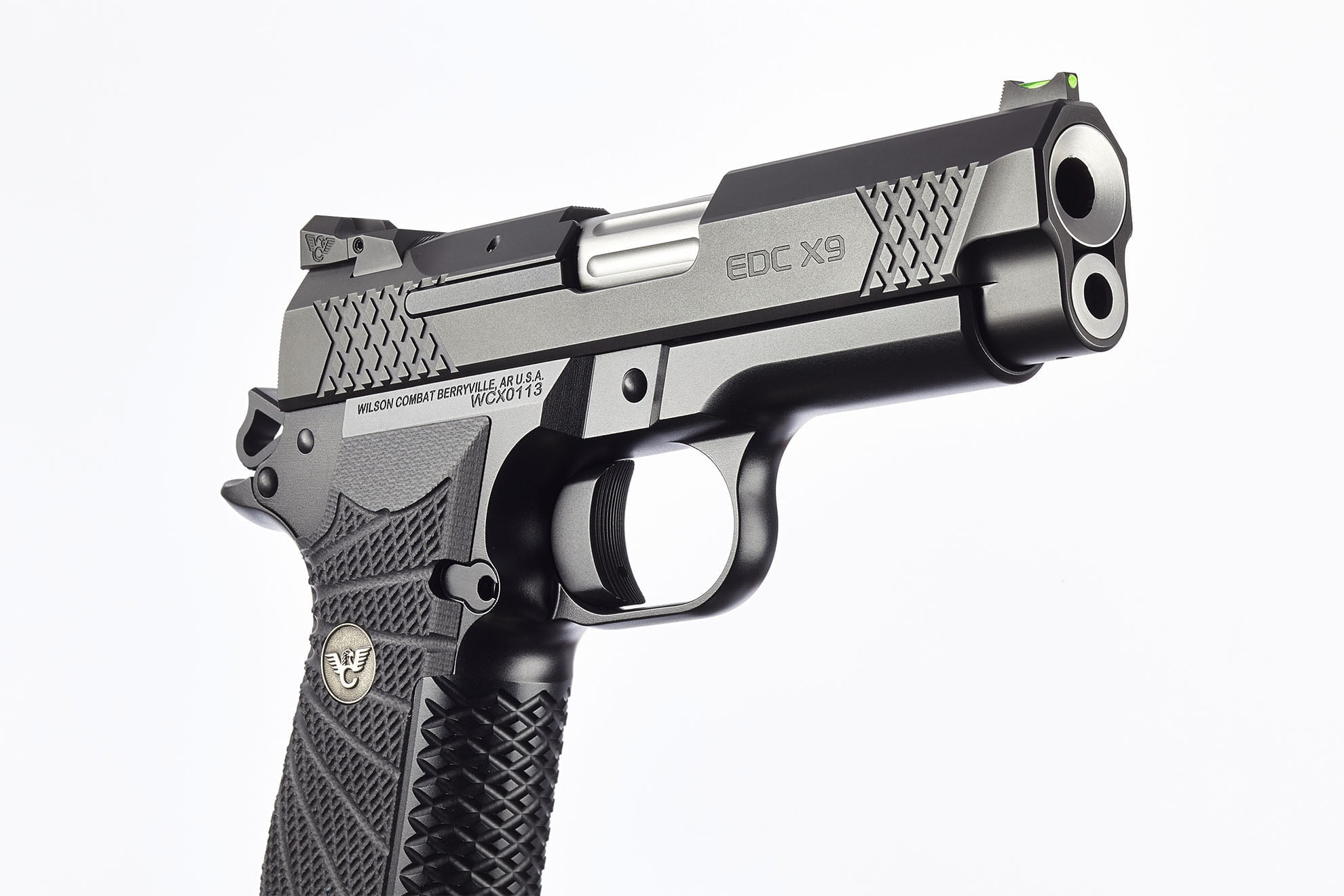
Worth clearing up a common assumption first, because the published numbers go the other way to most people’s instinct. The Staccato P is the bigger gun: 8.1in long, 5.9in tall, 1.5in wide and 33oz. A 4in EDC X9 2.0 is 7.4in long, 5.25in tall, 1.4in wide and 30.01oz.
So the Wilson is smaller in every dimension and three ounces lighter, while the Staccato carries two more rounds and costs about $693 less. That is the trade in one sentence, and it is not the trade the marketing on either side leads with.
This is where Wilson flexes its custom-shop roots. The X9 is hand-fit to tolerances you feel the instant you rack it, and the one-piece frame gives it a dense, unbroken quality that a modular gun cannot quite match. It feels like a gun someone finished by hand, because it largely was.
Staccato’s fit and finish are excellent, and its guns are more refined than most people expect from a company that ships in real volume. But the modular grip means there is a junction where the polymer meets the chassis, and over very high round counts that interface needs occasional attention. For most owners it is a non-issue. For someone who wants the most unified, hand-built object, the Wilson has the edge, and it should at the price.
Triggers
Both triggers are outstanding, and both will spoil you for striker guns forever. Wilson’s is a classic custom 1911 break, crisp and short in the three-and-a-half to four pound range. Staccato’s flat trigger breaks around four pounds with a clean wall and a fast reset that competition shooters love.
Preference here is personal. The Wilson feels a touch more like a traditional match 1911 trigger, while the Staccato’s flat face and reset suit rapid strings. Neither is objectively better. If the trigger is your deciding factor, shoot both, because your finger will pick the winner faster than any spec sheet.
Reliability and Duty Proof
Both run, and both are built to. Where Staccato has a unique edge is documented duty use. Agencies do not adopt a pistol on looks, and Staccato earning real law enforcement contracts is meaningful proof that the platform holds up to hard, high-round-count service. That track record is part of what you are buying.
Wilson’s reliability reputation is decades deep, built on 1911s that run and on the company’s obsessive tuning. The X9 inherits that pedigree. Both benefit from quality magazines and a short break-in, as tight guns often do. Reliability is not a reason to pick one here. It is a strength they share.
Concealed Carry
For pure concealment, the Wilson X9 has the advantage. It was designed as a carry gun first, and its thin one-piece frame and shorter grip hide better than a full-size Staccato P. If you want the most rounds in the smallest premium package, the X9 or the smaller SFX9 is hard to beat.
Staccato answers with the compact C2, which shrinks the 2011 into a genuine carry size while keeping the optics cut and high capacity. If you specifically want a carry-sized Staccato against the X9, that head-to-head is worth its own look. For the full-size guns compared here, the X9 conceals easier and the P carries more.
What Each Brand Costs Right Now
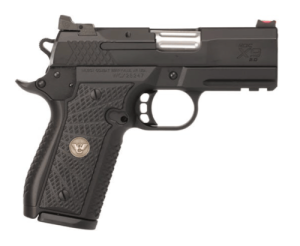
Four cards, cheapest first, two from each maker. The headline pair are the Staccato P and the Wilson EDC X9; the other two are the cheaper route into each brand.
The cheapest way into Staccato at $2,399.99, and the carry gun of the range at 23oz on an aluminum frame. Not the gun in the headline, but the one a lot of readers actually want.
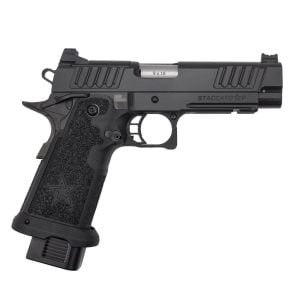
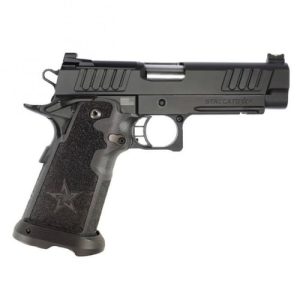
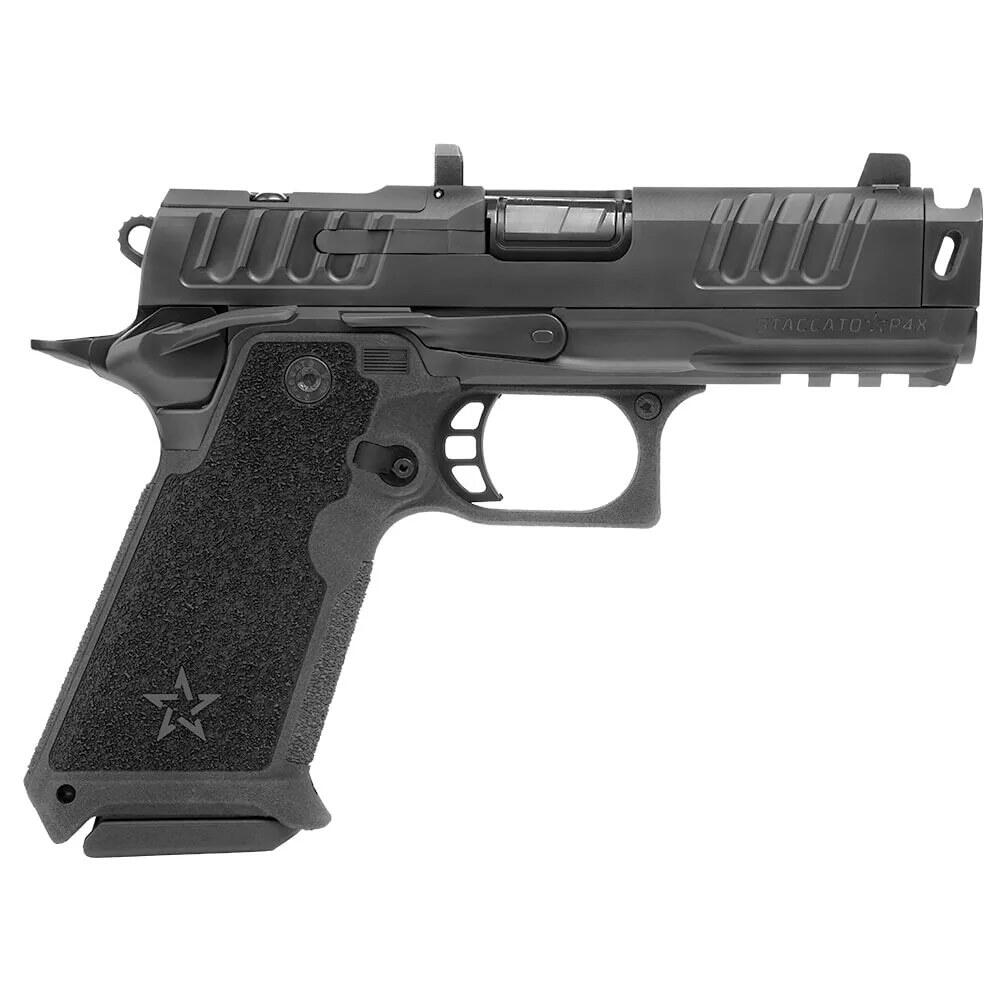
The P itself at $2,537.99 against a $2,499 MSRP, so street is running just above list. This is the gun that put 2011s on duty belts, and the one the spec table is built around.
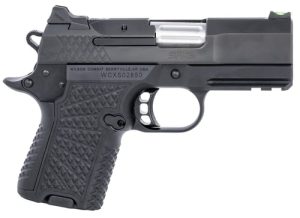
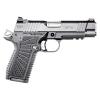
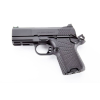

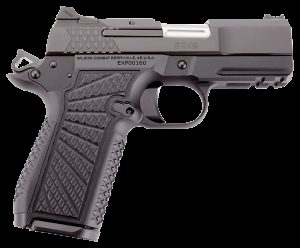
The SFX9 at $2,860.00 is the cheaper Wilson double-stack, and it lands between the two headline guns on price. If the X9 is the gun you want but not the number you want, start here.
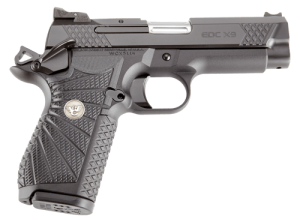
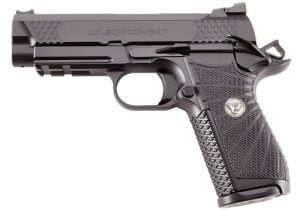
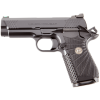
The X9 from $3,230.99 against a $3,799 MSRP. That is $693.00 more than the Staccato P, for a gun that is smaller and lighter but carries two fewer rounds.
Price and Value
Staccato undercuts the Wilson by $693.00 at the floor while giving you more capacity and a factory optics cut. On a features-per-dollar basis, that is a real win, and it is a big reason the 2011 spread so fast. For a shooter who wants maximum capability for the money, Staccato is the value play in this matchup, even though nobody would call it cheap.
The Wilson costs more because you are paying for the custom-shop fit and the one-piece design. Whether that premium is worth it depends on how much you value that one-piece feel and the Wilson name. Both hold value far better than production pistols, so neither is a bad financial decision by handgun standards. For more picks on each side, see our roundups of the best Wilson Combat pistols and the best Staccato guns.
Aftermarket and Support

Both are well supported, but in different ways. Wilson makes a huge portion of its own parts and accessories in house, so you are buying into a tight, first-party ecosystem. Staccato benefits from the enormous third-party 2011 aftermarket plus a massive and vocal owner community, which means grips, holsters, and upgrades are everywhere.
If you like a one-stop first-party experience, Wilson delivers it. If you like endless customization options and a huge community to learn from, the 2011 world around Staccato is deeper. Both make it easy to keep the gun fed and holstered.
Recoil and Shootability
Both guns shoot flatter and softer than almost anything in their weight class, which is the whole reason people pay 2011 and X9 money in the first place. The steel and aluminum construction, the low bore axis, and the excellent triggers combine to keep the muzzle glued to the target through fast strings. If you have only ever shot polymer strikers, the first magazine through either of these is a revelation.
The Staccato’s competition roots give it a slight edge in pure flat-shooting speed, since the platform was refined in the USPSA world where every hundredth of a second counts. The Wilson X9 is not far behind and its heavier steel frame soaks up recoil beautifully. For a new shooter learning to run a pistol fast, either one flatters your technique, and the difference between them is smaller than the difference between either and a typical duty gun.
Sights and Red Dots
Iron sights on both are excellent, with crisp front sights and serviceable rears, and both track well for fast shooting. The real story in 2026 is the red dot, and here the platforms diverge in how easy they make it. Staccato’s direct-mount optics cut is standard on most models, so mounting a dot is clean and low, with no adapter plate stacking height.
Wilson offers optics on specific variants, and when you get the right one the mounting is excellent. The practical difference is that Staccato assumes you want a dot and builds for it across the line, while Wilson asks you to choose the optics-ready variant up front. If you already know you are running a red dot, factor that into which base gun you order.
Durability and Round Count
These are guns built to be shot, not safe queens. Both use steel where it matters and both are engineered for long service lives. Staccato’s duty adoption is real-world proof that the platform survives high round counts under hard use, and competition shooters routinely put tens of thousands of rounds through 2011s. That is a strong durability resume.
The Wilson X9 inherits the company’s decades of building 1911s that simply keep running, and its one-piece frame has fewer interfaces to loosen over time. On a modular gun the grip module can want occasional attention at very high round counts, which is a normal part of 2011 ownership rather than a flaw. Both will outlast most owners’ interest in shooting them, so durability is a shared strength.
Resale and Collectibility
Both hold value far better than a production pistol, which quietly softens the sting of the purchase price. The Wilson X9 has broad name recognition and moves quickly on the used market, and clean examples command strong prices. Staccato’s popularity and duty reputation keep demand high, so a used Staccato also sells fast and holds a healthy chunk of its value.
Neither is a good way to lose money by handgun standards. If you buy either and decide it is not for you, you will recover most of your investment, which is more than you can say for the average striker gun. For a purchase this size, that resale floor is a real part of the value equation.
Living With Each One
Day to day, the X9 rewards the shooter who loves the object. It feels like a fine tool every time you pick it up, and the one-piece frame and hand-fit action make even dry practice satisfying. It is the gun you clean at the kitchen table just to look at it. If your relationship with a pistol is part craftsmanship appreciation, the Wilson delivers that in a way few carry guns do.
The Staccato rewards the shooter who wants to run it. It begs to be taken to a match or a class, and the swappable grip, factory dot, and huge community make it endlessly tinkerable. It feels like a serious piece of equipment built to do a job, and it does that job superbly. Decide whether you want a gun to admire or a gun to campaign, and that instinct will point you at the right one.
Which Should You Buy?
Buy the Staccato if you want maximum capacity, a factory optic cut, a swappable grip, and a pistol with proven duty and competition credentials, for meaningfully less money. It is the more practical, more flexible, better-value choice for most buyers, and it is the benchmark high-capacity 9mm for a reason.
Buy the Wilson EDC X9 if you want a one-piece, hand-fit carry gun that keeps the soul of a 1911 while adding a fat magazine, and you value that one-piece feel and Wilson pedigree over raw capacity. It is the connoisseur’s carry piece.
If you are torn between hand-built houses instead, our Wilson Combat vs Nighthawk Custom comparison covers the other end of the custom spectrum.
How I Compared These
This comparison draws on hands-on time with the Wilson X9 and Staccato pistols, published specifications from both makers, and the well-documented record of Staccato in duty and competition use. I weighted the factors buyers at this price actually care about: platform feel, capacity, optics, trigger, reliability, carry, and value. Prices and availability shift, so use the live pricing above as your current guide before buying.
Bottom Line
Wilson Combat and Staccato are the two best answers to the high-capacity 9mm question, and they solved it differently. Staccato took the modular 2011 mainstream and made it a duty and value benchmark. Wilson engineered a one-piece X-frame that carries like a 1911 and feels hand-built because it is. For most buyers chasing capability and value, Staccato wins. For the shooter who wants a bespoke carry gun with 1911 soul, the X9 is worth every dollar.
You cannot lose either way.
Related buying guides: For more picks, see our best double-stack 1911 pistols and best custom 1911 pistols roundups.
Related reading: Wilson EDC X9 vs Staccato C2 runs the same fight one size down, Nighthawk vs Staccato is the hand-built answer, and the best 2011 pistols ranks the wider field.
Is Wilson Combat better than Staccato?
Neither is objectively better, and the trade is cleaner than most comparisons admit. The Wilson EDC X9 is the smaller, lighter, hand-fit gun with true one-piece 1911 feel. The Staccato P carries two more rounds, takes an optic more easily, offers a swappable grip and has real duty adoption behind it, for about $693 less. Pick bespoke feel or modern capability.
What is the difference between the Wilson EDC X9 and a Staccato?
The X9 uses Wilson's one-piece X-frame with the double-stack grip integral to the frame, so there is no join to feel. A Staccato is a modular 2011 with a grip module bolted to a chassis, which is what allows grip swaps and drove the platform's competition success. Same idea, two different ways of getting there.
Which is bigger, the X9 or the Staccato P?
The Staccato P, in every dimension. Staccato publishes 8.1in overall, 5.9in tall, 1.5in wide and 33oz. Wilson publishes 7.4in, 5.25in, 1.4in and 30.01oz for the 4in EDC X9 2.0. So the Wilson is the smaller and lighter gun, which surprises people who assume the custom 1911 is the heavier one.
Which holds more rounds?
The Staccato P at 17+1, with 20-round magazines available. The EDC X9 2.0 takes 15-round magazines, or 18-round magazines when specified with the magwell, so a magwell X9 closes most of that gap. Against a base X9 the Staccato wins clearly.
Is the Staccato optics-ready?
Optic-cut Staccatos exist but they are specific variants rather than the whole range. Our catalogue prices a standard Staccato C2 at $2,593.99 against a C2 DPO at $2,789.99, about $196 more. Wilson likewise offers optic cuts on selected X9 and SFX9 variants rather than across the line.
Which is better for concealed carry?
The Wilson X9, and the numbers back it rather than just the reputation. It is 0.7in shorter, 0.65in lower, 0.1in thinner and three ounces lighter than a Staccato P. If you want a carry-sized Staccato instead, the C2 is the fairer comparison, and we ran that head to head separately.
Which costs less, Wilson or Staccato?
Staccato, by $693.00 at the floor. The cheapest Staccato P we can source is $2,537.99 against $3,230.99 for an EDC X9. Wilson lists the X9 2.0 at $3,799 MSRP and Staccato lists the P at $2,499. If you want a Wilson double-stack for less, an SFX9 is $2,860.00.
Is there a cheaper way into either brand?
Yes. A Staccato CS is $2,399.99 and is the lightest of the range at 23oz on an aluminum frame. A Wilson SFX9 is $2,860.00 and follows the X9 idea for roughly $370 less. Those two bracket the headline pair on price.
4,021+ Gun & Ammo Deals
Updated daily from 200+ top retailers. Filter by category, caliber, action type, and price.
Related Guides