

Last updated August 25, 2026 · By Nick Hall, who has carried both of these and agonized over which one to keep. Every spec below comes from Wilson Combat and Staccato directly; prices are the lowest live offer in our retailer feed on the day of the update.
Affiliate disclosure: some links below are affiliate links. If you buy through them you still get the best price and you help us keep tracking deals, at no extra cost to you.
This is the premium carry matchup that actually keeps people up at night. The Wilson Combat EDC X9 and the Staccato C2 are two of the finest high-capacity 9mm carry guns on earth, both promising a fat magazine and a 1911-grade trigger in a package you can hide under a shirt. The C2 starts at $2,593.99 and the X9 at $3,230.99, so there is about $637 between them.
If you have the budget for either, you are choosing between two genuinely great guns, and the decision comes down to philosophy and a handful of practical details.
I have carried both, and each one has made me want to sell the other. Let us settle it by looking at exactly how they differ, because on the surface they look like the same idea executed twice.
Table of Contents
How we tested: Every pick here is ranked against our testing methodology. Minimum round counts, accuracy and reliability protocols, the failures that disqualify a gun.
Quick Verdict
If you want the most refined hand-fit carry gun with true 1911 feel and the slimmest profile, the Wilson EDC X9 is the pick, and at 1.4in wide against the C2’s 1.49in it genuinely is the thinner gun. If you want a swappable grip module, five ounces off the belt and competition DNA, the Staccato C2 is the more modern and the cheaper choice.
For a purist carry piece, I lean X9. For a red-dot carry gun with duty pedigree, I lean C2. This is one of the closest calls in the whole premium carry world.
Specs Comparison
| Spec | Wilson Combat EDC X9 | Staccato C2 |
|---|---|---|
| Platform | One-piece X-frame double-stack | Modular 2011, compact |
| Caliber | 9mm | 9mm |
| Capacity | 15, or 18 with the magwell | 16+1, ships with two magazines |
| Barrel | 4in bull (5in and 3.25in also offered) | 3.9in bull |
| Weight, empty | 30.01oz (4in) | 25oz |
| Overall length | 7.4in (4in barrel) | 7.5in |
| Height | 5.25in | 5.5in |
| Width | 1.4in | 1.49in, 1.3in at the grip |
| Frame | Aluminum X-Frame | 7075 aluminum, billet machined |
| Optics | Optional cut on select X9 variants | DPO optic variants offered, about $196 more |
| Grip | Fixed, integral to frame | Swappable grip module |
| Trigger | 3.5 to 4.5 lb single-action | 4 to 4.5 lb single-action |
| Feel | One-piece 1911 | Modern, light, flat-shooting |
| MSRP | $3,799 | $2,299 |
| Cheapest live offer we can source | $3,230.99 | $2,593.99 |
| Warranty | Lifetime | Lifetime |
Wilson EDC X9 Pros & Cons
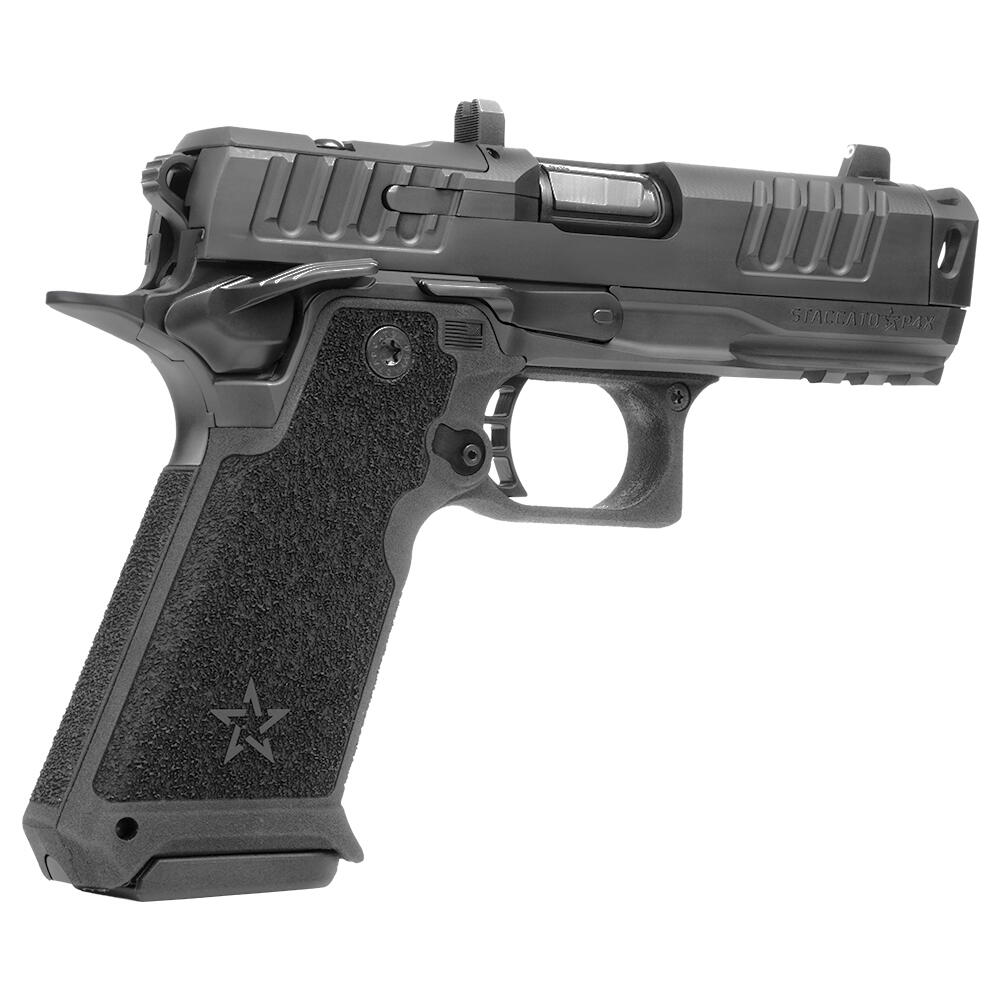
Pros
- One-piece frame, true unbroken 1911 feel
- Hand-fit tolerances and a superb factory trigger
- Thin profile hides well for the capacity
- Deep Wilson parts and support ecosystem
- Excellent resale and name recognition
Cons
- Heavier than the aluminum-grip C2
- Optics only on certain variants, not standard
- Fixed grip, no module swaps
- Costs about $637 more than the C2
Staccato C2 Pros & Cons
Pros
- Factory optic variants with direct-mount cut
- Lighter, 25oz against 30.01oz for X9
- Sixteen rounds, two magazines in the box
- Swappable grip for hand fit
- Competition and duty DNA behind the platform
Cons
- Grip module joins where X9 is solid
- Grip-to-chassis junction wants occasional attention
- Smaller aftermarket than full-size 2011s
- Still a serious investment
Same Mission, Different Frames
Both guns exist to answer the same question: how do you put fifteen or more rounds of nine-millimeter into a premium carry gun that shoots like a custom 1911? Wilson’s answer is the X-frame, a one-piece aluminum frame with an integral double-stack grip. There is no separate module, so the gun feels like a slightly wider 1911, dense and all of a piece. If the feel of a real 1911 is sacred to you, the X9 keeps it.
Staccato’s answer is the compact 2011, a steel chassis wrapped in a swappable grip module. That modular design is lighter thanks to the aluminum grip, and it lets you tune the grip to your hand. It also brings the optics-ready cut as standard, which is a big deal for a modern carry gun. The C2 shrinks the 2011 into a genuine carry size while keeping the platform’s strengths. The broader platform difference is covered in our 1911 vs 2011 guide.
Weight and Carry

Put the published numbers side by side and the picture is sharper than the marketing. A 4in EDC X9 2.0 is 30.01oz empty, 7.4in long, 5.25in tall and 1.4in wide. A Staccato C2 is 25oz, 7.5in long, 5.5in tall and 1.49in wide. So they are within a tenth of an inch of each other on length and width, and the C2 gives away nine hundredths of an inch in thickness.
The real gap is the five ounces. That is the difference you feel at hour eight, not at the gun counter, and it is the single strongest argument for the C2 as a carry gun. Wilson notes that its published weights are close approximations rather than guaranteed figures, which is honest of them and worth knowing before you weigh one yourself.
The C2 has a real edge in weight. Its aluminum grip module keeps it several ounces lighter than the all-metal X9, and on a belt all day that difference is noticeable. Combined with the optics cut, the C2 is arguably the more modern carry package straight from the box.
The X9 answers with a thinner one-piece frame and a shorter grip on the base model, which some carriers find hides better despite the extra weight. Steel also soaks up recoil, so the X9 can feel a touch softer shooting. This is a genuine trade: lighter and optic-friendly with the C2, or thinner, more solid, and softer-shooting with the X9. Both carry well for such capable guns.
Optics
This one is straightforward. The Staccato C2 ships optics-ready with a direct-mount cut on the standard configuration, so putting a red dot on it is easy and clean. In 2026 that matters, because a growing share of carriers run a dot, and the C2 treats it as the default.
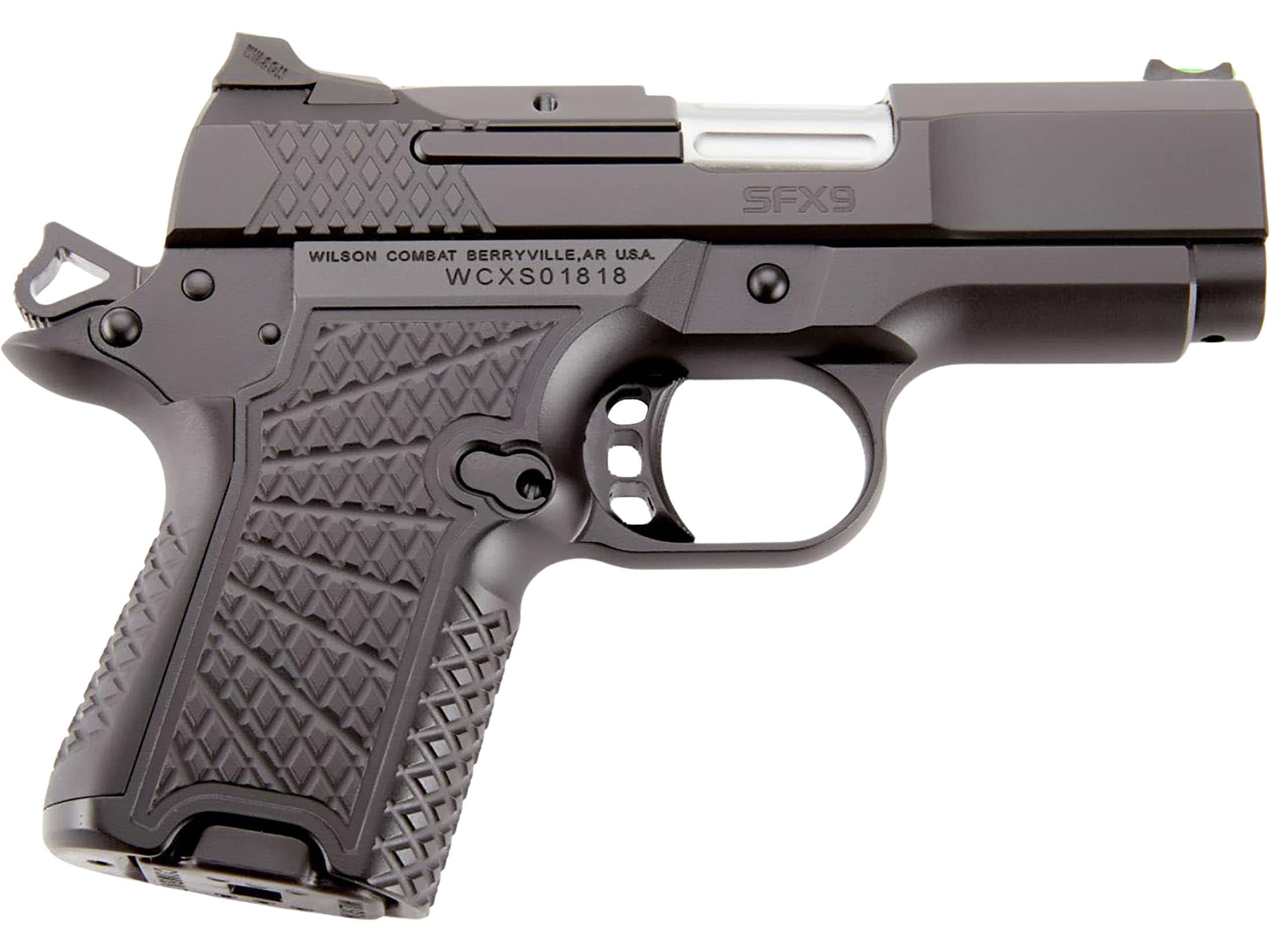
The Wilson X9 offers optics on specific variants like the optics-cut X9 and the SFX9, but it is not universal across every base gun. If a red dot is central to your plan, the C2 makes it simpler, while the X9 asks you to pick the right variant. For an iron-sight carry gun, both are superb and this stops mattering.
Feel, Fit, and Trigger
The X9 is the more unified object. Its one-piece frame and Wilson custom-shop fit give it a density and a hand-built quality that a modular gun cannot fully match. If you love the way a fine 1911 sits in the hand, the X9 is the more soulful carry gun, and its trigger is a classic custom break.
The C2 counters with a lower bore axis and a flat trigger that make it exceptionally fast and flat-shooting, which is the 2011’s whole reason for existing. It feels more modern and more competition-tuned, and the swappable grip lets you fit it to your hand. Neither trigger is better in absolute terms. The X9 feels like a hand-built 1911, the C2 feels like a race-bred carry gun.
Reliability and Round Count
A carry gun has one job above all others, and that is to work every single time. Both of these clear that bar. Wilson’s decades of building reliable 1911s carry straight into the X9, and the one-piece frame has fewer interfaces to loosen over a lifetime of carry and practice. It is the kind of gun you can bet your life on and forget about.
Staccato’s platform is proven in duty use, which is real-world evidence that it holds up to hard, high-round-count service. The compact C2 inherits that pedigree. The modular grip wants occasional attention at very high round counts, which is normal 2011 maintenance rather than a weakness. Both benefit from quality magazines and a short break-in, and both reward the owner who actually trains with the gun. Reliability is a shared strength here, not a tiebreaker.
Concealment and Holsters
Both hide better than their capability suggests, but they hide differently. The X9’s thin one-piece frame and shorter base grip tuck in close, and many carriers find it prints less despite the extra weight. It is a genuinely concealable gun for something that holds fifteen plus one, and Wilson designed it around carry from the start.
The C2’s lighter aluminum grip makes it easier to carry all day, and its compact dimensions keep it manageable under a shirt, though the grip is where a 2011 tends to show. Holster support is excellent for both, since both are popular enough that every serious maker cuts for them. If all-day weight is your priority, the C2 has the edge. If minimizing printing is your priority, the X9’s thin profile is hard to beat.
Aftermarket and Support
Wilson makes a large share of its own parts and accessories in house, so the X9 lives inside a tight, first-party ecosystem. Magazines, sights, and support all come from the source, which many owners appreciate for the consistency and simplicity. It is a one-stop experience backed by the company that built the gun.
The C2 benefits from the broader 2011 world and Staccato’s large, active community, which means grips, holsters, and setup ideas are everywhere. The compact-specific aftermarket is smaller than the full-size 2011 market, but it is growing quickly as the C2’s popularity climbs. If you love tinkering and community knowledge, the Staccato ecosystem is deep. If you prefer a first-party experience, Wilson delivers it.
Resale and Long-Term Value
Both hold value far better than a typical carry gun, which cushions the purchase price. The X9 enjoys broad Wilson name recognition and sells quickly used, and clean examples command strong prices. The C2 rides Staccato’s popularity and duty reputation, so it also moves fast on the used market and retains a healthy share of its cost.
For a gun in this price range, that resale floor matters. If you buy either and change your mind, you will recover most of your money, which turns an expensive purchase into a lower-risk one than the sticker suggests. Neither is a poor financial decision by premium-handgun standards, and both are guns people tend to keep anyway.
What Each One Costs Right Now
Four cards, cheapest first. The two headline guns are the middle pair; the outer two are the cheaper way into each brand if the headline price is more than you want to spend.
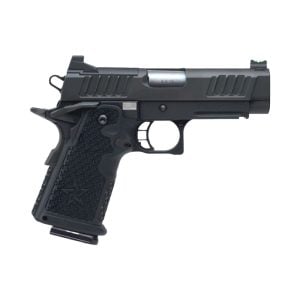
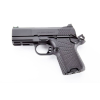
Not the gun in the headline, but worth knowing about at $2,399.99. The CS is Staccato’s dedicated carry piece, smaller and lighter again than the C2, and it is the cheapest way into the brand.
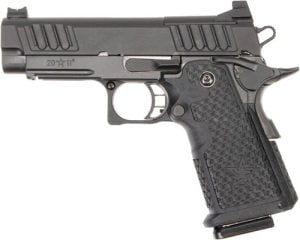
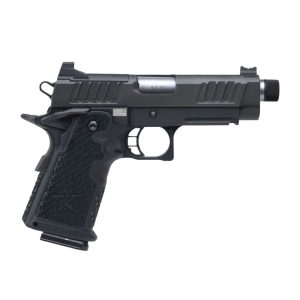
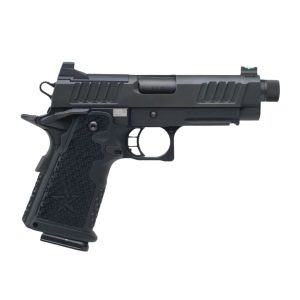
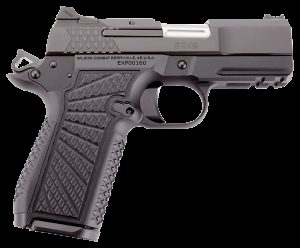
The C2 itself, from $2,593.99. Staccato lists it at $2,299 MSRP, so street is running above list, which tells you how much demand there is. The DPO optic variants sit around $2,789.99, roughly $196 more.
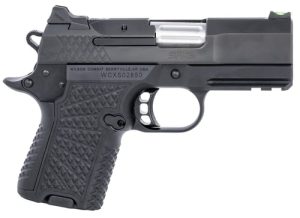
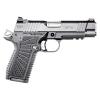

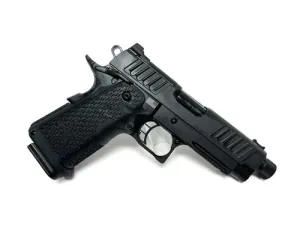
The SFX9 at $2,860.00 is the X9 idea in a cheaper package, and it is the gun to look at if you want a Wilson double-stack without the X9’s price. It undercuts the X9 by roughly $370.
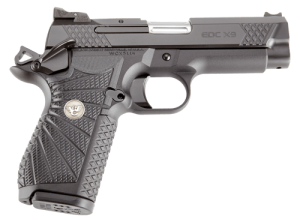
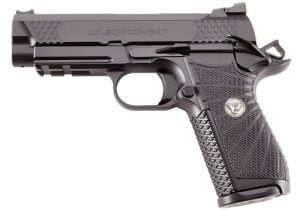
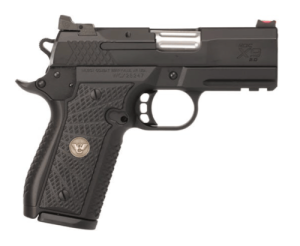
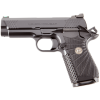
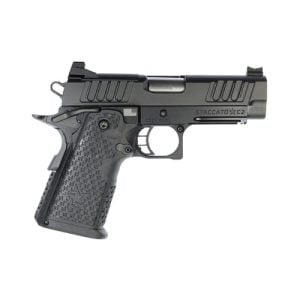
The X9 from $3,230.99, against a $3,799 MSRP. That is about $637 above the C2, and it is the number this whole comparison turns on.
Price and Value
The C2 costs about $637 less than the X9 while adding a factory optics cut and shaving weight, which makes it the stronger value on paper. For a modern carrier who wants a dot and a lighter gun, that is a compelling package for the money.
The X9 costs more because you are paying for Wilson’s custom-shop fit and the one-piece design. Whether that premium is worth it depends on how much you value that one-piece feel and the Wilson pedigree. Both hold value very well, so neither is a poor decision. If you want to see how these houses stack up more broadly, our Wilson Combat vs Staccato comparison covers the full-size guns.
Grip and Ergonomics
The grip is where these two feel most different in the hand. The X9’s one-piece frame gives a solid, unbroken grip with Wilson’s excellent texturing, and because it is integral to the frame there is no seam or flex, just dense metal. For shooters who love the feel of a fine 1911, that solid grip is a big part of the appeal, and it never shifts or needs attention.
The C2’s swappable grip module lets you tune size and texture to your hand, which is a real advantage if standard grips never quite fit you. The aluminum module also drives the weight savings. The trade is that a module is a separate part bolted to the chassis, so it does not feel quite as monolithic as the X9’s frame, and it wants occasional checking over long round counts. If hand-fit adjustability matters, the C2 wins.
If one-piece solidity matters, the X9 does.
Maintenance and Care
Both are premium guns that reward basic care, and both are straightforward to maintain for anyone comfortable with a 1911-pattern pistol. The X9 breaks down along familiar lines, and its one-piece frame means there is little to fuss over beyond normal cleaning and lubrication. It is the simpler gun to live with in that respect, with fewer parts that ever need attention.
The C2 is also easy to maintain, with the added note that the grip module hardware benefits from an occasional check at high round counts, which is standard 2011 ownership rather than a chore. Both should be run with quality magazines and given a short break-in when new. Neither is fussy, and both will run for years with the modest care any fine handgun deserves.
Choosing Your First Premium Carry Gun
If this is your first step into premium carry, think about how you actually carry and shoot rather than the spec sheet. If you already run a red dot on your carry guns and value shedding weight, the C2 slots into that plan with the least friction, and it costs a bit less to get there. It is the easy recommendation for the modern, dot-forward carrier.
If you are drawn to the 1911 as an object, love the idea of a hand-fit gun, and want the thinnest, most unified carry piece, the X9 is the one you will not tire of. It is the choice that rewards appreciation as much as utility. Either way, this is a buy-once, keep-forever category, so choose the gun that matches how you actually live, not just the one that wins a single spec line.
Which Should You Buy?
Buy the Staccato C2 if you want a lighter, optics-ready carry gun with a swappable grip and competition-bred handling, for less money. It is the more modern package and the easier red-dot carry choice.
Buy the Wilson EDC X9 if you want the most refined, hand-fit carry gun with true 1911 feel and the thinnest profile, and you value that soul over a few ounces and a factory optic cut. It is the purist’s premium carry piece.
Still deciding between the whole houses rather than these two models? Start with our best Wilson Combat pistols and best Staccato guns roundups.
How I Compared These
This comparison draws on hands-on carry and range time with both the EDC X9 and the Staccato C2, published specifications from both makers, and the practical realities of carrying a premium double-stack 9mm daily. I weighted feel, weight, optics, trigger, concealment, and value. Prices and availability move, so use the live pricing above as your current guide.
Bottom Line
The Wilson EDC X9 and Staccato C2 are two answers to the exact same premium carry question, and they are close enough that you should choose on feel. The C2 is lighter, optics-ready, and a touch cheaper, the modern red-dot carry gun. The X9 is one-piece, hand-fit, and thin, the purist’s 1911-soul carry piece. Handle both if you possibly can, because at this level the spec sheet is nearly a tie and your hand will break the deadlock.
Related buying guide: For more picks, see our best double-stack 1911 pistols roundup.
Related reading: the best 2011 pistols ranks the wider field, Wilson Combat vs Nighthawk Custom covers Wilson against the other great custom house, and Nighthawk vs Staccato is the hand-built answer to the same question this page asks.
Is the Wilson EDC X9 or Staccato C2 better for carry?
Both are excellent and the numbers are closer than the debate suggests. The X9 is the thinner gun at 1.4in against 1.49in and has the one-piece 1911 feel. The C2 is five ounces lighter, 25oz against 30.01oz, which is what you notice by the end of a long day. Pick the X9 for feel and profile, the C2 for weight and a red dot.
Which is lighter, the X9 or the C2?
The Staccato C2, by about five ounces. Staccato publishes 25oz for the C2 without an optic or magazine. Wilson publishes 30.01oz empty for the 4in EDC X9 2.0, rising to 33.4oz for the 5in and falling to 28.6oz for the 3.25in. Wilson also notes its published weights are close approximations rather than guaranteed figures.
Which holds more rounds?
It depends on how the X9 is configured. The C2 holds 16+1 and ships with two 16-round magazines. The EDC X9 2.0 takes 15-round magazines, or 18-round magazines when specified with the magwell, so a magwell X9 actually carries more than a C2. Against the base X9 the C2 has the edge.
How much bigger is the X9 than the C2?
Barely, and in the X9's favour on two of three measures. A 4in EDC X9 2.0 is 7.4in long, 5.25in tall and 1.4in wide. A C2 is 7.5in long, 5.5in tall and 1.49in wide with a 1.3in grip. So the X9 is a tenth of an inch shorter, a quarter inch lower and nine hundredths thinner, while weighing five ounces more.
Is the Staccato C2 optics-ready?
Optic-cut C2s exist but they are separate variants rather than the base gun. The C2 DPO models run around $2,789.99 against $2,593.99 for a standard C2, so about $196 more. Wilson likewise offers optic cuts on specific X9 and SFX9 variants rather than across the range.
How much more expensive is the EDC X9?
About $637. The cheapest EDC X9 we can source is $3,230.99 against $2,593.99 for a C2. Wilson lists the X9 2.0 at $3,799 MSRP and Staccato lists the C2 at $2,299, so both are selling near or above list. If the X9 price is the sticking point, a Wilson SFX9 at $2,860.00 splits the difference.
Is there a cheaper way into either brand?
Yes, on both sides. A Staccato CS is $2,399.99 and is the lighter, smaller dedicated carry gun of the range. A Wilson SFX9 is $2,860.00 and follows the same double-stack idea as the X9 for roughly $370 less. Those two bracket the headline pair neatly.
Do both come with a lifetime warranty?
Yes. Both Wilson Combat and Staccato back their pistols with a lifetime warranty and both have strong customer-service reputations, which is what you should expect at this money.
4,021+ Gun & Ammo Deals
Updated daily from 200+ top retailers. Filter by category, caliber, action type, and price.
Related Guides