

Last updated October 3, 2026
Some of the links below are affiliate links, meaning at no additional cost to you, we may earn a commission if you click through and make a purchase.
Selling a gun is legal, it’s common, and it’s easy to get wrong in a way that costs you money or lands you in real trouble. Most people only run into the rules once, the day they decide to sell, and the rules change depending on who’s buying, where they live and how the gun gets to them.
I’ve sold guns every way covered here: across a gun counter, to a buddy at the range, through an online auction and to a mail-in buyer. The best route depends on what you’re selling and if you want the most money or the fastest money, because those are rarely the same buyer.
This guide walks through it in order. Find out what the gun is worth, check the law for your sale, compare what you’d actually take home through each channel, then close the deal safely and keep a record. Every legal point below comes from the statute, ATF or the carrier’s own rules, read in October 2026.
How to Sell a Gun at a Glance
| Question | Answer |
|---|---|
| Can I sell my gun privately? | Yes, to a resident of your own state who isn’t prohibited, unless your state requires a background check on private sales |
| Out-of-state buyer? | The gun has to go to a licensed dealer in the buyer’s state |
| Fastest cash | Sell to a local gun shop, or a mail-in buyer that pays after inspection |
| Most money | A private sale or an online auction, after fees |
| GunBroker seller fees | 6% of the first $400, 4% after that, plus $7 per gun for private sellers |
| Shipping | Private sellers can mail a rifle or shotgun to a dealer by USPS. Handguns can’t go by mail yet |
| Paperwork | Federal law requires none between two private parties. We still recommend a bill of sale |
Table of Contents
Step 1: Know Exactly What You Have and What It Is Worth
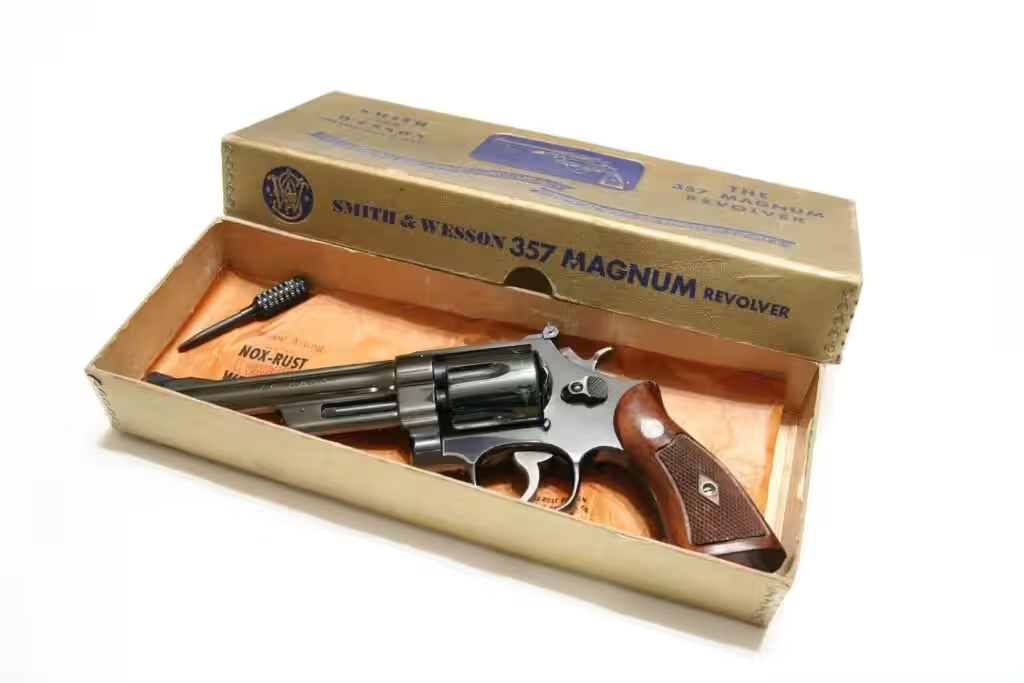
Every bad gun sale I’ve seen started with a bad number. Before you talk to a single buyer, pin down the exact make, model, caliber, barrel length and generation, then grade the condition honestly. A gun shop will do this in about 30 seconds, and if you haven’t, you’re negotiating blind.
Our gun values guide covers this step in full: the NRA condition grades word for word, how to grade your own gun at the kitchen table, and how far used prices sit below new on popular models. Grade first, then price.
For a common modern gun, the quickest honest benchmark is what the same model sells for new and used today. Our price check pulls current offers from 200+ retailers in one search:
Find the Best Price in Seconds
Search once, compare 200+ trusted retailers instantly.
Then decide what matters more to you, speed or price. A dealer or a mail-in buyer pays fast and takes the hassle off your hands, while a private buyer or an auction pays more but leaves the work and the risk with you. Neither is wrong, so pick on purpose.
Step 2: Check the Law Before You List the Gun
Federal law sets the floor for every private sale in the country, and your state can add more on top. Here are the federal rules that apply to anyone selling a gun they own, straight from 18 U.S.C. 922.
Sell Only to a Resident of Your Own State
An unlicensed person can’t sell or give a gun to another unlicensed person they know or have reason to believe lives in a different state. ATF is blunt about it: the restriction covers every kind of transfer, gift, trade, loan or sale, and every type of firearm.
So if the buyer lives out of state, the gun has to be shipped or delivered to a licensed dealer in the buyer’s state, and the buyer picks it up there after the dealer runs the federal paperwork and background check. Federal law treats you as a resident of the state where you live with the intention of making it your home.
Two narrow exceptions exist. Guns passed on through a will or inheritance can cross state lines to an heir who can legally own them there, and you can loan or rent a gun to someone temporarily for lawful sporting use.
Never Sell to Someone Who Is Prohibited
This one applies to everyone, licensed or not. It’s a federal crime to sell a gun to anyone you know or have reasonable cause to believe is prohibited from having one. The federal list covers anyone who:
- Is under indictment for, or has been convicted of, a crime punishable by more than one year in prison
- Is a fugitive from justice
- Is an unlawful user of, or addicted to, a controlled substance
- Has been adjudicated mentally defective or committed to a mental institution at 16 or older
- Is in the country illegally, or with limited exceptions, on a nonimmigrant visa
- Was dishonorably discharged from the military, or has renounced US citizenship
- Is subject to a qualifying domestic violence restraining order, or has a misdemeanor domestic violence conviction
- Intends to use the gun in a felony, terrorism or drug trafficking, or to pass it to a prohibited person
“Reasonable cause” is the part that bites private sellers. If a buyer tells you they can’t pass a background check, or offers extra cash to skip one, walk away. That’s the textbook warning sign.
Federal Age Rules for Private Sellers
It’s a federal crime for anyone to sell or hand a handgun, or ammunition made only for handguns, to someone they know or have reason to believe is under 18. The familiar 21 and 18 age limits for buying from a gun store apply to licensed dealers, not private sellers.
That’s why, under federal law alone, an 18 to 20 year old can buy a handgun from an unlicensed seller who lives in the same state, as long as the buyer isn’t otherwise prohibited. Several states set higher ages. Colorado, for one, bars private sales of any firearm to anyone under 21, so check your state before you sell to a young buyer.
Selling Part of Your Collection Is Not Dealing
You need a federal license to be in the business of dealing guns, which the law defines as buying and reselling repeatedly to predominantly earn a profit. The same statute carves out anyone who sells all or part of a personal collection, or makes occasional sales for a hobby or to improve a collection.
ATF’s 2024 rule on this added presumptions, including one that kicks in when someone resells a gun within 30 days of buying it, and it says no minimum number of sales triggers the license requirement. In May 2026 ATF proposed removing those added definitions and presumptions. As of October 3, 2026, no final rule has been published, so the 2024 language is still on the books.
For someone thinning out a safe, this rarely matters. It starts to matter if you’re buying guns specifically to flip them.
Does Your State Require a Background Check on Private Sales?
This is where most private sellers get caught out. Federal law requires no background check and no paperwork between two private parties in the same state, but a long list of states do. We read each state’s statute for this table.
| Rule | States | What it means for a private seller |
|---|---|---|
| Every private sale goes through a dealer | California, Colorado, Delaware, Nevada, New Jersey, New York, Oregon, Vermont, Washington, DC | Meet the buyer at a gun shop and have the dealer run the check and paperwork |
| Every sale needs a state check or permit, with or without a dealer | Connecticut, Hawaii, Illinois, Massachusetts, Michigan, Rhode Island | Follow your state’s permit or authorization process before you hand the gun over |
| Sales only, gifts not covered | Virginia, New Mexico | A check applies when you sell, not when you give a gun away |
| Handguns only, or handguns plus listed rifles | Pennsylvania, Maryland, Minnesota, Nebraska | Handguns, and in Maryland and Minnesota certain listed rifles, need a dealer, permit or state check. Other long guns follow federal rules |
| Gun shows and advertised sales only | Maine | A sale from an ad or at a gun show goes through a dealer. Every sale waits 72 hours before delivery |
Source: each state’s own statute, read October 3, 2026. Rules change, so confirm with your state before you sell.
A few details catch people. Virginia’s rule covers sales, not gifts. Maine’s covers only sales at gun shows and sales that start with an advertisement, and every Maine seller has to wait 72 hours after agreeing a sale before handing the gun over. Oregon routes private transfers through a dealer, and its newer permit-to-purchase requirement is tied up in court.
If your state isn’t listed, federal rules are the whole story for a same-state private sale. Rules change, so check your state’s page in our state gun laws guide before every sale.
Where to Sell a Gun: What You Actually Take Home
This is the table I wish every guide had. Same gun, worth $600 to a private buyer, run through each way of selling it. The fee math uses each company’s own published numbers as of October 2026. Where a buyer makes you an offer instead of charging a fee, there’s no fixed number to print.
| Where you sell | You take home | Fees you pay | Time to cash | Trade-off |
|---|---|---|---|---|
| Private sale, in person | $600 | Optional dealer transfer fee | As soon as you find a buyer | Most money. You carry the risk and do the work |
| GunBroker auction | $561 before shipping | $39 in fees, plus shipping | Auction length plus shipping | Biggest audience. Buyer pays you directly |
| GunBroker Valet consignment | $450 | Flat 25% | 15 to 20 days to sell | They handle shipping, transfer and listing |
| Mail-in buyer | Their offer | None. They pay shipping | About 5 to 7 days at WeBuyGuns | Fast and easy. Offer below a private sale |
| Gun shop, sell outright | Their offer | None | Same day | Fastest cash. Lowest price |
| Gun shop, trade-in | Their offer, as store credit | None | Same day | Often a better number if you’re buying |
| Local consignment | Price minus the shop’s cut | The shop’s percentage | Weeks, depends on the gun | Get the rate and time limit in writing |
Fees from the GunBroker fee schedule and Valet page, and WeBuyGuns timing from its how-it-works page, all read October 3, 2026. Mail-in and shop offers depend on the gun, so there’s no fixed number to show.
The GunBroker line works like this: 6% of the first $400 is $24, 4% of the next $200 is $8, and private sellers pay a $7 document fee on each sold gun, so $39 comes off a $600 sale. The buyer pays a separate 1% fee on top. You also cover shipping, which matters a lot for handguns, as you’ll see below.
Valet is GunBroker’s consignment service. It takes a flat 25% that covers shipping, the transfer and every auction fee, and the sale takes 15 to 20 days. On a $600 gun that leaves $450, assuming it sells for the same price.
Selling to a Gun Shop or Pawn Shop
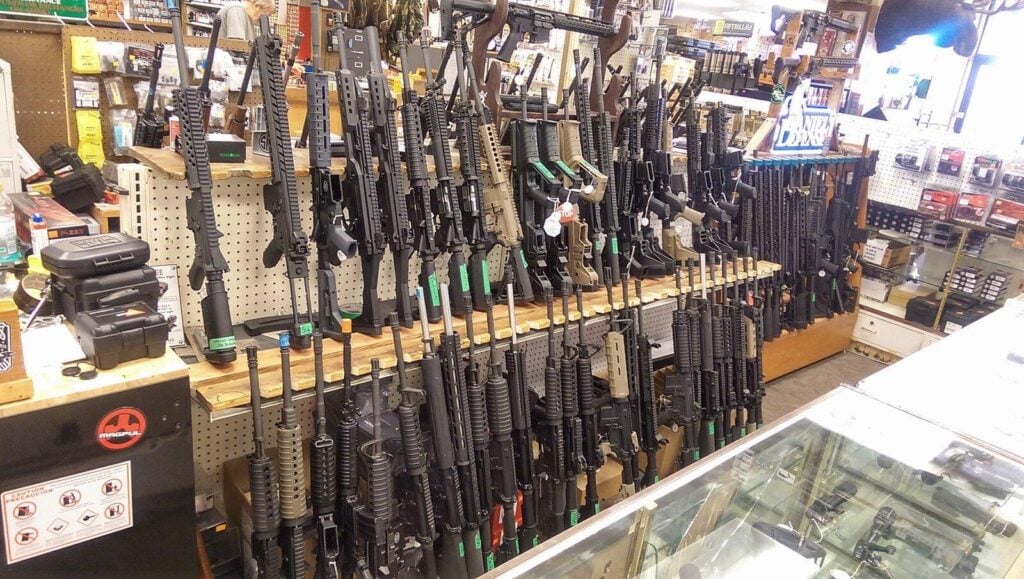
Walking into a local gun shop is the simplest way to sell a gun. You hand it over, agree a price, and leave with cash or store credit. The dealer logs the gun into its records with your name and address by the end of the next business day.
There’s no Form 4473 or background check on you as the seller. That paperwork is for people a dealer sells to, not the people it buys from. Expect to show ID anyway, since many states and local rules require it for secondhand sales.
The trade-off is price. A dealer has to resell your gun at a profit, so the offer will sit below what a private buyer would pay. Get two or three quotes, and if you’re buying something in the same store, ask what the number looks like as a trade-in credit.
Pawn shops count as dealers under federal law. Selling outright works like any other dealer sale. Pawning is a loan, and the shop may run a background check on you when you pawn the gun. Getting it back out of pawn is a transfer, and that requires a check.
Consignment at a local shop sits in between. The shop lists your gun, sells it to its customers and pays you when it sells, minus a cut. Rates vary by shop, so get the percentage and the time limit in writing before you leave the gun.
Selling a Gun Online
Online is where the reach is. You’ll see more buyers and better prices, but every online sale to someone you can’t hand the gun to ends at a licensed dealer, and you have to get the gun there.
Online Auctions: GunBroker
GunBroker is the biggest auction site for guns. A basic listing is free, and you only pay the final value fee if the gun sells. The buyer picks a receiving dealer at checkout, GunBroker verifies that dealer’s license, and you ship only after you have it. GunBroker doesn’t collect money for you, so the buyer pays you directly.
Two rules from GunBroker’s own pages save headaches. Payment apps like PayPal, Zelle, Venmo and Cash App can’t be used for gun sales there, and you’re responsible for shipping and transferring the gun legally. The current GunBroker fee schedule lists every optional charge, and reserve prices and listing upgrades cost extra.
Classifieds: Armslist
Armslist is a classifieds site, built for local deals. It isn’t part of the transaction, it doesn’t check buyers, and it doesn’t hold payment. Listing a gun now needs a paid Premium Personal account at $6.99 a month. Armslist’s own advice is to avoid deals that involve shipping unless you use its escrow partner, and never to accept cashier’s checks or money orders.
Mail-In Gun Buyers
Mail-in buyers are licensed dealers that buy guns from the public sight unseen. You fill out a form with photos, get an offer, ship the gun on their prepaid label, and they pay after inspection. It’s the online version of selling to a gun shop: fast and simple, with an offer below a private sale.
WeBuyGuns, a licensed dealer in Indiana, is the one I’d check first. It says offers come within 24 to 48 hours, often sooner, and stay valid for 14 days, shipping is on its prepaid FedEx or UPS label, and most payments go out within one business day of inspection, by ACH or check. If the gun turns out worse than described, it makes a new offer, and if you turn that down it sends the gun back.
Cash for Arms runs a similar mail-in offer and says it holds the special tax status needed to buy NFA items like suppressors. Getting offers from two buyers takes ten minutes and keeps everyone honest.
One catch with mail-in buyers. Read what they won’t take before you fill out the form. WeBuyGuns, for example, won’t buy home-built guns other than AR-15s, black powder guns, guns that need repair or anything with a damaged serial number.

How to Sell a Gun Privately, Safely
A private sale to someone in your own state puts the most money in your pocket. It also puts all the risk on you, so run it like a careful transaction, not a parking lot handoff.
- Meet at a gun shop and do the transfer there. ATF’s guide for private sellers lists this first. The dealer runs the background check and does the paperwork, for a transfer fee. In states that require a check on private sales, it’s mandatory anyway.
- Check ID if you skip the dealer. ATF suggests looking at the buyer’s ID to confirm they live in your state.
- Ask the buyer outright. Ask if anything would stop them legally owning a gun, and write their answer into your bill of sale.
- Take payment you can trust. Cash counted on the spot, or a bank transfer that has cleared, beats a check that can bounce a week later.
- Bring the gun unloaded and cased. Hand over the box, manual, spare magazines and any paperwork that came with it.
ATF is careful to say its suggestions aren’t legal requirements. But if a gun you sold ever turns up in a crime, a record of who bought it, and that you checked, is the best position you can be in. That’s what the bill of sale is for.
For the dealer route, our FFL transfer guide explains how a transfer works, and the FFL transfer fees page covers what shops charge.
Shipping a Gun You Sold
Shipping is where private sellers most often break the law without realizing it. The short version: you can’t ship a gun to a private buyer in another state, ever. It goes to a licensed dealer in the buyer’s state. And how you can ship depends on what kind of gun it is.
| What you are shipping | USPS | UPS | FedEx |
|---|---|---|---|
| Rifle or shotgun | Yes, unloaded, to a licensed dealer in any state, with tracking and signature | No, licensed shippers only | No, licensed shippers only |
| Handgun | No, banned for private persons. A change is proposed | No, licensed shippers only | No, licensed shippers only |
| Through a mail-in buyer | Their prepaid label | Their prepaid label | Their prepaid label |
Sources: USPS Publication 52, August 2026 edition, and the UPS and FedEx firearms pages, read October 3, 2026.
For a rifle or shotgun, USPS lets a private owner mail it, unloaded, to a licensed dealer in any state, using a service with tracking and a signature at delivery. Nothing on the outside of the box can show what’s inside, and the post office can ask you to open the package or certify the gun is unloaded.
Handguns are the problem. USPS still bans private persons from mailing them under the August 2026 edition of USPS Publication 52. A USPS proposal to change that has been pending since April 2026, after a January 2026 Justice Department legal opinion called the handgun mailing ban unconstitutional. UPS and FedEx accept guns only from licensed shippers under contract, so you can’t use them either.
So a private seller with a handgun sold online has two real options: pay a local dealer to ship it, or sell to a mail-in buyer that sends you its own prepaid label. Don’t pack ammunition in the box with the gun.
Special Cases: Inherited Guns, NFA Items and Recent Purchases
Inherited Guns
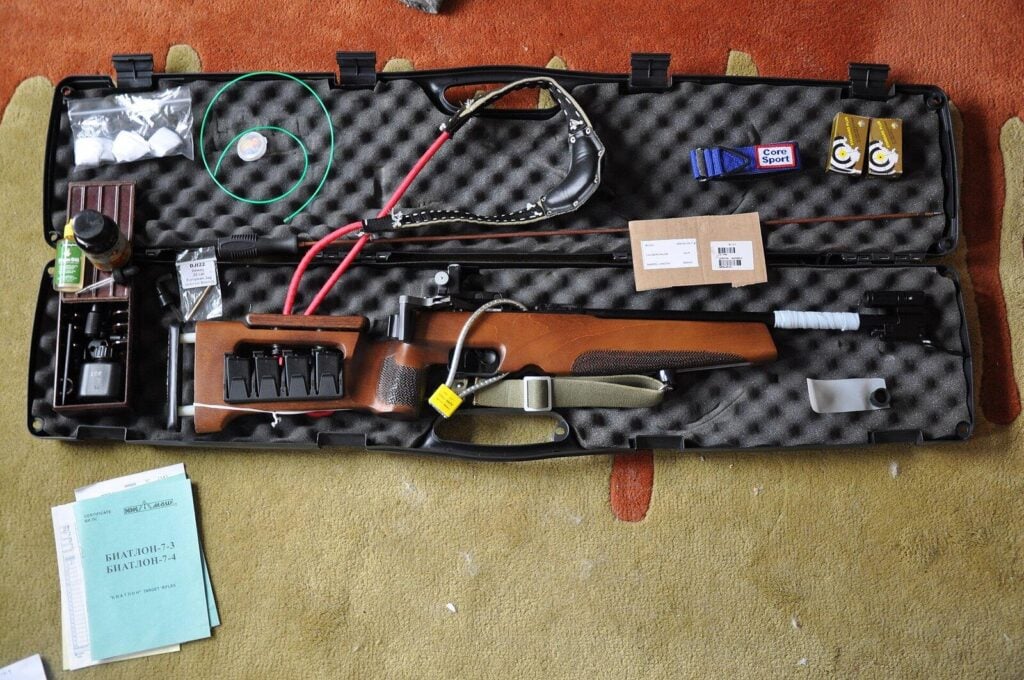
If you inherited a gun, you can sell it like any other gun you own. The federal inheritance exception only covers the gun reaching the heir, even across state lines, as long as the heir can legally own it at home. Once it’s yours, any sale follows the normal rules above. If you’re the executor selling a whole collection, our gun values guide is the place to start on pricing.
Suppressors, SBRs and Other NFA Items
NFA items never change hands without an approved ATF Form 4, filed by the seller. Since January 1, 2026 the transfer tax is $0 for suppressors, short-barreled rifles and shotguns, and AOWs, and it’s still $200 for machine guns and destructive devices. The seller pays it.
Only machine guns lawfully registered before May 19, 1986 can be transferred to civilians at all. For heirs, the executor registers NFA items to a beneficiary tax-free on Form 5, or uses Form 4 to sell to someone else. Some mail-in buyers won’t take NFA items at all, so ask first.
Selling a Gun You Just Bought
Selling a gun you’ve owned for a week is legal. Doing it over and over is exactly the pattern the dealing rules target. If you’re reselling several guns within a month of buying them, stop and read the dealing section above before you list another one.
Write a Bill of Sale, Even When Nobody Requires One
Federal law requires no paperwork between two private parties, and ATF’s private seller guide doesn’t mention a bill of sale at all. I’d write one every time anyway. It costs five minutes and proves when the gun stopped being yours.
Here’s what ours includes. Make two copies, sign both, and each of you keeps one.
- Date, time and place of the sale
- Seller’s and buyer’s full names, addresses and phone numbers
- The buyer’s ID type and number, and the state that issued it
- Make, model, caliber and serial number of the gun
- Sale price and how it was paid
- A statement that the gun is sold as is
- A line, signed by the buyer, that they live in your state and aren’t legally prohibited from owning a gun
- Both signatures
Buyers get their own suggestion from ATF: log every gun they acquire in a personal firearms record. Point your buyer to it. It helps them, and it shows you handled the sale like an adult.
The Bottom Line on Selling a Gun
If you want it done this week, take it to two local shops and a mail-in buyer and take the best offer. If you want top dollar, sell it privately through a dealer transfer or list it on an auction site and do the work. Either way, the law is the same: same-state buyers only, never a prohibited buyer, out-of-state sales through a dealer, and your state’s rules on top.
Get the number right, get the paperwork right, and you’ll sell the gun once. That’s the goal.
Frequently Asked Questions
Can I legally sell my gun to a private person?
Yes, under federal law you can sell a gun to a private buyer who lives in your state, as long as you don't know or have reason to believe they're prohibited from owning one. Many states add a background check requirement for private sales, so check your state's law before you sell.
Can I sell a gun to someone in another state?
Not directly. Federal law bars an unlicensed person from transferring a gun to an unlicensed resident of another state. Ship or take the gun to a licensed dealer in the buyer's state, and the buyer picks it up there after a background check.
Do I need a background check to sell a gun privately?
Federal law doesn't require one for a private sale between residents of the same state. Many states do, including California, New York, Washington, Colorado and Illinois. Even where it isn't required, ATF suggests running the sale through a licensed dealer so the buyer gets checked.
Where can I sell a gun for the most money?
A private sale or an online auction puts the most in your pocket, after fees. GunBroker charges sellers 6% of the first $400, 4% of the amount above that, and a $7 fee per gun for private sellers. Gun shops and mail-in buyers pay less but pay faster.
Can I ship a gun I sold?
Only to a licensed dealer, and how depends on the gun. A private owner can mail an unloaded rifle or shotgun to a dealer in any state by USPS with tracking and signature. Handguns can't be mailed by private persons, and UPS and FedEx only take guns from licensed shippers.
Do I need a bill of sale to sell a gun?
Federal law doesn't require one for a private sale, and some states have their own forms or records. We recommend a bill of sale every time, with both names, the buyer's ID details, the gun's serial number, the price and a signed statement that the buyer isn't prohibited.
How old do you have to be to buy a gun in a private sale?
Federal law bans selling a handgun to anyone under 18. The 21 and 18 limits most people know apply to licensed dealers, so federally an 18 to 20 year old can buy a handgun from a same-state private seller. Some states set higher ages, Colorado bars private sales of any gun to anyone under 21.
Does a gun shop run a background check on me when I sell?
No. The background check and Form 4473 apply when a dealer sells or hands a gun to a customer. When a dealer buys from you, it records your name and address in its acquisition records. Pawning is different, and a pawn shop may run a check when you pawn a gun.
How do I sell an inherited gun?
Once the gun is yours, sell it like any other gun, under the normal federal and state rules. The inheritance exception only covers the gun passing to an heir across state lines. NFA items in an estate go to a beneficiary tax-free on ATF Form 5, or to a buyer on Form 4.
How do I sell a suppressor or other NFA item?
The seller files ATF Form 4 and the buyer can't take the item until it's approved. Since January 1, 2026 the transfer tax is $0 for suppressors, short-barreled rifles and shotguns, and AOWs, and $200 for machine guns and destructive devices.