

Last updated November 21st 2026
Some of the links below are affiliate links, meaning at no additional cost to you, we may earn a commission if you click through and make a purchase.
By Nick Hall, a competitive shooter for over 35 years.
Table of Contents
What Is the Mozambique Drill?
The Mozambique drill is a three-shot pistol drill: two fast shots to the body, then one precise shot to the head. It’s also called the failure drill or the failure to stop drill, because the third shot is the answer when the first two fail to stop a threat. The common standard is 7 yards, from the holster, all three hits in about 3 seconds, and any miss fails the run.
What makes it hard is the change of gears. The body pair is fast and the target is big. The head box is tiny, so you have to slow down, move your eyes up and break one clean shot. Most shooters can do either half well. The Mozambique drill tests whether you can do both in the same three seconds, which is why it’s still on so many range-day lists nearly 50 years after Cooper named it.
The scenario behind the Mozambique drill is a threat that two good hits don’t stop, whether because of heavy clothing, body armor or drugs. That’s why some ranges call it the body armor drill or the drug drill.
Where the Mozambique Drill Came From
The story comes from Mike Rousseau, described as a Rhodesian mercenary, who fought in the Mozambican War of Independence, which ran from 1964 until a ceasefire on September 8, 1974. Jeff Cooper, who founded the American Pistol Institute in 1976, later Gunsite Academy, called Rousseau “a student of mine” and placed the fight “when that country was abandoned”, which points to the Portuguese pullout of 1974 and 1975, not the late 1960s. In Cooper’s telling, Rousseau turned a corner near the airport of what was then Lourenço Marques and met a man with an AK-47 walking toward him at about ten paces.
Cooper’s account goes on: “Mike, who was a good shot, came up with his P35 and planted two satisfactory hits, one on each side of the wishbone.” The man kept coming. Rousseau went for the head, the shot landed a little low, “catching the terrorist precisely between the collar bones and severing his spinal cord. This stopped the fight.”
Cooper turned it into a drill and named it after the country. By the late 1970s, Cooper had built it into his training at the new Gunsite Academy. Keep in mind that the story rests on Rousseau’s own retelling, and the details vary from one writer to the next: some put the fight in the late 1960s, some say the third shot hit the head, and one magazine version even calls the pistol a Hi-Point. The P35 in Cooper’s account is the Browning Hi-Power.
The drill reached a wider audience on screen. Jim Zubiena ran it in an episode of Miami Vice, and Tom Cruise’s character shoots it in the 2004 film Collateral, which is where many shooters first saw it.
Mozambique Drill vs Failure Drill: Why the Name Changed
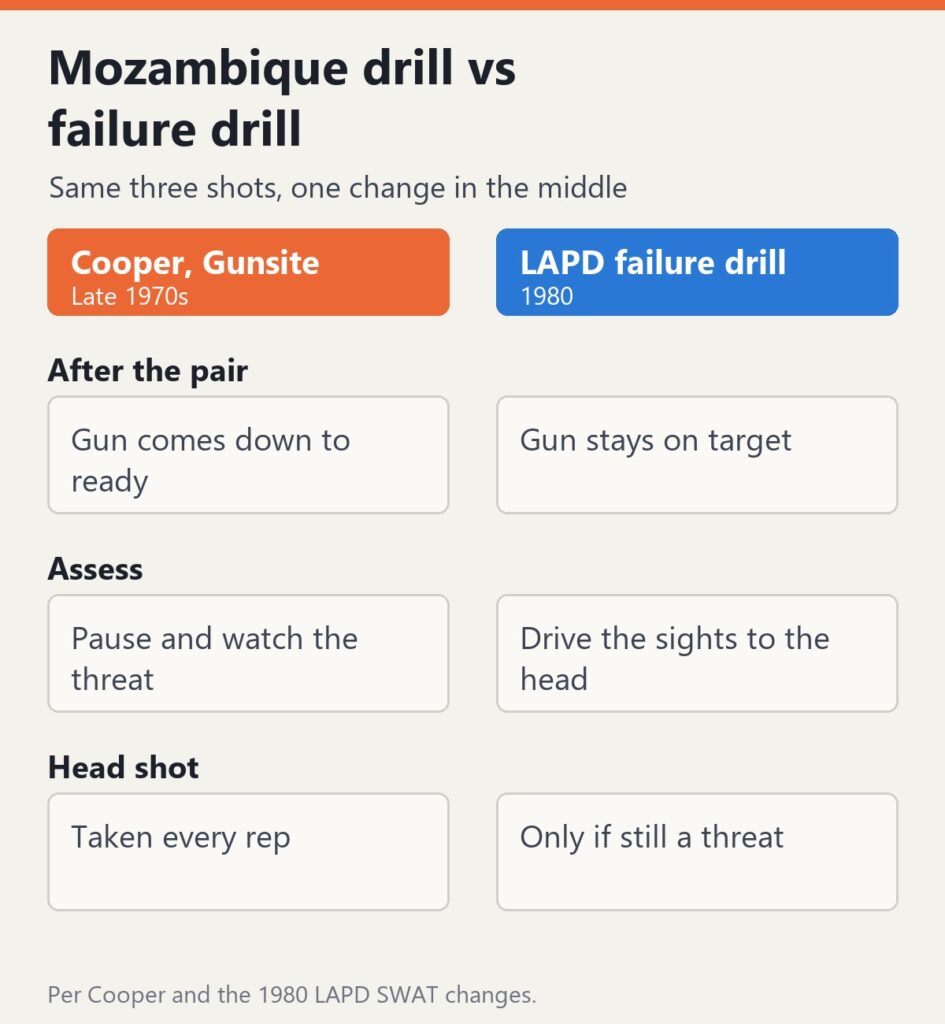
The failure drill is the Mozambique drill with a new name and one technique change. In 1980 two LAPD SWAT officers, Larry Mudgett and John Helms, took the week-long 250 pistol class at Gunsite. Mudgett worried the name could be read as having racial overtones. “He asked Cooper if he could be allowed to call it the Failure Drill, suggesting the third shot was the solution for when the first two shots failed to stop the attacker.” Cooper told him to call it whatever he liked.
They also changed how it’s shot. In Cooper’s version the shooter fired the pair, then assessed. The LAPD officers “modified the drill so the shooter kept the handgun on target after the first two shots and transitioned for the head shot if the threat was still viable.” That is the version this guide teaches: the gun never drops between the pair and the head shot.
The old range rhyme still sums up the sequence: “Two to the body, one to the head, is guaranteed to leave them dead.” Treat the second half as a rhyme, not a promise.
A US Marine Corps marksmanship lesson plan teaches the same sequence with the rifle as the Failure to Stop drill and gives a second aim point: “If it is desired to stop the threat from moving, the alternate aim point will be to the pelvis.” You’ll also hear it called the Zombie Drill or the body armor drill on some ranges. It’s the same three shots.
How to Shoot the Mozambique Drill, Step by Step
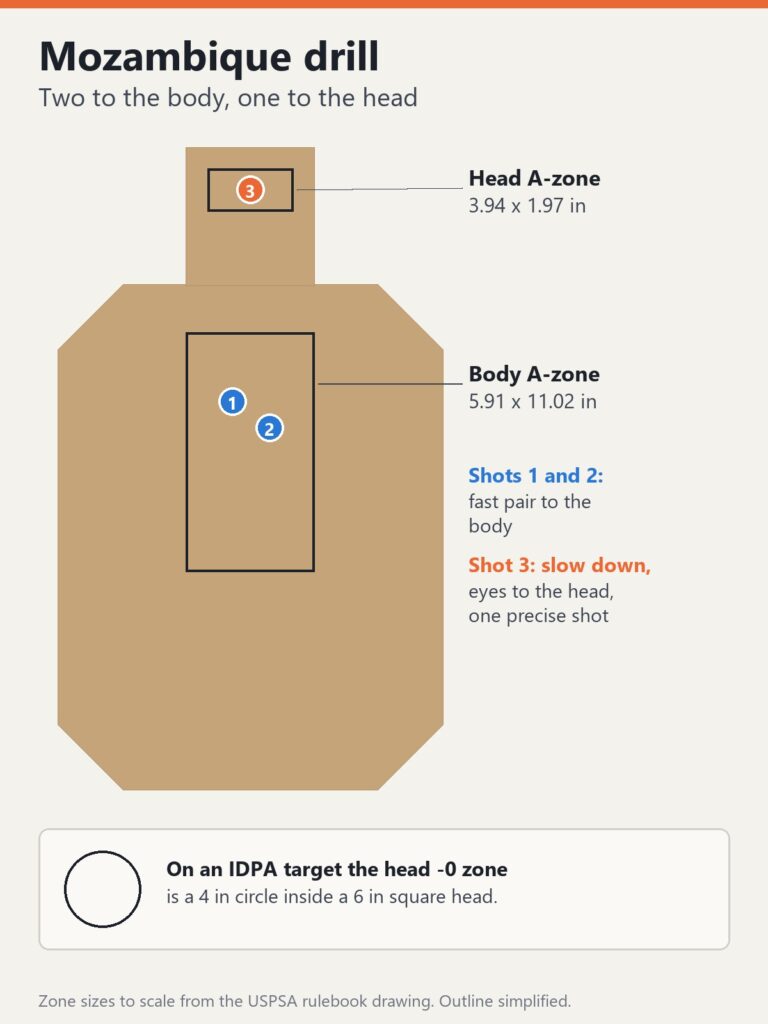
Set a USPSA or IDPA target at 7 yards and start from the holster. If your range doesn’t allow drawing, start from low ready. Set a par time on your shot timer, or a buddy’s phone app, and go on the beep:
- Draw and fire two fast shots to the body. Aim for the center of the upper chest. At 7 yards this is a controlled pair, a sight picture for each shot. Inside 5 yards a hammer pair off one sight picture works. Both hits have to land in the body A-zone, or the -0 zone on an IDPA target. Our cue: you fire two shots, but you see your sight picture three times.
- Move your eyes to the head. Your eyes go first and the gun follows. Darryl Bolke, a police SWAT firearms instructor who trained under Mudgett, describes it this way: “When doing that, we move our eyes first, and the gun follows.”
- Slow down for the head shot. Get a clean sight picture or dot on the head box and press straight back.
- Check the target. All three hits in the scoring zones, inside the par time, is a pass. Any miss is a fail.
The hard part is cadence. Cooper described it exactly: “The problem for the shooter is to change his pace, going just as fast as he can with his first pair, then, pausing to observe results or lack thereof, he must slow down and shoot precisely.” We teach the rhythm as bam, bam, pause, bam. If your three shots sound evenly spaced, you’re either going too slow on the body or too fast on the head.
Where to Aim: Target Zones for the Head Shot
The head box is small on purpose. On the USPSA target, the head A-zone is a rectangle just 3.94 in. wide and 1.97 in. tall, about the size of a business card. The body A-zone is 5.91 by 11.02 in. A head hit outside the small box still scores, but only as a C. IDPA uses a round zone instead: “A four-inch circle is placed in the center and becomes D-0, while any hits outside are D-1.” For the drill, only the head A-zone or the IDPA 4 in. circle counts. A C or a -1 on the head is a failed rep.
The aim point inside the head matters too. Aim between the eyebrows and the upper lip, where the skull bone is thinnest. Don’t aim higher, because the forehead bone is thick enough to make a bullet glance off. On paper, that means aiming at the center of the head box, not the top of the head. On a plain silhouette with no scoring zones, use this version: two shots into an 8-inch circle on the chest, then the head shot inside an upside-down triangle about four inches on each side, with the top edge at the eyes and the bottom point at the upper lip, just below the nose.
One target to avoid: the octagon IPSC target has no head at all, so you can’t shoot this drill on it. Buy a USPSA practice target or a full-silhouette IPSC target with a head, or an IDPA target.
Mozambique Drill Par Times and Standards
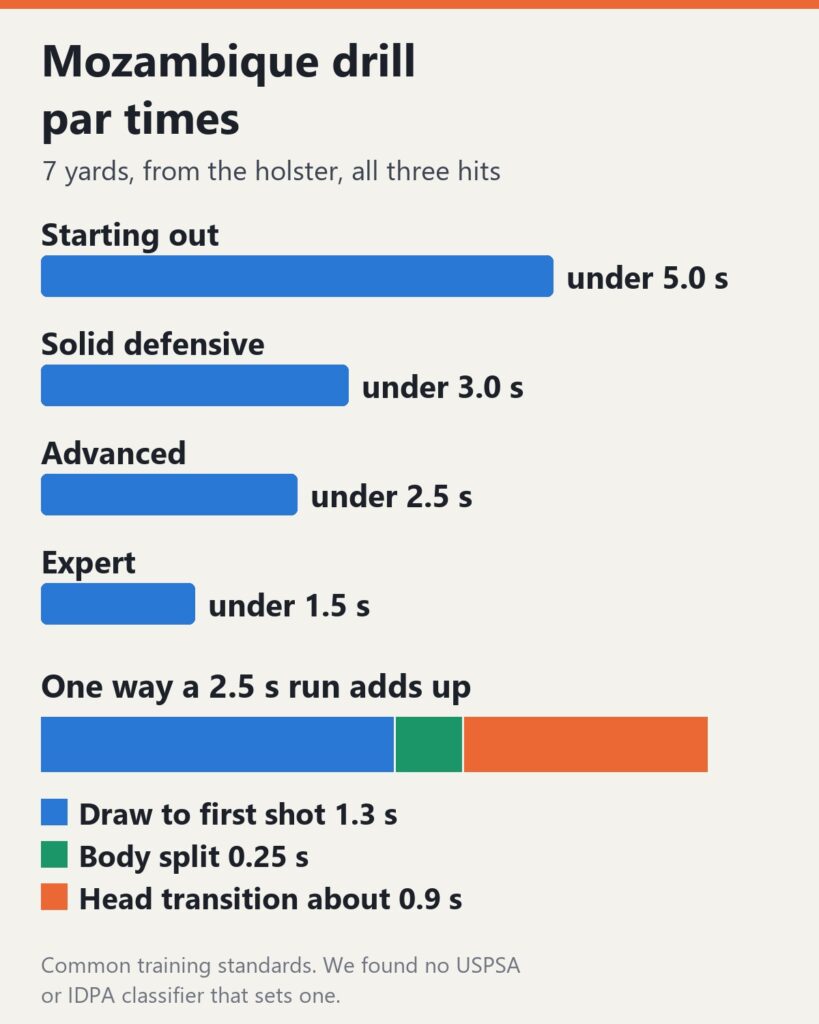
There is no official Mozambique standard. No current USPSA or IDPA classifier is a Mozambique drill, so the times you see are training benchmarks. They cluster around 3 seconds, though. At 7 yards from the holster, these are the Mozambique drill standards the published tiers share:
| Level | Clean run, all hits | What it means |
|---|---|---|
| Starting out | Under 5.0 seconds | Better than most police officers manage |
| Solid defensive shooter | Under 3.0 seconds | The common goal; Wilson Combat sets 3 seconds |
| Advanced | Under 2.5 seconds | Needs a draw of about 1.3 seconds or less |
| Expert | Under 1.5 seconds | Expert speed, the top tier on every scale that goes this low |
We set 4 seconds from concealment at 5 yards as the standard, and most police officers can’t run it clean in under five seconds. If you can do it in around two seconds, you’re good. A clean run beats a fast one every time: a 2.4 with a head miss is a fail, not a 2.4.
Here is one way a 2.5 second run adds up: about 1.3 seconds from the beep to the first shot, a quarter second for the second body shot, and about 0.9 seconds for the transition and head shot. So if you’re stuck at 3 seconds, the draw and the transition are where the time is, not the body split.
Distance changes the drill. At 3 yards the head is easy and the clock is everything. At 7 yards, the standard, you need a real sight picture for the head shot. At 10 yards the head box is small enough that the transition becomes the whole drill. IDPA itself only asks for head-size targets past 10 yards in standards stages, and never past 15.
Common Mistakes on the Mozambique Drill
- Firing the head shot at the same speed as the pair. It misses high or lands in the neck. It’s the miss I see most on this drill. Cooper saw it in beginners: “The beginner tends to fire all three shots at the same speed, which is either too slow for the body shots or too fast for the head shot.”
- Leaving your eyes on the chest. Look at the head box before the gun gets there.
- Anticipating recoil on the head shot. Pushing the gun down to fight a recoil you expect drives the shot low.
- Letting the pair drift wide. If you’re already thinking about the head, the body shots spread. Both have to be A-zone hits.
- Adding a third body shot. It’s two and one. More rounds to the body turns it into a different drill.
Do You Need a Shot Timer for the Mozambique Drill?
Yes, if you want to know where you stand. The drill is defined by its par time, and you can’t feel the difference between 2.5 and 3.5 seconds. A shot timer gives a start beep, records the time of every shot by sound, and shows your draw time and splits. Phone apps exist, but they’re less reliable than a dedicated timer.
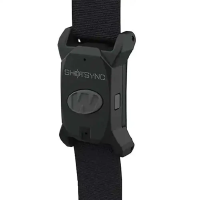
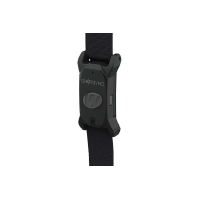
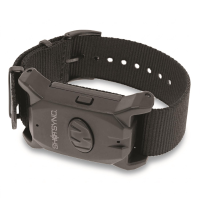
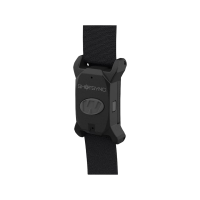
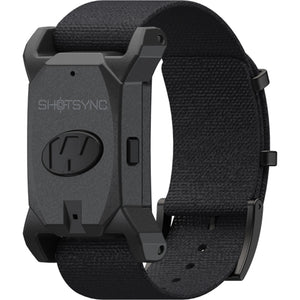
A newer option is a wearable timer. Walker’s ShotSync sits on your wrist and pairs with a phone app. Walker’s says “Using both microphone and accelerometer sensors, SHOTSYNC precisely counts shots and records split times, building a detailed history of every training session.” Walker’s says it times your draw and every shot after it “based on both recoil and sound”, and the free app sets par times and shot sensitivity. Walker’s rates the battery at “up to 5.5 hours of battery life”, enough for a full range day.
To set any timer up for this drill, use par mode. The timer gives a start beep, then a second beep at your par time, and it keeps recording shots after that second beep, so read your actual times instead of trusting the beep. Start with a 5 second par and cut it as your runs get clean. On a busy or indoor range, turn the sensitivity down so the timer doesn’t log other shooters. For the echo delay after each shot, Kestrel calls 0.11 seconds a good middle-of-the-road setting.
How Much Ammo a Mozambique Drill Session Uses
Every rep is three rounds, so the drill is cheap per run and adds up fast in a session. It also makes a good cold-start test: one rep as the first thing you shoot on a range day tells you more than a warm-up mag.
| Session | Reps | Rounds | 50-round boxes to bring |
|---|---|---|---|
| Cold-start check | 1 | 3 | 1 |
| Short block | 5 | 15 | 1 |
| Standard practice | 10 | 30 | 1 |
| Full drill day | 50 | 150 | 3 |
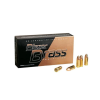
Practice with 115 grain FMJ range ammo. It’s the standard low-cost 9mm range load, and the drill is about your draw, splits and transition, not terminal performance. Run a few reps with your carry ammo now and then so you know how it recoils, then go back to range ammo. Blazer Brass is a reliable, low-cost box to stock up on:
For more options, see our best 9mm ammo guide.
Best Targets for the Mozambique Drill
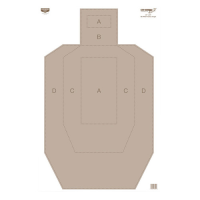
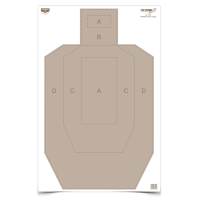
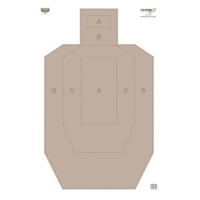
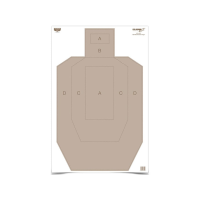
Use a target with a real head box. A USPSA practice target, or an IDPA target, gives you a head box sized like the diagram above, so your hits mean something. Birchwood Casey’s EZE-Scorer IPSC practice target is the older full silhouette with a head, not the headless octagon, and it costs very little per pack. Buy the full-size 23 by 35 in. version, because the reduced-size targets shrink the head box too:

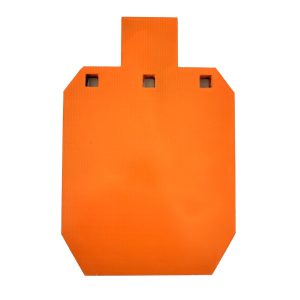
Steel adds instant feedback, because you hear every hit ring. But steel changes the distance: Precision Targets warns against pistol fire under 10 yards, and Action Target’s steel safety rules also put handgun shooters at least 10 yards back. So shoot your steel Mozambique reps at 10 yards and keep 7-yard reps on paper. Never use steel-core or green-tip ammo on it, and wear eye protection, because steel throws fragments back:
Our shooting targets guide covers stands and other options, and our best steel targets guide checks what each plate is made of and every maker’s minimum distance.
Mozambique Drill Variations
- Dry fire. The transition needs no ammo. Draw, press twice on the body, move your eyes, press once on the head, at home with an empty gun and no ammo in the room. Our dry fire drills guide shows how to set it up safely.
- Step off the line. Fire the pair, take two steps back or to the side, then take the head shot. Moving while you transition is harder than it sounds.
- Two targets. Run the drill on one target, then the next. Rifle shooters run it as the Mozambique x2 with a mandatory reload between targets, and the published standard is clear: “The maximum par time for the drill is 6.50 seconds.”
- One hand. Strong hand only, then support hand only. This is where most shooters find out how much their grip was doing.
- Two and a knee. A rifle version: fire the pair standing, drop to a knee and take the head shot from kneeling.
- Partner call. Have a partner call whether the head shot is needed after the pair. It trains the decision, not just the motion. For simpler building blocks, see our 50 simple shooting drills.
Is the Mozambique Drill Still Relevant?
As a marksmanship drill, yes. As a script for a real fight, it needs care. The criticism is fair: if you put two in the body and one in the head every rep, you can train a habit you’d never want to repeat on the street. Combat Handguns puts the warning plainly: “And if the two shots to the body stopped the attack, you could face serious issues if you put one in the head.”
Special forces units have moved on from it. After 9/11, the risk of suicide vests led them to largely replace it with other techniques. And I’d rather you train to keep shooting until the threat stops than train to count to three.
That’s why I treat it as a skills test, not a tactic. It measures three things you need: a fast draw, a controlled pair and a precise shot under time pressure. Mix in partner-called reps so the head shot is a decision. Use of force is judged case by case under your state’s law, and nothing on a paper target changes that.
What Makes the Mozambique Drill Easier: Pistol and Sights
You can shoot it with any duty-size 9mm, but three things make it easier. A red dot makes the head transition faster, because you only have to put the dot on the box instead of lining up front and rear sights. With a dot, let it settle back on the chest after the second shot, then drive it straight up to the head box and wait for it to stop moving before you press. With irons, the cue is the same: a hard front sight focus on the head box for the third shot. A flat, clean trigger helps the head shot break without pulling it low. And a full-size or compact gun with some weight soaks up the recoil of the fast pair better than a micro-compact.
If you’re shopping, our best competition pistols and best budget competition pistols guides cover guns built for fast, accurate shooting, and our best competition red dots guide covers the optic side. If you shoot matches, our what is IDPA guide explains where drills like this show up on the clock.
Frequently Asked Questions
What is the Mozambique drill?
A pistol drill of two fast shots to the body and one precise shot to the head, shot on the clock. The common standard is 7 yards from the holster in about 3 seconds, and any miss fails the run.
Is the Mozambique drill the same as the failure drill?
Yes. LAPD SWAT officers renamed it the failure drill in 1980 and kept the gun on target between the body pair and the head shot. The Marine Corps calls it the Failure to Stop drill.
What is a good Mozambique drill time?
At 7 yards from the holster, under 3 seconds with all hits is a solid goal. Under 5 is a fair start, under 2.5 is advanced and under 1.5 is expert level.
How far away do you shoot the Mozambique drill?
7 yards is the standard. Useful distances run from 3 to 10 yards, and the original story put the threat at about ten paces.
Who invented the Mozambique drill?
It's based on a fight described by Mike Rousseau during the Mozambican War of Independence. Jeff Cooper named it and taught it at Gunsite by the late 1970s.
Why is it called the Mozambique drill?
Cooper named it after the country where the fight took place. The LAPD officers who renamed it the failure drill worried the original name could be misread.
Where should the head shot hit?
In the head A-zone on a USPSA target, a 3.94 by 1.97 in. box, or the 4 in. circle on an IDPA target. The aim point is between the eyebrows and the upper lip.
How much ammo do I need for Mozambique drill practice?
Each rep is three rounds. Ten reps use 30 rounds, and a 50-rep session uses 150, or three 50-round boxes.
Do I need a shot timer?
To measure the drill, yes. It's defined by its par time, and a timer records your draw, splits and total. A phone app works in a pinch, and a wearable like the ShotSync also reads recoil.
Can I practice the Mozambique drill with dry fire?
Yes. Draw, press twice on the body, move your eyes and press once on the head with an empty gun and no ammo in the room. A timer with adjustable sensitivity, like the AMG Lab Commander, can be set to pick up a dry-fire click.
What if the head shot hits the neck?
On paper it's a failed rep. In the original story Rousseau's third shot landed low, between the collar bones, which is exactly the miss the drill trains you to avoid by slowing down for the head shot.
Can you run the Mozambique drill with a rifle?
Yes. The Mozambique x2 is a rifle version on two targets with a mandatory reload, and a Marine Corps lesson plan teaches the same sequence with the rifle as the Failure to Stop drill.
3,029+ Gun & Ammo Deals
Updated daily from 200+ top retailers. Filter by category, caliber, action type, and price.
Related Guides