

Last updated September 2026
Some of the links below are affiliate links, meaning at no additional cost to you, we may earn a commission if you click through and make a purchase.
- Treat every gun as loaded
- Point the muzzle in a safe direction
- Keep your finger off the trigger until you’re ready to shoot
- Know your target and what’s beyond
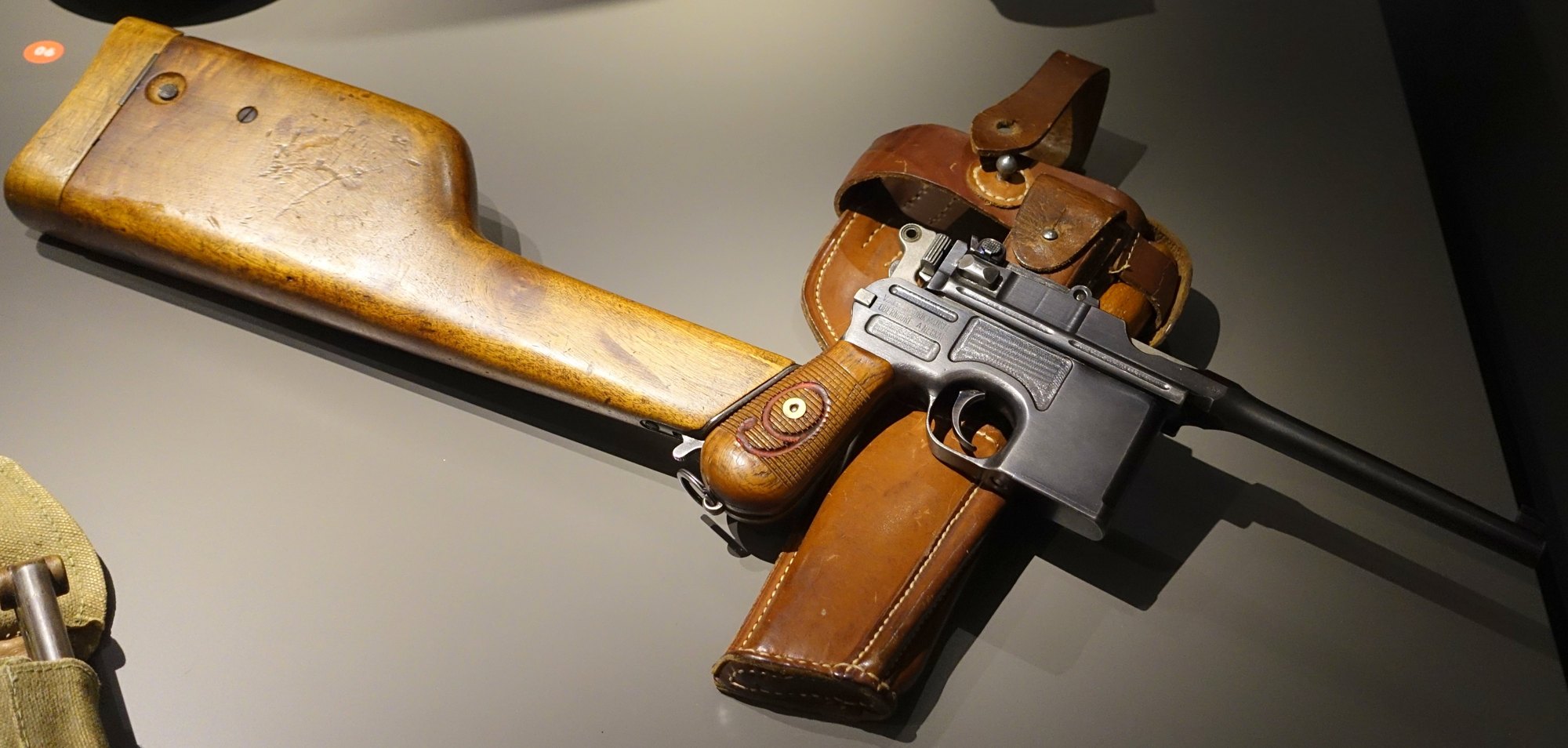
The Mauser C96 is the pistol that looks like nothing else. It has a box magazine in front of the trigger, a grip shaped like the end of a broom and a wooden holster that clips on as a shoulder stock. Mauser built roughly a million of them between 1896 and 1937. They went to war with Winston Churchill at Omdurman, with both sides in World War I and with Chinese warlord armies, and a cut-down one became Han Solo’s blaster. Every original is now at least 89 years old, and almost every one on the market has a story, some true and some invented to sell the gun.
This guide is for buyers. We sorted 125 completed C96 sales from January 2024 to September 2026 by variant and condition. We pulled ATF’s own wording on stocks, antiques and machine guns, and we settled the Tokarev ammo argument with the C.I.P. pressure tables. Then we took a Wartime Commercial to the range with its original stock, two kinds of 7.63 Mauser and a chronograph.
Quick take
A matching-number Mauser-made C96 in honest condition is one of the great collector pistols, and it still shoots well if its springs and bolt stop are sound. Buy the gun, not the story: most of the expensive fakes are Red 9s, carbines and stocks. Feed it only ammo labeled 7.63 Mauser or .30 Mauser.
- Typical price (2024 to 2026 sales): about $2,400 median across 125 sales; about $1,600 to $1,900 for an M1930 or Bolo, $3,400 for a genuine Red 9, $4,300 for an early cone hammer gun
- Caliber: 7.63x25mm Mauser (.30 Mauser); WWI “Red 9” guns in 9mm Luger
- Made: 1896 to 1937 by Mauser in Oberndorf. Nobody makes a firing C96 today
- Legal: every Mauser-made C96 is a curio or relic, guns made in or before 1898 are antiques, and the select-fire M712 is a machine gun under the NFA
How we tested: Every pick here is ranked against our testing methodology. Minimum round counts, accuracy and reliability protocols, the failures that disqualify a gun.
Mauser C96 Pros and Cons
Pros
- The most distinctive pistol ever made
- Flat-shooting 7.63 round, mild recoil
- Original stock turns it into a carbine
- Mauser-made guns are all curios and relics
- New 7.63 Mauser ammo is still made
- Values have climbed for years
Cons
- Matching originals often top $3,000
- Most-faked variants: Red 9s and carbines
- Stripper-clip loading is slow
- Never shoot 7.62×25 Tokarev in one
- Bolt stops and firing pins break
- Awkward grip, huge bore axis
Mauser C96 at a Glance
| Spec | Mauser C96 |
|---|---|
| Action | Short recoil, locked breech; a pivoting locking block under the bolt drops free after a short rearward travel |
| Caliber | 7.63x25mm Mauser (.30 Mauser); 9mm Luger on the WWI Prussian contract “Red 9”; rare 9mm Mauser Export |
| Capacity | 10 rounds standard in a fixed box magazine, loaded from stripper clips; 6 and 20 round versions; detachable 10 and 20 round magazines on the Schnellfeuer |
| Barrel | 140 mm (5.5 in) standard; 99 mm (3.9 in) on the Bolo and many 1920 reworks; 132 mm on early M1930s |
| Weight | About 2.5 lb empty |
| Overall length | 12.3 in standard; 10.7 in Bolo |
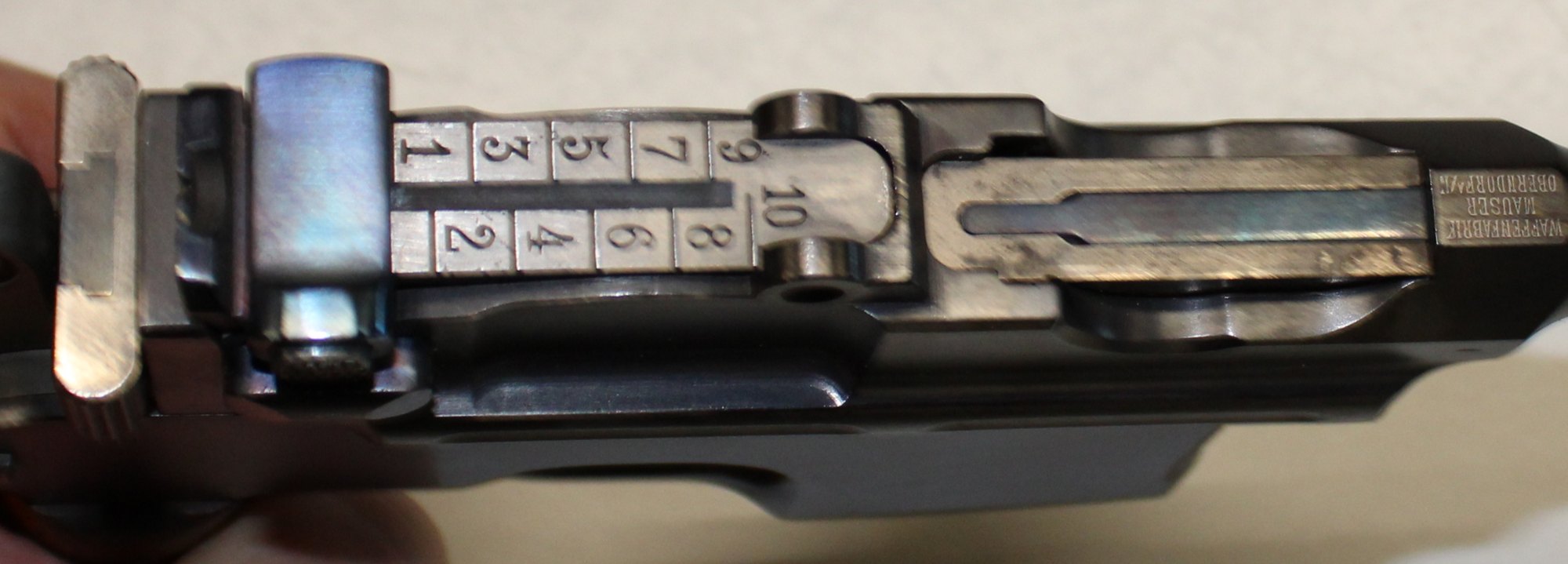
| Sights | Tangent rear sight marked 50 to 1,000 m; 50 to 500 m on 9mm Red 9s; fixed sights on most Bolos |
| Made | 1896 to 1937, Waffenfabrik Mauser, Oberndorf am Neckar; roughly a million |
| Legal | Curio or relic; antique if made in or before 1898; select-fire M712 is NFA |
Table of Contents
What a Mauser C96 Is Actually Like to Shoot: Myth vs. Truth
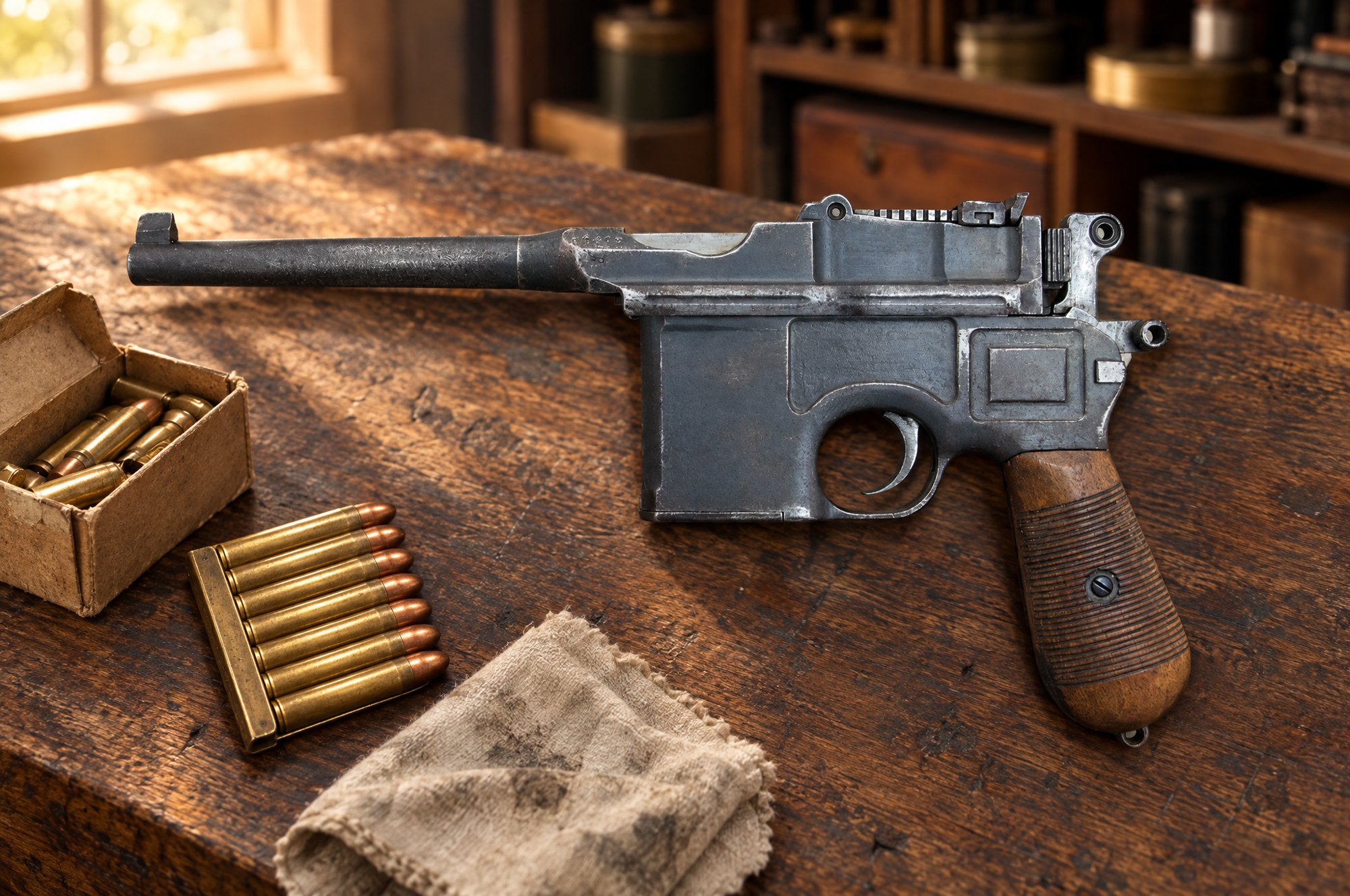
Our range gun is a Wartime Commercial, made between 1915 and 1918, with matching numbers, a New Safety hammer marked “NS”, about 60% original blue and its original wooden holster-stock. Before a round went through it we pulled the bolt stop and checked it and the barrel extension for cracks, fitted a new recoil spring and firing pin spring, and kept the original parts in a bag. Over two sessions we fired 200 rounds: 100 Fiocchi 88 grain FMJ and 100 Prvi Partizan 85 grain FMJ, both labeled 7.63 Mauser. Nothing else.
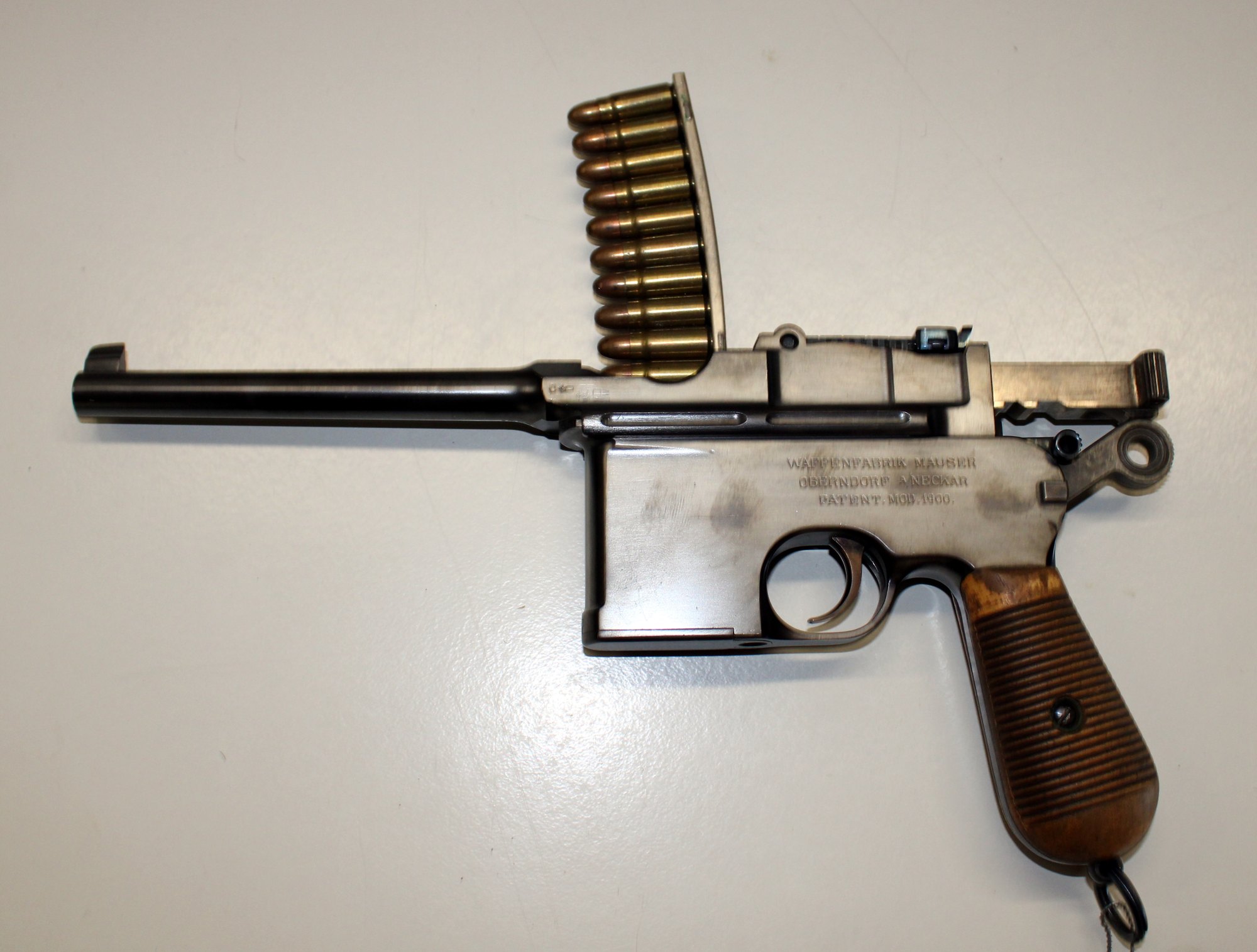
Loading is the first lesson. You lock the bolt back, drop a 10-round stripper clip into the guides, and push the rounds down into the magazine with your thumb. Pull the clip out and the bolt runs forward and chambers the top round. With good clips and a bit of practice it’s quick. With a worn clip, or cold fingers, it’s a fumble, and the stock helps a lot here: tuck it under your arm and you’ve got both hands free. After the last shot the bolt stays open, so you always know when you’re empty.
Shot as a pistol, the C96 surprised us. The recoil is light, a quick sharp push rather than a thump, but the bore sits high above your hand, so the muzzle flips more than the energy suggests. The broomhandle grip is small and round and gives you little to hold, and the trigger on our gun broke at 5 lb 14 oz after some creep. Offhand at 15 yards, two-handed, our five-shot groups averaged 3.4 inches. Rested at 25 yards they averaged 2.8 inches, and the gun shot about 3 inches high with the rear sight at its lowest 50 m setting.
Clip the stock on and it becomes a different gun. Recoil all but disappears, the sight picture steadies, and at 50 yards from a sitting position our groups averaged 4.1 inches, with hits on a 12-inch steel plate at 100 yards coming easily. The tangent sight is really marked out to 1,000 meters, but past about 200 yards you’re throwing rounds at an area, not a target. Through our chronograph, the Fiocchi averaged 1,391 fps from the 5.5-inch barrel and the PPU 1,428 fps, which is flatter-shooting than any service pistol round of its day.
We had two stoppages in 200 rounds. Both were the first round from a clip that didn’t seat fully, and both cleared by working the bolt. The one thing that bit us was the hammer: with the stock fitted and your face down on it, the hammer can nip the web of your hand, so keep your grip low.
| The myth | What we found | Evidence |
|---|---|---|
| “It’s unreliable junk.” | Not if the gun is sound. A C96 with good springs, an uncracked bolt stop and proper ammo runs. Worn-out guns, tired magazine springs and underpowered ammo cause most stoppages. | Our 200 rounds had two clip-seating stoppages. GUNS Magazine’s family bring-back fed without a problem; owners with shot-out guns report cycling trouble |
| “The recoil is brutal.” | The energy is mild. The muzzle flip is real because the bore sits so high. With the stock on, it’s soft. | Our session, plus three owner accounts calling the recoil sharp but controllable or very soft |
| “The sights are good to 1,000 meters.” | The marks are real. The usefulness isn’t. Practical hits end around 150 to 200 meters even with the stock. | American Handgunner calls anything past 200 yards area fire |
| “Shooting one kills the value.” | Firing doesn’t. Damage does: a cracked bolt stop, a battered barrel extension or a broken numbered part costs real money. | Collectors shoot matching guns regularly; the price gap is between sound and damaged guns, not fired and unfired |
| “Tokarev ammo is the same thing.” | It chambers, but C.I.P. allows Tokarev about 11% more pressure. Don’t fire it in a C96. | C.I.P.: 2,250 bar for 7.63 Mauser against 2,500 bar for 7.62×25 Tokarev |
| “You can’t get ammo for it.” | You can. Fiocchi and Prvi Partizan both make 7.63 Mauser, and our dealers list it from about $29 a box of 50. | Our live ammo card below |
Who the Mauser C96 Is For (and Who Won’t Enjoy It)
Buy a C96 if you are
- A collector of military or early automatic pistols. The C96 is one of the first successful self-loaders and has more documented variants than almost any handgun.
- A C&R license holder. Every Mauser-made C96 qualifies, so it can ship straight to your door.
- Someone who wants to shoot history. A sound Wartime Commercial or Bolo is a genuine range gun, and new ammo is still made.
- A buyer with patience and a loupe. This is a gun where knowledge pays. The buyer who can spot a reblue or a fake Red 9 gets the bargains.
- A film or history fan. Churchill, Lawrence of Arabia, the Chinese “box cannon” and Han Solo all trace back to this pistol.
Skip the C96 if you are
- Looking for a cheap old military pistol to shoot a lot. A Tokarev TT-33 or Makarov costs a fraction as much and ammo costs less.
- Wanting a carry or home defense gun. It’s big, slow to reload and hard to replace if it breaks. Buy a modern pistol.
- Buying from photos without a return policy. The fakes are too good, and the expensive variants are faked the most.
- Hoping to shoot surplus Tokarev ammo. Cheap 7.62×25 is the wrong ammo for this gun, and 7.63 Mauser runs about 60 cents a round.
- Set on the machine pistol. A transferable M712 Schnellfeuer is an NFA machine gun that costs many times the price of a standard C96.
What a Mauser C96 Costs in 2026
These are sale prices, not asking prices. We tracked 125 completed sales of Mauser-made C96s from January 2024 to September 2026: 54 Morphy Auctions lots, which include the buyer’s premium, and 71 GunBroker sales. Machine pistols, carbines, engraved guns and fake Red 9s are left out, and so are the Chinese and Spanish copies, which get their own line below. Grade is unstated on most GunBroker sales, so read the condition figures as a guide, not a price list.
| Variant | Median sale | Range seen | Sales tracked |
|---|---|---|---|
| Cone hammer and early guns | $4,305 | $1,353 to $6,600 | 14 |
| Red 9 (genuine 9mm) | $3,422 | $2,126 to $4,920 | 16 |
| Prewar Commercial | $2,366 | $800 to $5,658 | 16 |
| Bolo | $1,875 | $500 to $5,120 | 17 |
| M1930 | $1,599 | $780 to $4,920 | 17 |
| Wartime Commercial | $1,071 | $861 to $2,432 | 5 |
| All Mauser-made C96s | $2,400 | $500 to $6,600 | 125 |
| Condition | Median sale | Sales tracked |
|---|---|---|
| Refinished, altered, mismatched or under 70% finish | $2,070 | 36 |
| 90%+ original finish | $4,254 | 12 |
Two things move the price more than anything else. Guns described as matching sold for a median $3,201 against $2,251 for guns whose listings did not say. An original stock matters too: genuine Red 9s with their stock brought a median $4,560 against $3,150 without, and early guns $4,494 against $3,300. The cheap end of the table is mostly shooters, so a clean Wartime Commercial or Bolo is still the affordable way in.
Copies are priced on their own. Chinese copies sold for a median $1,356 across six sales. Spanish Astra 900s did better than you might expect, with a $3,600 median across five, because they’re scarce and collected in their own right.
Asking prices run well above what these guns sell for. On the day we checked, dealer asking prices for Mauser-made C96s had a $3,988 median, about 66% over the $2,400 median sale, and early guns were listed at a median $8,995. That’s your room to negotiate. For a wider view, TrueGunValue’s 335 used C96 sales average $2,012.82, up $86.55 over 12 months, though that figure pools every variant and some copies.
These are the C96s our dealers have listed right now. Most are single used guns, so they come and go.
Guns.com lists more C96s than any other dealer we track, with close-up photos of each gun. See every Mauser C96 on Guns.com
Compare other guns in the USA Gun Shop price checker, and see our guide to buying vintage guns online for auction houses and collector dealers.
Which Mauser C96 to Buy: The Variants
Mauser changed the C96 constantly, and collectors name the variants by hammer, frame, contract and era. You don’t need to know all of them. You need to know the ones that change the price, and the ones that get faked.
| Variant | Years | How to spot it | Who wants it |
|---|---|---|---|
| Cone hammer | 1896 to 1897 | Spurless hammer with ribbed cone sides; early flat-sided or milled frames; some 6 and 20 round guns | Advanced collectors; the earliest guns are antiques |
| Large ring hammer | From 1897 (flatside frames about 1898 to 1902) | Hammer with a big open ring | Collectors; many are antiques |
| Prewar Commercial | To 1914 | Small ring hammer, milled frame panels, 5.5 in barrel, 1,000 m sight | Collectors who want a classic long-barrel C96 |
| Wartime Commercial | 1915 to 1918 | New Safety hammer marked “NS”, plainer finish, 7.63 caliber | The best shooter-collector buy |
| Red 9 | 1916 Prussian contract | 9mm Luger; a large 9 cut into the grips and painted red on many; 50 to 500 m sight | Collectors; the most faked |
| 1920 rework | Early 1920s | “1920” stamped on the frame, often cut to 99 mm with a fixed sight | Collectors of German police guns |
| Bolo | About 1920 to 1930 | New-made gun with a small grip and a 99 mm (3.9 in) barrel | Shooters and first-time buyers |
| M1930 | 1930 to 1937 | Large grip, stepped 140 mm barrel, Universal Safety, Mauser banner on late guns | Shooters and collectors |
| M1932 Schnellfeuer (M712) | 1932 to 1936 | Selector switch on the left side, detachable magazine | NFA collectors only |
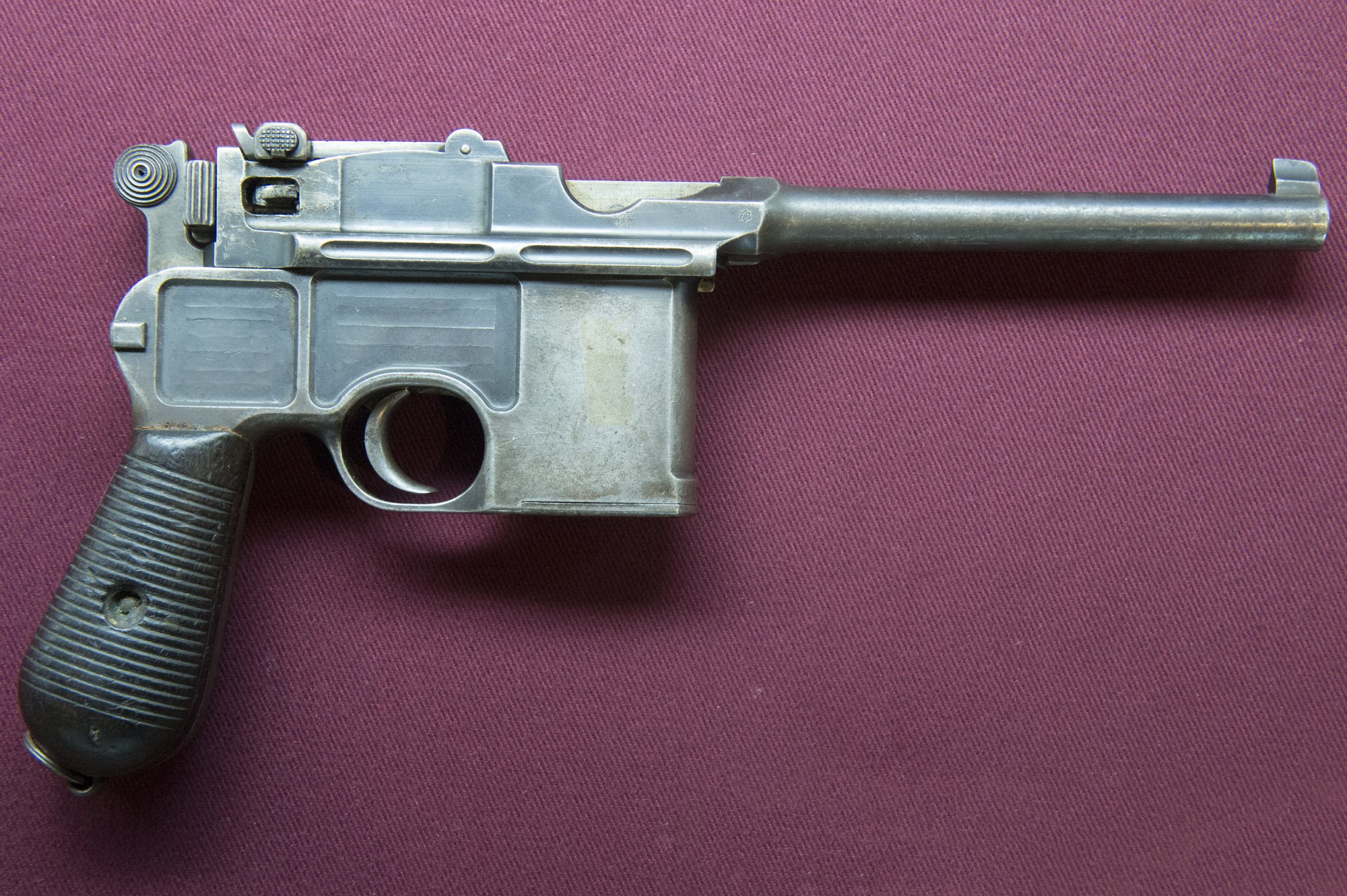
Cone Hammer and Large Ring Guns (1896 to about 1905)
The first C96s have a spurless cone-shaped hammer with ribbed sides, and the large ring hammer followed from 1897. Early guns come in 6, 10 and 20 round versions, and some have flat-sided frames without the milled panels of later guns. They’re scarce, they’re the ones Churchill-era buyers carried, and any made in or before 1898 is a federal antique. ATF’s own list uses a serial number under 15,000 and the cone or large ring hammer as part of its description of the early stocked antiques. Mauser sold only about 19,632 before 1900, so these are a small group, priced accordingly.
Prewar Commercial (to 1914)
The small ring hammer and the milled frame panels make this the classic look. Long barrel, tangent sight to 1,000 meters, deep commercial blue. Prewar Commercials were sold worldwide, and many came with the wooden holster-stock, which is the single biggest addition to value you’ll see on a C96. Check that the stock is Mauser-made and matches the gun.
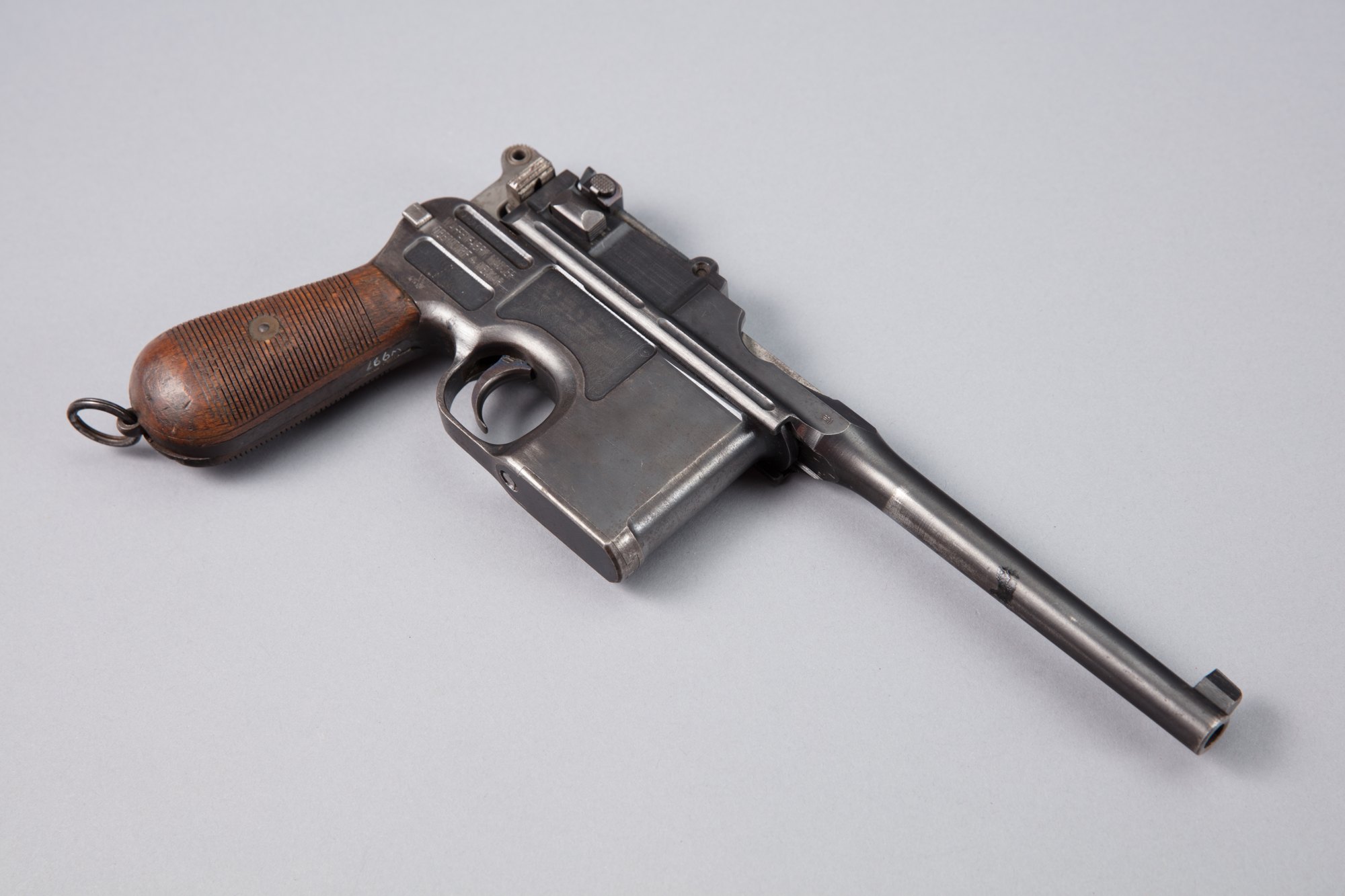
Wartime Commercial (1915 to 1918)
Germany needed pistols in World War I and Mauser’s commercial production went to the army. These guns carry the New Safety hammer, stamped “NS” on the back. They’re 7.63 caliber, they’re common enough to find with matching numbers, and they’re the gun we’d point most first-time buyers toward. It’s what we shot for this guide.
The Red 9 (Prussian Contract, 1916)
In 1916 the Prussian army ordered C96s chambered in 9mm Luger, the same round as its P08. The contract was for 150,000, and about 137,000 were delivered. Many were marked with a large “9” cut into both grip panels and painted red, so soldiers wouldn’t load them with 7.63 ammo. That’s the Red 9, and it’s the most collected C96 variant and the most faked.
A genuine Red 9 is chambered in 9mm, its rear sight is graduated from 50 to 500 meters rather than 1,000, and it’s numbered in the contract’s own serial range, which started again at 1 and overlaps commercial serials. Not every genuine gun got the red 9 on its grips, since unit armorers applied it, and plenty of 7.63 guns have had red 9 grips added. Check the chamber and the sight, not the grips.
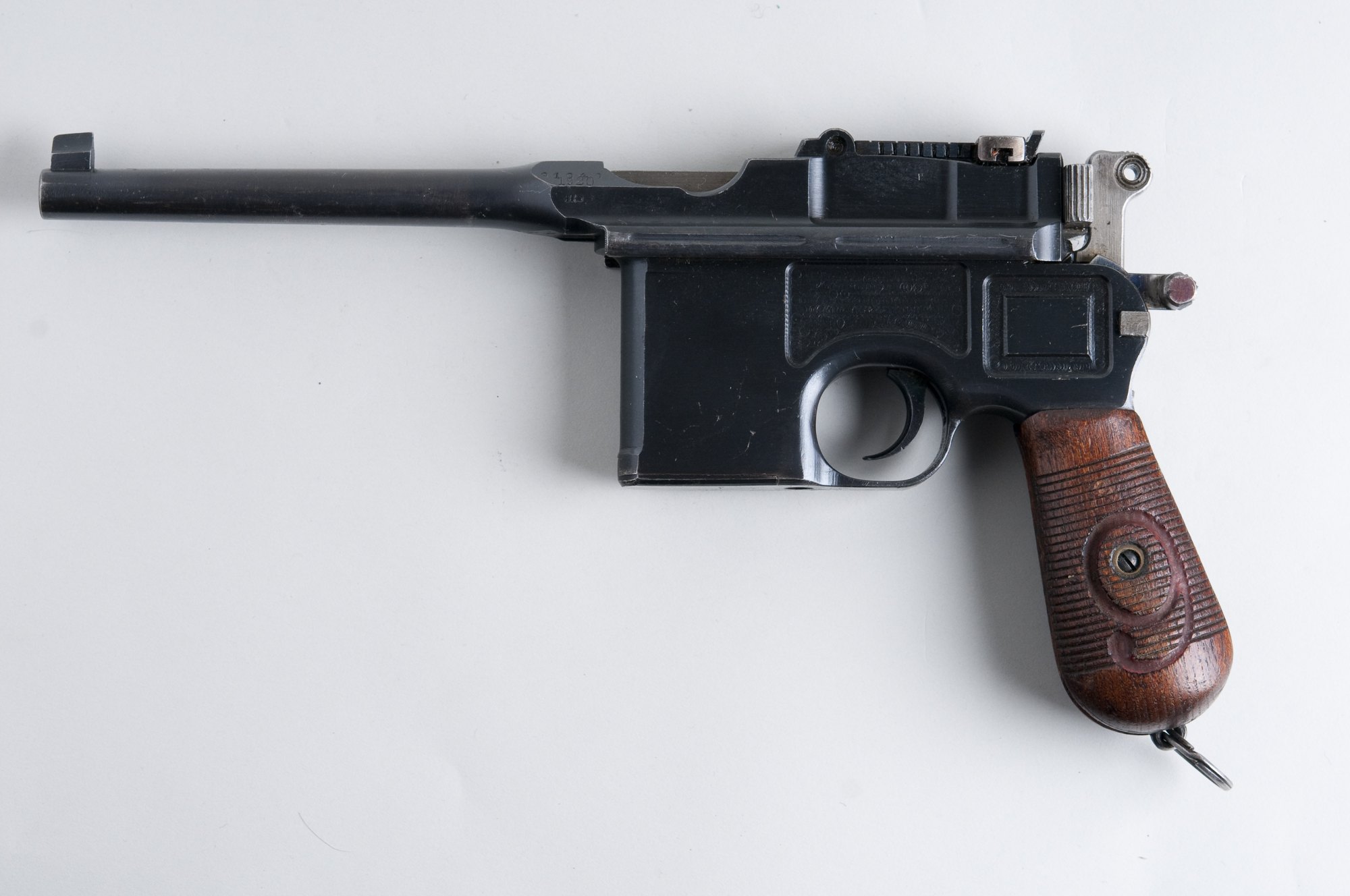
1920 Reworks and the Bolo
After World War I the Treaty of Versailles limited German police and government pistols to barrels of about 4 inches and banned 9mm. Existing C96s were reworked, and the ones that went through carry a “1920” stamp on the frame, often with a unit number. Many were cut to 99 mm with a fixed rear sight, and some Red 9s were rebarreled to 7.63.
The Bolo is a different thing, and plenty of sellers mix them up. It’s a new-made commercial model from about 1920 to 1930, with a small grip and a 99 mm barrel from the factory. The name comes from the popular story that the Bolsheviks bought them in bulk. Bolos are the most affordable original C96s and among the best to shoot. Nearly a third of all C96s were Bolos.
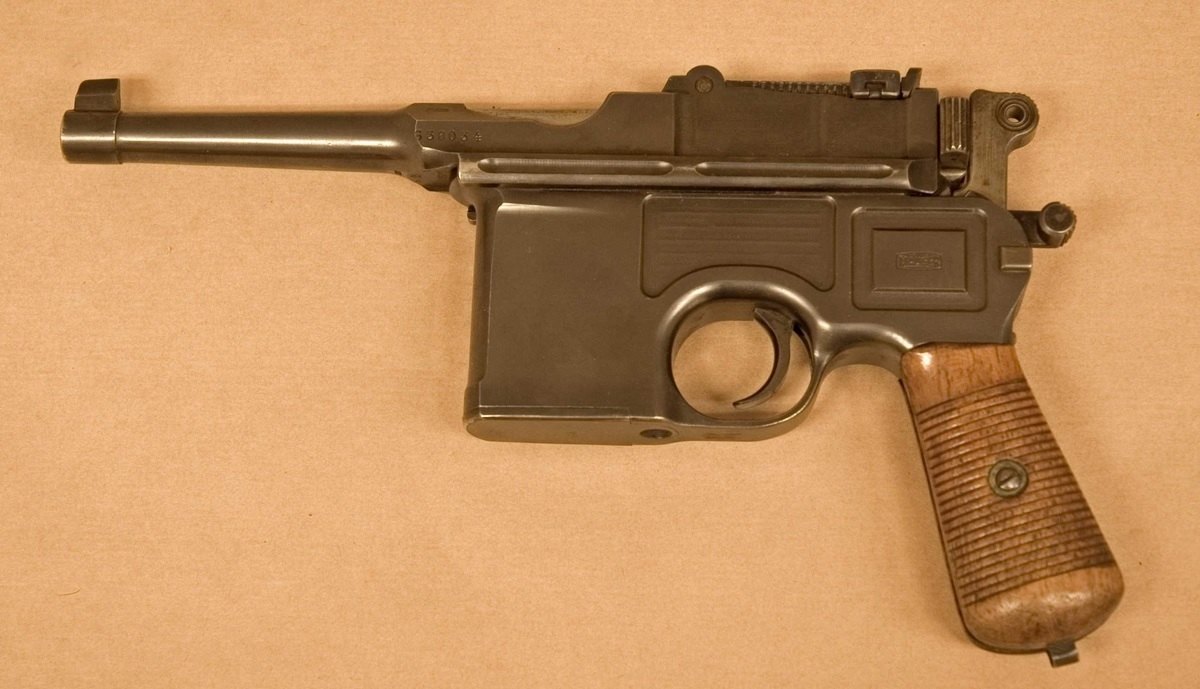
M1930 (1930 to 1937)
Mauser’s last major version went back to a full-size grip and a long barrel, 132 mm on early guns and 140 mm later, and added the Universal Safety. Late M1930s carry the Mauser banner on the left rear frame panel. The M1930 was the gun China bought in huge numbers, and the Luftwaffe took 7,800 from existing stock in 1940. Dealers sometimes call it the “M711.” It’s a solid shooter and still sells below the early commercials.
M1932 Schnellfeuer and M712
The M1932 Schnellfeuer, a design by Karl Westinger, is a select-fire machine pistol with a selector on the left of the frame and detachable 10 and 20 round magazines. It fires at around 900 to 1,000 rounds a minute, and about 98,000 were made from 1932 to 1936. “M712” was a later German designation. Under US law it’s a machine gun, so only registered, transferable examples can be sold to civilians, through the full NFA transfer process. If someone offers you a cheap one, walk away.
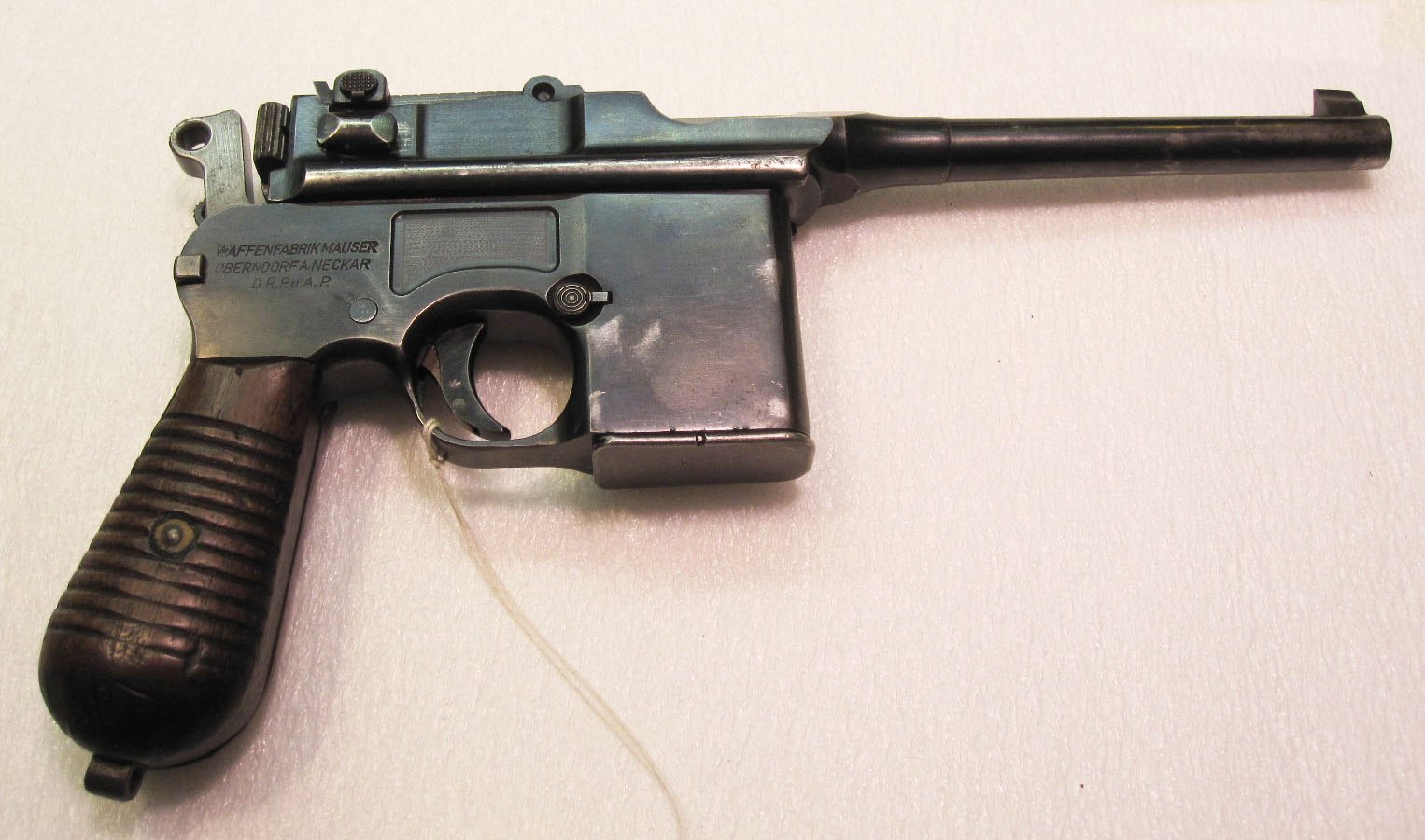
Carbines
Mauser also made a small number of C96 carbines with longer barrels and fixed wooden stocks, about 1,100 in total. Real ones are rare and valuable, and 1896mauser.com’s research suggests that at least nine out of ten carbines on the market aren’t Mauser-made. Buy one only with an expert’s opinion in hand.
Copies: China, Spain and the 1980s Guns
The C96 was copied more than almost any pistol of its era, and the copies are sold as Mausers every week. Chinese arsenals made their own, including the Shanxi Type 17 in .45 ACP, about 8,500 of them from 1928 to 1931. Mauser never made a .45 C96. Spain’s Astra 900 series, from 1927, looks almost the same and takes the same ammo, and Beistegui’s Royal guns added select-fire versions. In the late 1980s and early 1990s, Federal Ordnance built M713 and M714 guns on newly made frames with surplus parts.
Copies are worth collecting in their own right, and a good Astra can outsell a common Mauser, but Chinese copies sell well below the originals, and some copies aren’t curios or relics at all. A Federal Ordnance gun or a postwar Chinese gun is a modern firearm, and stocking one makes it a short-barreled rifle.
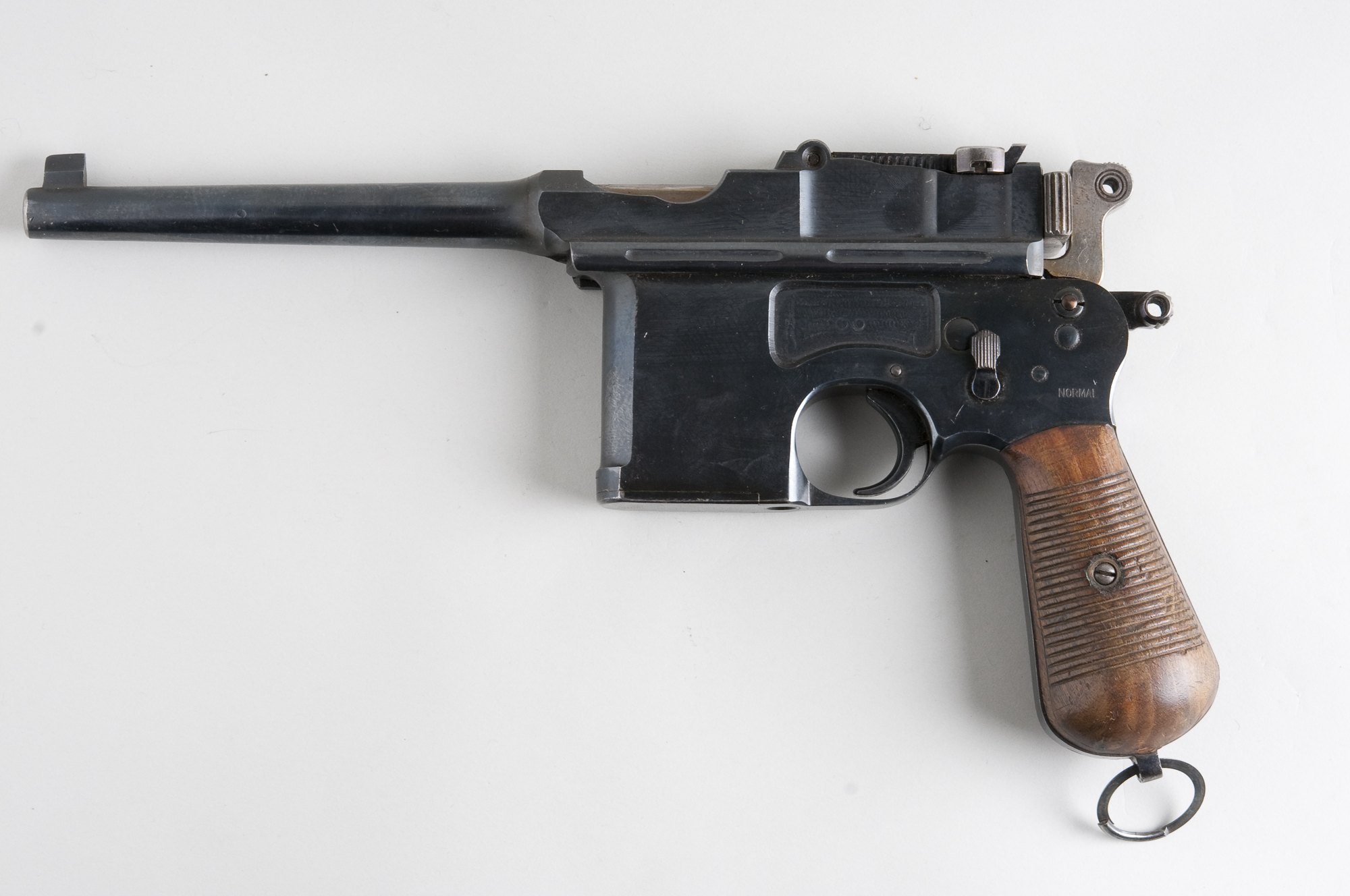
Mauser C96 Condition Guide
Collectors grade a C96 on original finish and matching numbers first, and mechanical soundness second. For a shooter, reverse that order. A 30% gun with a sound bolt stop is worth more to you than a pretty one with a cracked barrel extension.
| Grade | What you see | What it does to price |
|---|---|---|
| 90%+ original, matching | Deep original blue with sharp lettering, crisp milled panels, bright bore, numbers matching throughout | Top of the market: $4,254 median across all variants in our data |
| 70% to 89% original | Blue worn at the edges, grip frame and muzzle, some thinning on the flats, markings still sharp | The collector sweet spot, priced between the tiers either side |
| Under 70%, patina | Mostly gray or brown patina, honest wear, often a pitted bore | Shooter money unless the variant is rare |
| Refinished, altered or mismatched | Soft lettering, too-bright blue, a cut or relined barrel, or parts with other serial numbers | About $2,070 median, and far less on common variants: mismatched guns sold for a $984 median |
The C96’s blue wears in predictable places: the grip frame, the front edges of the magazine well, the barrel near the muzzle and the high points of the milled panels. Original Mauser blue is deep and even, with sharp edges on the lettering. A refinished gun gives itself away in the details: lettering with soft, dished edges, rounded corners on the milled panels, and blue that looks too fresh for the wear on the grips. Refinishers sometimes even put the rear sight slider back the wrong way round.
Markings, Serial Numbers and Matching Parts
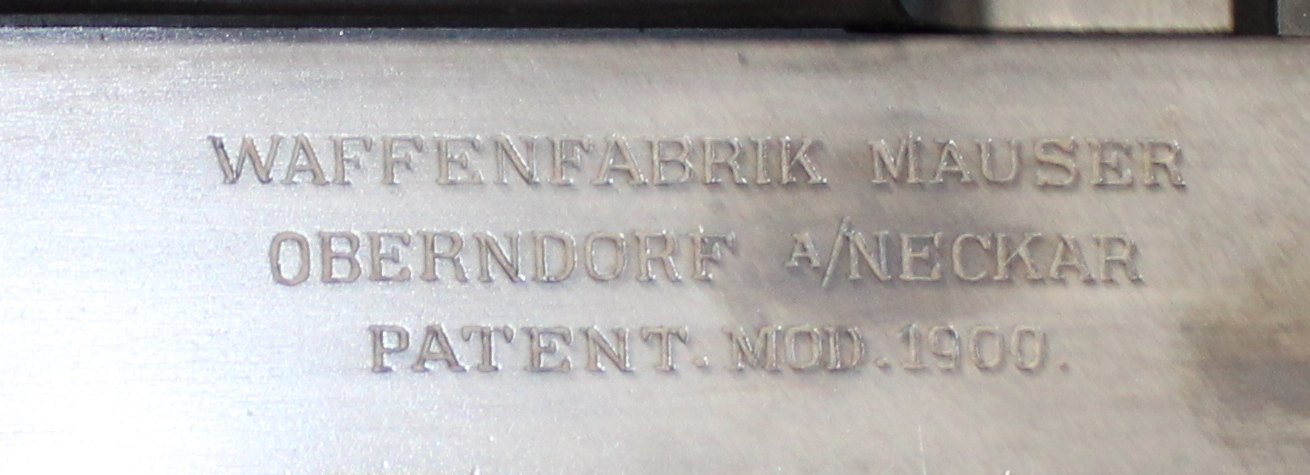
Most C96s carry the maker’s address on top of the chamber, “WAFFENFABRIK MAUSER OBERNDORF A/N”, and on the right side of the frame. The serial number is on the left of the barrel extension and the rear of the frame, and partial numbers turn up on the hammer, bolt, magazine floorplate, grip panels and other parts. A matching gun has all of those numbers the same. In our sales data, guns described as matching brought a median $3,201, against $2,251 for guns whose listings did not say, and $984 for the handful sold as mismatched.
| Marking | Where | What it tells you |
|---|---|---|
| WAFFENFABRIK MAUSER OBERNDORF A/N | Chamber top, right frame | Mauser-made. Misspellings or odd lettering point to a copy |
| Serial number | Left of barrel extension, rear of frame, partial numbers on parts | Matching status; rough era |
| “NS” on the hammer | Back of the hammer | New Safety, found on wartime and later guns |
| Large “9” on the grips, painted red | Both grip panels | Possible Red 9. Confirm with the 9mm chamber and the 500 m sight |
| “1920” with a unit number | Frame or barrel extension | Postwar police or army rework |
| Mauser banner | Left rear frame panel | Late M1930 or Schnellfeuer |
| Import mark | Frame or barrel, varies | Imported after 1968. Normal on surplus guns and costs little on a shooter |
Dating a C96 by serial number alone is harder than it sounds. Mauser’s own records were lost after World War II, the Prussian contract guns have their own serial range that overlaps the commercial numbers, and M1930s run from about serial 800000 to above 921000. Use the hammer type, safety, markings and barrel to name the variant first, then use the serial to narrow it down.
Fakes, Reblues and Parts Guns
- Fake Red 9s. Red 9 grips on a 7.63 gun are the oldest trick. A genuine one has a 9mm chamber and a 50 to 500 m sight. Auction houses list “constructed” Red 9s openly; private sellers often don’t.
- Reproduction stocks sold as original. Good reproduction stocks are everywhere. An original stock is Mauser-made, often serial numbered to the gun, and priced as a major part of the gun’s value.
- Carbines. Most carbines on the market are later builds on pistol frames. Treat any carbine as a copy until an expert says otherwise.
- Chinese copies with Mauser markings. Some carry full Mauser markings; others give themselves away with misspellings such as the famous “Wauser.”
- Refinished guns. Look for softened lettering, rounded edges on the milled panels, blue that’s too fresh for the wear, and a rear sight slider put back the wrong way round.
- Relined or cut barrels. A barrel that’s been cut to Bolo length with a new sight dovetail isn’t a Bolo. Check the barrel length against the frame and grip size.
- Han Solo conversions. Original Mausers have been cut up to build blaster replicas. Any altered original is priced as a parts gun.
- 1980s guns sold as originals. Federal Ordnance and Chinese reproductions from the 1980s turn up as “refinished originals.” Check for recent import or maker marks.
Mauser C96 Pre-Purchase Inspection Checklist
Here’s the check we run on every C96 before we pay for it, with the gun unloaded and pointed in a safe direction. If a seller won’t let you do most of this, or won’t send close-up photos of it, keep looking.
- Open the bolt and confirm the chamber and magazine are empty.
- Check that the serial on the frame matches the barrel extension, bolt, hammer and floorplate. Note every part that doesn’t.
- Look at the bolt stop and the barrel extension around it for cracks. A crack in the barrel extension behind the bolt stop means the gun shouldn’t be fired.
- Work the bolt. It should move smoothly and lock back on the magazine follower when the magazine is empty.
- Check the safety. Identify which type the gun has, and on New Safety guns make sure it holds the hammer the way it should.
- Cock the hammer and push on it. It should hold at full cock without slipping.
- Look down the bore with a light. Pitting from corrosive ammo is common and hurts accuracy less than you’d expect, but it lowers the value.
- Check the chamber marking and the rear sight graduations. A 9mm gun should have a 500 m sight.
- Look for refinish tells: soft lettering, rounded edges and blue that looks newer than the wear on the grips.
- Measure the barrel. A 99 mm barrel on a large-grip frame, with a fresh sight dovetail, has been cut.
- If there’s a stock, check its numbers, its fit in the grip slot and its hardware.
- Ask about recent springs, a spare firing pin and a return privilege in writing.
Shooting and Caring for a Collector C96
The ammo rule is simple: feed a 7.63 C96 only ammo labeled 7.63 Mauser or .30 Mauser. Fiocchi and Prvi Partizan both make it, in FMJ. Fiocchi’s Heritage load is an 88 grain FMJ rated at 1,425 fps.
The Tokarev question comes up on every C96 forum, because 7.62×25 Tokarev chambers and fires in a C96. The two cases are nearly identical. The pressures aren’t. C.I.P., the European body that sets cartridge standards, lists a maximum of 2,250 bar for 7.63 Mauser and 2,500 bar for 7.62×25 Tokarev, about 11% more. Some military Tokarev loads, especially Czech surplus, run hotter still, and steel cases hammer the bolt stop. Tokarev ammo belongs in a Tokarev. Mauser ammo can go in a Tokarev, but not the other way round.
| Use | Avoid |
|---|---|
| 7.63 Mauser or .30 Mauser FMJ, from Fiocchi or Prvi Partizan | Any 7.62×25 Tokarev, especially Czech or other military surplus |
| Standard 115 or 124 grain 9mm FMJ in a genuine 9mm Red 9 | +P or NATO 9mm in a Red 9 |
| Good stripper clips, loaded with the stock under your arm | Steel-case ammo, which batters the bolt stop |
| New recoil, firing pin and magazine springs | Corrosive surplus without cleaning the same day |
| A spare firing pin in your range bag | Pulling the extractor out when you don’t need to; it breaks |
The C96 strips without tools for most of the job, and Mauser meant you to use a cartridge nose to press the floorplate catch. Taking out the firing pin and the bolt stop does need a screwdriver or the factory takedown tool, and reassembly is fiddly the first time. Keep the lockwork clean and lightly oiled, keep the magazine spring fresh, and store the gun out of its wooden stock-holster, which holds moisture against the steel.
If the gun breaks, a numbered part is the expensive kind of break. Reproduction bolt stops, firing pins and springs are all available, but a replacement part won’t match the serial, and on a matching gun that costs value. That’s the real case for shooting a C96 sensibly: not that firing it hurts the gun, but that replacing an original part hurts the price.
This is the 7.63 Mauser listed at our dealers right now. We filter out 7.62×25 Tokarev, 7.65 and anything else that isn’t the right round.
Own a genuine 9mm Red 9? These standard-pressure 115 and 124 grain FMJ loads are on sale at our dealers. We filter out +P, NATO and steel-case ammo.
Standard 9mm Deals for a Red 9
On-sale 9mm luger standard from 200+ retailers · Updated every 4 hours



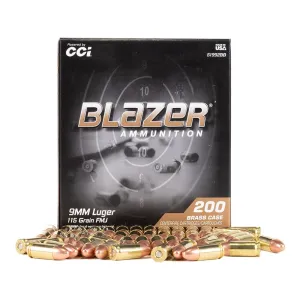
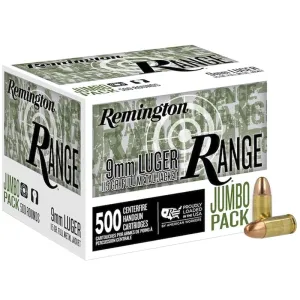
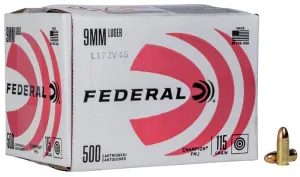
Our best 9mm ammo guide covers modern loads in more depth.
A Short History of the Mauser C96
The C96 wasn’t Paul Mauser’s idea. Three brothers in his experimental workshop, Fidel, Friedrich and Josef Feederle, developed it in 1895, partly behind the boss’s back, and won him over once the prototype worked. It went on sale in 1896 and 1897, one of the first self-loading pistols anyone could buy, and its 7.63 Mauser cartridge was the fastest pistol round in the world until the .357 Magnum arrived in 1935.
No major army adopted it at first, but officers bought it privately. The most famous was a young Winston Churchill, who bought a Mauser pistol in London and used it in the charge of the 21st Lancers at Omdurman on September 2, 1898, and carried it again in the Boer War. Italy’s navy bought 5,000, the Ottoman sultan bought 1,000 for his palace guard, and the shoulder stock turned it into a light carbine for anyone who needed one.
World War I made it a military pistol. Germany bought Mauser’s commercial output and then the 9mm Red 9s, and after the war the Treaty of Versailles shortened its barrels. Mauser responded with the Bolo, which sold heavily abroad, including to the Soviet Union in the 1920s, and then the M1930 and the select-fire Schnellfeuer.
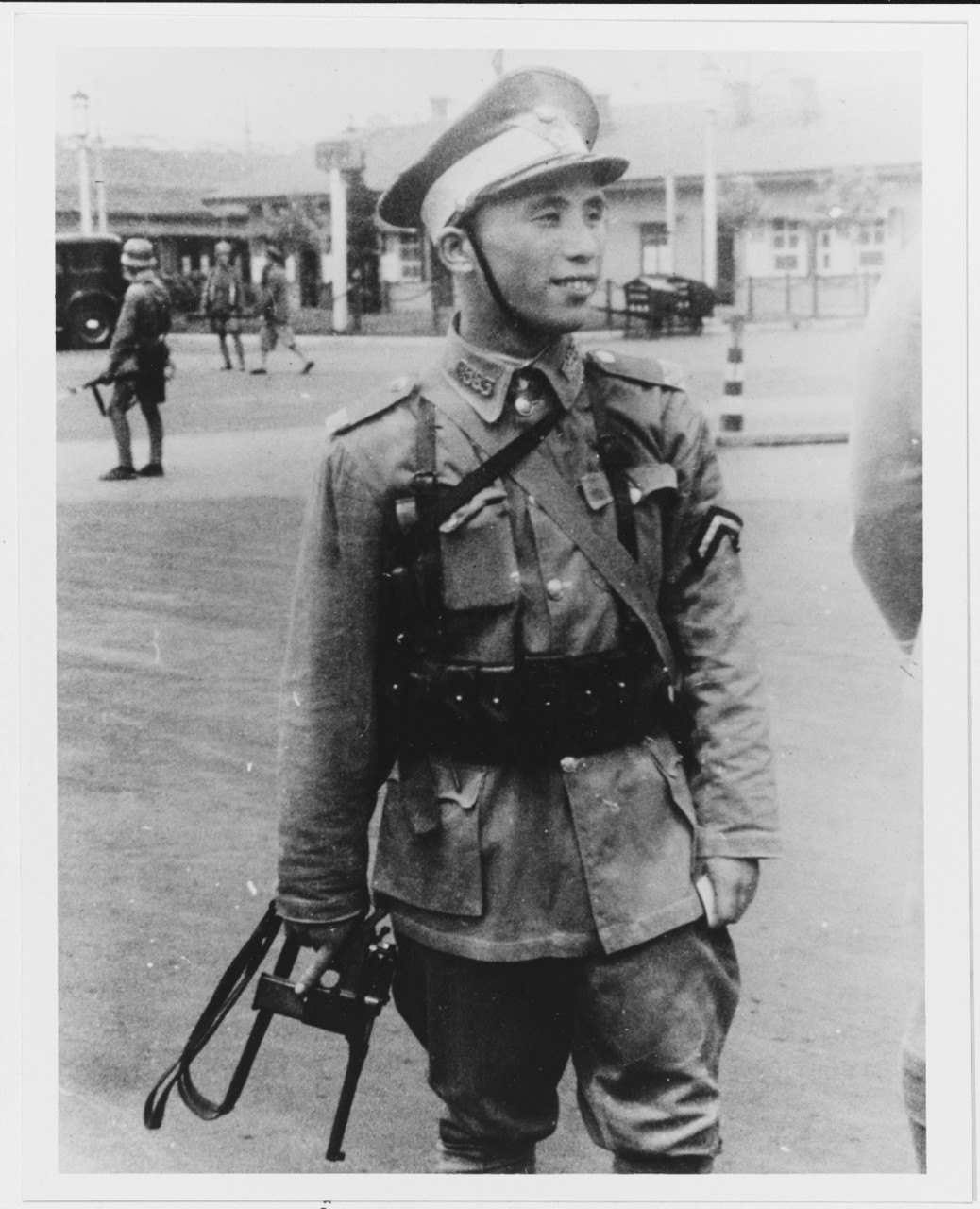
China was the C96’s biggest customer. Handguns were exempt from the 1919 arms embargo on the warring factions there, so Chinese buyers took around 300,000 Mausers, and Chinese arsenals copied tens of thousands more. They called it the “box cannon.” When the Sino-Japanese War cut off that market in 1937, Mauser ended production. The 7,800 M1930s the Luftwaffe took in 1940 came out of existing stock.
Why the C96 Is Still So Popular
Start with the look. Nothing else has that magazine ahead of the trigger and that grip, and it reads instantly as “old-world adventure” in a way a Luger or 1911 doesn’t. That’s why prop makers built Han Solo’s DL-44 blaster on a C96, with a shortened barrel, an MG 81 flash hider and a Hensoldt scope, and why generations of Star Wars fans know the silhouette. It’s why video games from Red Dead Redemption 2 on keep putting it in players’ hands.
Then there’s the history you can hold. A C96 might have been carried by a British officer in Sudan, a German soldier on the Western Front, a Chinese warlord’s bodyguard or a Weimar policeman, and the markings often tell you which. It’s also a gun you can still shoot, with new ammo in production and a stock that makes it one of the most fun historical guns at the range.
C96 Legal Status: C&R, Antiques, Stocks and the NFA
Under federal law, an antique firearm is one made in or before 1898, and a curio or relic is one made at least 50 years ago. So every Mauser-made C96 is a curio or relic by age, and C96s made in or before 1898 are antiques, which federal law doesn’t treat as firearms at all. C&R guns can ship to a C&R license holder. Everyone else buys through an FFL dealer. State law can be stricter, so check yours before you buy.
The stock is where it gets complicated. Fitting a shoulder stock to a pistol with a barrel under 16 inches normally makes it a short-barreled rifle under the National Firearms Act. But ATF’s Curios or Relics List removes from the NFA the “Mauser, Model 1896, semiautomatic pistol, as produced by Mauser prior to 1940 accompanied by original German mfd. detachable holster/shoulder stocks, any cal.” Chinese copies made before 1945 and Spanish copies made before 1946 are also listed when they come with original stocks of the same origin.
Reproduction stocks are the gray area. ATF has said in correspondence that original pre-1940 Mauser C96s with faithful reproduction stocks are also outside the NFA, but that isn’t written into the published list. Get your own ATF determination before you buy a reproduction stock, and never stock a modern copy, such as a Federal Ordnance gun or a postwar Chinese gun. That’s an SBR, and ATF counts a pistol and stock owned together even if they’re never attached.
The select-fire M1932 Schnellfeuer and M712 are machine guns under the NFA. Only examples registered before May 1986 can be transferred to civilians, and our guide to the National Firearms Act explains how that process works.
Where to Buy a Mauser C96
- Guns.com. The deepest used selection we track, with detailed photos. Browse C96s on Guns.com.
- Auction houses. Morphy, Rock Island and others write detailed condition reports and call out constructed guns and reproduction stocks, but add a buyer’s premium of roughly 20 to 25%.
- Collector dealers and GunBroker. The widest choice, including Chinese and Spanish copies. Insist on close-ups of the serials and a return privilege.
- Gun shows and collector shows. The best way to handle a C96 before you buy, and to learn what real markings look like.
Wherever you buy, ask the same questions before you pay:
- Are all the serial numbers matching, and which parts aren’t?
- Is the finish original, or has it been reblued?
- What caliber is it, and what does the rear sight read?
- Is the stock original, and is it numbered to the gun?
- Are the bolt stop and barrel extension free of cracks?
- Is there an import mark, and is it a Mauser or a copy?
- Can I return it if it isn’t as described?
Mauser C96 vs. Its Rivals
| Pistol | Caliber | Years | Why you’d pick it |
|---|---|---|---|
| Mauser C96 | 7.63 Mauser; 9mm (Red 9) | 1896 to 1937 | The look, the stock and the history |
| Luger P08 | 9mm Luger | 1908 to 1942 | Better grip, easier to shoot well, bigger collector market |
| Astra 900 | 7.63 Mauser | From 1927 | Looks like a C96, collected in its own right, most parts don’t interchange |
| Tokarev TT-33 | 7.62×25 Tokarev | 1930 to 1950s | Cheap to buy and to shoot, flat, simple |
C96 vs. the Luger P08
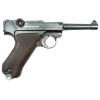
They’re the two great German pistols of the early 20th century, and collectors often own both. The Luger P08 is the better handgun: a natural grip angle, a slimmer profile and a detachable magazine. The C96 is the better carbine with its stock on, and the more distinctive gun. Clean, matching examples of both sell in a similar range, and our Luger guide has the P08’s own price data.
C96 vs. the Astra 900
Spain’s Astra 900 is the closest copy, and at a glance it’s hard to tell apart. It takes the same 7.63 ammo, but its internal design differs and most of its parts won’t fit a Mauser. It’s collected in its own right, and in our data Astra 900s sold for a median $3,600, more than a typical Bolo or M1930. Buy it for what it is, never as a Mauser, and never pay Mauser money for one sold as a Mauser.
C96 vs. the Tokarev TT-33
The Tokarev fires what’s basically a hotter version of the C96’s cartridge from a simpler, flatter pistol. It’s the shooter’s choice: cheap to buy and cheap to feed. Our Tokarev guide covers it in full. Just don’t let the shared cartridge dimensions talk you into feeding Tokarev ammo to your C96.
For more classic military handguns, see our guide to the guns of World War II and our Mauser rifle buyer’s guide.
Final Verdict
The Mauser C96 is the collector pistol with the biggest personality, and one of the few you can still take to the range. Buy a matching Mauser-made gun, check the bolt stop and the barrel extension before you pay, and feed it only 7.63 Mauser. Be most careful with Red 9s, carbines and stocks, because that’s where the fakes are.
Get a sound Wartime Commercial or Bolo with its original stock and you’ll own a pistol that was already famous when your grandparents were born.
FAQ
How much is a Mauser C96 Broomhandle worth?
In 125 completed sales from January 2024 to September 2026, the median Mauser-made C96 sold for about $2,400, with a range of $500 to $6,600. By variant, M1930s had a median of about $1,600, Bolos $1,875, prewar commercials $2,366, genuine Red 9s $3,422 and early cone hammer guns $4,305. Matching numbers and an original stock both add a lot.
Can you still shoot a Mauser C96?
Yes, if the gun is sound. Have the bolt stop and the barrel extension checked for cracks, fit fresh springs, and shoot only ammo labeled 7.63 Mauser or .30 Mauser. Fiocchi and Prvi Partizan both make it. A genuine 9mm Red 9 takes standard-pressure 9mm FMJ, never +P.
Can I shoot 7.62x25 Tokarev in a C96?
No. Tokarev ammo chambers in a C96, but C.I.P. allows it 2,500 bar against 2,250 bar for 7.63 Mauser, about 11% more, and some military Tokarev loads run hotter still. Steel cases also batter the bolt stop. Mauser ammo can be fired in a Tokarev, but not the other way round.
Is it legal to put a stock on a Mauser C96?
An original Mauser-made C96 made before 1940 with its original German detachable holster-stock is removed from the NFA by ATF's Curios or Relics List. ATF has said in correspondence that faithful reproduction stocks on original guns are also exempt, but that is not in the published list, so get your own determination first. Never stock a modern copy: that is a short-barreled rifle.
How do I tell a real Red 9?
A genuine Red 9 from the 1916 Prussian contract is chambered in 9mm Luger and has a rear sight graduated from 50 to 500 meters. The red 9 on the grips is not proof, because it was applied by unit armorers and is easy to add to a 7.63 gun. Check the chamber and the sight first.
What is a Bolo Mauser?
The Bolo is a commercial C96 made from about 1920 to 1930 with a small grip and a 99 mm (3.9 inch) barrel from the factory. The name comes from the story that the Bolsheviks bought them. It is not the same as a 1920 rework, which is an older gun cut down and stamped 1920 to meet the Treaty of Versailles.
Is anyone making a new Mauser C96?
No firing C96 is in production in 2026. The last firing reproductions were the Federal Ordnance M713 and M714 of the late 1980s and early 1990s, built on new frames with surplus parts. Everything sold as a new C96 today is a non-firing replica or an airgun.
Was Han Solo's blaster a real Mauser C96?
Yes. The DL-44 prop from Star Wars was built on a Mauser C96 with a shortened barrel, an MG 81 flash hider and a Hensoldt scope.
5,305+ Gun & Ammo Deals
Updated daily from 200+ top retailers. Filter by category, caliber, action type, and price.