

Last updated September 25th 2026
Some of the links below are affiliate links, meaning at no additional cost to you, we may earn a commission if you click through and make a purchase.
Table of Contents
How we tested: Every pick here is ranked against our testing methodology. Minimum round counts, accuracy and reliability protocols, the failures that disqualify a gun. Where we have not shot a specific variant ourselves, we say so in that section.
The Short Answer
The Colt Single Action Army is still in production. Colt sells it today in .45 Colt with a 4.75, 5.5 or 7.5 inch barrel, and its own store lists all three at $2,299. On the street, new ones we found on September 25, 2026 ran from $2,399.99 to $3,100.99.
That’s four to five times what a good Italian clone costs. An Uberti, Cimarron or Pietta copy of the same 1873 design starts around $500. So the real question isn’t whether the Colt is a good revolver. It is. It’s whether the name on the frame, the fit and the resale value are worth $1,800 to you. For a collector, yes. For someone who just wants to shoot cowboy action, buy a clone and spend the difference on ammo.
What Colt Sells Today
Colt’s current Single Action Army page lists one caliber and three barrel lengths, each with its own SKU. The 5.5 and 7.5 inch listings describe a blued barrel and cylinder with a color case hardened frame, and all three carry a blade front sight and a V-notch rear. It’s six rounds of .45 Colt, single action only, and the only safety is the half-cock notch on the hammer, just like 1873.
| Model (Colt SKU) | Barrel | Caliber | Capacity | Colt price |
| Single Action Army (P1840) | 4.75 in. | .45 Colt | 6 | $2,299 |
| Single Action Army (P1850) | 5.5 in. | .45 Colt | 6 | $2,299 |
| Single Action Army (P1870) | 7.5 in. | .45 Colt | 6 | $2,299 |
Colt doesn’t sell it direct in the normal sense. The “Buy Now” buttons on its page send you to Guns.com and GunBroker. Retailers also still list other versions, including a .357 Magnum Colt SAA that Bass Pro Shops had at $2,499.99, even though Colt’s own page shows only .45 Colt right now. Colt has offered the SAA in the past in an all-nickel finish and in eight chamberings, from .32-20 to .45 ACP, so plenty of those turn up on the used market.
Which barrel should you pick? The 4.75 inch is the quickest out of a holster and a common cowboy action choice. The 5.5 inch balances best in my hand and is the one I’d buy if I could only have one. The 7.5 inch is the original cavalry length, with the longest sight radius and the least muzzle flip, and it’s the one that looks most like the gun in the history books. Colt charges the same for all three, so buy the one you’ll shoot.
What a Colt SAA Really Costs in 2026
I went through every Colt SAA listing in our catalog on September 25, 2026. Here’s how it breaks down.
- New, standard models: $2,399.99 for a 7.5 inch at Sportsman’s Outdoor Superstore, $2,499.99 for the .357 at Bass Pro, and $3,100.99 at Guns.com.
- Used, standard models: Guns.com had a run of used SAAs from $2,099.99 to $3,299.99.
- Special editions: a TALO edition with Nimschke-style engraving at $4,211.99, and a New Frontier 150th Anniversary model at $6,300.99.
- Custom and collector guns: a Colt Custom “Eight Ball” SAA at $39,995, and two used SAAs listed at $21,750.99 and $27,450.99.
Two things stand out. First, a used standard SAA doesn’t save you much. The cheapest used one was $199 under Colt’s own price, which is why so many people just buy new. Second, the gap between a shooter and a collector piece is enormous. Once a gun has age, history or engraving, the price has nothing to do with how it shoots. If you’re shopping at that level, our most expensive guns ever sold list shows how high it goes.
Where the Peacemaker Came From
Colt’s engineers William Mason and Charles Brinckerhoff Richards designed the gun for the U.S. government’s revolver trials of 1872. The Army adopted it, production began in 1873, and it stayed the standard Army revolver until 1892. Along the way it picked up a pile of names: Single Action Army, Model P, M1873, Frontier and, most famously, the Peacemaker.
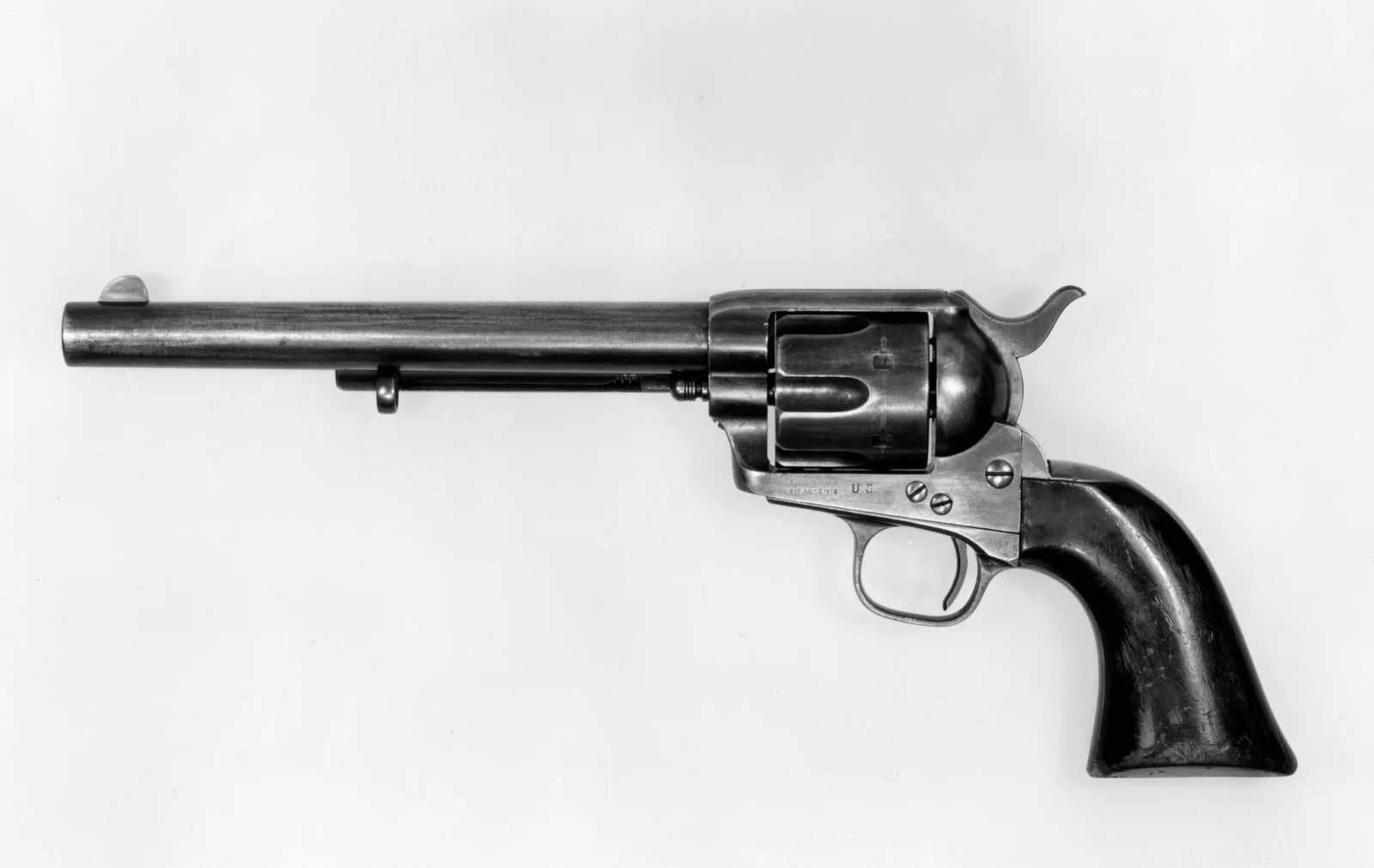
The original cavalry gun had a 7.5 inch barrel and measured 13 inches overall. Shorter versions followed: the 5.5 inch became known as the Artillery model and the 4.75 inch as the Civilian or Gunfighter model. There was even a version under 4 inches with no ejector rod, nicknamed the Sheriff’s Model, Banker’s Special or Storekeeper.
Its reputation came from the people who carried it, on both sides of the law. We’ve covered that side of the story in our pieces on Wyatt Earp’s guns, Billy the Kid’s guns and the guns of Tombstone. One myth worth knowing: the famous 12 inch “Buntline Special” was popularized by Wyatt Earp biographer Stuart N. Lake in 1931, in a highly fictionalized biography of Earp.
First, Second and Third Generation Explained
Collectors split the SAA into generations, and the generation matters a lot for price.
- First Generation (1873 to 1941): 357,859 made, counting a small number assembled during and after World War II. These are the guns of the actual Old West, and the early ones are the ones that bring five figures.
- Second Generation (1956 to 1974): Colt brought the SAA back because TV and movie westerns created demand for it. Serial numbers run 0001SA to 73,205SA. From 1961 to 1975 Colt also sold the New Frontier, an adjustable-sight version, and made 4,200 of them.
- Third Generation (1976 to 1993): Colt changed the barrel thread pitch and replaced the removable cylinder bushing with a solid one. Serial numbers run SA80,000 to SA99,999.
- Late Third Generation (1994 to today): production resumed as cowboy action shooting took off, and the removable bushing came back. You’ll see these sold as Fourth Generation guns. Serial numbers use an “S” prefix and “A” suffix.
If you’re buying a shooter, the generation mostly affects price, not function. If you’re buying an investment, it’s everything, and you’ll want a factory letter from Colt’s archive service to confirm what you have.
How to Tell Which Generation You Have
Start with the serial number, because that’s where the generations differ most. A number with no letters and low digits points to the first generation. An “SA” suffix means second generation. An “SA” prefix, SA80,000 to SA99,999, means a 1976 to 1993 third generation gun. An “S” prefix with an “A” suffix means the modern run. Then look at the front of the cylinder pin area: a removable cylinder bushing points to first, second or late third generation, while a solid bushing points to the 1976 to 1993 guns.
Don’t trust a listing that calls a gun “first generation” without a photo of the serial number and, ideally, a Colt letter. Refinished and restored guns are common, and they’re worth far less than original-finish ones. Our guide to buying vintage and antique guns covers what to ask before you pay.
The Calibers: Not Just .45 Colt
Today it’s a .45 Colt gun, but first generation SAAs came in at least thirty calibers, from .22 rimfire to .476 Eley. About half, 158,884, were .45 Colt. Next came .44-40 at 71,392, .38-40 at 50,520, .32-20 at 43,284 and .41 Colt at 19,676.
The .44-40 guns have their own name. Colt marked them “Frontier Six-Shooter,” and they existed so a man could carry one cartridge for both his revolver and his Winchester Model 1873 rifle. That pairing is a big part of why .44-40 was the second most common chambering. Colt certified the SAA for smokeless powder around 1900, at serial number 192,000, so an earlier gun shouldn’t see modern smokeless loads at all.
Feeding It: .45 Colt Ammo
The original .45 Colt load pushed a 255 grain bullet with 40 grains of black powder at a nominal 970 feet per second. Twentieth-century smokeless specs settled on the same 255 grain round-nosed flat-point bullet at 870 fps. That’s the kind of load an SAA was built for: a heavy, soft-shooting lead bullet at moderate speed.
It isn’t cheap to feed. At the five retailers we trust for pricing on September 25, 2026, the cheapest .45 Colt was Scorpion 250 grain flat point at 80 cents a round ($39.99 for 50 at Palmetto State Armory). HSM’s 200 grain Cowboy Action load was 90 cents, and Fiocchi’s 250 grain Cowboy Action load was $1.18. Most factory .45 Colt ran between $1 and $1.80 a round.
Now the warning. You’ll also see heavy hunting loads listed right next to them, like Cor-Bon’s 200 grain +P and HSM’s 325 grain Bear Load. Those are built for strong modern revolvers. Read the box, and if it says +P or “for Ruger and T/C only,” keep it out of a Single Action Army. Stick to standard pressure loads and cowboy loads, and your Colt will outlast you.
How to Load and Carry One Safely
This is the part new owners get wrong. The SAA has no transfer bar. When the hammer rests on a live round, the firing pin is resting on the primer, and a hard blow to the hammer can fire it. The original Army instructions said to carry six with the hammer in the safety notch, the first click back, but after World War II gun writers started recommending an empty chamber under the hammer, partly because a sharp blow could damage the redesigned half-cock mechanism on the second generation guns.
The modern practice is simple. Draw the hammer back to the loading notch, the second click, and open the loading gate. Load one, skip one, load four more. Close the gate, cock the hammer fully, and lower it gently onto the empty chamber. That’s five rounds with the hammer down on nothing. It’s the same way cowboy action shooters load, and it’s how I load mine. Colt did build a transfer-bar version, the Colt Cowboy, from 1999 to 2003, but it’s long out of production.
The Clones: Uberti, Cimarron and Pietta
Most people shooting an 1873 pattern revolver today aren’t shooting a Colt. They’re shooting an Italian copy, and the good ones are very good. Uberti and Pietta build them, and importers like Cimarron and Taylor’s sell them under their own names in dozens of configurations.
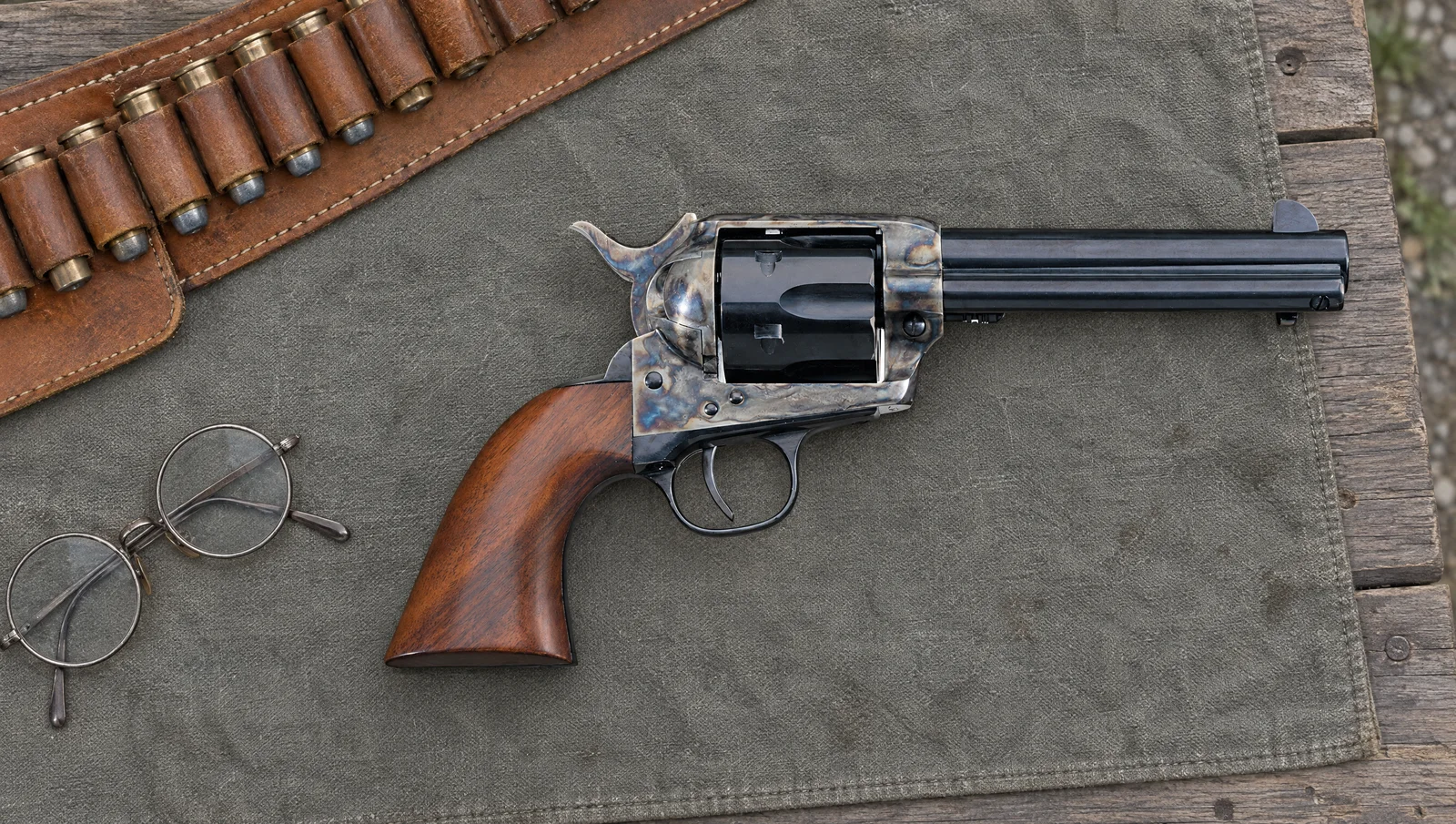
I’ve spent the most time with the Uberti 1873 Cattleman, which we reviewed in depth in our Uberti Cattleman review. Uberti’s own price list shows how much the details move the price: a brass trim .45 Colt with a 5.5 inch barrel lists at $599 against $689 for the same gun in all-steel trim. The live card below opened at $569.99 when I checked.
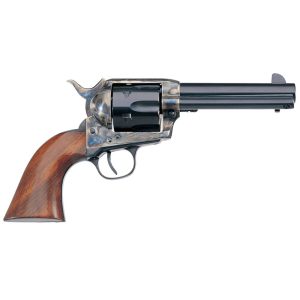
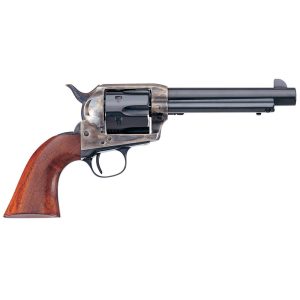
Cimarron’s Frontier line is the widest selection of the lot, in .45 Colt, .357 Magnum and .44-40, with Old Model and Pre-War frames and 4.75, 5.5 and 7.5 inch barrels. New ones in our catalog started at $516.20, and most sat in the $540 to $600 range.
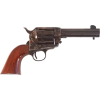
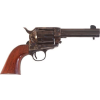
Pietta’s 1873 is the budget pick, and Taylor’s sells a lot of them under its own name. The Pietta card starts at $514.99. The cheapest 1873 single action we found anywhere was a Taylor’s at $461.11 at Classic Firearms.
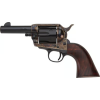
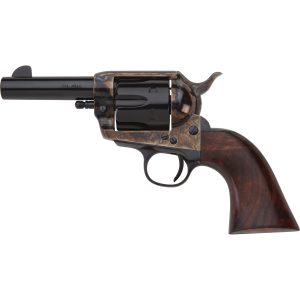
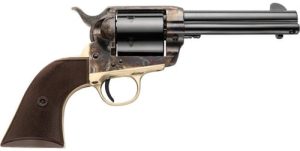
What do you give up? Mostly the name and the resale value. The clones are close copies, and cowboy action shooters run them hard every weekend. If that’s your plan, our beginner’s guide to cowboy action shooting explains how matches work.
Ruger Vaquero: The Modern Safety Alternative
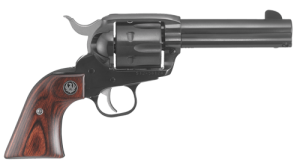
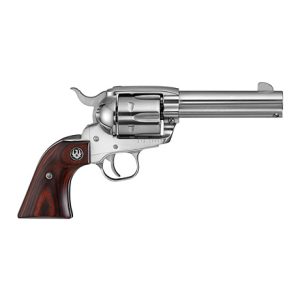
If the loading and carry rules above bother you, the Ruger Vaquero solves them. It looks like a Single Action Army but uses Ruger’s transfer bar, so the firing pin can’t reach a primer unless you pull the trigger. You can safely carry all six. The live card opened at $779.73 when I checked.
Standard Manufacturing: The High-Grade Middle Ground
Between a $500 clone and a $2,400 Colt sits Standard Manufacturing’s SAA. New ones in our catalog ran from $1,611.28 for a case colored 5.5 or 7.5 inch to $1,805.28 for a nickel model, and Guns.com had them at $2,169.99 and up. If you want a high-grade 1873 pattern gun and don’t need the Colt name, it’s the one to look at.
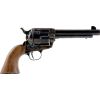
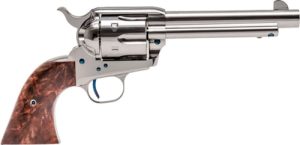
Is a Colt SAA Worth $2,300?
As a shooter, it’s a lovely revolver. The action on a good one is smooth, the four clicks as you cock the hammer are crisp, and the balance of a 5.5 inch gun in the hand is the reason this design has lasted more than 150 years. I’d call the 5.5 the best all-rounder, the 4.75 the best for carry and cowboy action, and the 7.5 the one that looks right on a wall and shoots best at distance.
Value is harder. A clone shoots nearly as well for a quarter of the money. What the Colt gives you is the name, the history, fit and finish that the clones don’t match, and resale. A new Colt holds its value far better than a clone, and a used one rarely sells for much under a new one’s price. If that’s worth $1,800 to you, buy the Colt. If you’re not sure, buy a clone first and find out whether you love single actions before you spend Colt money.
Buying a Used Colt SAA: What to Check
- Serial number and generation: match the serial format to the generation claimed, and ask for a Colt letter on anything priced as a collector piece.
- Timing: cock the hammer slowly and make sure the cylinder locks up on every chamber before the hammer reaches full cock.
- Lockup: with the hammer fully cocked, the cylinder shouldn’t wobble much front to back or side to side.
- Finish: an original case colored frame is worth much more than a refinished one. Sharp edges on the markings and even color suggest original finish.
- Price: compare against a new one. Standard used guns in our catalog ran from $199 under Colt’s $2,299 to about $1,000 over it.
Colt Single Action Army Live Pricing
The card below tracks new standard Colt SAAs. It leaves out the clones, the engraved and anniversary editions and the used guns, so it’s the price of a gun you’d actually shoot. When I checked, it opened at $2,399.99 for a 7.5 inch at Sportsman’s Outdoor Superstore, and the top trusted retailer price was $3,100.99 at Guns.com.
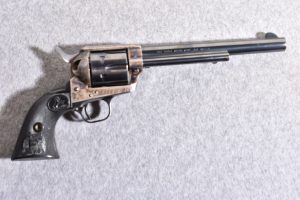
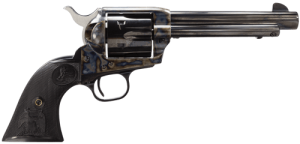
Colt specs and prices come from Colt’s Single Action Army page. The museum photo is serial no. 4519, Metropolitan Museum of Art accession 59.143.4, released as CC0 on Wikimedia Commons. Street prices are what we saw on September 25, 2026.
Frequently Asked Questions
Is the Colt Single Action Army still made?
Yes. Colt currently lists the Single Action Army in .45 Colt with a 4.75, 5.5 or 7.5 inch barrel, all at $2,299 on its own store. The current series has run since 1994; earlier production stopped from 1941 to 1956 and again from 1974 to 1976.
How much does a Colt Single Action Army cost?
Colt lists it at $2,299. On September 25, 2026, new standard models we found ran from $2,399.99 to $3,100.99, and used standard guns at Guns.com started at $2,099.99. Engraved, anniversary and early collector guns cost far more, from about $4,200 to well over $20,000.
What calibers does the Colt SAA come in?
Colt's page lists .45 Colt only right now, though retailers still sell .357 Magnum Colt SAAs. First generation guns came in at least thirty calibers; about half were .45 Colt, followed by .44-40, .38-40, .32-20 and .41 Colt.
What are the Colt SAA generations?
First Generation ran from 1873 to 1941, Second Generation from 1956 to 1974, and Third Generation from 1976 to 1993. Production restarted in 1994 in a series some collectors call Late Third or Fourth Generation, with the removable cylinder bushing back.
How many rounds should you load in a Single Action Army?
Five. The SAA has no transfer bar, so the firing pin rests on the primer when the hammer is down on a loaded chamber. Load one, skip one, load four more, then lower the hammer onto the empty chamber.
Is a Colt SAA worth it over an Uberti clone?
For a collector or someone who values the Colt name and resale value, yes. For shooting cowboy action matches, an Uberti, Cimarron or Pietta clone does the job for about a quarter of the price, and new ones start around $500.
Which Colt SAA barrel length is best?
The 4.75 inch is the quickest from a holster and a common cowboy action choice. The 5.5 inch is the best all-rounder. The 7.5 inch is the original cavalry length with the longest sight radius. Colt charges the same $2,299 for all three.
Can you shoot +P .45 Colt in a Colt Single Action Army?
No. Loads marked +P or for Ruger and T/C revolvers only are built for stronger modern guns. Use standard pressure .45 Colt or cowboy action loads, and keep smokeless ammo out of any SAA made before about 1900.
5,718+ Gun & Ammo Deals
Updated daily from 200+ top retailers. Filter by category, caliber, action type, and price.
Related Guides