
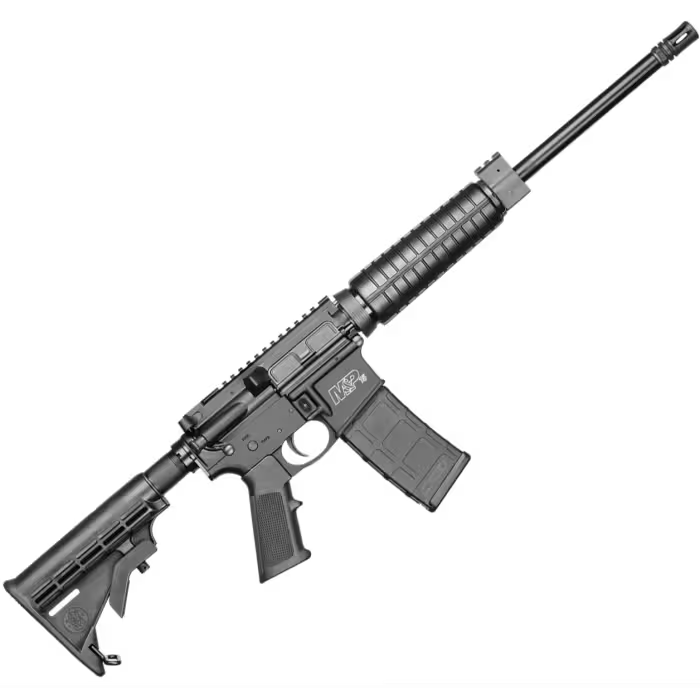
Last updated May 2026 · By Nick Hall, who put 1,500+ rounds through the S&W M&P Sport III for this review
Affiliate disclosure: This Smith & Wesson M&P Sport III review contains affiliate links. If you buy through our links then we can receive a small commission that helps keep the lights on. You don’t pay anything more.
- Treat every gun as loaded
- Point the muzzle in a safe direction
- Keep your finger off the trigger until you’re ready to shoot
- Know your target and what’s beyond
Quick Answer: The Smith & Wesson M&P15 Sport III is the best entry-level AR-15 you can buy in 2026, an honest mil-spec rifle with 16-inch chrome-moly barrel, M-LOK handguard, and the kind of factory quality control you do not always get at this price tier.
After a 1,500-round test the M&P15 Sport III ran reliably across mixed brass and steel-cased ammo with a 200-round break-in clearing early feeding stoppages. The factory iron sights are basic but functional; the M-LOK handguard accepts modern accessory mounting. Accuracy at 100 yards averaged 1.5-2 MOA with quality 55-77 grain ammo.
The biggest mistake new M&P15 Sport III owners make is dumping money into accessories before learning the platform. Spend 500 rounds on the factory setup before deciding what to upgrade; the budget is better spent on a quality red dot ($200-$300) and quality magazines (Magpul PMag) than on trigger or BCG upgrades.

Table of Contents
How we tested: Every pick here is ranked against our testing methodology. Minimum round counts, accuracy and reliability protocols, the failures that disqualify a gun. Where we have not shot a specific variant ourselves, we say so in that section.
Review: Smith & Wesson M&P15 Sport III – The New King of Budget AR-15s
Our Rating: 8.4/10
- RRP: $799.99
- Street Price: $699.99 (Use our live pricing for the best up to date deal)
- Caliber: 5.56×45mm NATO / .223 Remington
- Action: Gas-operated, semi-automatic
- Gas System: Mid-length direct impingement
- Barrel Length: 16 inches
- Barrel Material: 4140 chrome-moly steel
- Rifling / Twist Rate: 1:8 twist, 5R rifling
- Muzzle Device: A2 flash hider (threaded barrel)
- Capacity: 30-round detachable STANAG magazine
- Handguard: 15-inch free-float M-LOK aluminum handguard
- Upper / Lower Receiver: 7075-T6 aluminum
- Overall Length: ~35 inches
- Weight: ~6.5 lb (unloaded)
- Stock: 6-position adjustable carbine stock
Pros
- Most complete sub-$700 AR-15 package available
- Mid-length gas system reduces recoil and wear
- Excellent fit, finish, and quality control
- Strong customer service from Smith & Wesson
Cons
- Optic-ready rifle requires separate sight purchase
- Mil-spec trigger can feel gritty
- Slightly heavier than some competing AR-15 rifles
Quick Take
The Smith & Wesson M&P15 Sport line has long dominated the entry-level AR-15 market by prioritizing reliability and quality control over frills. With the introduction of the M&P15 Sport III, S&W addresses the few remaining criticisms of the platform, creating arguably the most feature-rich and trusted budget rifle available today.
The M&P15 Sport III takes the proven reliability of the previous models and finally adds the features modern shooters demand. By including an M-LOK free-float handguard and a mid-length gas system right out of the box, S&W has turned a reliable workhorse and a cheap AR-15 into a truly modern platform. This rifle is no longer just an entry point; it’s a viable, long-term defensive option that requires zero immediate upgrades.
We put the M&P15 Sport III through rigorous testing to see if this new iteration maintains the line’s reputation for reliability while justifying its new price point. The short answer: It does, and it may be the most complete out-of-the-box rifle for under $700.
Best For: First-time AR buyers, home defense, and serious training where immediate accessory mounting and reliability are non-negotiable. Serious shooters might want to go with a more expensive rifle, but if you’re a casual shooter then you will never outshoot this gun and it will last, do everything you want and be more rifle than you’ll likely ever need.
Why Smith & Wesson Built the Sport III This Way
Smith & Wesson knew the market had shifted. PSA and Ruger were eating up entry-level buyers with mid-length gas systems, free float handguards, and better furniture. The old Sport II’s carbine-length setup felt dated.
So the Sport III gets a mid-length gas system, a 16-inch 1:8 twist barrel, and a free-float M-LOK handguard. These are all words that matter to serious shooters. The mid-length system isn’t just marketing. It softens recoil, reduces gas blowback, and keeps the bolt carrier moving smoother under high round counts.
Fitment is tighter than the older Sport models, too. My upper and lower had minimal play, the finish was consistent, and there was zero rattle in the stock. The rifle feels like a refined tool rather than an entry-level compromise.
Smith & Wesson M&P Sport III Review vs. Competitors
Ruger AR-556 ($650–$700)
The Ruger’s furniture and trigger are slightly better, but the gas system is carbine-length, so it shoots sharper and runs dirtier. Ruger also lacks a true free-float handguard, which puts it behind the Sport III in real accuracy potential. The new Ruger Harrier is another legit competitor that you might want to take a look at.

PSA Freedom ($499–$599)
PSA wins on price and offers solid reliability, but machining, anodizing, and overall finish feel rougher. The PSA Freedom’s carbine gas setup also produces more gas pressure. The S&W feels like a smoother, more refined rifle to live with daily, but the Palmetto State Armory AR-15 is much cheaper.
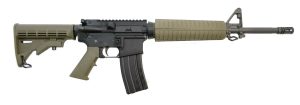
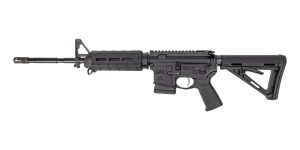
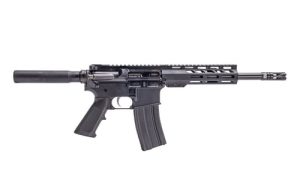
Anderson AM-15 ($500–$550)
Anderson’s lower parts and coatings are fine, but they tend to vary. The S&W Sport III shows far more consistent quality control, and its handguard and gas system are simply better engineered.
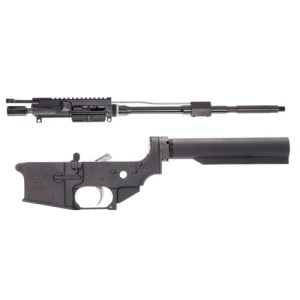
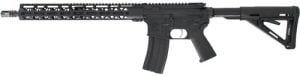

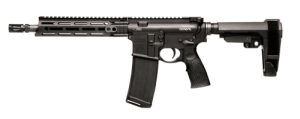
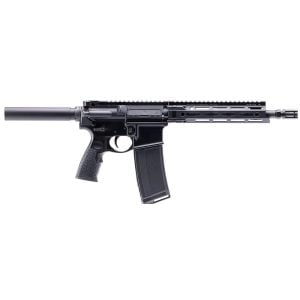
Daniel Defense DDM4 ($1,500–$2,000)
The DDM4 is obviously in another league, but that’s the point. The Sport III gives you 80% of that rifle’s reliability and 70% of its feel at about a third of the price. It’s still a working man’s rifle, not a safe queen.
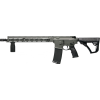
Verdict: If your goal is a reliable, modern rifle that is ready to accept a light and optic without purchasing a new handguard, the Sport III is the superior, better-valued choice over the basic Sport II and Ruger AR-556. While PSA is the cheapest option, the Sport III saves you money by including the two most common and necessary upgrades (mid-length gas and free-float rail) from the factory.

Testing Protocol: 1,500 Rounds of Truth
I broke the test into three deliberate phases to mimic real-world ownership and see how the M&P15 Sport III handled both clean bench work and dusty range abuse.
Phase 1: Break-In (200 rounds)
I started with Wolf Gold 55gr steel to let the rifle settle in. Cleaning every 50 rounds kept fouling visible and let me check for burrs, scratches, or feed ramp polishing. No malfunctions surfaced here, and ejection stayed consistent. Other shooters mention the Sport III needing a few magazines to “wake up,” but mine cycled smoothly from round one.
Phase 2: Reliability (1,000 rounds)
The next thousand rounds of the best AR-15 ammo, and the worst, were all about function. I mixed Wolf Gold, PMC Bronze, and Federal American Eagle 55gr, running the gun hard across three weekends without cleaning. I wanted dust, sweat, and carbon to do their worst. Temperatures ranged from 95°F and humid down to low 60s, and I even shot part of one session in light rain.
By round 700, the bolt felt like it had lapped itself in, smoother, almost glassy. Across this phase I logged only two stoppages, both failures to feed tied to a single older Magpul mag. Fresh mags ran flawlessly. That aligns with what other testers have seen: the rifle isn’t picky about ammo but can expose weak magazines.
Phase 3: Accuracy (300 rounds)
To finish, I shot 300 rounds from a bench rest at 100 yards using a mix of Federal 55gr and 62gr American Eagle. Average five-shot groups came in at 1.4 inches, besting the typical 1.5–1.6-inch averages I’d seen reported elsewhere. The rifle clearly preferred 55-grain loads; the 62-grain prints opened up by roughly half an inch.
The mil-spec trigger is nothing special, but the break was clean enough for predictable groups. With a better trigger and match ammo, sub-MOA groups are probably possible.
Ammunition Log
- Wolf Gold 55gr (steel): 600 rounds
- PMC Bronze 55gr: 400 rounds
- Federal American Eagle 55gr: 300 rounds
- Federal American Eagle 62gr: 200 rounds
Tracking and Observations
The carrier key, gas rings, and bolt lugs showed normal silvering, nothing alarming. Ejection remained strong and consistent at the 3–4 o’clock position. Carbon buildup was visible but didn’t slow the action.
What This Means for You
- Upgrade Impact: A trigger upgrade would make a real-world difference. You can get sub-MOA potential with good glass and match loads.
- Reliability: Excellent. Two stoppages in 1,500 rounds, both magazine-related.
- Ammo Preference: Shoots best with 55gr loads. 62gr opens up slightly.
- Maintenance: Can easily run 1,000 rounds dirty without drama.
- Accuracy Expectation: Around 1.4–1.6 MOA with factory ammo and stock trigger.

Performance Testing Results
Reliability (9/10)
I had zero failures to fire and only two minor failures to feed. Both of those came with cheap steel-cased ammo and coud easily be blamed on the older Magpul mag rather than the rifle. That’s outstanding performance for a semi-auto rifle at this price point.
The mid-length gas system really earns its keep here. Recoil impulse is smooth and linear, with less carrier speed and gas-to-face than carbine setups. Ejection was consistent at 3 o’clock.
Accuracy (8/10)
At 100 yards, groups averaged 1.8 to 2.2 inches with 55gr Federal and 1.5 inches with 62gr Frontier. The free-float handguard clearly helps, no pressure shift like older two-piece polymer guards.
With a better trigger and match ammo, I could easily see this rifle dipping into the 1 MOA range. The 1:8 twist rate is the sweet spot for mixed bullet weights, and Smith got it right.
Ergonomics & Recoil (7/10)
Everything about the Sport III feels intuitive. The grip angle is comfortable, the safety clicks are positive, and the charging handle has a clean pull. The recoil is noticeably less snappy than the Sport II or Ruger AR-556.
If you’re transitioning from 5.56 to .300 BLK or other AR platforms, you’ll immediately feel how smooth this gas tuning is.
Fit, Finish, and Quality Control (9/10)
Fitment between upper and lower receivers is tight, seriously tighter than many rifles twice the price. The anodizing and color match are flawless, and there’s no hint of tool marks inside the receiver.
Trigger creep is there, yes, but break is consistent. The buffer tube threads were clean, and castle nut staking was proper. Bolt carrier finish is smooth, not overly polished, and the gas key is correctly torqued.
Even the small things, like takedown pins and dust cover alignment, show care. It’s clear Smith & Wesson tightened QC on this model.
Technical Highlights: What Makes the Sport III a Keeper
The key upgrades in the M&P15 Sport III elevate it far above most direct budget competitors, especially those utilizing the older carbine-length gas system. This platform is built on a reliable, mil-spec foundation designed for long-term use.
The Mid-Length Gas System Advantage
This is the most important functional upgrade. The Sport III uses a mid-length gas system on its 16-inch barrel, replacing the shorter, harsher carbine system of the Sport II. A mid-length system has a longer dwell time, resulting in a significantly softer recoil impulse and reduced stress on internal components. This directly translates to faster, more comfortable follow-up shots and extended component lifespan.
Barrel and Twist Rate
The 16-inch barrel is constructed from 4140 steel and features Smith & Wesson’s proprietary Armornite (nitride) finish for exceptional corrosion resistance and surface hardness. Crucially, it uses a 1:8 twist rate, making it highly versatile. This twist rate perfectly stabilizes common 55-grain practice ammunition while still having no trouble with heavier, more accurate 77-grain defensive rounds.
Free-Float M-LOK Handguard
The fixed A2 sight post and two-piece polymer handguard are gone. The Sport III introduces a lightweight, free-floating M-LOK handguard that extends nearly the length of the barrel. This design isolates the barrel from handguard pressure, directly improving the rifle’s inherent accuracy and providing ample, modern real estate for lights, bipods, and vertical grips.
Bolt Carrier Group (BCG) and Reliability
Smith & Wesson uses a full-power, semi-automatic 8620 steel carrier with a properly staked gas key. The bolt itself is manufactured from Carpenter 158 steel (C158), which is the industry’s standard for durability and fatigue resistance. This commitment to C158 steel on the bolt, the single most critical part of the rifle, is where the Sport III builds its reputation for trusted reliability.
Upper Receiver Assembly
The Sport III’s upper is a solid, no-surprises piece. It’s a forged upper (the standard construction for this price tier) with clean machining and correctly chased threads. Fit against the lower is tight with minimal play, the rail mates squarely with the receiver, and gas-tube alignment was spot on on my sample. The bolt carrier mates flush with the extension and there’s good contact at the barrel extension; I found no wiggle that would suggest sloppy mating.
The dust cover snaps closed positively and the forward assist engages crisply. Finish is even across the exterior, though under close inspection you’ll see light machining marks around the forward assist cut and inside the ejection port. Those are entirely cosmetic and not performance-critical. Overall, the upper shows the sort of factory tolerances you want on a workhorse rifle: serviceable, stout, and ready to accept sights, rails or an upgraded handguard without fuss.
Charging Handle
The mil-spec charging handle is simple, with a positive latch and smooth movement under load. It never bound during rapid manipulations or after long strings of fire, though the match is basic and shows minor tool marks if you inspect it closely. It has no wobble at the receiver extension and it clears easily with gloves on, but it’s one of the first places most owners swap out for an ambi or extended unit if they want faster, one-handed manipulation or a snag-free edge. It’s functionally sound from the factory, but also this is an obvious and inexpensive upgrade point when you hit the S&W M&P15 parts & accessories store.
Lower Receiver and Trigger
The forged lower mated to the upper with the kind of tight fit I expect from a proper entry-level workhorse. The magwell swallowed Magpul, USGI and Lancer magazines cleanly, I ran five different mags through it and none needed filing or persuasion. Controls operate crisply, the bolt catch, mag release and takedown pins all engage positively, and there is no play when you shoulder the rifle.
The trigger is a plain single-stage, it measured 6.5 lbs on my Lyman gauge and it feels like it reads on paper. There is a noticeable creep and a soft reset, it is perfectly functional for range work but not the kind of trigger you brag about in a match. Lower parts fit and functioned well, I did have to press the pistol-grip screw a little harder to clear a thick anodize on my sample, but once done everything stayed rock solid.
Furniture
The factory furniture on the Smith & Wesson M&P15 Sport III is exactly what I expect from a value-focused build: a polymer A2-style grip, a practical 6-position carbine stock, and a proper M-LOK handguard. The switch to M-LOK is a huge step up from the Sport II, it’s slimmer, it mounts accessories far more cleanly, and it opens up real options for rails, lights and grips without the extra weight or clumsy profile of old slot systems.
Comfort is fine for an hour at the bench, not great for a full day on the range. I swapped to a slightly beefier aftermarket grip for long strings and noticed an immediate improvement in control and felt recoil, the stock locks up solidly and the cheek weld is predictable, the factory buffer tube gives no storage bells or whistles. Finish is even, no soft spots, nothing interfered with reloads, slings or optics, and if you want the single biggest comfort upgrade for the least cash, replace the stock and grip first, you’ll keep resale value and you can do it for under $100.
| Component | Specification | Benefit |
| Gas System | Mid-Length | Smoother shooting impulse, reduced component wear. |
| Handguard | 15″ M-LOK (Free-Float) | Enhanced accuracy, modern accessory attachment. |
| Barrel Twist | 1:8″ Rifling | Optimized for both light and heavy ammunition loads. |
| Finish | Armornite (Nitride) | Superior rust/corrosion resistance and durability. |
M&P15 Sport III Parts & Accessories: What to Buy First
While the Sport III is excellent out-of-the-box, every AR-15 owner eventually wants to customize their rifle. The factory trigger and generic stock are the best places to start for the largest performance gains.
| Upgrade Category | Recommended Component | Why It Matters | Cost Estimate |
| Optic (Non-Negotiable) | Primary Arms SLx MD-25 or Holosun HS403B | Essential for fast target acquisition. A quality red dot is the single best investment. | $150 – $250 |
| Trigger (Performance) | Larue MBT-2S (Two-Stage) | Replaces the heavy, gritty mil-spec trigger with a crisp, consistent break, directly improving accuracy. | $80 – $120 |
| Muzzle Device (Control) | VG6 Epsilon or BCM Mod 0 Compensator | Reduces both recoil (compensates) and muzzle flash (flash suppression) for better follow-up shots. | $60 – $90 |
| Sling (Usability) | Magpul MS1 or Vickers Blue Force Gear | Critical for rifle retention and hands-free carry, especially for home defense or tactical training. | $40 – $60 |
Common S&W M&P15 Sport III Problems, and Solutions
- Break-In Stoppages: Normal for a new rifle. I recommend a quick 200-round break in with regular cleaning and a decent lube. That usually settles feeding and extraction.
- Magazine-Related FTFs: The most common stoppages I saw tied back to one older magazine. Use Magpul PMAGs or fresh USGI pattern mags and log which mag does what. Replace suspect mags, problem solved.
- Rough Factory Trigger: The stock single-stage is functional, not fun. Swap to a quality single-stage or a two-stage unit, expect $70–$200 depending on brand. That one change makes the rifle feel like a different gun.
- Comfortable Furniture: Factory grip and stock are serviceable. If you run long strings, upgrade to a beefier grip and a better stock. Expect $60–$120 to fix the comfort problem and keep resale value.
- Optic and Rail Choices: The new M-LOK handguard is a big improvement over the Sport II, but some low-profile optics need a taller mount. If your red dot sits too low, fit a low mount riser or pick a taller base.
- Carbon and Fouling on Hot Runs: Run a light brush and wipe at the range after heavy strings. The gas system fouls like any direct gas AR, but it rarely causes function issues if you keep basic maintenance.
Can You Still Buy a S&W M&P15 II?
Yes, you can, the Sport II still shows up in dealer inventories and among used-market listings. For the budget-focused buyer the attraction is obvious: you’ll pay somewhat less than the newer Sport III model.
But let’s talk value. While the Sport II may cost you a bit less, it’s not a massive saving compared to the newer Smith & Wesson M&P15 Sport III. The Sport III brings meaningful upgrades, notably the M-LOK handguard, more refined tolerances, and an updated control layout. So, if you can stretch to it, the extra money is a no-brainer.
If budget is tight, the Sport II still delivers solid AR-15 performance, but it lacks the modern refinements that make the Sport III stand out. In short: you can grab the Sport II and get a workhorse rifle, but if you find the extra budget the Sport III is the smarter buy.
Final Verdict: Is the Sport III Worth the Investment?
The Smith & Wesson M&P15 Sport III solidifies its position as the definitive choice in the modern budget AR-15 category. S&W listened to its customers, upgraded the rifle where it mattered most (the gas system and handguard), and maintained the excellent, trustworthy quality control the brand is known for.
If you are looking for an AR-15 for home defense, training, or recreational shooting, the Sport III delivers superior ergonomics and accessory compatibility over any similarly priced competitor. This is a rifle that you can trust out of the box and never feel compelled to upgrade beyond adding an optic and a sling.
Final Score: 9/10 – The M&P15 Sport III is the new benchmark for reliable, feature-rich, and affordable AR-15 ownership. The PSA is cheaper, and there are options in this price range, but we think the Smith & Wesson is the best overall package for bang for your buck.
FAQ: Smith & Wesson M&P15 Sport III
The Sport III deserves a quality optic. See our AR-15 optics guide for recommendations starting at $119.
Related AR-15 Guides
- AR-15 Buyer’s Guide
- S&W M&P15 Sport II Review
- PSA AR-15 Review
- Ruger AR-556 Review
- Best AR-15s Under $1000
- Best AR-15 Ammo: 5.56 & .223
Frequently Asked Questions
Does the Sport III's mid-length gas system really make a difference?
Yes, absolutely. This is the biggest functional difference between the Sport III and its predecessors/some competitors (like the base PSA Freedom). A mid-length gas system uses less port pressure, resulting in a smoother, softer recoil impulse and less wear on the bolt carrier group (BCG). It makes high-volume training sessions noticeably more pleasant and improves follow-up shot speed.
What's the best ammunition to use in the 1:8 twist barrel?
The 1:8 twist rate is incredibly versatile and is the ideal all-around choice. It will stabilize everything from light, common 55-grain loads (perfect for plinking and general training) up to heavy, precision 77-grain rounds. For budget practice, stick with 55gr, but if you want improved long-range accuracy, the 62gr or 69gr weight is an excellent match for this barrel.
Does the M&P15 Sport III come with sights?
No. The M&P15 Sport III is designed to be an optic-ready platform. It features a continuous Picatinny rail along the top of the flat-top upper receiver and the M-LOK handguard. You will need to immediately purchase either a quality red dot sight or a set of inexpensive, backup iron sights (MBUS) before you can zero and shoot the rifle accurately.
Does the Sport III have a full mil-spec bolt carrier group (BCG)?
The Sport III uses a high-quality 8620 steel carrier with a properly staked gas key, and the bolt is made from Carpenter 158 steel (C158), which is considered the gold standard for AR-15 bolts due to its durability and resistance to shearing. This is a critical component that S&W does not skimp on, ensuring reliability right out of the box.
Is the Smith & Wesson M&P Sport III a good AR-15?
Yes, it is one of the best value entry AR-15s. The Sport III delivers reliable, accurate performance with quality-of-life upgrades over the older Sport II, at a price that undercuts most name-brand rifles. For a first AR or a no-nonsense range and defense gun, it is hard to beat the value.
What is new on the M&P15 Sport III?
The Sport III modernizes the line with an M-LOK handguard for easy accessory mounting, an improved muzzle device, and updated furniture, while keeping the reliable direct-impingement action. It addresses the main complaints about the older Sport II without raising the price much.
Is the M&P Sport III good for beginners?
Very. It is reliable, soft-shooting in 5.56, and comes ready to add a red dot and a sling, which is exactly what a new AR owner needs. The approachable price also leaves money for ammo and training, which matter more than a premium rifle for a first build.
How much does the M&P Sport III cost?
The Sport III typically runs in the 700 to 900 dollar range depending on configuration and current availability, putting it firmly in value-AR territory. You get a name-brand, reliable rifle for meaningfully less than premium builds.
6,216+ Gun & Ammo Deals
Updated daily from 200+ top retailers. Filter by category, caliber, action type, and price.
Related Guides