

Carlos Hathcock did most of his killing in Vietnam with a hunting rifle. The Marine sniper’s main gun was a Winchester Model 70 in .30-06 with an 8-power Unertl scope, essentially the same bolt-action a deer hunter could buy in 1960s America. He also shot the new Remington 700-based M40 in .308. His most famous record, though, came from a machine gun: in 1967 he mounted a Unertl scope on an M2 Browning .50 caliber and killed a Viet Cong guerrilla at 2,500 yards, a record that stood for 35 years. His sidearm was a Colt M1911A1 .45. The North Vietnamese called him “White Feather,” and he was credited with 93 confirmed kills.
Here’s every gun in the Hathcock story, the famous shots and which of them are still argued over, and what the same rifles cost today.
Table of Contents
Carlos Hathcock’s Guns at a Glance
| Gun | Caliber | How he used it |
|---|---|---|
| Winchester Model 70, 8x Unertl scope | .30-06 Springfield | His main sniper rifle in Vietnam |
| M40 (Remington 700), Redfield 3-9x scope | 7.62 NATO / .308 | The Marines’ new standard sniper rifle from 1966 |
| M2 Browning machine gun, 8x Unertl scope | .50 BMG | Kills past 1,000 yards, including the 2,500-yard record |
| Colt M1911A1 | .45 ACP | His sidearm |
| J.C. Higgins .22 rifle | .22 | What he hunted with as a boy in Arkansas |
| Springfield M25 “White Feather” | 7.62 NATO | A later rifle named in his honor, not one he carried |
Who Was Carlos Hathcock?
Carlos Norman Hathcock II was born in Little Rock, Arkansas, on May 20, 1942, and grew up poor in Wynne, Arkansas, raised mostly by his grandmother. He started hunting young, partly to help feed the family, with a .22 J.C. Higgins rifle. When he played soldier in the woods, his prop was the German Mauser his father had brought home from World War II. He’d wanted to be a Marine all his life, and he enlisted on his 17th birthday, May 20, 1959.
He was a match shooter before he was a sniper. In 1965 he won the Wimbledon Cup at Camp Perry, Ohio, the most prestigious 1,000-yard prize in American long-range shooting. He went to Vietnam in 1966 as a military policeman, and Captain Edward James Land, who was building a Marine sniper program from scratch, went looking for proven marksmen. He found the Wimbledon Cup winner almost at once.
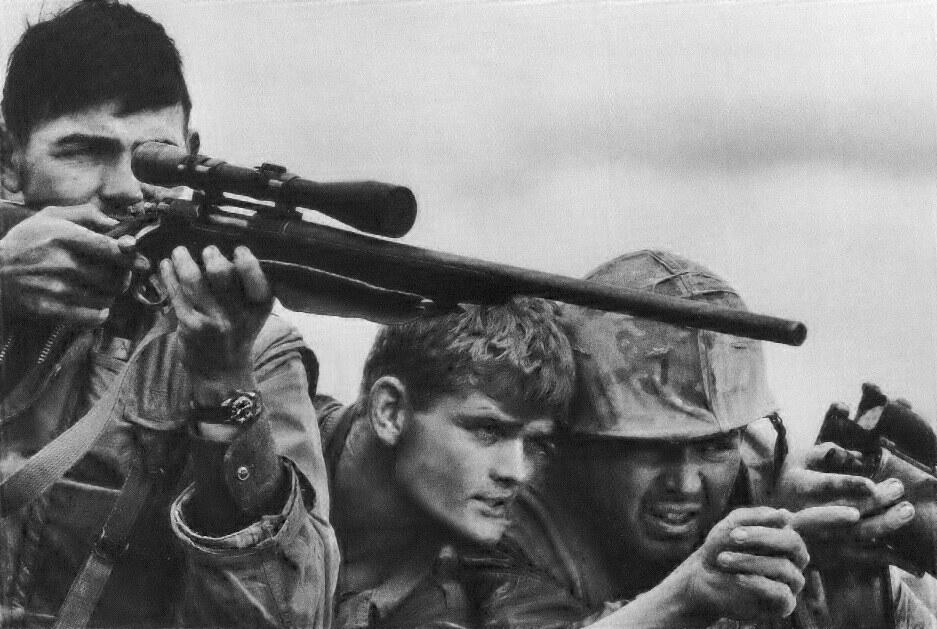
The Winchester Model 70: His Main Rifle
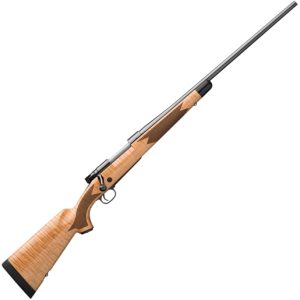
When the Marines started fielding snipers in Vietnam, they had no standard sniper rifle to hand out, and Winchester Model 70 bolt-actions filled the gap. Hathcock’s was chambered in .30-06 Springfield and wore an 8-power Unertl scope, a long, thin target scope with external adjustments. Unertl had built the Marines’ 8x sniper scope for the 1903 Springfield in World War II.
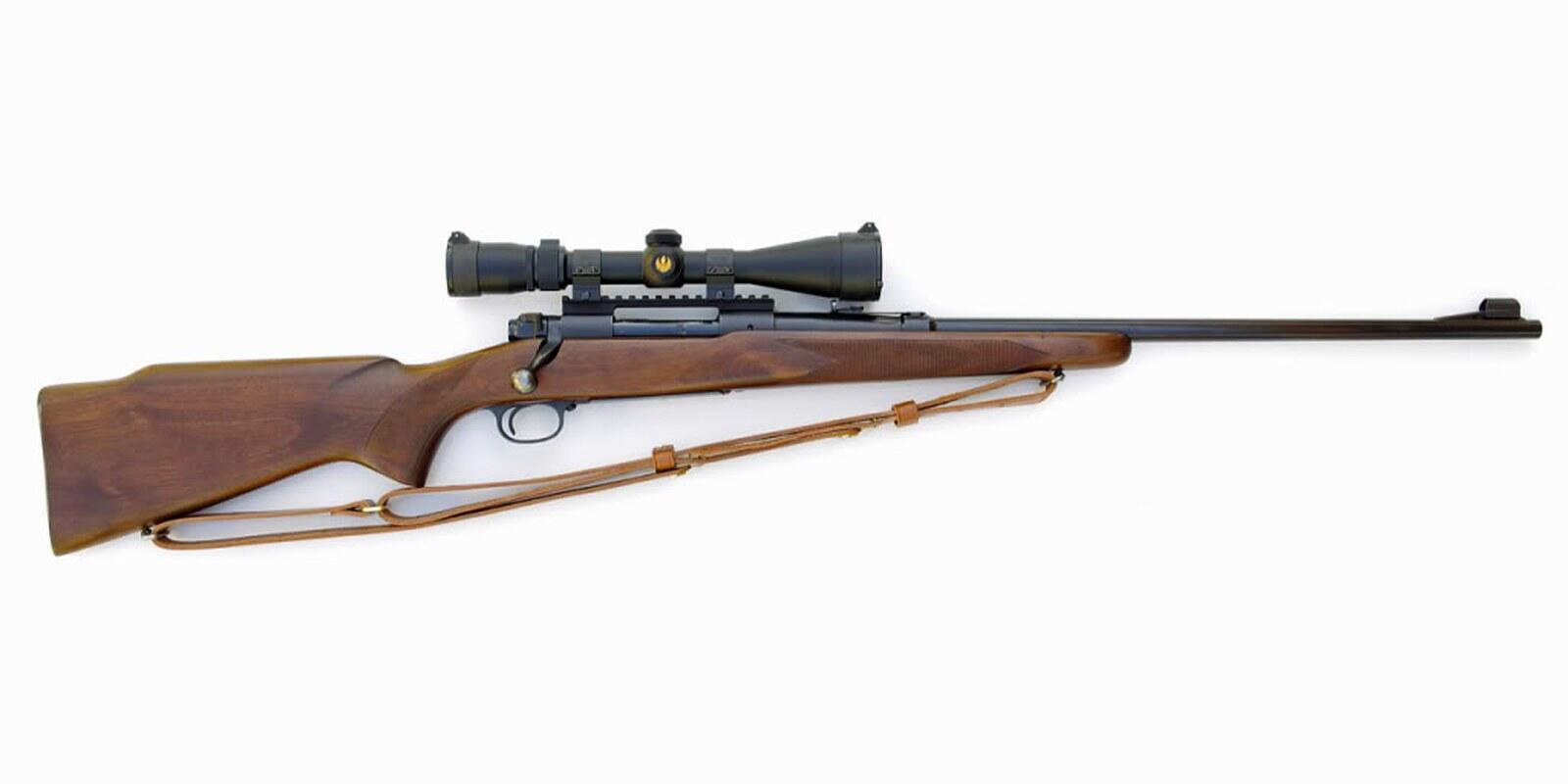
Winchester introduced the Model 70 in 1936, and shooters nicknamed it “the Rifleman’s Rifle”. The rifles made before 1964 are the ones collectors chase. They used a Mauser-type claw extractor, called controlled-round feed because the extractor grabs the cartridge rim as soon as it leaves the magazine, so a round can’t double-feed however the bolt is worked. Winchester cheapened the design in 1964, and pre-64 rifles, serial numbers below 700,000, still sell at a premium. The Model 70 you can buy new today has controlled-round feed again.
A .30-06 Model 70 is still one of the best all-around hunting rifles made, and Canadians gave a scoped Model 70 to Soviet sniper Lyudmila Pavlichenko in 1942. We test it in our Winchester Model 70 review, cover the maker on our Winchester page, and rank the field in the best .30-06 rifles:
The M40: The Remington 700 Sniper Rifle
In 1966 the Marine Corps adopted its first standard sniper rifle, the M40. The Corps ordered 700 Remington Model 40x rifles, the target version of the Model 700 bolt-action, in 7.62 NATO, the military twin of .308 Winchester, with a heavy barrel, a walnut stock and, on most rifles, a Redfield 3-9x Accurange variable scope. Hathcock used the M40 as well as the Model 70. The M40 line went on to serve the Marines for more than 50 years through the M40A1, A3, A5 and A6 before the Mk 13 Mod 7 replaced it.
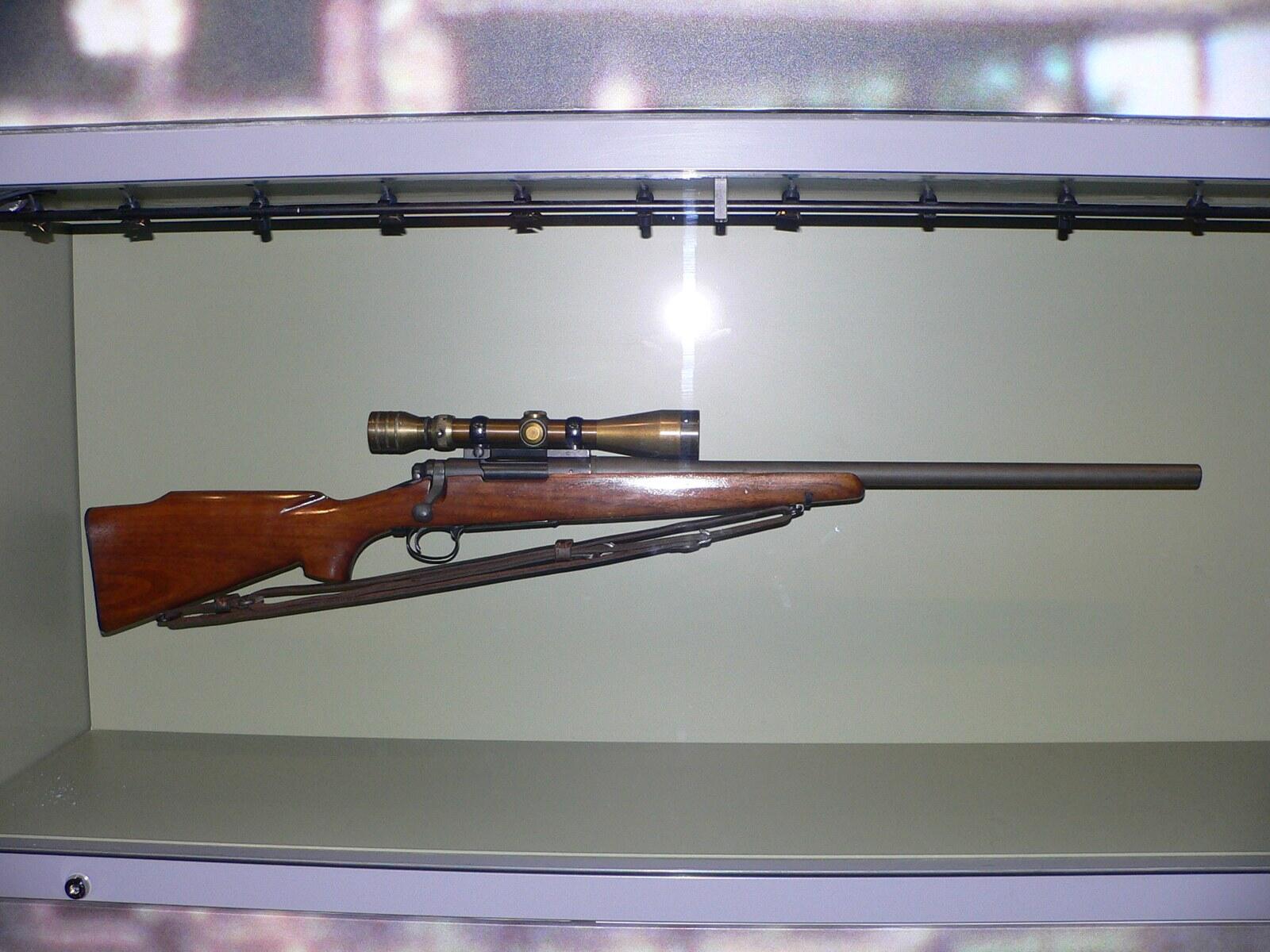
The Remington 700 action behind the M40 is the most copied bolt-action in America, and you can still buy a factory tactical version. We put the current rifle through its paces in our Remington 700 review, and our .308 vs .30-06 comparison explains why the Marines were happy to trade Hathcock’s .30-06 for the shorter NATO round:
The M2 Browning and the 2,500-Yard Record
Hathcock’s strangest sniper rifle was a heavy machine gun. The M2 Browning .50 caliber was designed in the 1920s to shoot down aircraft and stop vehicles, but its big cartridge carries enormous energy at long range, and the gun can fire single shots. Seabee metalworkers made Hathcock a bracket so he could mount an 8x Unertl scope on one. He made a number of kills past 1,000 yards with it.
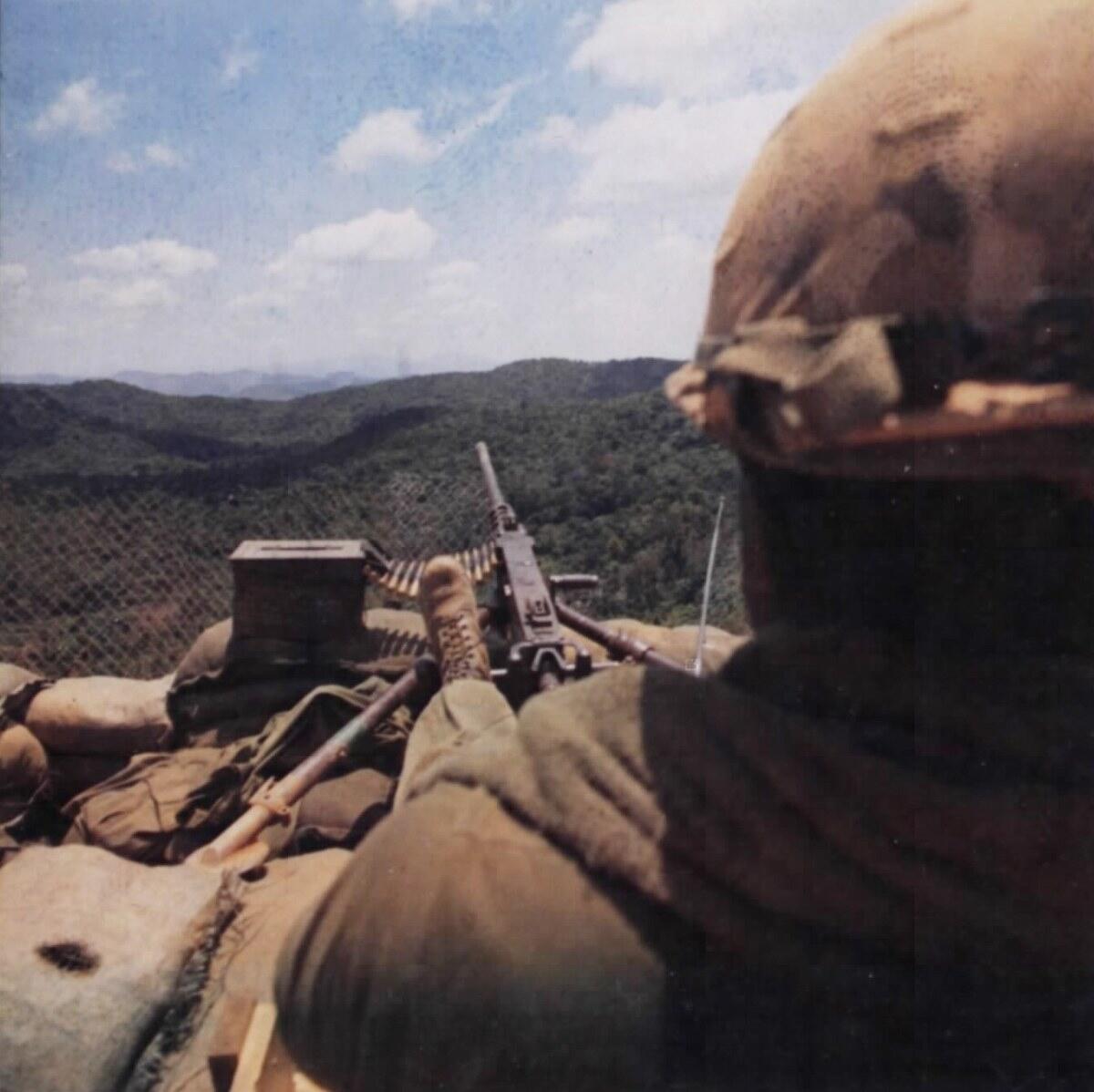
In 1967 he killed a Viet Cong guerrilla at 2,500 yards, or 2,286 meters, with the scoped M2. It was the longest confirmed sniper kill in history until 2002, when Canadian snipers Arron Perry and Rob Furlong beat it in Afghanistan, both with .50 BMG rifles. That wasn’t a coincidence. Hathcock’s success with the M2 helped convince militaries that the .50 BMG cartridge was a real sniper round, and it led, in time, to purpose-built rifles like the Barrett. See how his shot ranks today in the longest sniper kills in history.
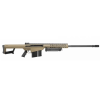
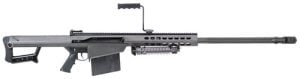
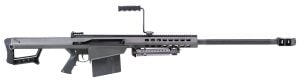
You can’t own a new M2 as a civilian, but you can buy a semi-auto .50 BMG. The Barrett M82A1 is the one that made the cartridge famous as a sniper round, and we review it in our Barrett M82A1 review. For the rest of the field see the best .50 BMG rifles and our .50 BMG buyer’s guide:
His Sidearm: The Colt M1911A1
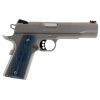
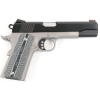
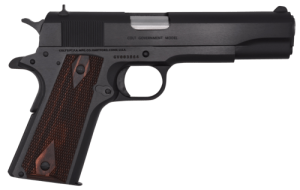
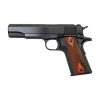
Like almost every Marine of his era, Hathcock carried a Colt M1911A1 in .45 ACP as his sidearm. The M1911A1 was the standard American military pistol from the 1920s until the Beretta M9 replaced it in the 1980s, and Marine special units kept 1911s in service long after that. Colt still builds the Government Model on the same pattern. Read our Colt 1911 Government review and compare the alternatives in the best 1911 pistols under $1,000:


Why They Called Him White Feather
Hathcock wore a white feather in the band of his bush hat, and the North Vietnamese Army and the Viet Cong called him Lông Trắng, “White Feather.” A platoon of enemy snipers was reportedly sent to hunt him down. Marines in the same area began wearing white feathers of their own to confuse the counter-snipers, knowing that made them targets too.
The Famous Shots
Through the enemy’s scope
Hathcock’s best-known kill was an enemy sniper known as “the Cobra,” who’d already killed several Marines near Hill 55, the firebase southwest of Da Nang where Hathcock worked, and who was believed to have been sent for Hathcock himself. Hathcock and his spotter, John Roland Burke, stalked him through the jungle. When Hathcock saw a glint of light off a scope in the bushes, he fired at it. The bullet went straight through the Cobra’s scope and killed him. Hathcock kept the enemy rifle as a trophy, turned it in and tagged it, and it was stolen from the armory.
People have argued about whether that shot is even possible. MythBusters tested it in 2006, found that the lenses stopped or deflected their bullets, and called it busted, then revisited it after viewers pushed back. A 2015 History channel documentary had a sniper team reenact it successfully, and a later YouTube test with replica rifles and scopes showed a bullet passing through. Most people now accept it can happen, with a lot of luck.
The general
Only once did Hathcock take the white feather off his hat in Vietnam. Days before the end of his first tour, he volunteered to kill an enemy officer said to be a general. He crawled more than 1,500 yards across open ground over four days and three nights without sleep, was nearly stepped on as he lay camouflaged in the grass, and nearly bitten by a bamboo viper without daring to move. When the officer stepped out of his camp, Hathcock fired one shot to the chest and killed him. The officer’s rank has never been confirmed, and the story is Hathcock’s account.
The “Apache” woman
Hathcock said in interviews that he killed a Viet Cong platoon leader nicknamed “the Apache,” a woman known for torturing captured Marines near Hill 55. Historians including Jerry Lembcke have questioned whether she existed at all, so treat that one as unproven.
How Many Kills Did Carlos Hathcock Have?
He’s credited with 93 confirmed kills, the number that gave Charles Henderson’s 1986 biography Marine Sniper: 93 Confirmed Kills its title. In Vietnam a kill only counted as confirmed if the spotter and a third party, who had to be an officer, witnessed it. Snipers working behind enemy lines rarely had an officer along, so the confirmed number is well below what he actually shot. That’s also why the figure is hard to check today, and some historians treat it with caution.
Hathcock isn’t the top American sniper by count. Chuck Mawhinney holds the Marine Corps record with 103, Finland’s Simo Häyhä has the highest credited count of any sniper in history, and Army Sergeant Adelbert Waldron held the American record with 109 until Navy SEAL Chris Kyle passed it in Iraq. We cover the rifles Kyle used in Chris Kyle’s guns, and rank the great names in the most famous military snipers in the world.
The Fire, the Silver Star and the Sniper School
Hathcock went home in 1967, missed the Corps, and came back to Vietnam in 1969 to command a sniper platoon. On September 16, 1969, the amphibious tractor he was riding on hit an anti-tank mine on Highway 1, north of Landing Zone Baldy, and burst into flames. Covered in burning gasoline, he pulled seven Marines off the vehicle before someone dragged him away and put him in water. He had third-degree burns to his face, arms and legs, and he was evacuated from the hospital ship USS Repose to a naval hospital in Tokyo and on to the burn center at Brooke Army Medical Center in San Antonio.
He got the Purple Heart. The Silver Star for pulling those Marines out of the fire didn’t come until November 12, 1996, nearly three decades later, and the photo at the top of this page is from that ceremony at Quantico. His son, Carlos Hathcock III, became a Marine too and retired as a gunnery sergeant.
After Vietnam he helped establish the Marine Corps Scout Sniper School at Quantico, teaching through near-constant pain. In 1975 he was diagnosed with multiple sclerosis. He was medically separated from the Marines just 55 days short of 20 years’ service, and he fell into depression when he had to leave. He later trained police snipers and select military units, including SEAL Team Six. Hathcock died of complications of multiple sclerosis on February 22, 1999, in Virginia Beach, at 56, and he’s buried at Woodlawn Memorial Gardens in Norfolk, Virginia.
The M25 White Feather and His Legacy
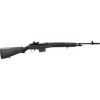
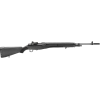
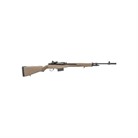
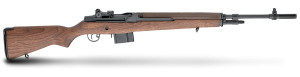
Springfield Armory honored him with the M25 “White Feather,” an accurized version of its M1A Super Match with a McMillan stock and a match barrel, with Hathcock’s signature and a white feather logo on the receiver. It was a tribute rifle, not something he took to war. Today the standard M1A is Springfield’s civilian version of the M14, and we review it in our Springfield M1A review:


His name is on a sniper range at Camp Lejeune and on the Carlos Hathcock Range Complex at Marine Corps Air Station Miramar, and the Marine Corps League and the National Defense Industrial Association both give out awards named for him. Hollywood borrowed from him too. The 1993 film Sniper, starring Tom Berenger, was loosely based on his first tour, Saving Private Ryan copied the through-the-scope shot, and novelist Stephen Hunter has said Hathcock inspired his sniper hero Bob Lee Swagger.
Hathcock once said he survived by getting “in the bubble,” a state of total concentration on his rifle, his surroundings and his target. He also said he never enjoyed killing: “It was the hunt, not the killing.” If you want a rifle in his spirit, start with our best sniper rifles and best military sniper rifles guides, and put good glass on it from our best rifle scopes list. Arkansas shooters can check Arkansas gun laws, and Virginia shooters Virginia gun laws.
Frequently Asked Questions
What rifle did Carlos Hathcock use?
His main rifle in Vietnam was a Winchester Model 70 in .30-06 Springfield with an 8-power Unertl scope. He also used the Marine Corps M40, a Remington 700-pattern bolt-action in 7.62 NATO with a Redfield 3-9x scope, and on some occasions an M2 Browning .50 caliber machine gun fitted with an 8x Unertl scope.
What gun did Carlos Hathcock use for his longest shot?
An M2 Browning .50 caliber machine gun with an 8x Unertl scope on a bracket made by Navy Seabees. In 1967 he killed a Viet Cong guerrilla at 2,500 yards, or 2,286 meters, the longest confirmed sniper kill until Canadian snipers beat it in Afghanistan in 2002.
How many confirmed kills did Carlos Hathcock have?
He is credited with 93 confirmed kills in Vietnam. A kill only counted if his spotter and an officer witnessed it, which was rare behind enemy lines, so the confirmed figure is lower than the number he actually shot.
Why was Carlos Hathcock called White Feather?
He wore a white feather in the band of his bush hat, and the North Vietnamese Army and Viet Cong called him Long Trang, White Feather. Other Marines in his area started wearing white feathers to confuse the enemy snipers sent to hunt him.
Did Carlos Hathcock really shoot an enemy sniper through his scope?
That is his account. He and spotter John Roland Burke stalked an enemy sniper called the Cobra near Hill 55, and Hathcock fired at the glint of a scope, killing the sniper through it. MythBusters first called it busted in 2006, but later tests, including a 2015 History channel reenactment, showed a bullet can pass through a scope.
What pistol did Carlos Hathcock carry?
A Colt M1911A1 in .45 ACP, the standard Marine Corps sidearm of the Vietnam era.
What is the Springfield M25 White Feather?
A tribute rifle Springfield Armory built in Hathcock's honor: an accurized M1A Super Match with a McMillan stock and a match barrel, with his signature and a white feather logo on the receiver. He didn't carry it in Vietnam.
5,743+ Gun & Ammo Deals
Updated daily from 200+ top retailers. Filter by category, caliber, action type, and price.
Related Guides