

Last updated October 2026
Some of the links below are affiliate links, meaning at no additional cost to you, we may earn a commission if you click through and make a purchase.
- Treat every gun as loaded
- Point the muzzle in a safe direction
- Keep your finger off the trigger until you’re ready to shoot
- Know your target and what’s beyond
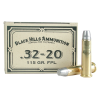
Yes, .32-20 ammo is still made. Remington and Winchester each catalog a 100-grain lead load at 1,210 fps, HSM and Black Hills load 115-grain cowboy ammunition, and Buffalo Bore, Choice and Old South fill in around them. On October 1, 2026, boxes of 50 started under $42 on our price cards.
That catches people off guard. The cartridge dates from 1882, and the forums are full of owners who were told their only option was to load their own.
The harder question is which box suits your gun. A new Remington box says Rifle on it and holds the standard load. A Buffalo Bore box says +P, and we’d keep it out of anything old. And the high-velocity rounds that came with grandpa’s Winchester belong on a shelf.
This guide covers who makes 32-20 Winchester ammo, where to find 32-20 ammo for sale and what it costs per round, what’s safe in which rifle or revolver, and what the round is good for. New to buying online? Our ammo buying guide covers the basics.
Quick answer
For an old revolver or lever action, buy 115-grain lead cowboy ammunition from HSM or Black Hills once a gunsmith has passed the gun. Cowboy loads are the mildest 32-20 ammo sold, and HSM’s were the cheapest boxes our dealers had. The 100-grain Winchester and Remington loads are the standard load at 1,210 fps from a rifle, and the word Rifle on those boxes is a product line, not a warning. Leave +P for modern guns.
- Price in October 2026: about $0.83 to $1.00 a round for HSM cowboy loads, $0.91 to $0.98 for Winchester, $1.94 to $2.33 for Remington
- Also sold as: .32 WCF, .32-20 WCF, .32-20 Win and .32 Winchester
- Bullet: .312 in., in a rimmed bottleneck case
- Not the same thing: .32 Winchester Special, .32 H&R Magnum, .32 S&W Long and .327 Federal Magnum will not work in a .32-20
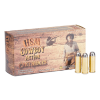
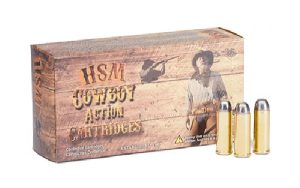
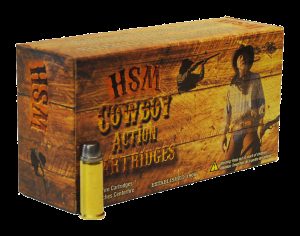
How we tested: Every pick here is ranked against our testing methodology. Minimum round counts, accuracy and reliability protocols, the failures that disqualify a gun.
.32-20 Winchester at a Glance
The .32-20 Winchester is a rimmed, bottleneck cartridge that Winchester introduced in 1882 for the Model 1873 rifle. It fires .312-inch bullets, and its SAAMI maximum average pressure is 16,000 CUP.
| Spec | .32-20 Winchester |
|---|---|
| Names | .32-20 Winchester, .32 WCF, .32-20 WCF, .32-20 Win, .32 Winchester, .32-20 Marlin |
| Bullet diameter | .312 in. |
| Case | Rimmed, bottleneck with a very slight shoulder, 1.315 in. long, with a .408 in. rim |
| Overall length | 1.540 to 1.592 in. |
| US pressure limit | 16,000 CUP, in the rifle standard only. SAAMI lists no psi figure for this cartridge |
| European pressure limit | 2,100 bar by transducer |
| Standard factory load | 100 gr lead at 1,210 fps and 325 ft-lb from a rifle |
| Rifling | 1 turn in 20 in. |
| Introduced | 1882, in the Winchester Model 1873 |
| Guns | Winchester 1873 and 1892, Marlin 1894, Colt Lightning rifle, Colt Single Action Army, Colt Police Positive Special, Smith & Wesson Hand Ejector, modern Cimarron and Taylor’s replicas |
| Status | In production |
32-20 Ammo: The Good and the Bad
The good news on 32-20 ammo is that Winchester and Remington both load a 100-grain lead bullet at 1,210 fps, and SAAMI holds the cartridge to 16,000 CUP. The bad news is mostly about price and old boxes.
Pros
- At least seven makers load it
- HSM cowboy loads start under a dollar
- Mild pressure suits old guns
- One load for rifle and revolver
- Easy on small game meat
Cons
- Remington boxes cost $97 and up
- A weak round can stick a bullet
- Too weak for deer
- Plus-P boxes sit beside standard ones
- Old high-velocity boxes still turn up
Table of Contents
Who Still Makes 32-20 Ammo in 2026
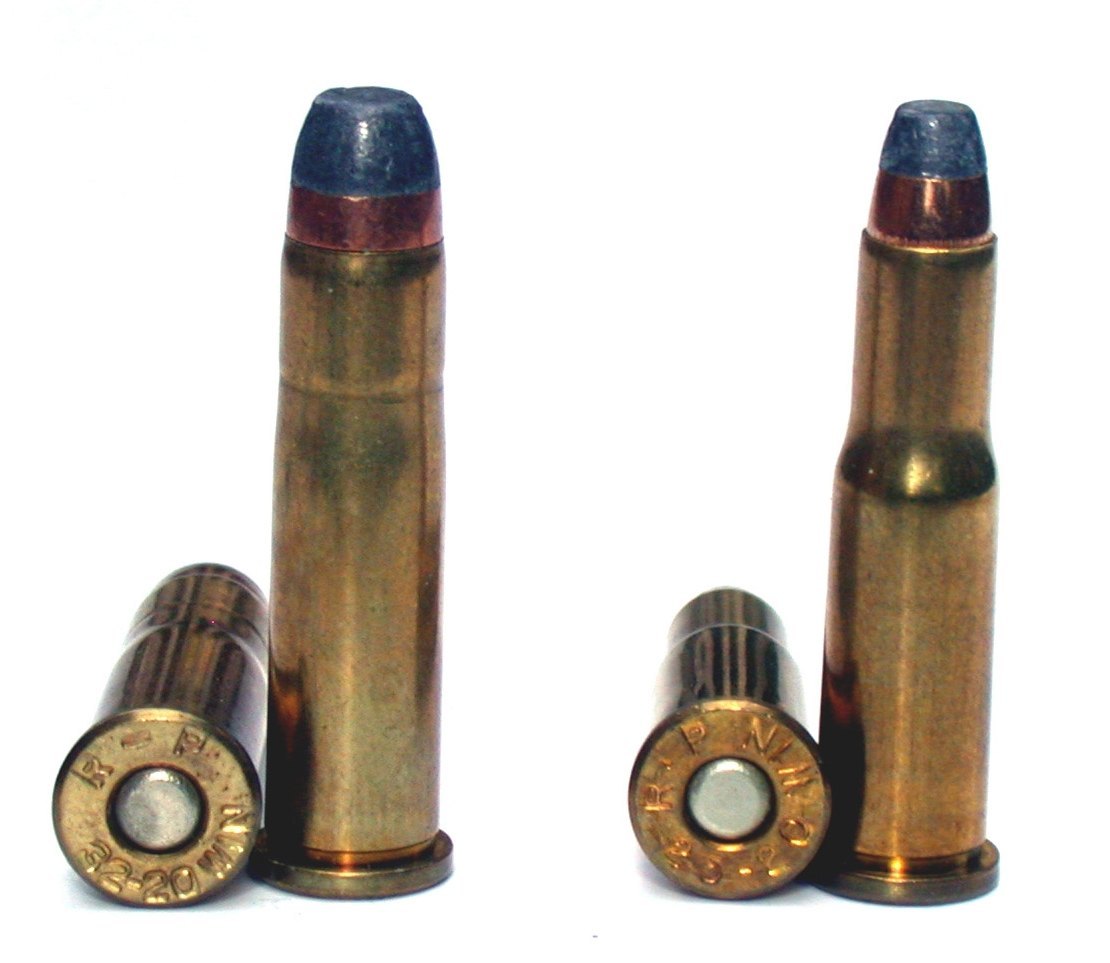
At least seven companies list 32-20 ammo in 2026. Remington and Winchester each catalog a 100-grain lead bullet at 1,210 fps, HSM and Black Hills load 115-grain lead cowboy ammunition, which Black Hills lists at 800 fps, and Buffalo Bore, Choice and Old South make specialty loads.
So is 32-20 ammo still made? Yes. The table shows what each maker’s own page listed on October 1, 2026.
| Maker and load | Bullet | Listed velocity | What it’s for |
|---|---|---|---|
| Winchester Super-X | 100 gr lead flat nose | 1,210 fps, 325 ft-lb | The standard load |
| Remington High Performance Rifle | 100 gr lead round nose | 1,210 fps, 325 ft-lb | The standard load |
| Black Hills Authentic Cowboy Action | 115 gr flat point lead | 800 fps from a 5.5 in. barrel | Cowboy action and old guns |
| HSM Cowboy Action | 115 gr round nose flat point lead | Not on HSM’s own site. It is sold through dealers | Cowboy action and old guns |
| HSM 100 gr JHP | 100 gr jacketed hollow point | 980 fps, 213 ft-lb | HSM calls it “optimized for your classic revolver” |
| Choice Cowboy Action | 115 gr coated lead | 610 fps from a 4.5 in. pistol, 845 fps from a 20 in. rifle | Cowboy action. Choice says it meets the SASS power factor |
| Choice 100 gr Hornady XTP and 115 gr Range & Target | Jacketed hollow point and coated lead | 1,675 and 1,605 fps from a 20 in. rifle | Choice doesn’t say which guns |
| Buffalo Bore +P | 115 gr hard cast, and an 85 gr copper hollow point | 2,000 and 2,100 fps from a rifle | Guns made of smokeless-era steel only |
| Old South | 115 gr lead over black powder, box of 20 | Not published | Period-style black powder shooting |
The two big-maker 32-20 Winchester ammo loads are twins on paper. Winchester and Remington both publish 100 grains at 1,210 fps for 325 foot-pounds. Winchester calls its bullet a lead flat nose and Remington calls its own a lead round nose.
The cowboy loads are the other half of the market. Black Hills lists its 115-grain bullet at 800 fps from a 5.5-inch test barrel, and HSM’s 115-grain load was the one our dealers stocked most widely.
Who doesn’t make it? Magtech, Grizzly and Steinel had no 32-20 ammo on their sites when we checked. Old Ultramax boxes still turn up, but we couldn’t find a current Ultramax catalog. It’s a healthier list than we found for 30-40 Krag ammo, where every big-maker box holds the same 180-grain load.

What 32-20 Ammo Costs in 2026
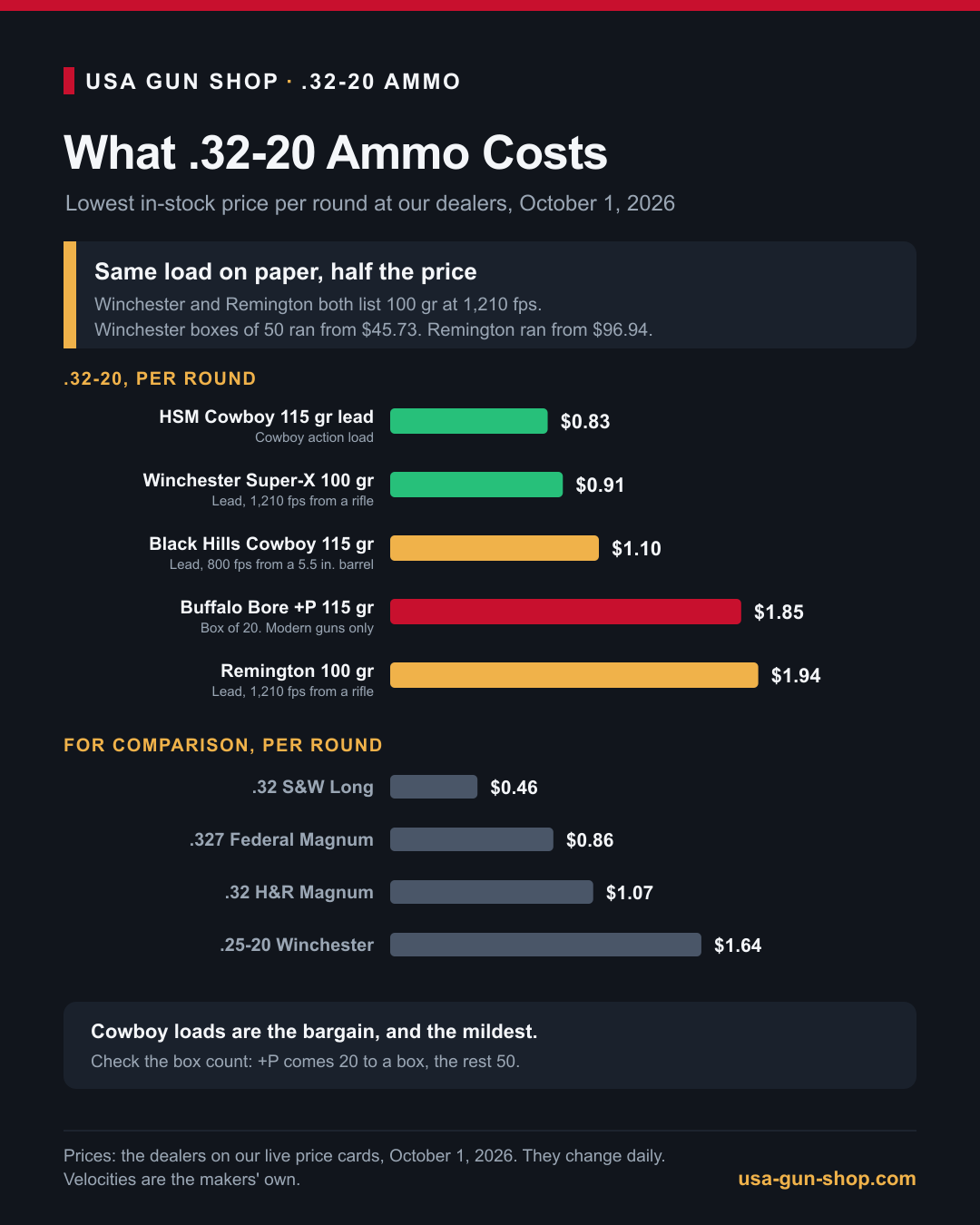
32-20 ammo for sale at our dealers cost $0.83 to $1.00 a round for HSM cowboy loads and $1.94 to $2.33 a round for Remington on October 1, 2026, with Winchester and Black Hills in between.
Prices are for a box of 50 unless the table says otherwise, from the dealers in our catalog that day. The live cards search more dealers, so you may see a lower price there. Prices move, and so does availability.
| Load | Box price | Per round |
|---|---|---|
| HSM Cowboy Action 115 gr lead | $41.63 to $49.99 | $0.83 to $1.00 |
| Winchester Super-X 100 gr lead | $45.73 to $48.99 | $0.91 to $0.98 |
| Black Hills Cowboy Action 115 gr lead | $54.98 to $58.99 | $1.10 to $1.18 |
| Remington 100 gr lead round nose | $96.94 to $116.49 | $1.94 to $2.33 |
| Buffalo Bore +P, box of 20 | $36.99 and $38.99 | $1.85 and $1.95 |
Two things stand out in 32-20 ammo prices. Winchester and Remington publish the same bullet weight, velocity and energy, and the cheapest Winchester box cost less than half the cheapest Remington box. Remington’s own site lists its load at $135.99, above what any of our dealers charged.
And the 32-20 cowboy loads are the bargain. They carry a plain lead bullet at low speed, they’re what cowboy action shooters burn through, and they were the easiest 32-20 ammo to find at our dealers.
Watch the box count when you compare. The Buffalo Bore +P box looks like the cheapest thing on some dealer pages because it holds 20 rounds. Per round it costs more than either cowboy load.
Against its neighbors, the .32-20 sits in the middle. On the same day .32 S&W Long started at $0.46 a round on our cards, .327 Federal Magnum at $0.86, .32 H&R Magnum at $1.07 and .25-20 at $1.64. Our ammo price report tracks the common calibers.
Supply is the catch. Owners on the forums report that the big makers load this round in batches, and American Rifleman wrote in 2021 that shooters were “pretty much relegated to handloading the cartridge.” That isn’t true today. But when you see your load, buy two boxes and keep the brass.
32-20 Revolver Ammo and Rifle Ammo: What’s Safe in Your Gun
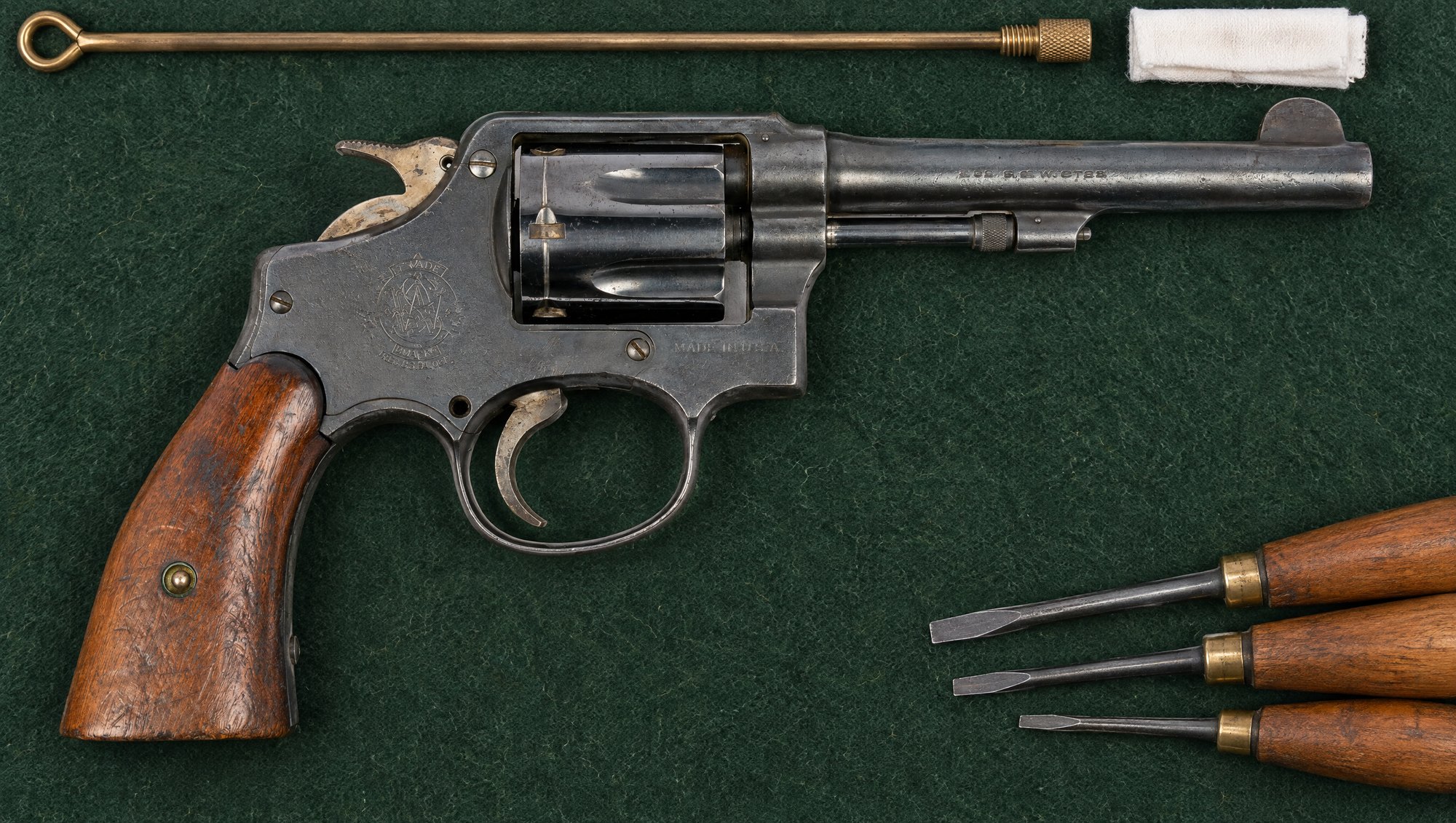
The standard .32-20 loads are built to SAAMI’s 16,000 CUP limit, which was set with the weakest old guns in mind, so one box serves rifles and revolvers alike. The age and condition of the gun decide the rest.
So there’s no separate 32-20 revolver ammo on today’s shelf, just standard loads, milder cowboy loads and +P. Find your gun in the table.
| Gun | Action and era | Cowboy and standard loads | +P | What to do first |
|---|---|---|---|---|
| Winchester Model 1873, original | Toggle link, black powder era | Cowboy loads are the mild choice, in a rifle that passes inspection | No | Gunsmith check. Some owners shoot black powder loads only |
| Winchester Model 1892, original | Twin locking blocks | Yes, in a rifle that passes inspection | We wouldn’t | Gunsmith check on any rifle this old |
| Marlin Model 1889, original | Lever action, black powder era | Cowboy loads, in a rifle that passes inspection | No | Gunsmith check |
| Marlin Model 1894, original | Lever action | Yes, in a rifle that passes inspection | We wouldn’t | Gunsmith check |
| Colt Lightning pump rifle, 1884 to 1904 | Slide action, black powder era | Cowboy loads, in a rifle that passes inspection | No | Gunsmith check |
| Colt Single Action Army and Bisley made before 1900 | Single action, black powder era | The sources split. See the serial numbers below | No | Gunsmith who knows Colts |
| Colt Single Action Army and Bisley made after 1900 | Single action, smokeless era | Yes, in a gun that passes inspection | We wouldn’t | Gunsmith check |
| Colt Police Positive Special and Army Special | Double action, from 1907 and 1908 | Yes, in a gun that passes inspection | No | Gunsmith check, and have the bore looked at |
| Smith & Wesson .32-20 Hand Ejector, 1899 to 1939 | Double action | Yes, in a gun that passes inspection | No | Gunsmith check, and have the bore looked at |
| Cimarron and Taylor’s replicas of the 1866, 1873 and Colt single actions | Modern steel, old designs | Yes | No in 1866 and 1873 replicas. Uberti’s manual calls for SAAMI or C.I.P. standard ammunition | Read the maker’s manual |
| Marlin 1894CL, Browning Model 53 replica, Ruger Blackhawk | Modern | Yes | These are the guns it’s for | Read the maker’s manual |
Brian Pearce, writing in Handloader, says the current Winchester and Remington loads are, as a rule, safe “in any .32-20 revolver in good operating condition.” The last four words carry the weight. A gun that’s loose, cracked or ringed isn’t safe with any box.
Colt serial numbers and smokeless powder
Colt single actions are the hard case. A Colt history quoted by John Taffin says the company didn’t guarantee the Single Action Army for smokeless powder until 1898. The usual cut-off quoted is serial number 192,000, in 1900. Writers quote four different lines in all, from serial 165,000 to 203,000.
Taffin draws his own line at serial 203,000, and shoots only black powder or its substitutes in Colts older than that. Pearce is more relaxed about standard loads in sound guns. With a Colt built before 1900, we’d side with Taffin until a gunsmith who knows them says otherwise.
The 1873 against the 1892
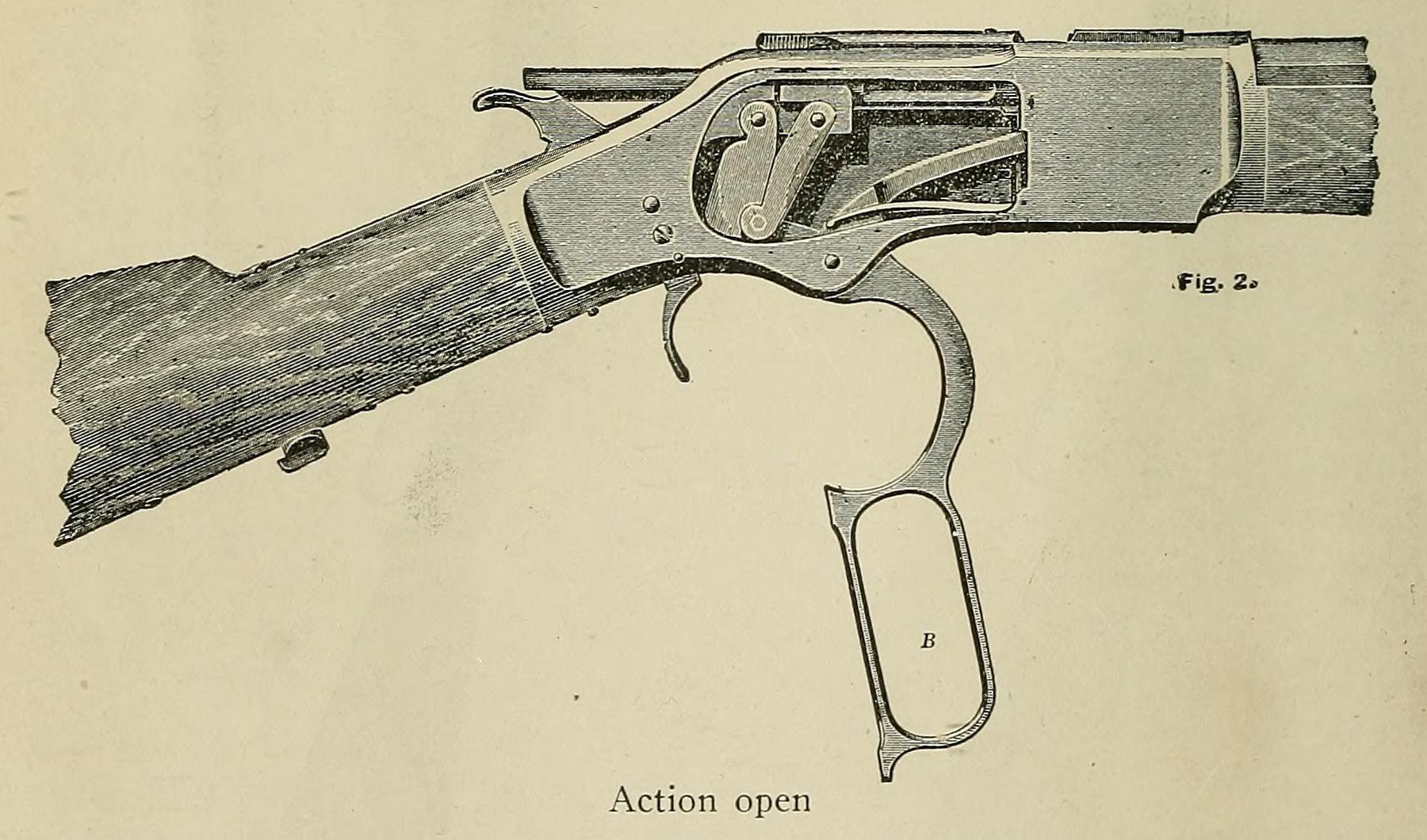
On the rifle side, the Model 1873 is a toggle-link action and the Model 1892 locks with twin locking blocks. American Rifleman calls the 1892 a strong rifle. It also says Model 1873 rifles and first-generation Colt SAAs “should not be subjected to hot loads.”
The replicas follow their manuals. Uberti’s manual for its single actions calls for commercially loaded cartridges made to SAAMI or C.I.P. standards. Our Winchester 1892 review and Colt Single Action Army guide cover the guns themselves.
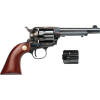
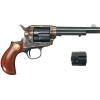
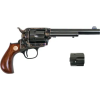
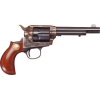
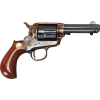
Shopping for the gun? This card shows what our dealers have in .32-20 right now, which is Cimarron single actions and lever guns. The best lever-action rifles roundup and our Uberti 1873 Cattleman review cover the modern options.
Why Standard 32-20 Loads Are Mild: 16,000 CUP
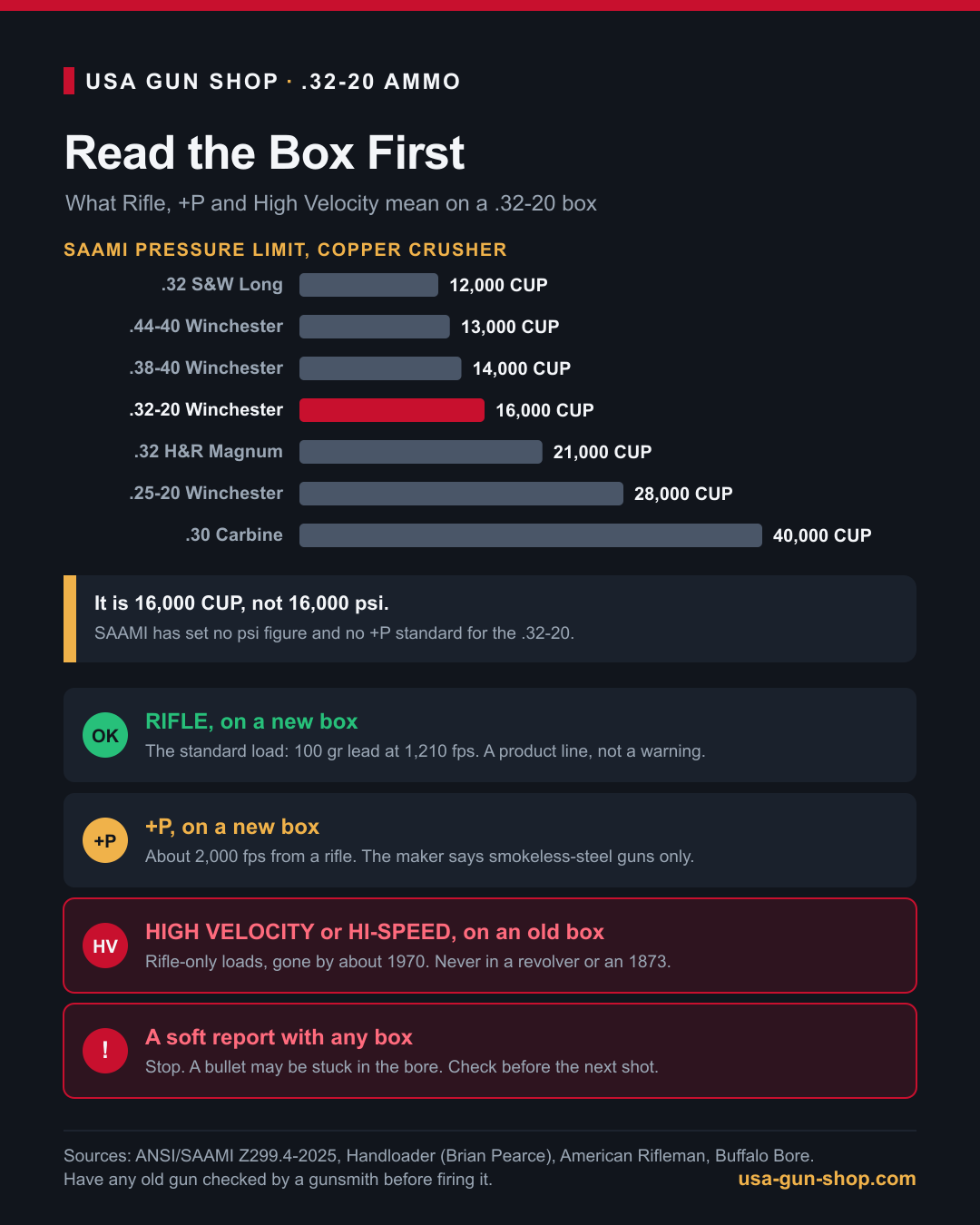
SAAMI limits the .32-20 Winchester to 16,000 CUP, measured by the old copper crusher method, and where the psi figure should be its table prints “Piezo Pressures Not Established.” The cartridge appears in the rifle standard only, SAAMI Z299.4.
So the “16,000 psi” you’ll see online is the right number with the wrong unit. CUP and psi aren’t the same scale, and one can’t be converted into the other. SAAMI’s pistol and revolver standard has no .32-20 entry at all, and there is no SAAMI +P standard for it. You can read the tables in the SAAMI standards.
Europe’s C.I.P. does publish a transducer figure, 2,100 bar. It’s a different test method, so don’t read it as a higher limit. Here is where the .32-20 sits against its neighbors in SAAMI’s crusher columns:
| Cartridge | SAAMI limit, copper crusher |
|---|---|
| .32 S&W Long | 12,000 CUP |
| .44-40 Winchester | 13,000 CUP |
| .38-40 Winchester | 14,000 CUP |
| .32-20 Winchester | 16,000 CUP |
| .32 H&R Magnum | 21,000 CUP |
| .25-20 Winchester | 28,000 CUP |
| .30 Carbine | 40,000 CUP |
Why so low? Terry Wieland put it this way in Handloader: SAAMI standards for the .32-20 “are geared to the capabilities of the weakest brethren.” The limit was written around 1880s rifles and revolvers, and the standard loads stay inside it.
Rifle on the Box, 32-20 +P and the Old High-Velocity Loads
Three kinds of 32-20 ammo box cause confusion: a new box marked Rifle, a new box marked +P, and an old box marked High Velocity or Hi-Speed. Only the first holds the standard 16,000 CUP load at 1,210 fps.
A new box that says Rifle
Remington sells its load as High Performance Rifle, and dealers file Winchester’s Super-X under rifle ammunition. Owners read that as a warning. It’s the name of the product line.
Both are the 100-grain lead load at 1,210 fps. SAAMI’s own reference load for the cartridge is 100 grains at 1,200 fps. Neither maker’s page says which guns the load is for, so we can’t quote them on revolvers.
Pearce does address it, as quoted above. He adds that the 1,210 fps rifle figure works out to around 830 to 860 fps in revolvers with 4 to 6 inch barrels.
A new box that says +P
Buffalo Bore sells two loads it calls 32-20 +P. One drives a 115-grain hard cast bullet at 2,000 fps from a rifle and 1,400 fps from a revolver. The other is an 85-grain copper hollow point at 2,100 fps from a rifle.
There is no SAAMI +P standard for this cartridge, so 32-20 +P is the maker’s own label. Buffalo Bore’s page says to use the load “only in firearms made with barrel steel designed for smokeless powder,” and to take a doubtful gun to a gunsmith.
That puts a rifle-class load back on the shelf beside the mild ones. American Rifleman names the Marlin 1894CL and the Ruger Blackhawk as guns that can take hotter loads. We’d keep +P to guns like those, and out of any 1873, any black powder era gun and any replica whose manual calls for standard ammunition.
Two Choice loads also run fast, at 1,675 and 1,605 fps from a 20-inch rifle barrel, and Ventura lists a new 100-grain load it calls Hi Speed. Neither maker’s page says which guns those loads are for. Ask before you put them in anything old.
An old box that says High Velocity or Hi-Speed
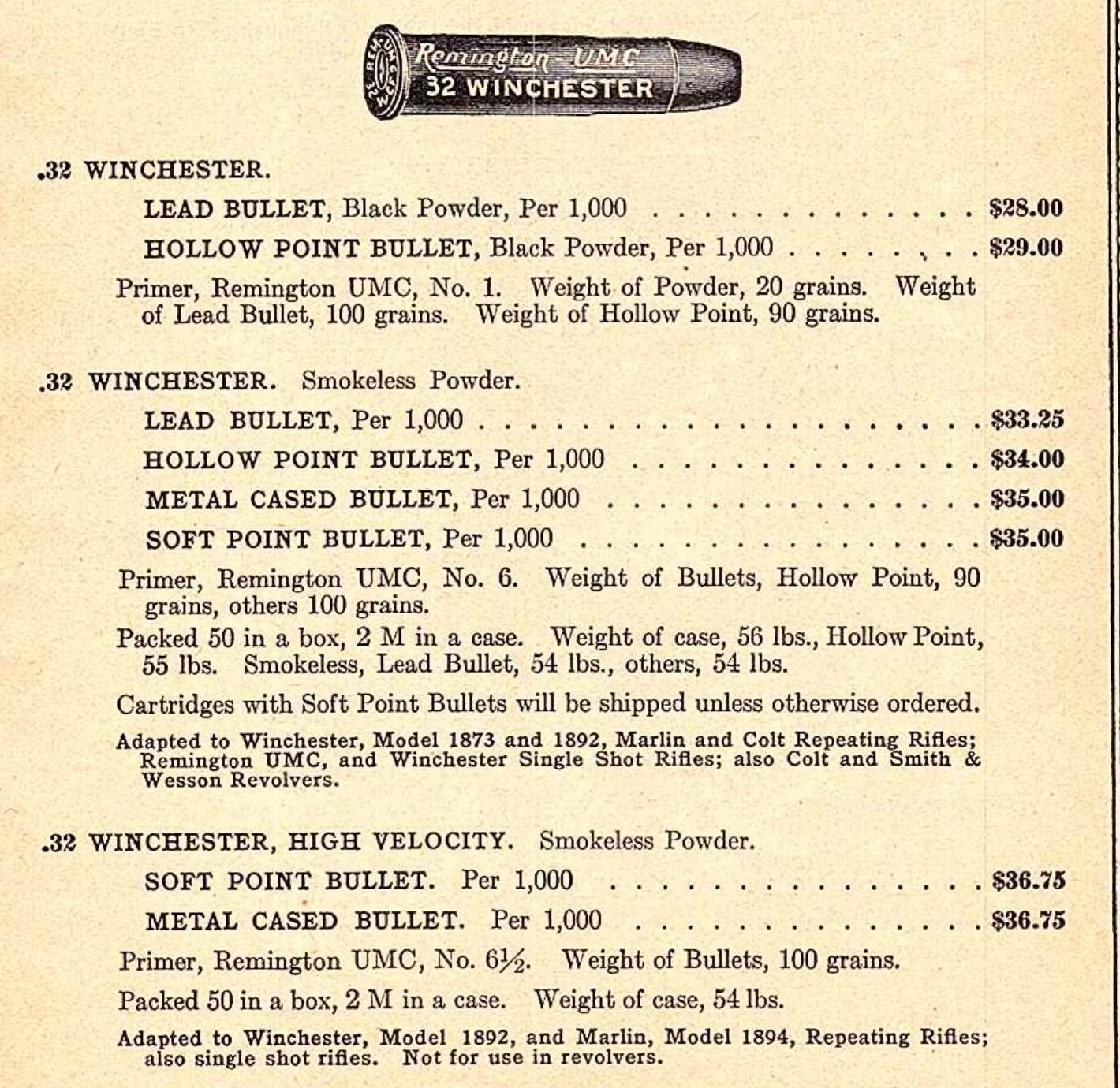
For decades Winchester, Remington and Western sold a second tier of .32-20 for strong rifles only. Pearce traces a Winchester load at 1,575 fps to 1900 and a 115-grain load at 1,640 fps by 1914, which ran up to 28,000 CUP. Remington’s Hi-Speed pushed an 80-grain bullet to a listed 2,100 fps.
American Rifleman chronographed an old box of Western Super-X High Velocity at 1,934 fps from a Model 1892 in 2025. The box carried this warning: “Do Not Use in Pistols, Revolvers or M73 Winchester Rifles.” Pearce says the last of these loads were cataloged around 1970.
They still turn up in estate lots. SAAMI’s sheet of unsafe combinations says not to use .32-20 Winchester High Velocity in handguns chambered for .32-20 Winchester, and Uberti’s manual tells owners never to use cartridges marked High Speed or High Velocity. Treat any such box as a collectible. The tells are the words High Velocity, Hi-Speed or High Speed on an old box, and in many cases a light jacketed bullet.
The Other Trap: A Bullet Stuck in the Barrel
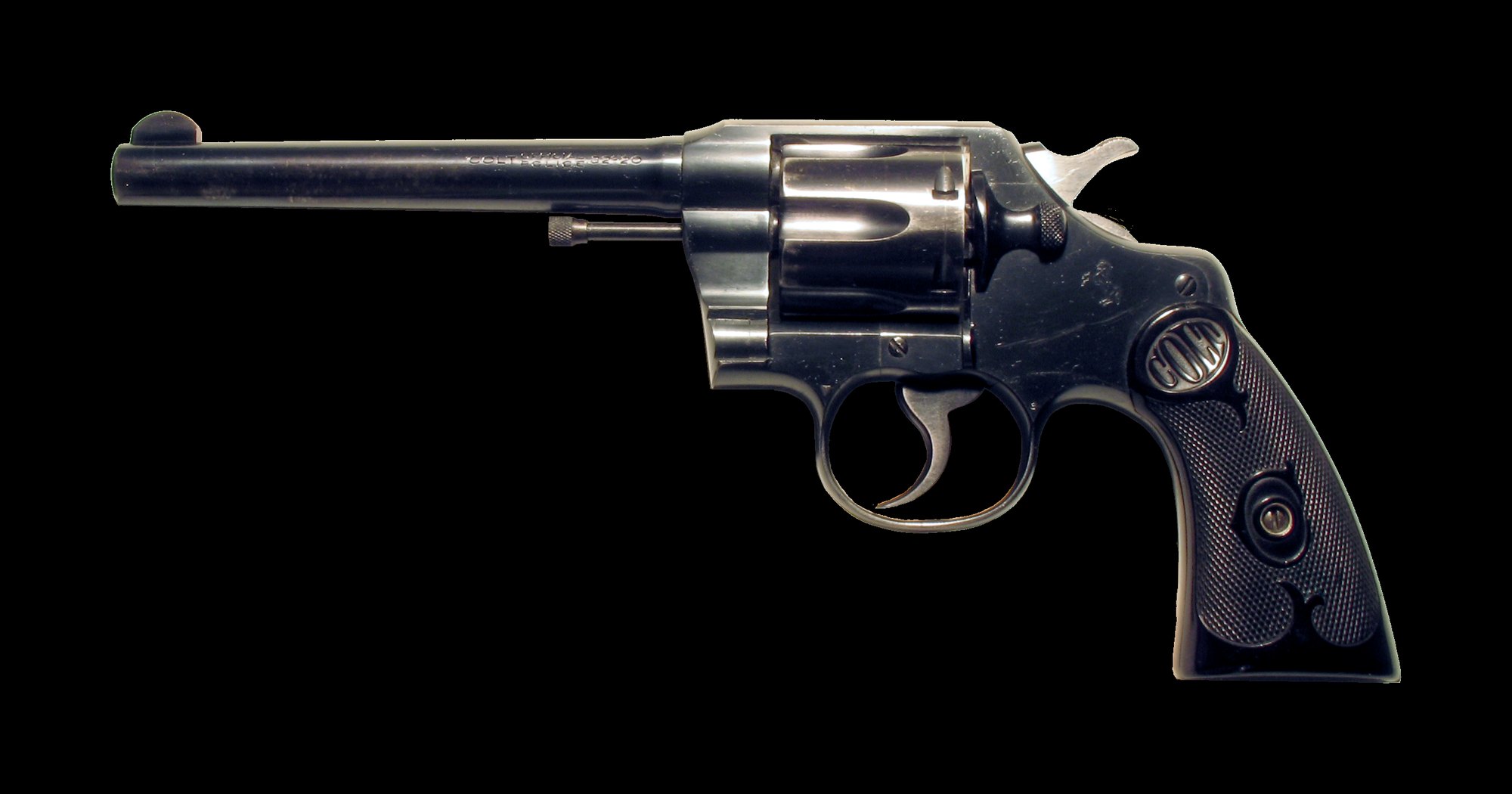
The .32-20’s quieter hazard is too little pressure. A light load can leave a bullet lodged in the bore, and a shot fired behind it can ring or burst the barrel. Two Handloader writers describe it with factory ammunition.
Mike Venturino fired Remington factory rounds with 100-grain jacketed soft points after pointing the muzzle down, and got a soft report “with the bullet stopping a few inches up the barrel.” He cleared the bore, tried again and got the same result.
Pearce explains why. When the powder rests against the base of the bullet, velocity can fall low enough that it “runs the risk of the bullet sticking in the bore.” It’s a small charge in a roomy case, and where the powder lies matters. He adds that the Black Hills cowboy load wasn’t prone to it in his tests.
- Stop on any soft report or light recoil. Keep the gun pointed downrange, unload it and make sure the bore is clear before the next shot.
- Have the bore of any used .32-20 checked for a ring or bulge before you buy it. One GUNS Magazine writer bought a Smith & Wesson that tumbled its bullets because the barrel was ringed. A ringed or bulged barrel is a gunsmith’s call, not something to shoot and see.
A click with no shot is a different problem. Keep the muzzle downrange and wait. The NRA’s range safety guidance says at least 60 seconds before opening the action.
Old barrels vary too. The specification is a .311 to .312 inch groove, but one Colt from about 1910 measured .314 inch, and Smith & Wesson chamber throats run .314 to .316. That’s mostly an accuracy problem. Jacketed bullets also wear vintage barrels faster, which is one more reason we feed old guns lead.
.32 WCF, .32 Winchester and the Names That Look Right but Aren’t
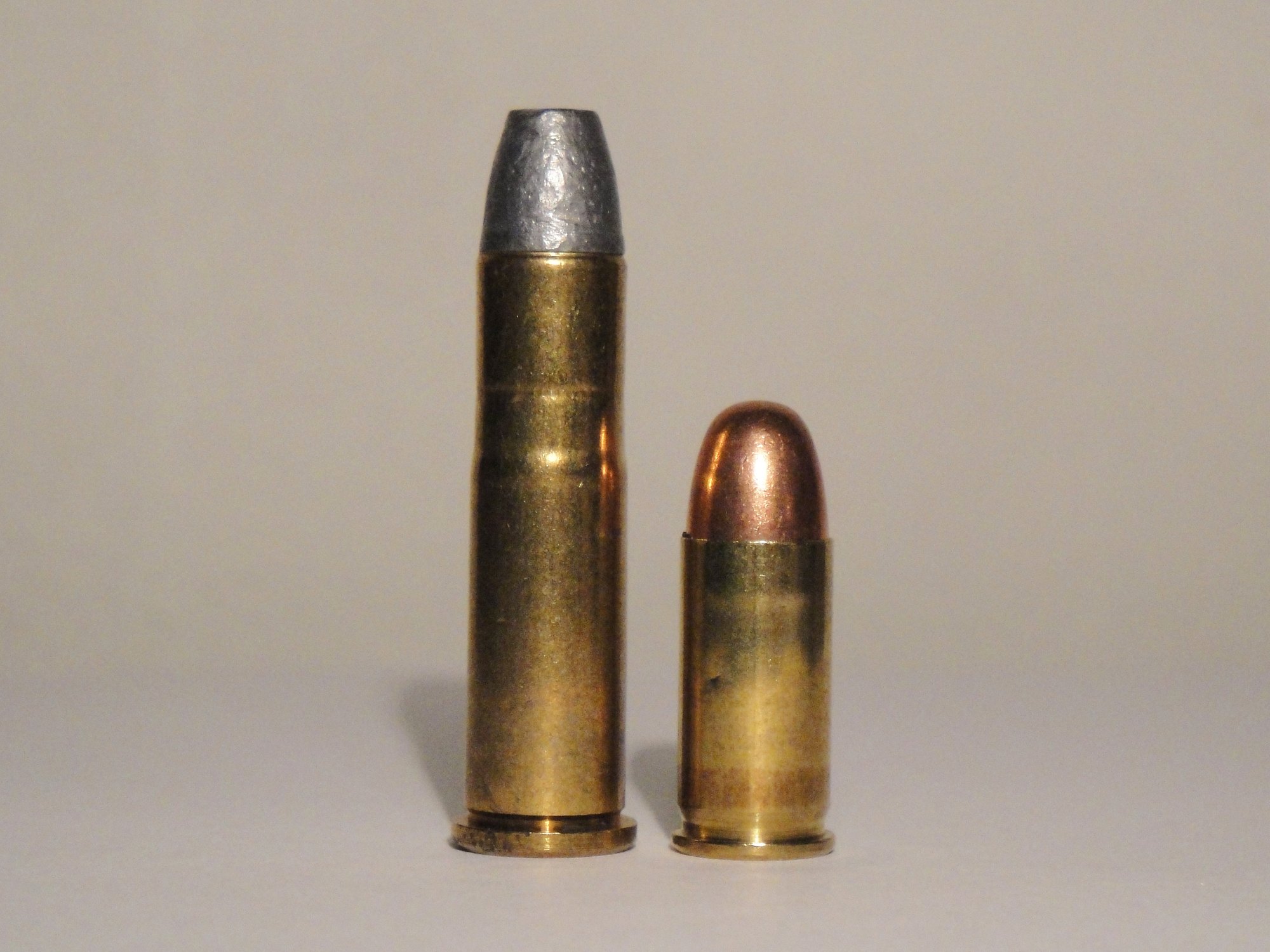
Boxes and barrels marked .32 WCF, .32-20 WCF, .32-20 Win, .32 Winchester and .32-20 Marlin all mean the same cartridge, so 32 WCF ammo and 32-20 ammo are one thing. WCF stands for Winchester Center Fire, and the 20 was 20 grains of black powder.
Markings vary by maker and era. Early Colt single actions are stamped .32 WCF, a Smith & Wesson from about 1912 reads .32 Winchester Ctg., and later Colts say .32-20. SAAMI’s advice is to match the headstamp on the cartridge to the marking on the gun.
| On the box | What it is | Fits a .32-20? |
|---|---|---|
| .32-20 Winchester, .32 WCF, .32-20 WCF, .32-20 Marlin | The same round under its old names | Yes |
| .32-20 High Velocity or Hi-Speed | The old rifle-only loads, gone from catalogs by about 1970 | It chambers. Don’t fire it in a revolver or an 1873 |
| .32 Winchester Special | A rifle round the size of a .30-30, with a .321 in. bullet | No |
| .32-40 | A long, straight black powder target cartridge of 1884 | No |
| .32 H&R Magnum | A straight revolver case with the same .312 in. bullet | No. Cimarron’s Lightning needs a second cylinder for it |
| .327 Federal Magnum | A lengthened .32 H&R Magnum that runs at 45,000 psi | No |
| .32 S&W and .32 S&W Long | Short, straight revolver cases | No |
| .32 Short Colt and .32 Long Colt | A separate Colt family | No |
| .25-20 Winchester | The .32-20 case necked down to .25 in 1895 | No |
| .30 Carbine | The M1 Carbine round, at 40,000 CUP | No |
One shortcut to skip: some owners report that a .32 S&W Long will chamber and fire in a .32-20 revolver. It’s the wrong cartridge for the chamber. SAAMI’s rule is that a round that fits a chamber isn’t necessarily safe to fire in it.
Old Boxes and 32-20 Black Powder Ammo
Old 32-20 ammo boxes are common because it was one of the most popular rifle cartridges of its day, and most are collectibles now. Treat any box of unknown age as corrosive primed, and expect weak or erratic rounds.
Sporting ammunition of the early smokeless era used corrosive primers, and mercuric ones until just before World War I. Corrosive residue holds moisture against steel. Mercury attacks the fired brass.
Writers who shot old boxes got mixed results. American Rifleman clocked an old Western 115-grain load at 1,139 fps from a Model 1892. GUNS Magazine had vintage Western rounds keyhole from a late 1930s Smith & Wesson. And Uberti’s rifle manual recommends against old ammunition altogether.
If you fire some anyway, read the box first, because High Velocity and Hi-Speed boxes aren’t for revolvers or 1873s. Afterward, flush the bore with hot water, dry it, then clean with bore solvent and oil as normal.
Want period-correct ammunition for a black powder era gun? Old South loads new 115-grain black powder 32-20 ammo in boxes of 20, at $49.99 when we checked.
32-20 Ballistics and What the Round Is Good For
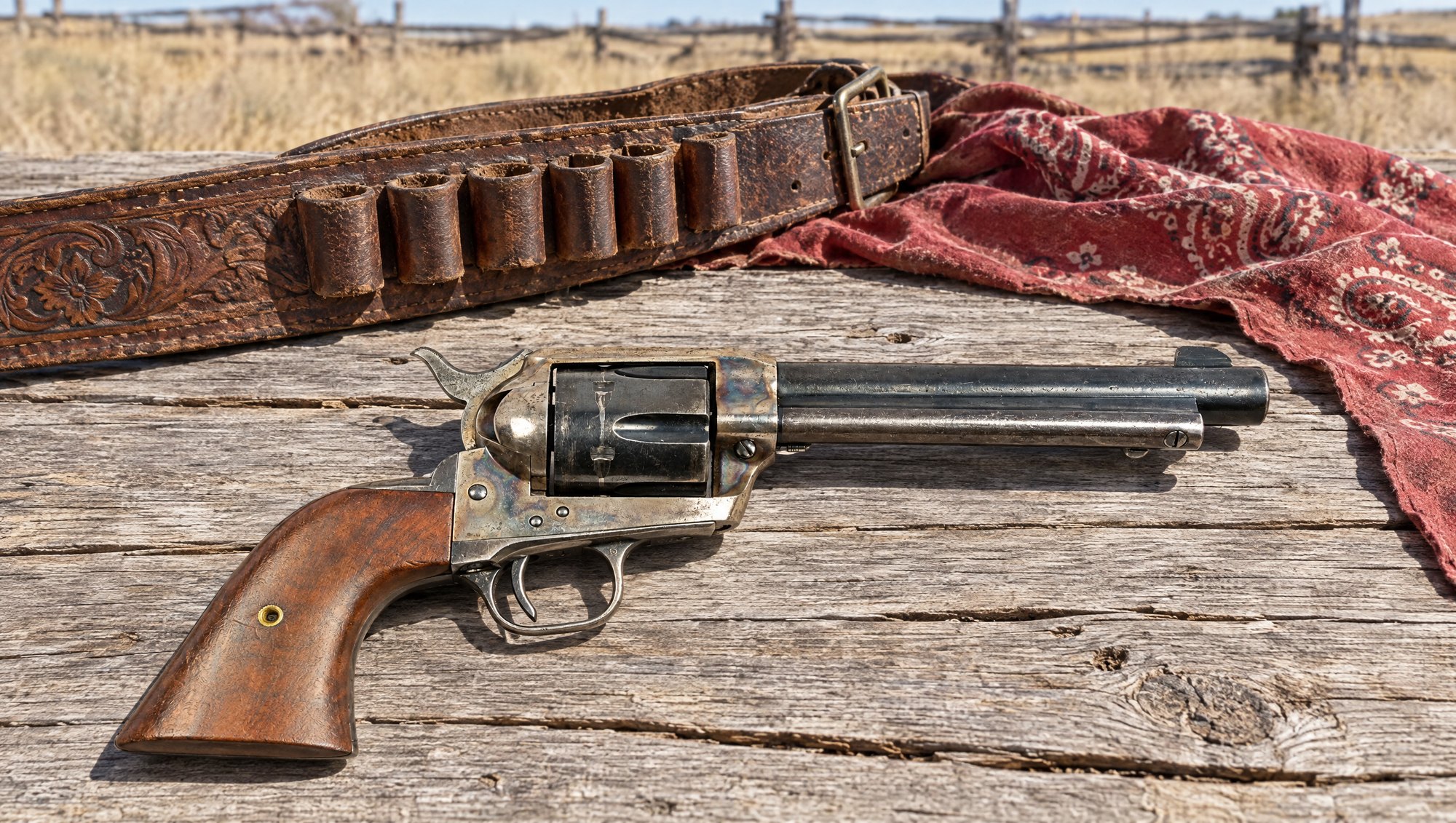
Factory 32-20 ballistics are modest: a 100-grain lead bullet at 1,210 fps for 325 foot-pounds from a rifle, falling to 1,021 fps and 232 foot-pounds at 100 yards on Remington’s chart. From a revolver the same load runs about 830 to 860 fps.
| Cartridge, Winchester factory load | Bullet | Muzzle velocity | Muzzle energy |
|---|---|---|---|
| .32-20 Winchester | 100 gr | 1,210 fps | 325 ft-lb |
| .25-20 Winchester | 86 gr | 1,460 fps | 407 ft-lb |
| .38-40 Winchester | 180 gr | 1,160 fps | 538 ft-lb |
| .44-40 Winchester | 200 gr | 1,190 fps | 629 ft-lb |
| .218 Bee | 46 gr | 2,760 fps | 778 ft-lb |
| .30 Carbine | 110 gr | 1,990 fps | 967 ft-lb |
Those 32-20 ballistics come from Winchester’s own listing, with five of its other loads for scale.
What is it good for? Small game, varmints up to about coyote size, plinking and cowboy action matches. Hunters liked it because it didn’t tear up much meat, and effective range is about 100 to 125 yards with standard loads. Our best small game rifles roundup covers the modern alternatives.
Is it a deer cartridge? Not with factory loads. Winchester sold it that way at first, and American Rifleman says the deer claim was “fairly quickly dismissed.” American Rifleman puts the original load at 399 foot-pounds, against 1,903 for a 150-grain .30-30.
32-20 vs 32 H&R Magnum
32-20 vs 32 H&R Magnum comes up because both fire .312-inch bullets, and Cimarron sells revolvers with a cylinder for each. Gun Digest says the H&R as factory loaded “essentially duplicated the performance of the .32-20.”
The cases don’t interchange. The H&R is a straight revolver case held to 21,000 CUP, and the .32-20 is a bottleneck held to 16,000. On our cards the 32-20 cowboy loads were cheaper per round, at $0.83 against $1.07.
The .327 Federal Magnum is in another class at 45,000 psi. Taffin writes that most shooters consider it the .32-20’s replacement in revolvers. But if you own a .32-20 rifle, one box still feeds both guns.
32-20 Myths vs. the Truth
The first 32-20 ammo myth to drop is that nobody makes it. At least seven makers list loads in 2026, and boxes of 50 started under $42 on our cards. Here are the other claims that come up on the forums.
| The myth | The truth |
|---|---|
| “Nobody makes it. You have to handload.” | At least seven makers list it, and Winchester and Remington both catalog a 100-grain load. |
| “A box marked Rifle will wreck a revolver.” | On a new Remington or Winchester box it is the product line. It holds the standard 1,210 fps load. |
| “All current factory ammo is safe in old guns.” | Not since +P arrived. Buffalo Bore limits its own load to guns made of steel meant for smokeless powder. |
| “Cowboy loads are safe in everything.” | They are the mildest loads sold, but a worn or damaged gun isn’t safe with any load. Gunsmith first. |
| “The limit is 16,000 psi.” | It is 16,000 CUP. SAAMI lists no psi figure for this cartridge. |
| “A .32-20 is a .32 Winchester Special.” | No. The Special is a far bigger rifle round with a .321 in. bullet. |
| “You can shoot .32 S&W Long in it.” | It may chamber, but it is the wrong cartridge for the gun. |
| “It’s a deer cartridge.” | Winchester said so in the 1880s. With factory loads it is a small game and varmint round. |
| “The ammo that came with the gun is fine to shoot.” | It may be a rifle-only High Velocity load, and old primers are corrosive. Old boxes are collectibles. |
Our Range Notes: Four Loads in a Rifle and a Revolver
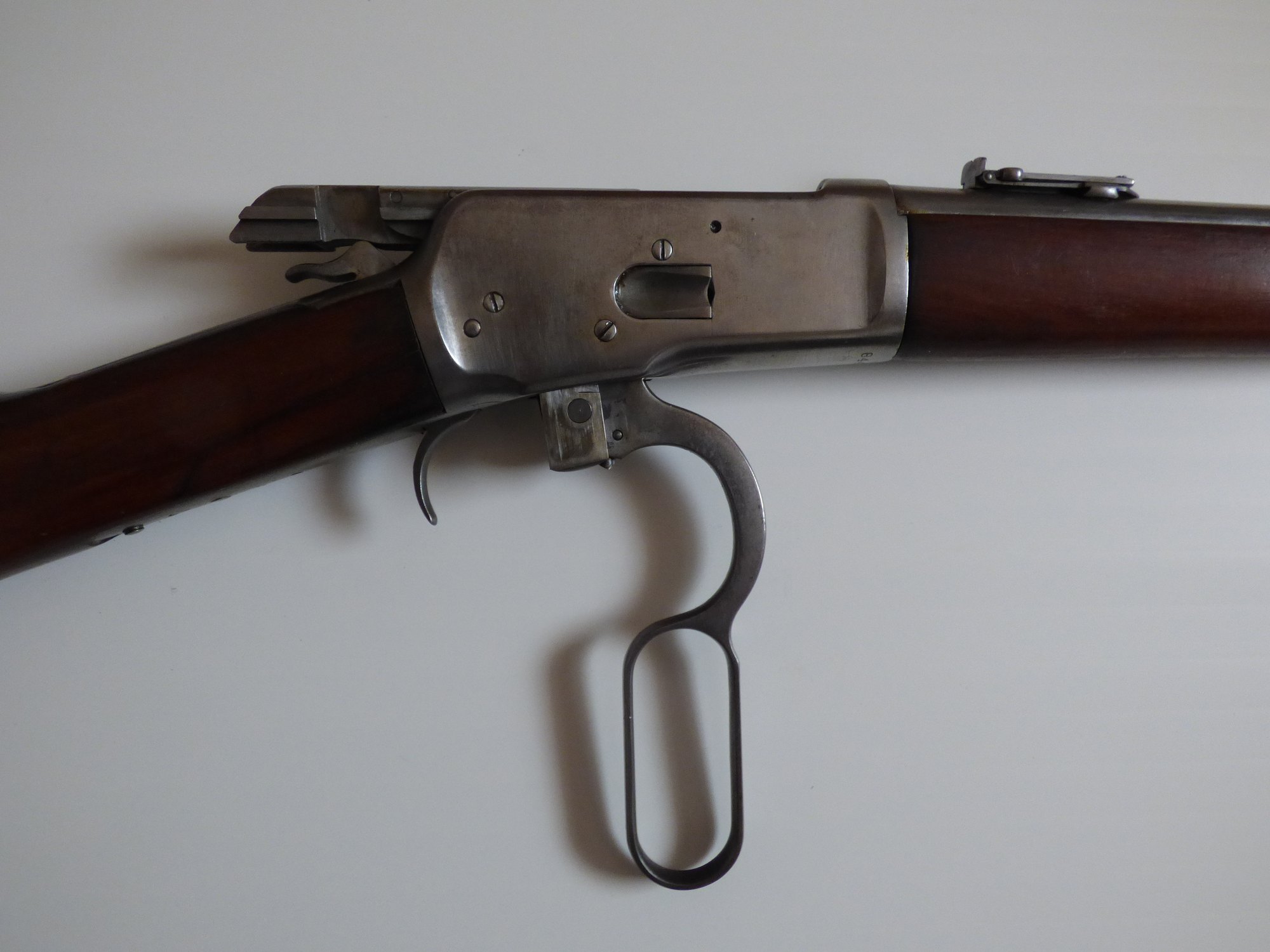
We shot four factory 32-20 ammo loads through a Winchester Model 1892 with a 24-inch barrel and a Smith & Wesson .32-20 Hand Ejector with a 5-inch barrel over two mornings in September. Both guns had been checked by a gunsmith first, and we fired 200 rounds over a chronograph.
| Load | Listed velocity | Model 1892, 24 in. | Hand Ejector, 5 in. | Rifle group | Revolver group |
|---|---|---|---|---|---|
| Winchester Super-X 100 gr | 1,210 fps | 1,176 fps | 771 fps | 1.9 in. | 2.4 in. |
| Remington 100 gr | 1,210 fps | 1,192 fps | 784 fps | 2.2 in. | 2.7 in. |
| Black Hills Cowboy 115 gr | 800 fps from 5.5 in. | 1,034 fps | 692 fps | 1.6 in. | 1.9 in. |
| HSM Cowboy 115 gr | Not published | 1,058 fps | 718 fps | 2.0 in. | 2.3 in. |
Rifle groups were five shots at 50 yards from a rest with the factory sights. Revolver groups were six shots at 15 yards from a rest.
The numbers back up the label section. The two boxes sold as rifle ammunition gave under 800 fps from the revolver, a little below the 830 to 860 fps Pearce quotes, and neither gave sticky extraction. The cowboy loads ran about 700 fps from the revolver and a little over 1,000 from the rifle.
We listened to every shot. None sounded soft and no bullet stayed in a barrel, but the cowboy loads are quiet enough that you have to pay attention. Every round from all four boxes dropped into the revolver’s chambers and fed from the rifle’s magazine.
The Black Hills load shot the tightest groups from both guns. The HSM load cost less and wasn’t far behind in the revolver. Those are the two we’d buy for an old gun.
A Short History of the .32-20
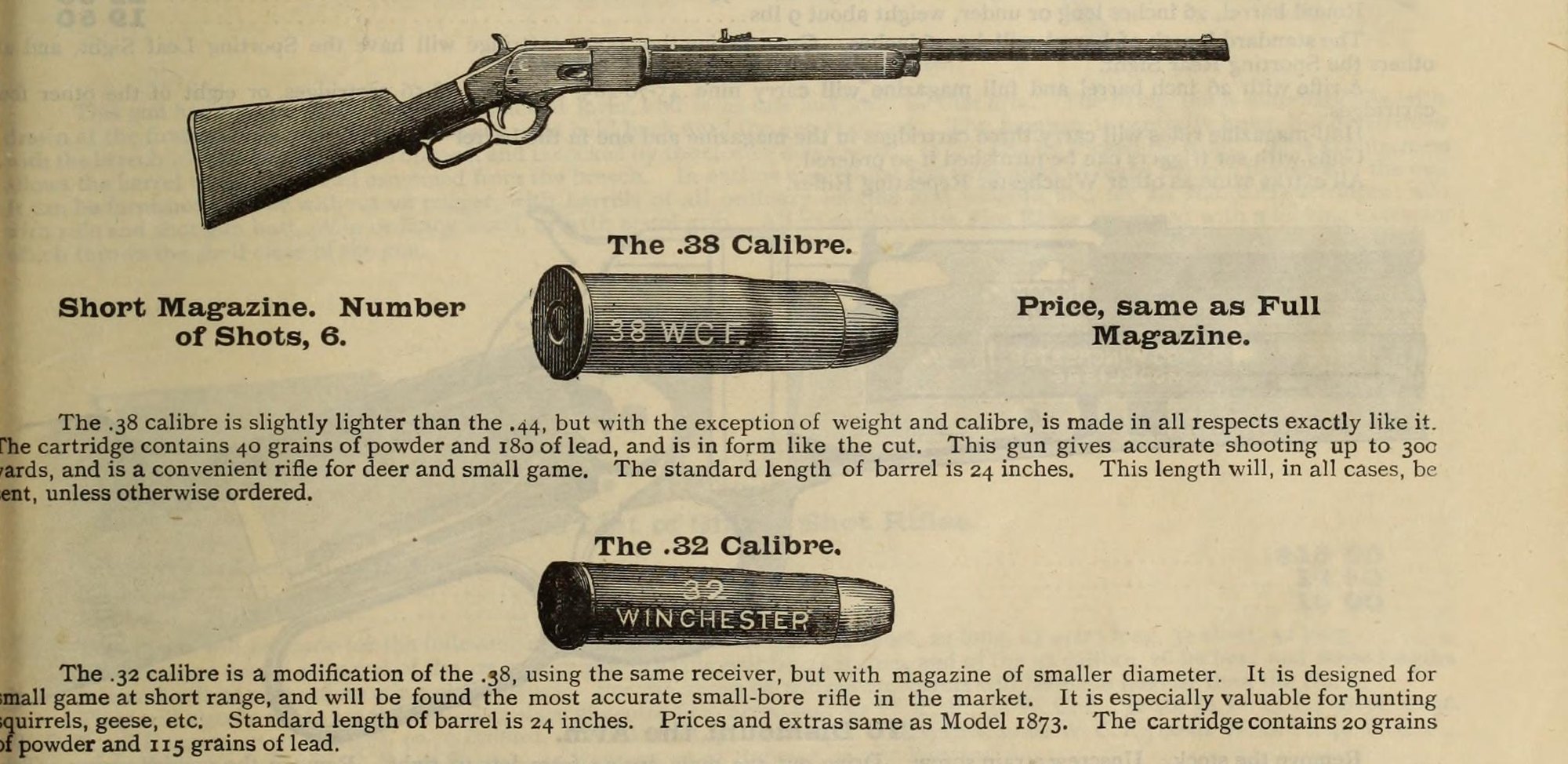
Winchester introduced the .32 WCF in 1882 for the Model 1873 lever action. The original load was a 115-grain lead bullet over 20 grains of black powder at about 1,170 to 1,180 fps. Colt chambered the Single Action Army for it in 1884, though one Colt reference says 1885, and more than 43,000 first-generation guns were made in the caliber.
The Winchester Model 1892 took it from the start and Marlin’s Model 1894 followed. Smith & Wesson offered the .32-20 in its Military & Police revolver from the start in 1899, and built 144,684 of those Hand Ejectors by 1939. Colt added the Police Positive Special in 1907 and the Army Special in 1908, and the .25-20 of 1895 is the same case necked down.
Then it faded. Marlin dropped its .32-20 lever gun in 1935, the Winchester 1892 ended in 1941, and Winchester’s last .32-20 rifle, the bolt-action Model 43, left the line in 1957.
Marlin brought it back as the Model 1894CL in 1988. Cowboy action shooting did the rest, and Cimarron and Taylor’s sell .32-20 replicas today. Our classic revolvers guide covers the old Colts and Smith & Wessons.
A Note on Reloading
The .32-20 takes .312-inch jacketed bullets and .313-inch cast bullets, with 100 and 115 grains the standard weights, and Starline catalogs new brass for it. The case neck is thin, carbide dies aren’t made for a bottleneck case, and necks crumple easily, so handloaders go slowly. Starline labels its case for a small pistol primer, factory loads have used small rifle primers, and the two are the same size.
One warning from Handloader is worth passing on. Wieland, who used both Starline and Hornady brass, had over-book loads tested in a lab. They looked normal on the bench and “exceeded proof pressures for the cartridge.” Reading a fired case won’t tell you where you are with this round.
We do not publish load data on this page. Use a current manual from a bullet or powder maker, stay inside the 16,000 CUP limit in any old gun, and start with our beginner’s guide to reloading if you’re new to it.
Bottom Line: Which 32-20 Ammo to Buy
For most owners the 32-20 ammo to buy is a 115-grain lead cowboy load from HSM or Black Hills, which cost $0.83 to $1.18 a round at our dealers on October 1, 2026. The gun decides the rest.
- For an old Colt or Smith & Wesson revolver: HSM or Black Hills 115-grain cowboy loads, after a gunsmith has passed the gun. For a Colt built before 1900, ask about black powder loads first.
- For an original 1873, 1892 or Marlin: the same cowboy loads. In a sound 1892, Winchester Super-X adds speed for less money than Remington.
- For a modern replica, an 1894CL or a Blackhawk: any standard load, and +P only where the maker’s manual allows it.
- For the old rounds that came with the gun: keep them as collectibles and shoot new 32-20 ammo.
If you shoot other old guns, our 8mm Mauser ammo guide does the same job for the Mauser, and where to buy vintage guns online covers the dealers.
We’ve done the same job for other old calibers: the .303 British ammo guide, the 7.62×25 Tokarev ammo guide, the .44-40 ammo guide and the .45 Colt ammo guide.
Lead image: composite based on two photos by Hmaag, one CC0 and one public domain.
32-20 Ammo FAQ
Is 32-20 ammo still made?
Yes, 32-20 ammo is still made. Remington and Winchester each catalog a 100-grain lead load at 1,210 fps, HSM and Black Hills load 115-grain cowboy ammunition, and Buffalo Bore, Choice and Old South make specialty loads. Boxes of 50 started under $42 on our price cards when we checked on October 1, 2026.
Can you shoot 32-20 rifle ammo in a revolver?
New Remington and Winchester boxes sold as rifle ammunition hold the standard 100-grain load at 1,210 fps, and Handloader writer Brian Pearce calls those loads safe, as a rule, in any .32-20 revolver in good operating condition. Old boxes marked High Velocity or Hi-Speed are different. They were rifle-only loads, and they aren't for revolvers.
Is .32 WCF the same as .32-20?
Yes. 32 WCF ammo and 32-20 ammo are the same cartridge. WCF stands for Winchester Center Fire, which was Winchester's own name for it, and .32-20 WCF, .32-20 Win and .32-20 Marlin are other names for the same round.
Is a .32-20 the same as a .32 Winchester Special?
No. The .32 Winchester Special is a much larger rifle cartridge the size of a .30-30, with a .321 inch bullet. It won't fit a .32-20, and the two have nothing in common except the number 32.
How much does a box of 32-20 ammo cost?
On October 1, 2026, a box of 50 HSM cowboy loads cost $41.63 to $49.99 at our dealers, Winchester Super-X cost $45.73 to $48.99, Black Hills cost $54.98 to $58.99 and Remington cost $96.94 to $116.49. That's $0.83 to $2.33 a round.
What is a .32-20 good for?
Small game, varmints up to about coyote size, plinking and cowboy action shooting. The standard factory load makes 325 foot-pounds at the muzzle from a rifle, and effective range is about 100 to 125 yards. It isn't a deer cartridge with factory loads.
Is 32-20 +P safe in an old Colt or Smith & Wesson?
We wouldn't use it in one. There's no SAAMI +P standard for the .32-20, and Buffalo Bore says to use its +P load only in firearms made with barrel steel designed for smokeless powder. Keep +P to modern guns such as the Marlin 1894CL and Ruger Blackhawk, and shoot standard or cowboy loads in old revolvers.
Is .32-20 the same as .32 H&R Magnum?
No. Both fire .312 inch bullets, but the .32-20 is a bottleneck case and the .32 H&R Magnum is a straight revolver case, so they don't interchange. Revolvers that shoot both, such as the Cimarron Lightning, come with a separate cylinder for each.
5,470+ Gun & Ammo Deals
Updated daily from 200+ top retailers. Filter by category, caliber, action type, and price.
Related Guides