
Last updated May 2026 · By Nick Hall, who has run thousands of dry-fire reps at home with most of the systems below
The best home firearms training system in 2026 is the Mantis X10 Elite. It clips onto your gun, tracks the muzzle through every trigger press, and tells you exactly why your shots are wandering. Add the Mantis Laser Academy for target work and you can build real, measurable skill in your living room for less than a couple of weekend range trips.
Dry fire used to mean staring down a hallway and guessing whether your trigger press was clean. It’s not a guess anymore. The modern firearms training systems in this guide hand you live feedback on every shot, and the gear’s gotten cheap enough that there’s no excuse to only train when you can get to a range. Here’s what’s worth your money and what isn’t.
Table of Contents
How we tested: Every pick here is ranked against our testing methodology. Minimum round counts, accuracy and reliability protocols, the failures that disqualify a gun. Where we have not shot a specific variant ourselves, we say so in that section.
Firearms Training Systems Compared at a Glance
| System | Type | Best for | Price |
|---|---|---|---|
| Mantis X10 Elite | Motion sensor | Trigger coaching, every gun | 250 dollars |
| Mantis Laser Academy | Laser + phone app | Target drills at home | 100 to 150 dollars |
| G-Sight / Strikeman | Laser cartridge | Budget shot feedback | Under 150 dollars |
| iTarget Cube | Reactive laser targets | Movement and transitions | Around 120 dollars |
| SIRT Pistol | Auto-resetting trigger | Fast trigger reps | Around 240 dollars |
| CoolFire | Recoil simulator | Recoil management | 300 dollars and up |
How Dry-Fire Training Actually Works
Almost everything that goes wrong with a shot happens before the bullet leaves the barrel. Flinch, trigger jerk, a sight picture that drifts off the front sight, a grip that shifts under pressure. Live fire hides those mistakes behind recoil and noise, so you never see the cause. Dry fire strips all of that away and lets you watch the mechanics in slow motion.
The old problem was feedback. You could press the trigger a hundred times and never know if you were improving. The systems below fix that. Some read the motion of the gun, some put a laser on a target, and the best ones turn a quiet ten minutes at home into the muscle memory and marksmanship that used to need a coach standing over your shoulder.
Safety first, every time, and the NSSF safety rules are worth a refresher. Clear the firearm, drop the magazine, and keep live ammunition in a different room before any dry practice. Make it a ritual, not an afterthought.
Mantis X10 Elite: The Coaching Sensor
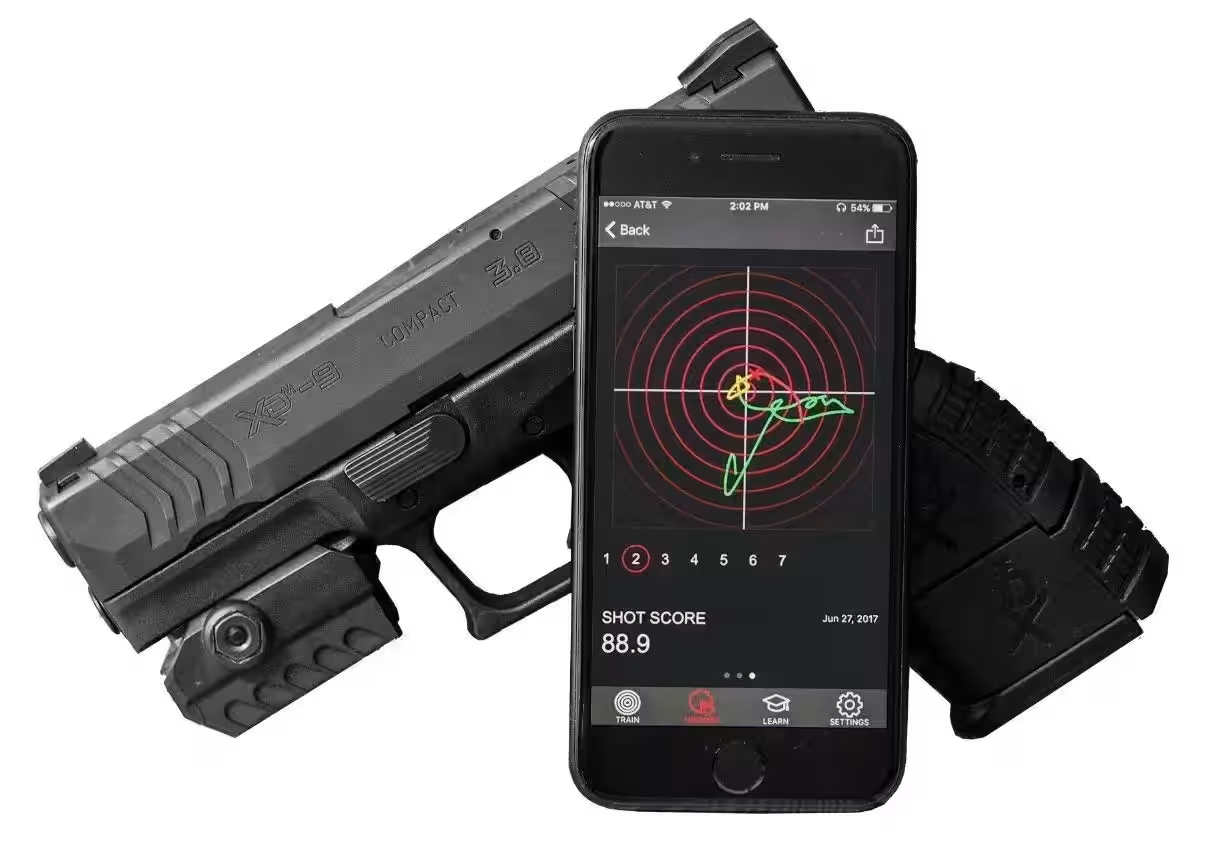
The Mantis X10 Elite is the one to beat. It’s a small sensor that clips to your rail or magazine baseplate and tracks the movement of the muzzle through the trigger press, thousands of data points a second, in both dry fire and live fire. The app scores each shot, draws the path the muzzle took, and tells you whether you’re pushing, heeling, or jerking the trigger.
The X10 rolls every feature from the older X2 and X3 sensors into one unit and adds recoil analysis, holster-draw timing, and consistency tracking over time. It works with pistols, rifles, shotguns, and even a bow. At 249.99 dollars it costs about the same as two or three boxes of defensive ammo, and the data it gives back pays for itself in saved range trips inside a month.
If your budget is tighter, the older Mantis X3 still does the core shot analysis for around 150 dollars. You give up the recoil and draw features, but the trigger coaching that fixes most beginners is all there.
Mantis Laser Academy: Target Practice in Your Living Room
Where the X10 reads your mechanics, the Mantis Laser Academy gives you something to shoot at. A laser cartridge drops into the chamber, your phone camera watches a paper or reactive target, and the app scores hits, runs drills, and times your splits. It strikes the best balance of features, ease of use, and price in the whole category.
This is the system I push hardest on new shooters who want to actually practice, not just analyze. You get draw-to-first-shot drills, multi-target transitions, and a scoreboard that makes you want to beat yesterday. The kit runs around 100 to 150 dollars depending on whether you want the reactive targets.

Laser Cartridge Systems: Strikeman, iTarget and G-Sight
Below the Mantis ecosystem sits a whole tier of laser-cartridge systems that do one thing well: put a dot on a target so you can see exactly where your shot broke. Strikeman, iTarget, and G-Sight all work the same basic way, a laser round in the chamber and an app or reactive target reading the hits, and any of them will sharpen your trigger press for under 150 dollars.
G-Sight leans into the app side with drills and scoring, Strikeman keeps it simple with a target and a phone stand, and iTarget built its name on a reactive cube that lets you run movement drills. None of them replicate recoil, so treat them as a complement to live fire rather than a substitute, and they work the same whether you run irons or a red dot. For pure repetition of the draw and the press, they’re hard to beat on value.
The SIRT Pistol: Train the Trigger Without Racking
The SIRT pistol from Next Level Training solves the most annoying part of dry fire. With a normal laser cartridge you have to rack the slide after every trigger pull to reset. The SIRT is a weighted replica with an auto-resetting trigger and a dual-laser system, so you can press again and again, just like live fire, and read your trigger and reset in one motion.
It’s not cheap at around 240 dollars and it’s not your actual carry gun, which are the two real knocks against it. But for grooving a clean trigger press and running fast strings without breaking your rhythm, nothing else feels closer to the real thing. Trainers love them for exactly this reason.
CoolFire and Recoil Simulators: The Closest Thing to Live Fire
If the missing piece in dry fire is recoil, recoil simulators are the answer. Systems like CoolFire use a CO2 or gas-driven kit that cycles your actual slide and delivers a real kick on every shot, then pair it with a laser so you can score hits at home. You get the muzzle flip and the reset feel that flat dry fire just cannot give you.
The tradeoff is cost and fuss. These run several hundred dollars and need refills and a bit of setup, so they’re overkill for a casual shooter. For a serious competitor or anyone training to manage recoil under speed, they’re the bridge between the living room and the range.
Shot Timers and Tracking Your Progress
You can’t improve what you don’t measure. A shot timer, whether a dedicated unit or a phone app, turns vague practice into hard numbers: draw to first shot, splits between shots, and total time on a drill. Watch those numbers fall week to week and you know the training is working.
Filming yourself is the cheap secret weapon most shooters skip. A budget action camera on a tripod catches the grip shift or the slow draw that you’ll never feel in the moment. Set it up, run your drills, and watch the tape. It’s the same trick every serious athlete uses, and it costs almost nothing.

VR and Simulator Training: Where It Really Stands in 2026
Full virtual-reality firearms training still lives mostly in the professional world. The judgment and de-escalation simulators that police and military units train on, from companies like Meggitt and Lasershot, are powerful, expensive, and built for agency budgets rather than your spare room. They put an officer in a branching scenario and test the decisions that happen before the trigger ever moves.
Consumer VR’s creeping toward that, and a handful of phone-based and headset apps will let you get a feel for it for little or no money. It’s fun and it’s getting better, but for an individual shooter today a Mantis sensor plus a laser trainer delivers far more real skill per dollar than any VR setup. The home VR future is coming. It’s just not the smart buy yet.
Which Training System Should You Buy?
There’s no single right answer here. The best system is the one that matches how you shoot and how much you will actually use it. Here’s how I steer people depending on where they are.
If you’re a new shooter
Start with the Mantis X10 Elite, and if you’re still choosing a gun, sort out the right beginner handgun first. The honest, shot-by-shot read on your trigger press is exactly what a beginner needs, because it catches the flinch and the jerk before they turn into bad habits you have to unlearn later. Add the Laser Academy once the basics feel solid and you want targets to chase.
If you are on a tight budget
A laser cartridge from G-Sight or Strikeman plus a free shot-timer app on your phone covers most of what matters for well under 150 dollars. You lose the deep motion data the Mantis gives you, but you still get to see where every shot lands and time your draw. That is most of the value for a fraction of the money.
If you compete
Build a stack. A SIRT or a Mantis for trigger reps, the Laser Academy for scored drills, a real shot timer for splits, and a recoil simulator like CoolFire when you need to train recoil management under speed. Competitors live and die by consistency, and these tools turn practice into measurable progress between matches.
If you carry for defense
Drill the draw and the first shot above everything else, because that is what a defensive encounter actually demands. The Laser Academy draw drills and ten minutes of daily dry fire with your carry gun, cleared and safe, build the one skill that matters most, and a structured concealed carry training course layers the legal and decision-making side on top. Train the boring fundamentals until they are automatic.
What to Skip
Not every training gadget earns its shelf space. A few are worth steering around so your money lands on the gear that actually moves your shooting.
Snap caps on their own are fine for protecting your firing pin and practicing reloads, but they give you zero feedback on the shot itself. Pair them with a sensor or a laser, or you are just clicking. Skip the cheap toy laser pistols too, since the trigger and grip feel nothing like your real gun and the habits do not carry over.
And hold off on a pricey VR rig for now. The consumer options are fun but thin, and the agency-grade simulators cost more than a safe full of guns. Your training dollars buy far more skill in a Mantis and a laser trainer than in a headset.
How to Build a Dry-Fire Practice Routine
The gear does nothing on its own. What turns a sensor or a laser into real skill is a short, repeatable routine you actually run, the same way structured dry-fire drills beat aimless clicking. Short and frequent beats long and rare every time, because focus fades fast and sloppy reps just train sloppiness.
Aim for ten to fifteen minutes most days rather than one long weekend grind. Start every session the same way: clear the gun, magazine out, live ammo in another room, then a few slow perfect trigger presses to set the tone before you add any speed.
- Two days a week on pure trigger control with the Mantis, working a wall drill and chasing a cleaner score each session.
- Two days on the draw and first shot with a laser system, set a par time and work to shave tenths off it.
- One day on transitions and movement with reactive targets or the iTarget cube.
- One day filming yourself, then watching the tape for the grip shift or slow draw you cannot feel.
None of this replaces the bigger picture of firearms training, but it is the daily reps that make the lessons stick. Log the numbers, even roughly. Watching your draw time fall and your Mantis score climb week over week is what keeps you coming back, and that consistency is the whole game. A gadget in a drawer trains nothing.
How I Tested These Systems
I’ve run these tools the way a normal person actually would, in ten to fifteen minute sessions at home over months rather than one long bench test. The Mantis sensors went on a Glock 19 and an AR for several thousand combined dry and live rounds, scored shot by shot in the app. The laser systems got drilled against both paper and reactive targets, and the shot timer tracked draw and split times the whole way through.
My yardstick was simple: did the number on a live-fire target actually move. The systems that earned a spot here are the ones that showed up on paper at the range, not just on a screen at home.
The Bottom Line
If you buy one thing, buy the Mantis X10 Elite. The shot-by-shot coaching fixes the trigger mistakes that hold most shooters back, and it works with everything you own. Add the Mantis Laser Academy when you want targets and drills, and you have a complete home training setup for around 350 dollars total.
On a budget, a laser cartridge system like G-Sight or Strikeman plus a free shot-timer app gets a new shooter most of the way there for under 150 dollars. Whatever you pick, the gear only works if you use it. Ten honest minutes a day beats a forgotten gadget in a drawer every single time.
Frequently Asked Questions
Does dry fire practice actually improve your shooting?
Yes. Dry fire builds trigger control, sight alignment and grip consistency without the cost or recoil of live ammunition, and most of what goes wrong in a shot happens before the round leaves the barrel. Ten to fifteen minutes a day of focused dry fire shows up fast on a live-fire target.
What is the MantisX and how does it work?
The MantisX is a small sensor that clips to your rail or magazine baseplate and tracks the motion of the muzzle through the trigger press. It scores each shot, draws the muzzle path, and tells you exactly how you are pulling off target, so you can fix flinch and trigger jerk in real time on your phone.
How much does a MantisX cost?
The MantisX X10 runs around 150 to 250 dollars depending on the bundle, which is roughly the price of two or three boxes of defensive ammo. For most shooters the data it gives pays for itself in saved range trips inside a month.
Is laser training as good as live fire?
No, but it is a strong complement. Laser trainers like the Laserlyte give instant hit feedback in your living room and are excellent for draw, presentation and trigger work. They cannot replicate recoil or muzzle blast, so pair them with regular live fire rather than treating them as a substitute.
Can you train for concealed carry at home?
Yes, and you should. Draw stroke, presentation and the first trigger press are the skills that decide a defensive encounter, and all three drill perfectly with dry fire and a laser trainer at home. Always clear the firearm and keep live ammo in another room before any dry practice.
Are VR firearms training simulators worth it?
For an individual, not yet. The judgment and de-escalation simulators used by law enforcement are powerful but expensive and overkill for home use. Phone-based and consumer VR options are improving and worth trying, but a MantisX plus a laser trainer gives a home shooter more value today.
How often should you dry fire practice?
Short and frequent beats long and rare. Ten to fifteen minutes most days builds the habit without fatiguing your attention, and quality reps matter far more than volume. Five perfect trigger presses are worth more than fifty sloppy ones.
What is the best dry-fire training system for beginners?
Start with a MantisX for the shot-by-shot feedback and add a laser trainer for draw and target work. That pairing covers the two things new shooters need most, honest data on the trigger press and safe repetition of the draw, for a fraction of the cost of range time.
6,216+ Gun & Ammo Deals
Updated daily from 200+ top retailers. Filter by category, caliber, action type, and price.
Related Guides