
Last updated September 30, 2026
Some of the links below are affiliate links, meaning at no additional cost to you, we may earn a commission if you click through and make a purchase.
- Treat every gun as loaded
- Point the muzzle in a safe direction
- Keep your finger off the trigger until you’re ready to shoot
- Know your target and what’s beyond
Vietnam War guns are the rifles, pistols and shotguns carried by American, allied, North Vietnamese and Viet Cong troops, from the first US advisers to the fall of Saigon on April 30, 1975. Every wartime original is now more than 50 years old, and you can still buy most of them in some legal form, from a $350 Chinese Type 54 pistol to Colt’s reissue of the M16.
Here are 15 of the most important, from the M16, M14 and M1911 to the AK-47 and SKS, grouped by the side that carried them. For each one I’ll tell you what it did in the war, whether a civilian can own one today and what our dealers are asking, with a live price card for every gun.
How we tested: Every pick here is ranked against our testing methodology. Minimum round counts, accuracy and reliability protocols, the failures that disqualify a gun.
Vietnam War Guns at a Glance
Here are all 15 Vietnam War guns on this list, who carried each one and what it shoots.
| Gun | Why It Matters | Key Facts | Check Price |
|---|---|---|---|
 |
THE RIFLE THAT DEFINED THE WAR
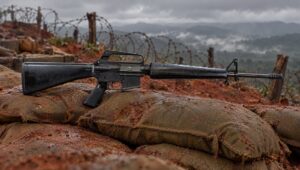
XM16E1 and M16A1
Collectors who want the rifle from the 1966 and 1967 fights, legally. |
Type: Rifle Caliber: 5.56x45mm Carried by: US Army and Marines |
Check Price ↓ |
 |
THE SOG RECON CARBINE
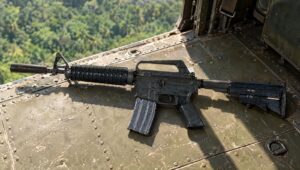
XM177E2 CAR-15
Serious collectors of Special Forces history with a big budget. |
Type: Carbine Caliber: 5.56x45mm Carried by: Special Forces and SOG recon teams |
Check Price ↓ |
 |
THE LAST WOOD-STOCKED BATTLE RIFLE
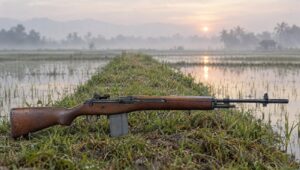
M14
Shooters who want a wood-stocked 7.62 NATO battle rifle with Vietnam history. |
Type: Rifle Caliber: 7.62x51mm NATO Carried by: US Army and Marines |
Check Price ↓ |
 |
THE TUNNEL RATS’ PISTOL
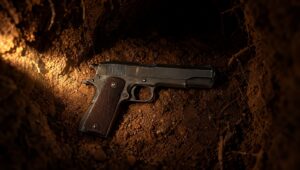
M1911A1
Anyone who wants the American sidearm of the war for under $400. |
Type: Pistol Caliber: .45 ACP Carried by: US forces, including the tunnel rats |
Check Price ↓ |
 |
THE CARBINE BOTH SIDES USED
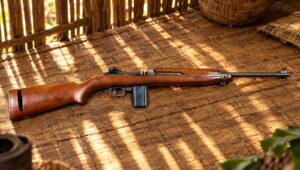
M1 and M2 Carbine
Buyers who want a light, handy carbine with history on both sides of the war. |
Type: Carbine Caliber: .30 Carbine Carried by: South Vietnamese forces, and the Viet Cong |
Check Price ↓ |
 |
THE COMBAT SHOTGUN
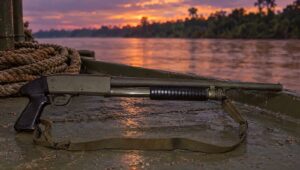
Ithaca Model 37
Shotgun collectors who want the pump gun with a real Vietnam contract. |
Type: Shotgun Caliber: 12 gauge Carried by: South Vietnamese forces, SEALs and Marine recon |
Check Price ↓ |
 |
THE AIRCREW AND AIR POLICE REVOLVER
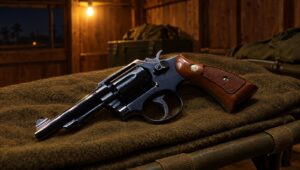
Smith & Wesson .38 Revolvers
Revolver fans who want the classic American service .38. |
Type: Revolver Caliber: .38 Special Carried by: Pilots, aircrews and Air Force security police |
Check Price ↓ |
 |
THE MARINE SNIPER RIFLE
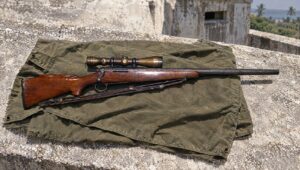
USMC M40 (Remington 700)
Precision shooters who want to build an M40-style rifle on the real action. |
Type: Sniper rifle Caliber: 7.62x51mm NATO Carried by: Marine Corps snipers |
Check Price ↓ |
 |
CARLOS HATHCOCK’S RIFLE
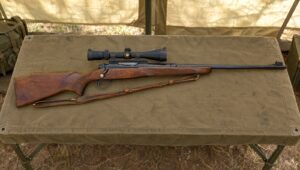
Winchester Model 70
Hunters who want a rifle with Carlos Hathcock’s story behind it. |
Type: Sniper rifle Caliber: .30-06 Springfield Carried by: Marine snipers, including Carlos Hathcock |
Check Price ↓ |
 |
THE VETERAN OF THREE WARS
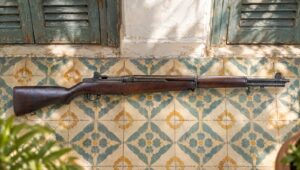
M1 Garand
Collectors who want one real rifle that served in three American wars. |
Type: Rifle Caliber: .30-06 Springfield Carried by: South Vietnamese army |
Check Price ↓ |
 |
THE AUSTRALIAN RIFLE
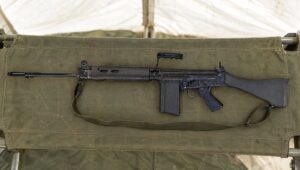
L1A1 Self-Loading Rifle
Collectors of Commonwealth rifles who want the gun the Australians carried. |
Type: Rifle Caliber: 7.62x51mm NATO Carried by: Australian troops, including the ANZAC battalion |
Check Price ↓ |
 |
THE ENEMY’S MAIN RIFLE
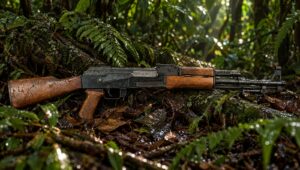
AK-47 and Chinese Type 56
Buyers who want the rifle the North Vietnamese carried, or the closest copy. |
Type: Rifle Caliber: 7.62x39mm Carried by: North Vietnamese Army and Viet Cong |
Check Price ↓ |
 |
THE CLASSIC BRING-BACK
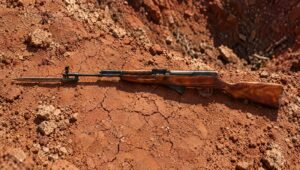
SKS and Chinese Type 56 Carbine
Anyone who wants a real Vietnam-era rifle for about $400. |
Type: Carbine Caliber: 7.62x39mm Carried by: Viet Cong and North Vietnamese troops |
Check Price ↓ |
 |
THE BOLT-ACTION CARBINE
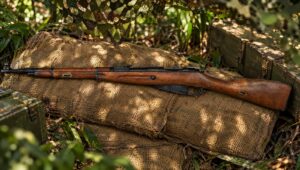
Mosin-Nagant M44 and Type 53
Budget collectors who want a bolt-action rifle from the North Vietnamese side. |
Type: Carbine Caliber: 7.62x54R Carried by: North Vietnamese Army |
Check Price ↓ |
 |
THE COVETED WAR TROPHY
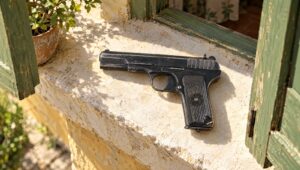
Tokarev TT-33 and Chinese Type 54
Collectors who want the classic Vietnam bring-back pistol. |
Type: Pistol Caliber: 7.62x25mm Tokarev Carried by: North Vietnamese forces |
Check Price ↓ |
Table of Contents
Which Vietnam War Guns Can You Own?
Vietnam War guns you can buy fall into three groups: real surplus originals, new copies and reissues, and machine guns you can’t easily own. The SKS, the M44, the Type 54 and the M1 Garand are the easiest real originals to find, and Colt’s M16 reissues are the priciest copies.
Here’s what you can actually buy for each gun on this list, and the rule that decides it.
| Gun | What you can buy | The rule |
|---|---|---|
| XM16E1 and XM177E2 | Colt’s semi-auto retro reissues | Originals fire full auto, so they’re machine guns |
| M14 | The semi-auto Springfield Armory M1A | Select-fire M14s are machine guns |
| M1911A1, M1 carbine, M1 Garand | Originals and new copies | Originals are 50+ years old, so they’re C&R |
| Ithaca 37, S&W .38s, Remington 700, Winchester Model 70 | Current production or reissues | Ordinary guns with a normal background check |
| SKS, M44, Type 54 | Surplus originals | C&R eligible once they’re 50 years old |
| Type 56 AK | US-made copies and rare originals | Chinese guns barred from import since 1994 |
| L1A1 SLR | Used L1A1-type rifles only | No new production |
US Guns of the Vietnam War
Nine guns carried by American soldiers, Marines, SEALs and airmen, from the M16 to two famous sniper rifles. The first US combat troops, 3,500 Marines, landed at Da Nang on March 8, 1965, and US troop strength peaked at about 543,400 in April 1969.
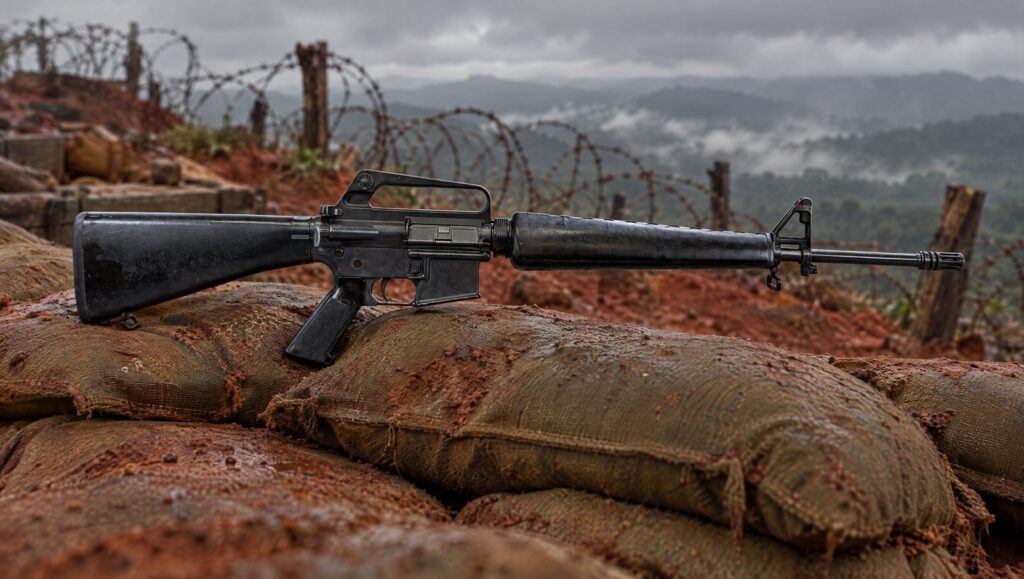
1. XM16E1 and M16A1: The Rifle That Defined the War
- Caliber: 5.56x45mm
- Action: Gas operated; the reissue is semi-auto with a 20-round magazine
- Became the M16A1: February 1967
- Carried by: US Army and Marines
| Category | Rating |
|---|---|
| History | 5/5 |
| Availability | 2/5 |
| Value | 2/5 |
Pros
- The rifle that defined the war
- Correct three-prong flash hider
- Semi-auto, so no NFA paperwork
Cons
- Over $2,500 for a reissue
- Limited runs sell out
- Won’t ship to several states
The XM16E1 was the rifle American troops carried into the big fights of 1966 and 1967, and it earned a bad reputation fast. It was type-classified as the M16A1 in February 1967, but the fixes to the cleaning gear, the chamber and the powder reached troops through 1967 and after. In the Hill Fights that spring, Marines often had to shove stuck cases out with a cleaning rod.
A real M16 fires full auto, so owning one means a machine gun registered before 1986 and federal paperwork. Colt has built semi-auto retro reissues instead, and Classic Firearms had the CRXM16E1, with a 20-inch barrel, a three-prong flash hider and a 20-round magazine, at $2,586.36 when I checked.
It won’t ship to California, Colorado, Connecticut and several other states. Our retro AR-15 rifles guide covers cheaper retro builds, and our M16 rifle page explains the law on the real thing.
Best For: Collectors who want the rifle from the 1966 and 1967 fights, legally.
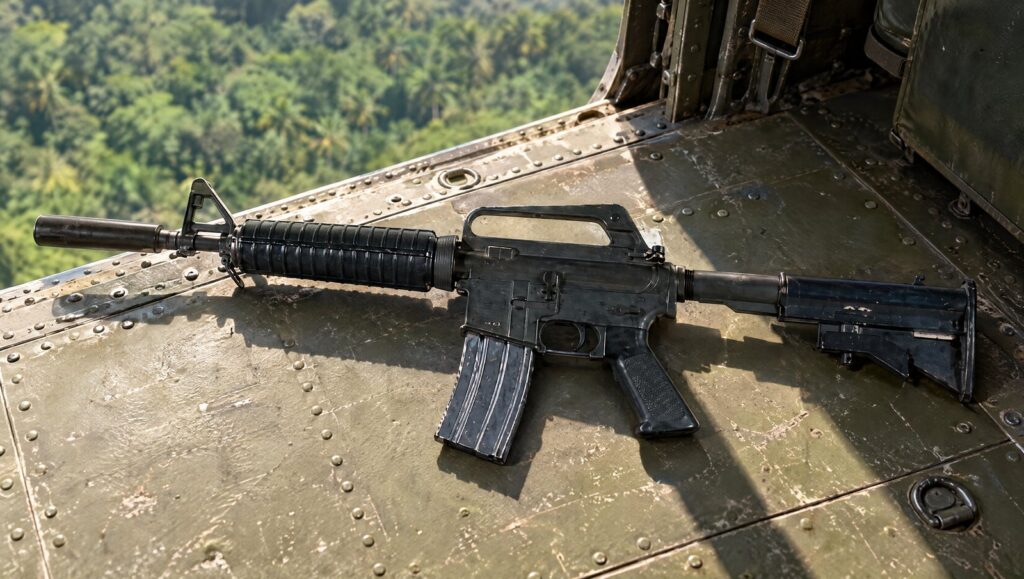
2. XM177E2 CAR-15: The SOG Recon Carbine
- Caliber: 5.56x45mm
- Original barrel: 11.5 inches; the reissue has 16.1 inches
- Made: Colt Model 629, with 510 built for SOG
- Carried by: Special Forces and SOG recon teams
| Category | Rating |
|---|---|
| History | 5/5 |
| Availability | 1/5 |
| Value | 2/5 |
Pros
- The SOG recon icon
- Short collapsible stock
- Reissue needs no NFA paperwork
Cons
- Rare, and priced like it
- Reissue barrel is longer
- Won’t ship to eight states
The XM177E2, which Colt called the Model 629, was the short CAR-15 that Special Forces recon teams made famous. Colt built 510 of them for SOG, the unit that ran missions behind enemy lines, so every recon man could have his own. SOG’s recon companies were the only units of the war armed entirely with CAR-15s.
The original had an 11.5-inch barrel, a chrome-plated chamber and a long moderator on the muzzle. That short barrel cut the speed of the standard 55-grain M193 bullet from 3,250 to 2,750 feet per second.
An original is a machine gun and a short-barreled rifle, so it’s out of reach for most buyers. Colt’s semi-auto retro reissue uses a 16.1-inch barrel to stay a normal rifle, and Guns.com listed one at $5,499.99 when I checked.
Best For: Serious collectors of Special Forces history with a big budget.
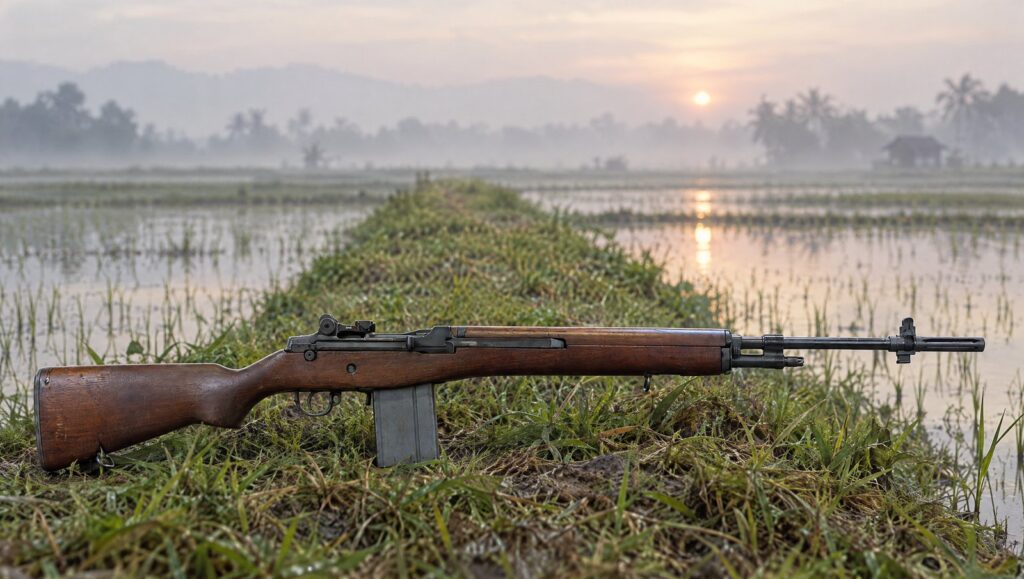
3. M14: The Last Wood-Stocked Battle Rifle
- Caliber: 7.62x51mm NATO
- Approved: May 1, 1957, with production from 1959
- Made: More than a million from 1959 to 1963
- Carried by: US Army and Marines, until the M16 took over
| Category | Rating |
|---|---|
| History | 4/5 |
| Availability | 5/5 |
| Value | 3/5 |
Pros
- Hard-hitting 7.62 NATO
- Proven sniper platform
- The M1A copies it closely
Cons
- Long and heavy rifle
- The M1A costs over $1,500
- Won’t ship to Massachusetts
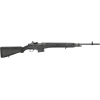
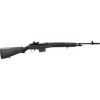
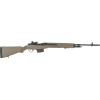
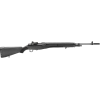
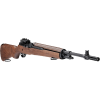
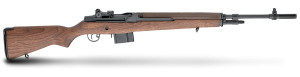
The Army approved the M14 on May 1, 1957, to replace the M1 rifle, the M2 carbine and the M3A1 grease gun, and production began in 1959. Harrington & Richardson was the biggest maker, turning out 537,512 of them, with Winchester next at 356,510.
The M16 pushed it out of front-line service in Vietnam, though a lot of units gave up their M14s reluctantly. It proved a very effective sniping rifle there, by day and night, and the M21 sniper version was adopted in the early 1970s.
The civilian version is the semi-auto M1A Standard, which Springfield Armory describes as a faithful recreation of the original M14. MidwayUSA had it at $1,521.99 and Palmetto State Armory at $1,682.99 when I checked. Our Springfield M1A review covers it, and our CMP M14 report covers the CMP’s surplus M14 plans.
Best For: Shooters who want a wood-stocked 7.62 NATO battle rifle with Vietnam history.
4. M1911A1: The Tunnel Rats’ Pistol
- Caliber: .45 ACP
- Last made: 1945, then issued for 40 more years
- Replaced: By the Beretta M9, adopted on February 14, 1985
- Carried by: US forces, including the tunnel rats
| Category | Rating |
|---|---|
| History | 5/5 |
| Availability | 5/5 |
| Value | 5/5 |
Pros
- The tunnel rats’ pistol
- GI copies cost under $400
- .45 ACP is easy to find
Cons
- Originals cost a premium
- Small GI-style sights
- Only eight rounds
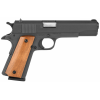
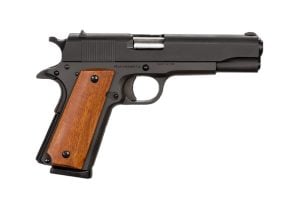
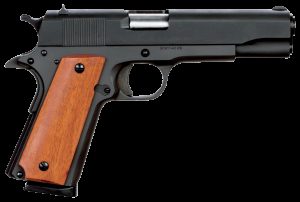
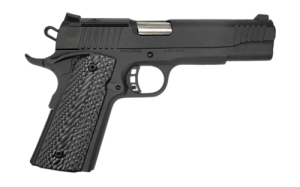
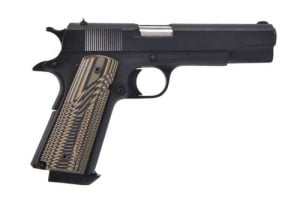
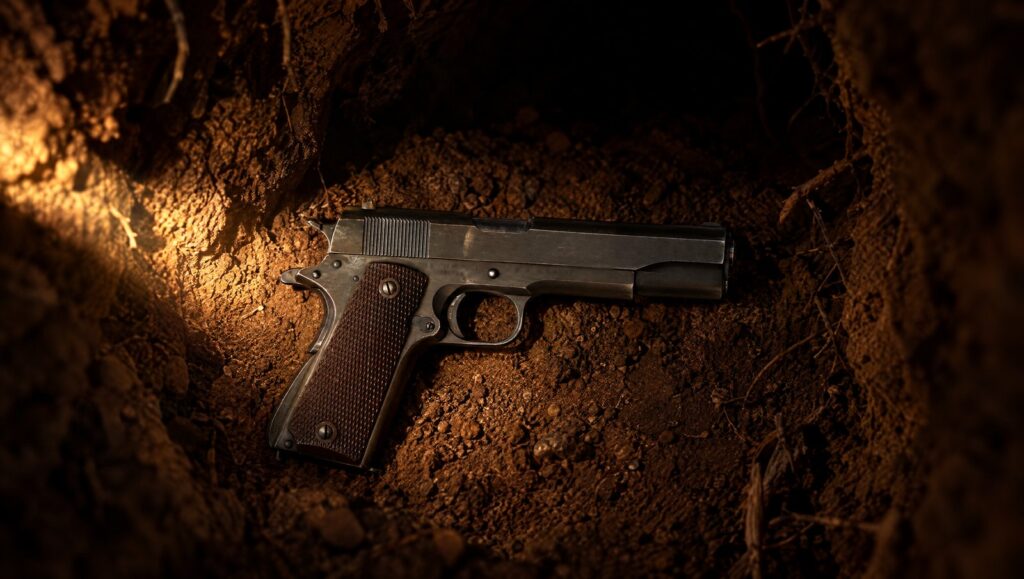
Every M1911A1 in Vietnam was at least 20 years old, because the last ones were made in 1945. It was still the standard American pistol, and it stayed that way until the Army adopted the Beretta 92F as the M9 on February 14, 1985.
It became the main tool of the tunnel rats, the soldiers who crawled into enemy tunnels with little more than a pistol and a flashlight. They learned to live with its blinding flash and deafening blast in those tight spaces.
Real surplus 1911s are scarce, so most people buy a GI-style copy. Palmetto State Armory had Rock Island’s M1911-A1 GI at $377.99 and Kentucky Gun Co had it at $351.04 when I checked, under Rock Island’s $420 MSRP. Our used 1911 guide covers buying an original.
Best For: Anyone who wants the American sidearm of the war for under $400.
5. M1 and M2 Carbine: The Carbine Both Sides Used
- Caliber: .30 Carbine
- M2 rate of fire: About 900 rounds a minute on full auto
- In Vietnam: From the French in the late 1940s, then US advisers from 1956
- Carried by: South Vietnamese forces, and the Viet Cong
| Category | Rating |
|---|---|
| History | 4/5 |
| Availability | 4/5 |
| Value | 3/5 |
Pros
- Light and handy
- Fought on both sides
- Inland’s copy is made in the USA
Cons
- Only 61 ammo listings
- Reproductions cost over $1,200
- Originals need careful inspection
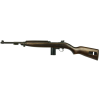
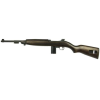
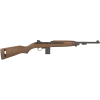
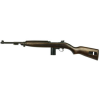
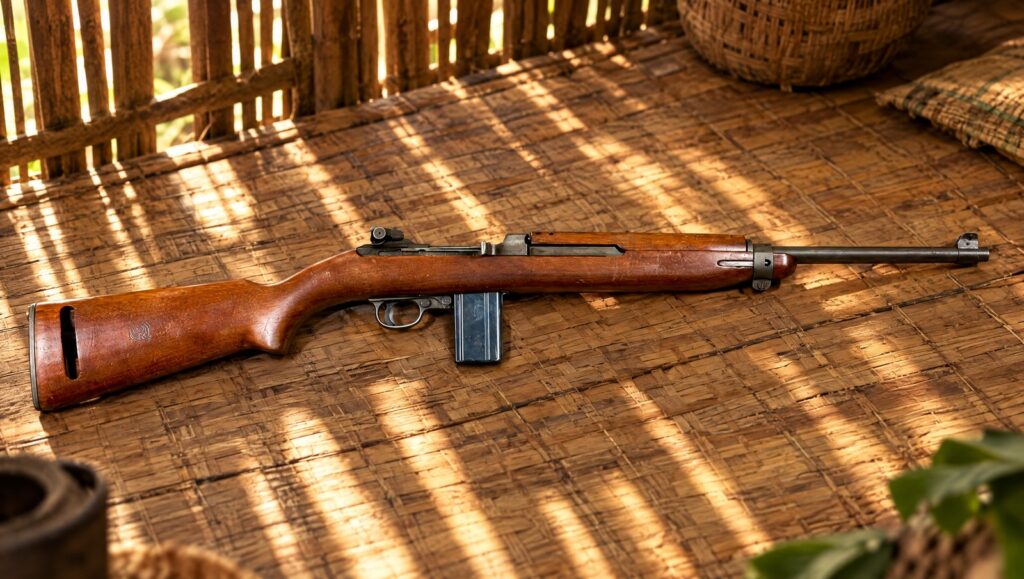
The French brought M1 carbines to Vietnam in the late 1940s, and US advisers brought more from 1956, issuing them to South Vietnamese Marines and Rangers. Later they went to the National Police, the Regional and Popular Forces and the Kit Carson Scouts.
The Viet Cong used plenty too, captured in battle, stolen from South Vietnamese stocks or bought on the black market. The select-fire M2 could fire about 900 rounds a minute, and during Tet in 1968, Marines fighting in Hue carried M2s they’d taken from a South Vietnamese armory.
Original carbines are C&R guns now. Inland’s new M1 1945 copies the last carbine Inland made in 1945, and MidwayUSA had it at $1,410.99 and Kentucky Gun Co at $1,351.55 when I checked. Our best M1 carbines roundup compares it with GI originals.
Best For: Buyers who want a light, handy carbine with history on both sides of the war.
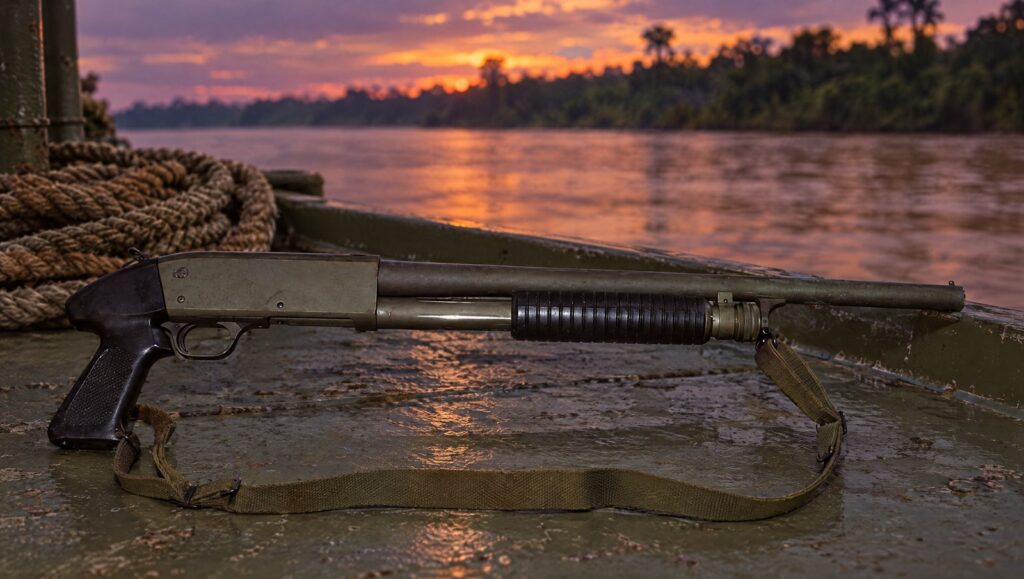
6. Ithaca Model 37: The Combat Shotgun
- Gauge: 12 gauge
- Introduced: 1937
- Vietnam contract: About 22,000 riot guns, ordered from 1962
- Carried by: South Vietnamese forces, SEALs and Marine recon
| Category | Rating |
|---|---|
| History | 4/5 |
| Availability | 3/5 |
| Value | 3/5 |
Pros
- A real Vietnam contract shotgun
- Ithaca reissues the Trench Gun
- 12 gauge ammo is everywhere
Cons
- Trench Gun reissue costs $2,999
- Originals are hard to verify
- Duckbill choke disappointed
Ithaca introduced the Model 37 in 1937, and in early 1962 the Army needed more combat shotguns to arm South Vietnamese forces. Ithaca built about 22,000 S-prefix riot guns under that contract, and the government bought Model 37 trench guns around 1967.
Navy SEALs and Marine recon teams tried some with an experimental duckbill choke, but the results were mixed and it was judged better for riot control. Of the refurbished World War II shotguns, the Winchester Model 12 and Stevens trench guns saw the most use, and the Navy, SEALs included, also used the Remington 870.
Ithaca has reissued its Model 37 Trench Gun in a limited run at $2,999, and its own page says it served from World War II through the jungles of Vietnam. For a plain Model 37, Bass Pro Shops listed a 12 gauge at $650.99, far below Ithaca’s $2,799 for a new Featherlight, so ask about its condition, and our Ithaca 37 review covers the modern gun.
Best For: Shotgun collectors who want the pump gun with a real Vietnam contract.
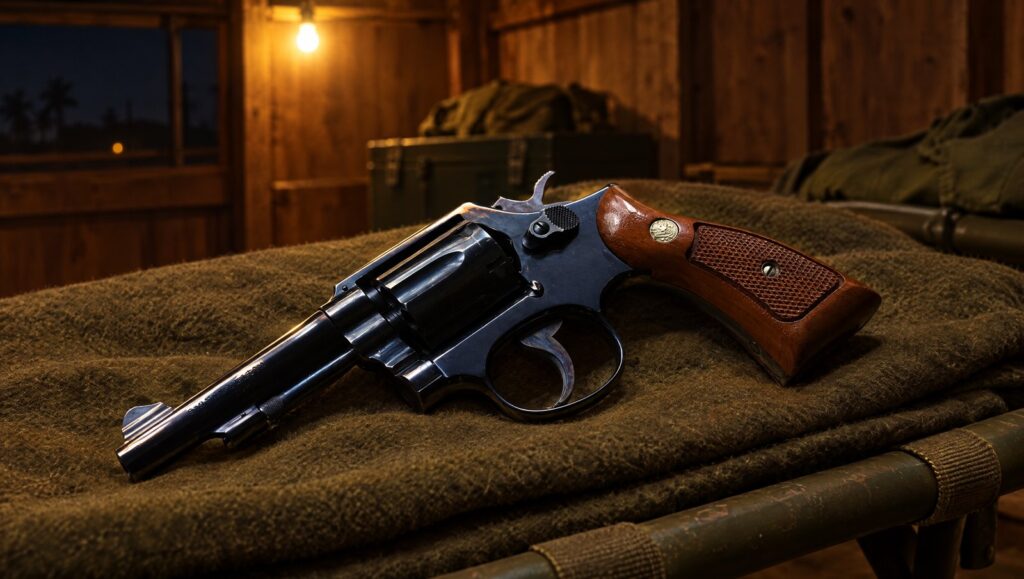
7. Smith & Wesson .38 Revolvers: The Aircrew and Air Police Revolver
- Caliber: .38 Special
- Models: The M&P, named the Model 10 in 1957, and the Model 15
- Action: Double action, six-shot cylinder
- Carried by: Pilots, aircrews and Air Force security police
| Category | Rating |
|---|---|
| History | 3/5 |
| Availability | 5/5 |
| Value | 4/5 |
Pros
- Simple six-shot service revolver
- Smith & Wesson still makes it
- .38 Special is easy to find
Cons
- Only six rounds
- New ones cost about $966
- Service history is hard to trace
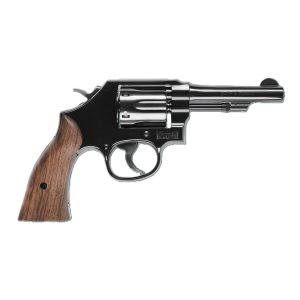
The Army’s pistol was the 1911, but pilots, Air Force security police and other non-infantry troops were often issued .38 Special revolvers. Smith & Wesson’s Military & Police became the Model 10 in 1957, and the Air Force bought mostly M&Ps after its lightweight Aircrewman revolver was dropped.
From 1960 the Air Force also bought the Model 15 Combat Masterpiece, and a veteran of the 377th Security Police Squadron at Tan Son Nhut wrote that it stayed their mainstay after he arrived in 1965. Some Navy and Marine aircrews still carried wartime Victory Model revolvers.
Smith & Wesson still makes the Model 10 Classic, a 4-inch, six-shot blued .38 with no internal lock. Palmetto State Armory had it at $965.99 and MidwayUSA at $969 when I checked, and our best .38 Special revolvers roundup compares it with other .38s.
Best For: Revolver fans who want the classic American service .38.
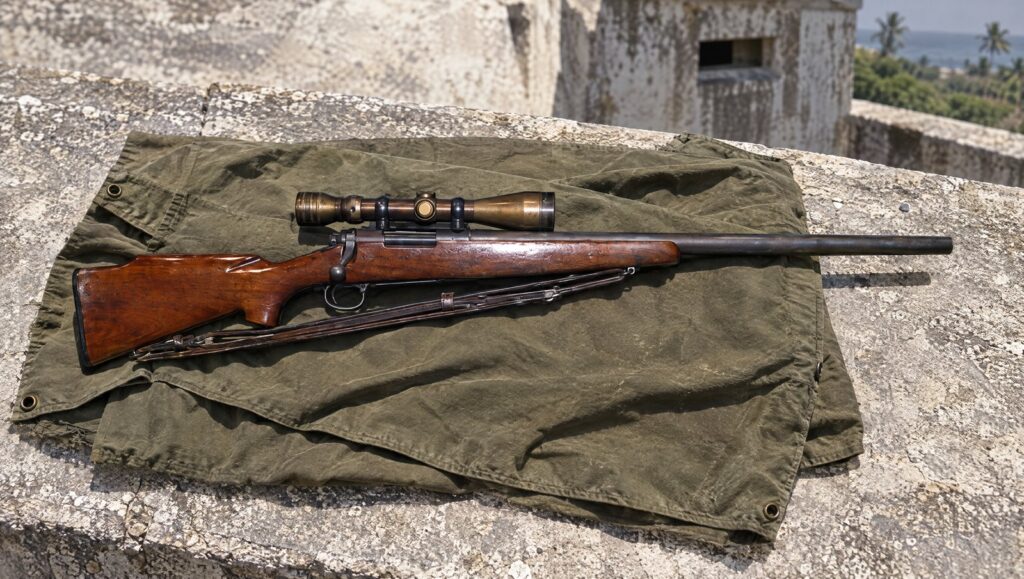
8. USMC M40 (Remington 700): The Marine Sniper Rifle
- Caliber: 7.62x51mm NATO
- Action: Short-action bolt, five-round magazine
- Adopted: April 7, 1966
- Carried by: Marine Corps snipers
| Category | Rating |
|---|---|
| History | 4/5 |
| Availability | 3/5 |
| Value | 5/5 |
Pros
- Real Marine sniper history
- Affordable Remington 700 base
- Huge aftermarket support
Cons
- No factory M40 reissue
- Needs a scope to match
- Thin retailer supply right now
The Marine Corps tested bolt-action rifles for accuracy, durability and availability, chose the Remington Model 700 and adopted it as the M40 on April 7, 1966. The Corps ordered 700 rifles, and several of them fought in the streets of Hue two years later.
It was a short-action 700 in 7.62 NATO with a five-round magazine, and early M40s wore a Redfield 3-9x Accu-Range scope. It became the foundation of Marine sniper rifles for the next four decades.
There’s no M40 reissue, but the Remington 700 is still the base of countless precision rifles. Classic Firearms had a 700 SPS in .308 Winchester, the civilian cousin of 7.62 NATO, with a 24-inch barrel, at $648.22 when I checked. Our Remington 700 review covers the action.
Best For: Precision shooters who want to build an M40-style rifle on the real action.
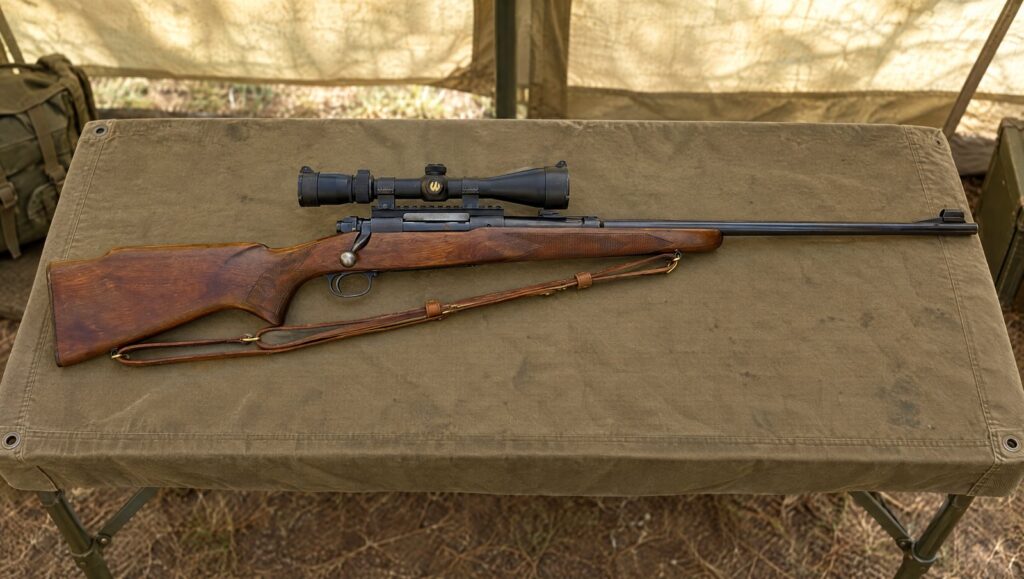
9. Winchester Model 70: Carlos Hathcock’s Rifle
- Caliber: .30-06 for Hathcock’s rifle
- Scope: An 8-power Unertl target scope
- Military status: Never formally adopted for combat
- Carried by: Marine snipers, including Carlos Hathcock
| Category | Rating |
|---|---|
| History | 5/5 |
| Availability | 5/5 |
| Value | 4/5 |
Pros
- .30-06, like Hathcock’s rifle
- Still in production
- A great all-round hunting rifle
Cons
- Not a sniper replica
- Scope and mount cost extra
- Costs over $1,100
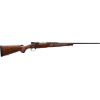
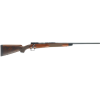
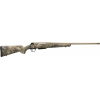
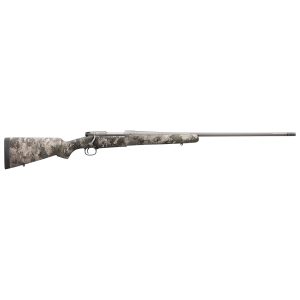
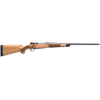
The Model 70 was never formally adopted for combat, but some were used as sniper rifles in World War II, Korea and Vietnam. The most famous sniper of the Vietnam War, Carlos Hathcock, carried one of the Marine Corps’ Model 70 target rifles in .30-06 with an 8-power Unertl scope.
Hathcock won the Wimbledon Cup, a 1,000-yard match at Camp Perry, in 1965, and deployed to South Vietnam with the 1st Marine Division the next year. Winchester quotes a Washington Post eulogy crediting him with 93 kills over two tours.
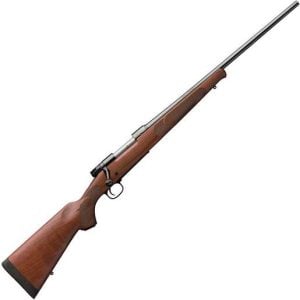
Winchester still makes the Model 70, and Sportsman’s Warehouse had a Featherweight in .30-06 at $1,169.99 while MidwayUSA had one at $1,299.99 when I checked. It’s a hunting rifle, not a copy of Hathcock’s target rifle, and our Winchester Model 70 review covers it.
Best For: Hunters who want a rifle with Carlos Hathcock’s story behind it.
Allied Guns: South Vietnam and Australia
Two rifles carried by America’s allies. The South Vietnamese army still had plenty of American Garands in 1968, and more than 60,000 Australians served in Vietnam, and the infantry carried a rifle built at Lithgow.
10. M1 Garand: The Veteran of Three Wars
- Caliber: .30-06 Springfield
- Adopted: 1936
- US standard rifle: 1936 to 1957
- Carried by: South Vietnamese army
| Category | Rating |
|---|---|
| History | 5/5 |
| Availability | 4/5 |
| Value | 3/5 |
Pros
- Served in three wars
- Real surplus you can buy
- C&R eligible originals
Cons
- Heavy and long
- Originals cost about $1,600
- Needs en-bloc clips
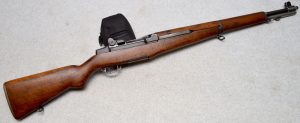
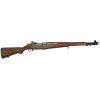
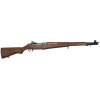
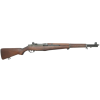
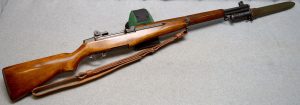
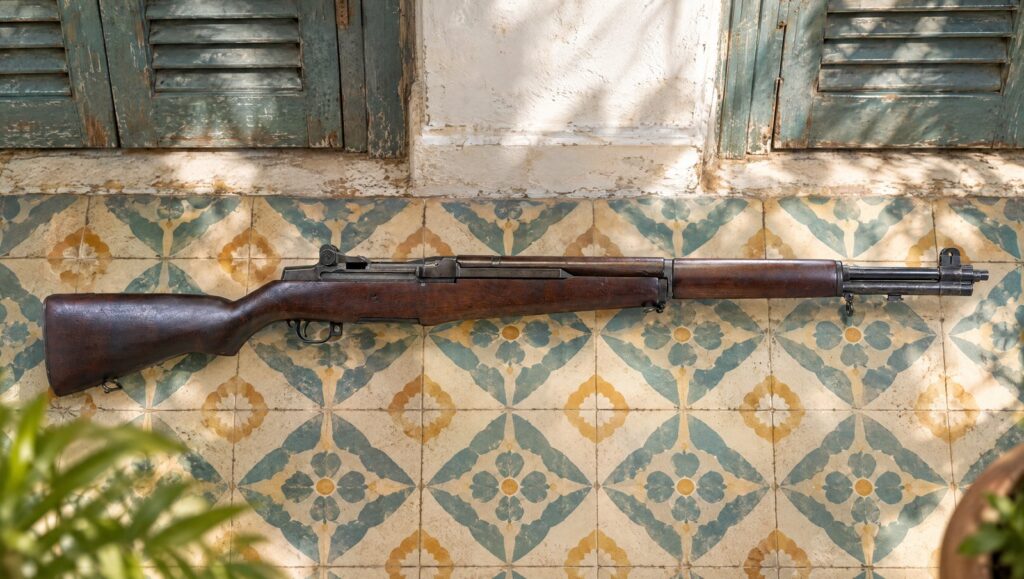
The M1 was the standard American rifle from 1936 to 1957, so it fought in World War II and Korea before it reached Vietnam. The South Vietnamese army still had plenty of them in the 1960s.
At Hue in early 1968, most South Vietnamese fighters were still armed with the Garand, even though a more modern rifle was already being issued. By then it had been in service for three decades.
Original M1s are C&R eligible, and Classic Firearms had an original rifle at $1,599.99 when I checked. Our used M1 Garand guide covers what to check before you buy one.
Best For: Collectors who want one real rifle that served in three American wars.
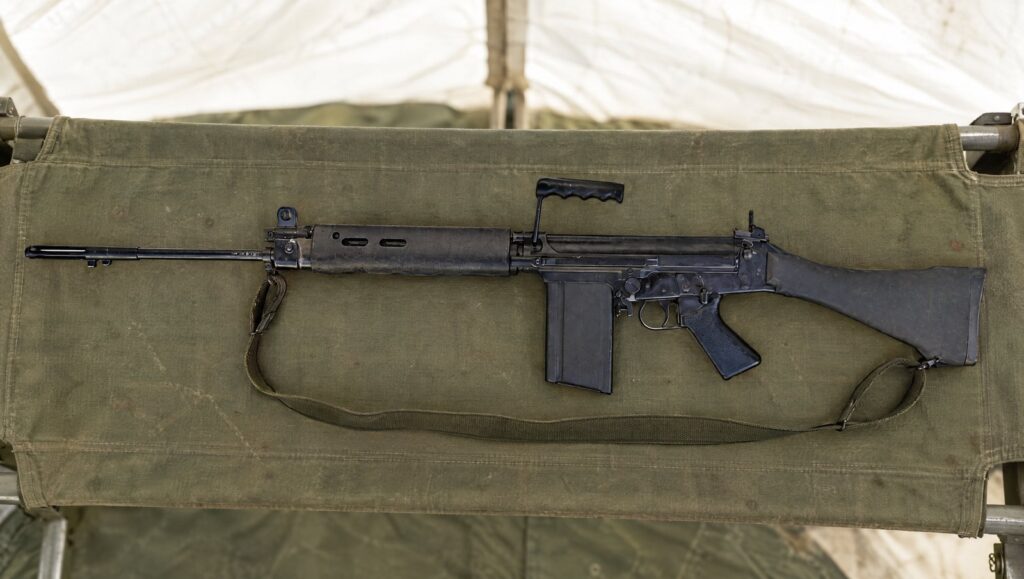
11. L1A1 Self-Loading Rifle: The Australian Rifle
- Caliber: 7.62x51mm NATO
- Action: Gas operated, semi-auto, 20-round magazine
- Made: Small Arms Factory, Lithgow, Australia
- Carried by: Australian troops, including the joint ANZAC battalion
| Category | Rating |
|---|---|
| History | 4/5 |
| Availability | 2/5 |
| Value | 3/5 |
Pros
- Same round as the M14
- The Aussie rifle of Vietnam
- Part of the big FAL family
Cons
- No new production
- Heavy battle rifle
- Used examples vary a lot
The L1A1 Self-Loading Rifle was the Australian Army’s standard infantry weapon in Vietnam, and its standard rifle from 1960 to 1992. It’s Australia’s version of the British L1A1, a development of Belgium’s FN FAL, and it was built at the Small Arms Factory in Lithgow.
Unlike the M16, it’s a semi-auto battle rifle in 7.62mm NATO with a 20-round magazine. Australia’s part in the war began in 1962, and more than 60,000 Australians served in Vietnam, 523 of whom died.
There’s no new L1A1. Century Arms imported L1A1-type rifles from 1989 to 1994, assembled in Canada on Brazilian IMBEL and Argentine receivers, and Guns.com had IMBEL L1A1s at $1,300.99 and $1,539.99 when I checked. Our FN FAL guide covers the whole family.
Best For: Collectors of Commonwealth rifles who want the gun the Australians carried.
North Vietnamese and Viet Cong Guns
Four Soviet designs, most of them built in China. China was Hanoi’s greatest arms supplier, and its copy of the AK-47 was doing most of the fighting for the North Vietnamese by 1968. The Viet Cong also used captured American guns, from M1 carbines to the occasional M16 or M14, and North Vietnam built its own K-50M submachine gun.
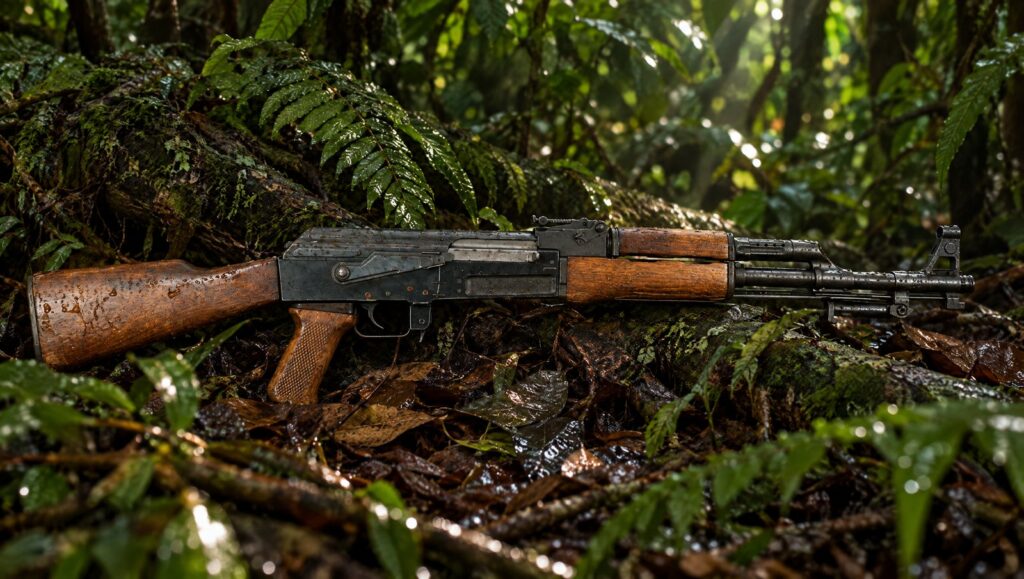
12. AK-47 and Chinese Type 56: The Enemy’s Main Rifle
- Caliber: 7.62x39mm
- Made: China, as a copy of the Soviet AK-47
- Supplied by: China, Hanoi’s greatest arms supplier
- Carried by: North Vietnamese Army and Viet Cong
| Category | Rating |
|---|---|
| History | 5/5 |
| Availability | 4/5 |
| Value | 4/5 |
Pros
- The rifle of the other side
- 213 ammo listings at our dealers
- US-made copies near $1,000
Cons
- Real Chinese guns are rare
- Import ban since 1994
- Copies aren’t wartime guns

By 1968, the gun doing most of the fighting for the North Vietnamese was the Type 56, China’s copy of the Soviet AK-47. China was Hanoi’s greatest arms supplier, and the 1st Marine Division even staged an identification photo of a typical Viet Cong guerrilla carrying one.
It fired the 7.62x39mm round, and many American SOG recon teams switched to Type 56 rifles themselves for the harder-hitting cartridge.
The US has barred arms imports from China since May 1994, so a real Type 56 is rare. Palmetto State Armory had its Soviet Arms Type 56, a new US-made copy with a 1.5mm Chinese-spec receiver, at $999.99, and Classic Firearms had a Chinese Type 56 underfolder rebuilt with a new US barrel and receiver by James River Armory at $1,200 when I checked. Our AK-47 buyers guide covers the rest.
Best For: Buyers who want the rifle the North Vietnamese carried, or the closest copy.
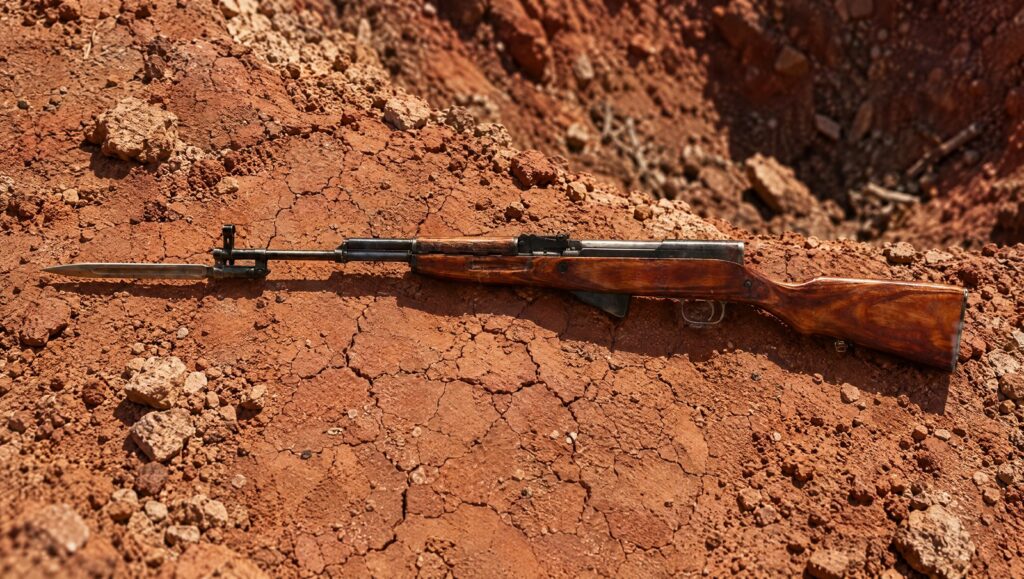
13. SKS and Chinese Type 56 Carbine: The Classic Bring-Back
- Caliber: 7.62x39mm
- Designed: By Sergei Simonov, 1945
- Supplied: By China to North Vietnam from 1959
- Carried by: Viet Cong and North Vietnamese troops
| Category | Rating |
|---|---|
| History | 5/5 |
| Availability | 5/5 |
| Value | 5/5 |
Pros
- Cheapest Vietnam rifle to own
- Shares the AK’s 7.62×39 round
- Great bring-back history
Cons
- Chinese imports have dried up
- Condition varies widely
- Fixed 10-round magazine
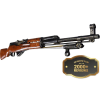
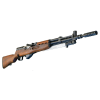
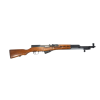
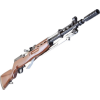
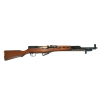
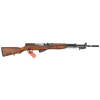
Sergei Simonov designed the SKS carbine in 1945, and China supplied the lion’s share of North Vietnam’s from 1959. It gave the Viet Cong and North Vietnamese another excellent rifle, and most of the ones American troops brought home were Chinese Type 56 carbines.
Vietnam was one of the last wars where returning Americans could legally bring home semi-auto military rifles as war trophies, with the required paperwork. That’s why some Chinese SKS carbines in the US come with capture papers.
Classic Firearms had a Chinese Type 56 SKS, sold as an original military turn-in, at $399.99, and a Yugoslav SKS at $479.99 when I checked. Our best SKS rifles roundup compares the versions.
Best For: Anyone who wants a real Vietnam-era rifle for about $400.
14. Mosin-Nagant M44 and Type 53: The Bolt-Action Carbine
- Caliber: 7.62x54R
- Action: Bolt action
- Made: Soviet M44, copied in China as the Type 53
- Carried by: North Vietnamese Army
| Category | Rating |
|---|---|
| History | 3/5 |
| Availability | 4/5 |
| Value | 5/5 |
Pros
- Cheap Cold War carbine
- Full-power rifle cartridge
- Easy entry to Vietnam history
Cons
- Only 38 ammo listings
- Stout recoil from a carbine
- Surplus bores vary
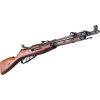
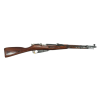
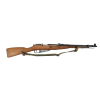
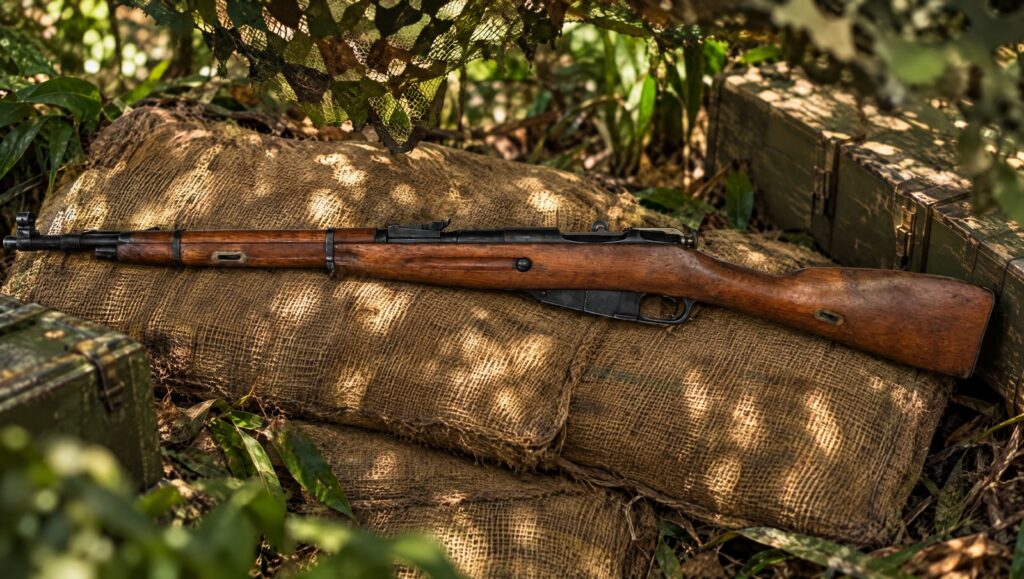
The Type 53 was China’s copy of the Soviet M44 Mosin-Nagant carbine, and in 1968 it was one of the three main infantry rifles in North Vietnamese battalions. It’s a short bolt-action carbine firing the 7.62x54R, a rimmed round that’s comparable to the .308 Winchester or the .30-06.
Classic Firearms had a Russian M44 in good to very good condition at $399.99 when I checked. Ammo is the catch, with only 38 listings of loaded 7.62x54R across our dealers, and our Mosin-Nagant guide covers where to buy one.
Best For: Budget collectors who want a bolt-action rifle from the North Vietnamese side.
15. Tokarev TT-33 and Chinese Type 54: The Coveted War Trophy
- Caliber: 7.62x25mm Tokarev
- Design: China’s copy of the Soviet TT-33
- C&R status: ATF lists the Chinese Type 51 and Type 54 by name
- Carried by: North Vietnamese forces
| Category | Rating |
|---|---|
| History | 4/5 |
| Availability | 3/5 |
| Value | 4/5 |
Pros
- Real bring-back history
- About $350 in surplus condition
- Listed by name as C&R
Cons
- Only 16 ammo listings
- No manual safety on military guns
- No new Chinese imports
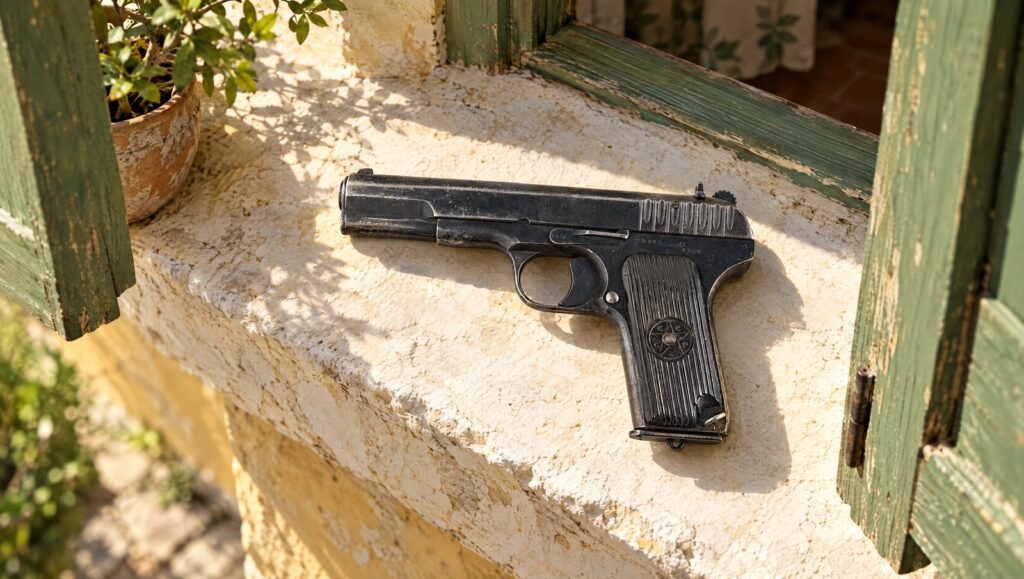
The Type 54 is China’s version of the Soviet TT-33 Tokarev, and China appears to have supplied North Vietnam with a significant number of them. All military Tokarevs fire the 7.62x25mm round.
It was a coveted war trophy, and most Chinese military Type 54s in the US were captured in the war and brought home by returning servicemen. ATF lists the Chinese Type 51 and Type 54 by name as curios or relics.
Classic Firearms had a Norinco Type 54 in good to very good condition at $350 when I checked. Ammo is scarce, with only 16 listings of loaded 7.62×25 across our dealers, and our Tokarev pistol guide covers every version.
Best For: Collectors who want the classic Vietnam bring-back pistol.
The M16 Jamming Problem: What Really Happened
No gun on this list has a worse reputation than the early M16, and the popular story blames soldiers who didn’t clean it. The real cause was three problems at once.
- An untested powder. The rifle was designed around IMR stick powder, but the Army switched to ball powder without testing it in the rifle. That pushed the rate of fire from 700 to 800 rounds a minute to nearly 1,000.
- No cleaning gear. The rifle was sold as self-cleaning. More than 85,000 were in Vietnam before a single cleaning kit for its .22 caliber bore, manual or chamber brush was available, and large-scale issue didn’t start until 1967.
- A bare chamber. The chamber wasn’t chrome plated, and Small Arms Review calls that the principal and most serious cause of the malfunctions. Chrome chambers came first, then chrome bores and chambers later in the war.
A House subcommittee chaired by Richard Ichord of Missouri investigated in 1967 and found the powder change wasn’t supported by test data. It recommended going back to the old powder, but the Army reformulated the new one and redesigned the recoil buffer instead. The reliability problems all but disappeared once the M16A1 entered service.
AK-47 vs M16 in Vietnam
The two rifles fired very different rounds. The M16 fired the small, fast 5.56x45mm M193 bullet at about 3,250 feet per second, while the AK and its Chinese copies fired the 7.62x39mm. Dale Dye recalls in American Rifleman that critics called the early M16 the Matty Mattel for its plastic and aluminum, while fans called it the widow maker for its light weight and firepower.
The AK and the SKS were the enemy’s main weapons, and some Americans chose them too: many SOG recon teams carried the Chinese Type 56 for its harder-hitting 7.62×39 round. Once the M16A1’s fixes reached the field, its reliability problems all but disappeared.
Vietnam Machine Guns: Why You Can’t Easily Own One
Several of the war’s most important guns fire full auto or launch grenades, and federal law makes them hard to own. Under 18 U.S.C. 922(o), no private citizen can transfer or possess a machine gun unless it was lawfully possessed before May 19, 1986.
- M60. Adopted in 1957 in 7.62x51mm NATO, it earned the nickname The Pig, but its overall performance in Vietnam was considered quite good.
- RPD. The standard light machine gun of most Viet Cong units, built in China as the Type 56 light machine gun. SOG veteran John Plaster called it SOG’s deadliest small arm.
- Stoner 63. A 5.56mm light machine gun that other services rejected but Navy SEALs liked.
- M3A1 grease gun. Standardized in December 1944, it saw some US use early in the war, and large numbers went to friendly local forces.
- K-50M. A North Vietnamese submachine gun based on the PPSh-41 and China’s Type 50, with a stock borrowed from the French MAT-49.
- M79. The single-shot 40mm Thumper, in service from 1961. Its bore is far over the half-inch limit in the destructive device definition of 26 U.S.C. 5845, so it falls under the NFA.
A machine gun registered before May 19, 1986 can still change hands, but only through ATF’s NFA transfer process, and the supply can never grow. Our M16 rifle page explains how that works, and our machine guns history covers how these guns changed combat.
Can You Own a Vietnam War Gun? The Short Legal Answer
Yes, most of them. A semi-auto rifle, pistol, revolver or shotgun from the war is an ordinary firearm, and you buy it through a dealer with a background check where your state allows it.
Under 27 CFR 478.11, a gun made at least 50 years ago counts as a curio or relic, but replicas don’t. So a 1966 Chinese SKS or a 1944 M1 carbine is C&R eligible today, while Colt’s reissues and Inland’s new carbines are not. Our C&R guns guide explains the license.
Two import rules shape what’s for sale. In 1989 the Treasury Department banned imports of 43 assault-type semi-auto rifles, and the US has embargoed arms from China since May 1994, which is why new Chinese AKs and SKS rifles stopped arriving.
If you build an AK from imported parts, read 18 U.S.C. 922(r), which bars assembling a semi-auto rifle from imported parts if that rifle couldn’t be imported. War trophies are a separate case, because returning troops could bring some home with the required paperwork.
Vietnam War Ammo You Can Still Buy
Here’s how many listings of loaded ammo each cartridge had across our dealer network on September 30, 2026, and how many dealers carried it.
| Cartridge | Guns on this list | Ammo listings | Dealers carrying it |
|---|---|---|---|
| 12 gauge | Ithaca 37 | 6,529 | 19 |
| 5.56 NATO / .223 | XM16E1, XM177E2 | 1,529 | 23 |
| 7.62 NATO / .308 | M14, M40, L1A1 SLR | 1,208 | 19 |
| .45 ACP | M1911A1 | 932 | 18 |
| .30-06 | M1 Garand, Winchester Model 70 | 830 | 16 |
| .38 Special | Smith & Wesson .38s | 616 | 17 |
| 7.62×39 | Type 56 AK, SKS | 213 | 15 |
| .30 Carbine | M1 carbine | 61 | 11 |
| 7.62x54R | M44 and Type 53 | 38 | 12 |
| 7.62×25 Tokarev | Type 54 | 16 | 7 |
The American guns are easy to feed. The 7.62x54R and 7.62×25 guns are cheap to buy but harder to shoot often, so buy ammo when you find it. A lot of old surplus ammo is corrosive, so clean the bore the same day with something water-based, then oil it.
How I Picked These 15 Vietnam War Guns
I picked guns that American, allied, North Vietnamese and Viet Cong forces actually carried, and that you can buy in some legal form today, then grouped them by side. Each price card says whether it shows a surplus original, a used gun or new production, and full-auto weapons got their own section.
History comes from American Rifleman, Leatherneck, Small Arms Review, the Australian War Memorial, the National Park Service, the Council on Foreign Relations, the Miller Center and The Armory Life, and the law from the US Code and ATF regulations. For the war before, see our WW2 guns guide, and for surplus rifles in general, our best military surplus rifles roundup.
Photos: each gun is a real museum or Wikimedia Commons photograph, credited under it, placed in a period scene. The Type 54 is shown by a Soviet TT-33, which it copies. The featured image is built around a photo of a Soviet AK-47 by Nemo5576, released under CC BY-SA 4.0.
The Bottom Line
For the cheapest real Vietnam War gun, get a Chinese Type 54 at $350, or an SKS or a Russian M44 at about $400. For the American side, a Rock Island GI 1911 under $400 or an Inland M1 carbine gets you close. And if you want the rifle from the 1966 and 1967 fights, Colt’s XM16E1 reissue is the one to buy.
Frequently Asked Questions
What guns were used in the Vietnam War?
The main American guns were the M16, the M14, the M1911A1 pistol, the M60 machine gun and the M79 grenade launcher. North Vietnamese and Viet Cong forces used mostly Soviet designs built in China, led by the Type 56 AK and the SKS, and Australians carried the L1A1 SLR.
What was the main rifle of the Vietnam War?
For Americans it was the M16, which pushed the M14 out of front-line service and became the M16A1 in early 1967. For North Vietnam it was the Type 56, China's copy of the AK-47.
Why did the M16 jam in Vietnam?
Three problems combined: an untested switch to ball powder, no cleaning kits or training because the rifle was sold as self-cleaning, and a chamber with no chrome plating. The M16A1 fixed most of it.
Can a civilian own an M16?
Only a machine gun lawfully possessed before May 19, 1986, and only through ATF's NFA transfer process. A semi-auto retro reissue like Colt's CRXM16E1 is an ordinary rifle.
Are Vietnam War guns C&R eligible?
Originals made at least 50 years ago are, so most Vietnam-era surplus now qualifies. New reissues and replicas don't, even when they copy a Vietnam gun closely.
What pistol did the tunnel rats use?
Mostly the M1911A1 .45, often with just a flashlight. They put up with its blinding flash and deafening blast inside the tunnels.
What rifle did Carlos Hathcock use?
His main rifle was a Marine Corps Winchester Model 70 target rifle in .30-06 with an 8-power Unertl scope, not the M40.
What rifle did the Australians use in Vietnam?
The L1A1 Self-Loading Rifle in 7.62mm NATO, built at Lithgow. It was the Australian Army's standard rifle from 1960 to 1992.
Why are Chinese SKS and AK rifles hard to find now?
The US has embargoed arms from China since May 1994, so no new Chinese guns arrive. What's for sale was already in the country.
What is the cheapest Vietnam War gun to buy?
A Chinese Type 54 pistol at $350, or an SKS or a Russian M44 at $399.99 each, were the cheapest when I checked.
Can you own an M79 grenade launcher?
Only as a registered destructive device under the NFA, because its 40mm bore is far over the half-inch limit in the federal definition, and each explosive grenade counts as a destructive device too.
4,715+ Gun & Ammo Deals
Updated daily from 200+ top retailers. Filter by category, caliber, action type, and price.
Related Guides