

Last updated September 27, 2026
Some of the links below are affiliate links, meaning at no additional cost to you, we may earn a commission if you click through and make a purchase.
- Treat every gun as loaded
- Point the muzzle in a safe direction
- Keep your finger off the trigger until you’re ready to shoot
- Know your target and what’s beyond
World War I was the first world war fought with bolt-action rifles, semi-automatic pistols and belt-fed machine guns on every side, and a surprising number of those guns are still for sale. They’re more than a century old now, some are old enough to count as antiques, and a few are cheaper than a new hunting rifle.
This is my guide to the 20 most important WW1 guns, grouped by the army that carried them, from the Springfield 1903 and the Lee-Enfield to the Luger, the Lebel and the Mosin-Nagant. For each one I’ll tell you what made it matter, if you can own one today, and what our dealers are asking, with a live price card wherever an original or a legal civilian version is in stock.
How we tested: Every pick here is ranked against our testing methodology. Minimum round counts, accuracy and reliability protocols, the failures that disqualify a gun.
WW1 Guns at a Glance
Here are all 20 WW1 guns on this list, which army carried each one, and if you can own one today.
| Gun | Why It Matters | Key Facts | Check Price |
|---|---|---|---|
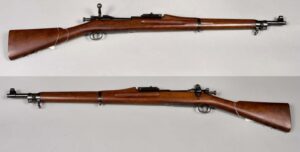 |
THE AMERICAN SERVICE RIFLE
Springfield M1903
Collectors who want the American bolt gun of both world wars, and shooters who like an accurate iron-sighted rifle. |
Army: United States Caliber: .30-06 Springfield Own one: Yes, original |
Check Price ↓ |
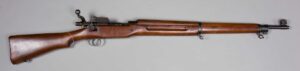 |
THE RIFLE MOST DOUGHBOYS CARRIED
M1917 Enfield
Shooters who want a WW1 American rifle to take to the range without paying Springfield prices. |
Army: United States Caliber: .30-06 Springfield Own one: Yes, original |
Check Price ↓ |
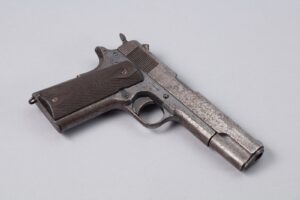 |
THE AMERICAN PISTOL
Colt M1911
Anyone who wants the WW1 American sidearm in a form they can shoot every weekend. |
Army: United States Caliber: .45 ACP Own one: Yes, original or copy |
Check Price ↓ |
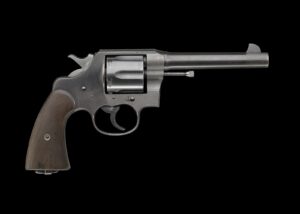 |
THE STOPGAP REVOLVER
M1917 Revolver
Revolver collectors who want a WW1 US martial gun that shoots common ammo. |
Army: United States Caliber: .45 ACP Own one: Yes, original |
Check Price ↓ |
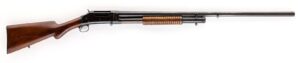 |
THE TRENCH BROOM
Winchester Model 1897 Trench Gun
Shotgun collectors, and anyone who wants the most famous close-quarters gun of WW1. |
Army: United States Caliber: 12 gauge Own one: Yes, civilian 97s |
Check Price ↓ |
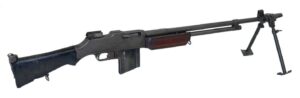 |
THE AUTOMATIC RIFLE
Browning Automatic Rifle M1918
Collectors who want the BAR experience in a legal semi-automatic rifle. |
Army: United States Caliber: .30-06 Springfield Own one: Semi-auto HCAR |
Check Price ↓ |
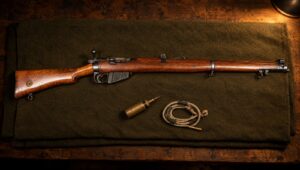 |
THE FASTEST BOLT ACTION
Lee-Enfield SMLE Mk III
Shooters who want the most practical WW1 bolt action at a sensible price. |
Army: Britain Caliber: .303 British Own one: Yes, original |
Check Price ↓ |
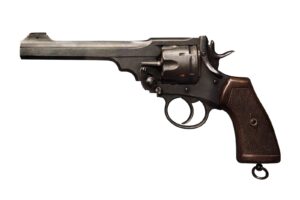 |
THE BRITISH REVOLVER
Webley Mk VI
Collectors of British military history who are willing to hunt for one. |
Army: Britain Caliber: .455 Webley Own one: Yes, but scarce |
Read More ↓ |
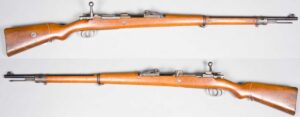 |
THE GERMAN SERVICE RIFLE
Gewehr 98
Serious collectors of German military rifles, and anyone who wants the original Mauser 98. |
Army: Germany Caliber: 8mm Mauser Own one: Yes, original |
Check Price ↓ |
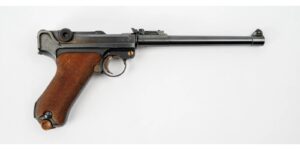 |
THE ICONIC GERMAN PISTOL
Luger P08
Collectors who want the most famous German pistol of WW1. |
Army: Germany Caliber: 9mm Luger Own one: Yes, original |
Check Price ↓ |
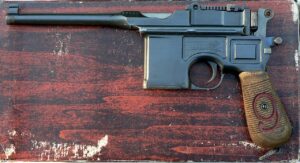 |
THE BROOMHANDLE
Mauser C96 Broomhandle
Collectors who want one of the most recognizable pistols ever made. |
Army: Germany Caliber: 7.63 Mauser, 9mm Luger on the Red 9 Own one: Yes, original |
Check Price ↓ |
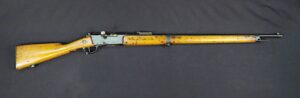 |
THE FRENCH RIFLES
Lebel 1886 and Berthier
Collectors who want the rifle that started the smokeless powder era. |
Army: France Caliber: 8mm Lebel Own one: Yes, some are antiques |
Check Price ↓ |
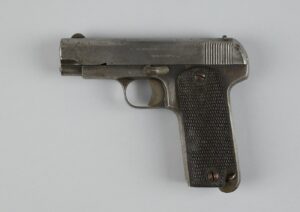 |
THE SPANISH-MADE FRENCH SIDEARM
Ruby Pistol
Budget collectors who want a genuine WW1 service pistol they can shoot with common ammo. |
Army: France Caliber: .32 ACP Own one: Yes, original |
Check Price ↓ |
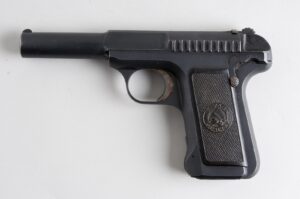 |
THE AMERICAN PISTOL FRANCE BOUGHT
Savage Model 1907
Collectors who like an American angle on French WW1 history. |
Army: France Caliber: .32 ACP Own one: Yes, original |
Check Price ↓ |
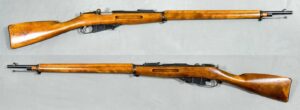 |
THE RUSSIAN SERVICE RIFLE
Mosin-Nagant M1891
Mosin collectors who want the original WW1 pattern, including the American-built rifles. |
Army: Russia Caliber: 7.62x54R Own one: Yes, original |
Check Price ↓ |
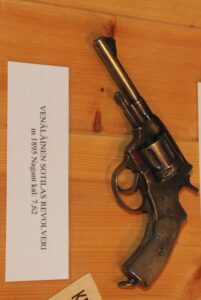 |
THE GAS-SEAL REVOLVER
Nagant M1895 Revolver
Collectors who want an inexpensive, genuinely odd WW1 handgun. |
Army: Russia Caliber: 7.62x38R Own one: Yes, original |
Check Price ↓ |
 |
THE STRAIGHT-PULL RIFLE
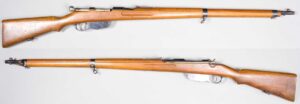
Steyr-Mannlicher M95
Collectors who want the most unusual bolt action of WW1 for very little money. |
Army: Austria-Hungary Caliber: 8x50R, most later rechambered to 8x56R Own one: Yes, original |
Check Price ↓ |
 |
THE CLIP-LOADED PISTOL
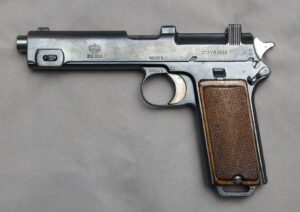
Steyr M1912 (Steyr-Hahn)
Pistol collectors who like engineering oddities with real WW1 service. |
Army: Austria-Hungary Caliber: 9mm Steyr Own one: Yes, original |
Check Price ↓ |
 |
THE ITALIAN SERVICE RIFLE
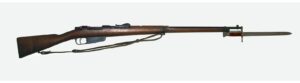
Carcano M1891
Budget collectors who want an original WW1 rifle for the price of a new .22. |
Army: Italy Caliber: 6.5×52 Carcano Own one: Yes, original |
Check Price ↓ |
 |
THE RIFLE THREE ALLIES USED
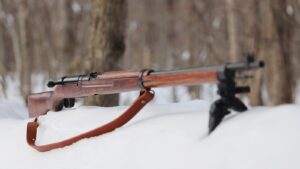
Arisaka Type 38
Collectors who want a WW1 rifle with an unexpected Allied story. |
Army: Japan Caliber: 6.5x50SR Arisaka Own one: Yes, original |
Check Price ↓ |
Table of Contents
What Guns Were Used in WW1?
The most important World War 1 guns were the standard rifles and pistols of each army. The US carried the Springfield 1903, M1917 Enfield and M1911, and Britain the Lee-Enfield and Webley. Germany had the Gewehr 98 and Luger, France the Lebel, Russia the Mosin-Nagant, Austria-Hungary the Steyr-Mannlicher M95 and Italy the Carcano.
On the Western Front and every other front, the fighting came down to those bolt-action rifles, machine guns and artillery, with pistols carried by officers, crews and trench raiders.
Almost every one of them was a bolt-action rifle or a pistol, which a civilian can own like any other gun. The machine guns are the exception. The Maxim, Vickers, Lewis, Chauchat and MP18 are regulated as machine guns under federal law, so they get their own section below the 20 picks.
| Army | Rifles | Pistols | Machine guns and others |
|---|---|---|---|
| United States | Springfield 1903, M1917 Enfield | M1911, M1917 revolver | Winchester 1897, BAR |
| Britain and Commonwealth | SMLE Mk III | Webley Mk VI | Vickers, Lewis |
| Germany | Gewehr 98 | Luger P08, Mauser C96 | MG 08, MP18 |
| France | Lebel 1886, Berthier | Ruby, Savage 1907 | Chauchat, Hotchkiss |
| Russia | Mosin-Nagant M1891 | Nagant M1895 | Maxim M1910 |
| Austria-Hungary | Steyr-Mannlicher M95 | Steyr M1912 | Schwarzlose |
| Italy | Carcano M1891 | Glisenti, Beretta | Fiat-Revelli |
| Japan | Arisaka Type 38 | Nambu, Type 26 revolver | Type 3 |
WW1 Guns of the United States
The US joined the war in April 1917 and armed a huge new army in a hurry, which is why American WW1 guns include a rifle designed for Britain and a revolver built to fire pistol ammo. They’re also the easiest WW1 guns to find here, because so many came home.
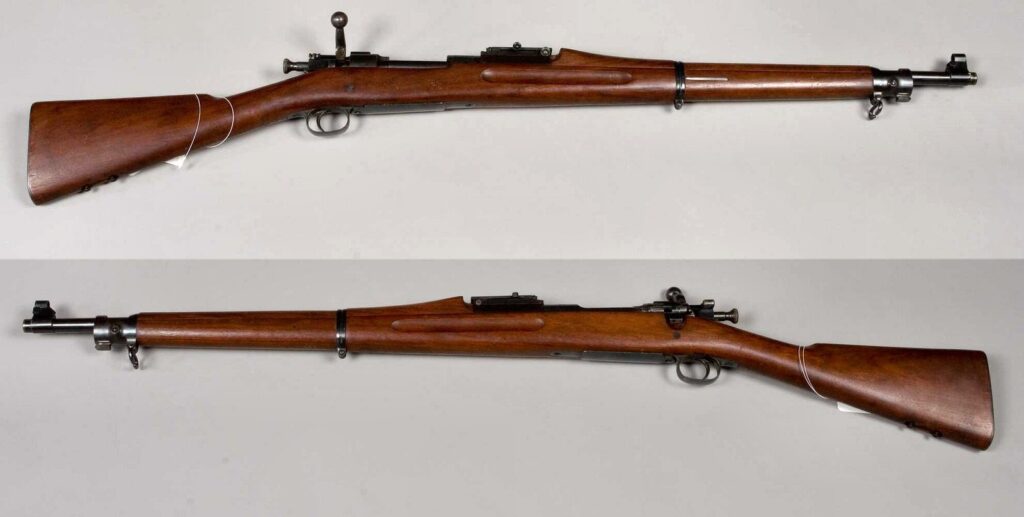
1. Springfield M1903: The American Service Rifle
- Caliber: .30-06 Springfield
- Action: Mauser-pattern bolt action, 5 rounds
- Made: 3,004,079 from 1903 to 1949
- Own one today: Yes, as an original, C&R eligible
| Category | Rating |
|---|---|
| Historical Impact | 4.5/5 |
| Shootability Today | 4.5/5 |
| Availability | 3.5/5 |
Pros
- Very accurate for its age
- Feeds on common .30-06
- Rare Mark I variants exist
Cons
- Clean originals cost over $1,500
- Avoid early low-number receivers
- Outnumbered by the M1917 overseas
The Springfield M1903 was America’s standard service rifle when the US entered the war, and by then 843,239 had been built at the government armory in Springfield, Massachusetts and at Rock Island Arsenal. The Marines who fought at Belleau Wood in June 1918 carried it. It’s a Mauser-pattern bolt gun in .30-06, and it was accurate enough to stay in service as a sniper rifle through Vietnam.
Originals from the war years are collector rifles now. The card below starts with a Springfield Model 1903 at $1,600 from Classic Firearms, and two Mark I rifles, the version cut for the Pedersen device, are listed at $1,900 and $2,400. Our US service rifles history covers the rifles before and after it.
Mine is a joy on paper. The two-stage trigger breaks clean and the rifle holds its zero. Just check the serial first, because receivers below about serial 800,000 from Springfield, or 285,507 from Rock Island, were heat-treated in a way that makes them risky with full-power loads.
Best For: Collectors who want the American bolt gun of both world wars, and shooters who like an accurate iron-sighted rifle.
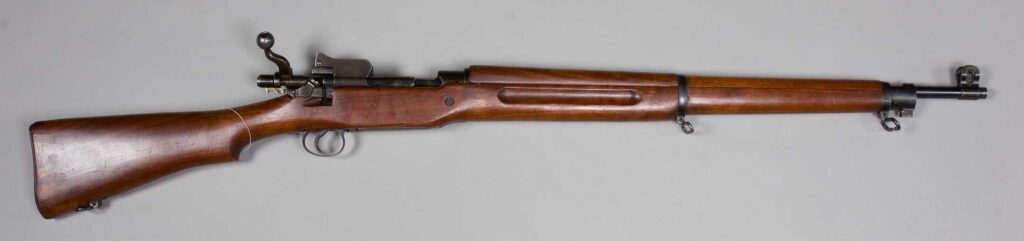
2. M1917 Enfield: The Rifle Most Doughboys Carried
- Caliber: .30-06 Springfield
- Action: Modified Mauser-type bolt action, 6 rounds
- Made: 2,193,429 by Winchester, Remington and Eddystone, 1917 to 1919
- Own one today: Yes, as an original, C&R eligible
| Category | Rating |
|---|---|
| Historical Impact | 4.5/5 |
| Shootability Today | 4.5/5 |
| Availability | 3.5/5 |
Pros
- Carried by most of the AEF
- Six-round magazine, strong action
- Cheaper than a Springfield
Cons
- Heavy at over 9 lb
- Many were sporterized
- Dog-leg bolt looks odd
The M1917 was a British design, the Pattern 1914, rebuilt for .30-06 because American factories were already tooled to make it. It quickly outnumbered the Springfield, and by November 11, 1918, about three quarters of the American Expeditionary Forces in France carried one. Sergeant Alvin York used an M1917 on October 8, 1918, during the Meuse-Argonne Offensive, the day that earned him the Medal of Honor.
Eddystone built more of them than Winchester or Remington, and the card below tracks Eddystone rifles, with Guns.com at $590.99 and a police trade-in at $899.99 from Sportsman’s Outdoor Superstore. Look closely at the cheaper ones. Plenty were cut down into hunting rifles decades ago.
It’s a heavy rifle, and that’s why it shoots so softly for a .30-06. The rear aperture sight sits close to your eye and it’s quick to use. I’d call it the most underrated rifle on this list.
Best For: Shooters who want a WW1 American rifle to take to the range without paying Springfield prices.
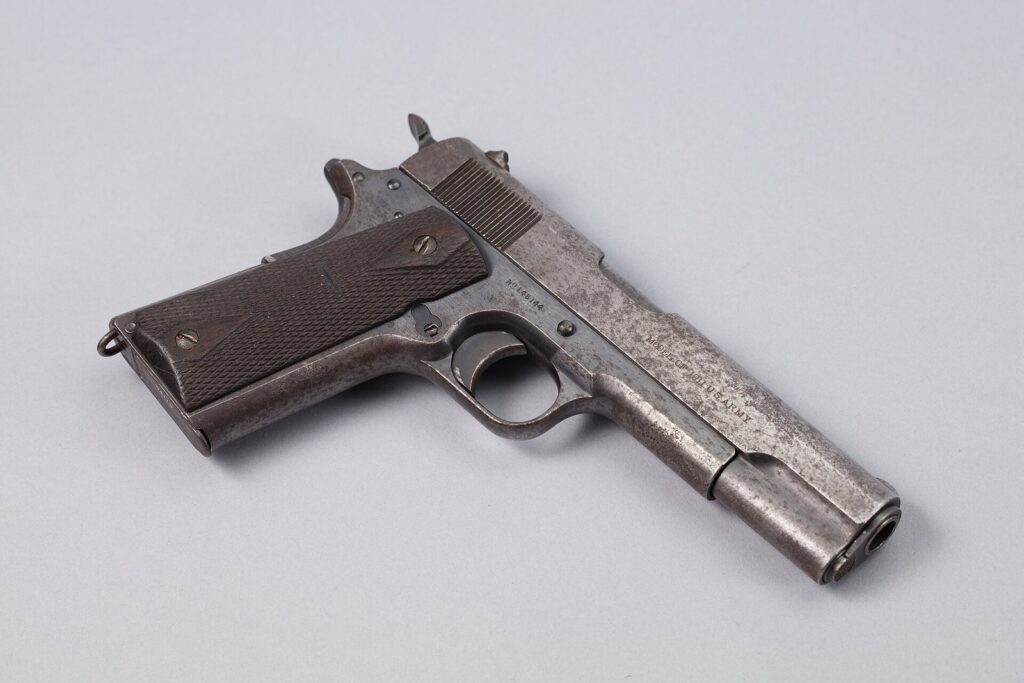
3. Colt M1911: The American Pistol
- Caliber: .45 ACP
- Action: Short recoil, single action, 7 rounds
- Adopted: 1911, updated as the M1911A1 in 1926
- Own one today: Yes, as an original or a GI-pattern copy
| Category | Rating |
|---|---|
| Historical Impact | 5/5 |
| Shootability Today | 5/5 |
| Availability | 5/5 |
Pros
- Still made after 110 years
- Cheap GI-pattern copies
- .45 ACP is everywhere
Cons
- WW1 originals cost thousands
- Copies follow the later A1 pattern
- Seven rounds in a heavy gun
John Browning’s M1911 went to war with the AEF in 1917 as the standard American pistol, and York’s own diary says he used one on October 8, 1918 as well. The version you know best, the M1911A1, came later, with a shorter trigger and an arched mainspring housing that grew out of WW1 experience.
Original WW1 Colts are collector pistols. For shooting, a GI-pattern copy makes more sense, and the card below shows Tisas’s US Army 1911A1 at $430.99 on Guns.com, with Classic Firearms at $349.99. Our Colt 1911 Government review covers the modern Colt.
The sights are small and the grip safety bites if you ride it high. But a GI 1911 still points naturally and shoots straight, and .45 ACP feels like a firm push, not a snap.
Best For: Anyone who wants the WW1 American sidearm in a form they can shoot every weekend.
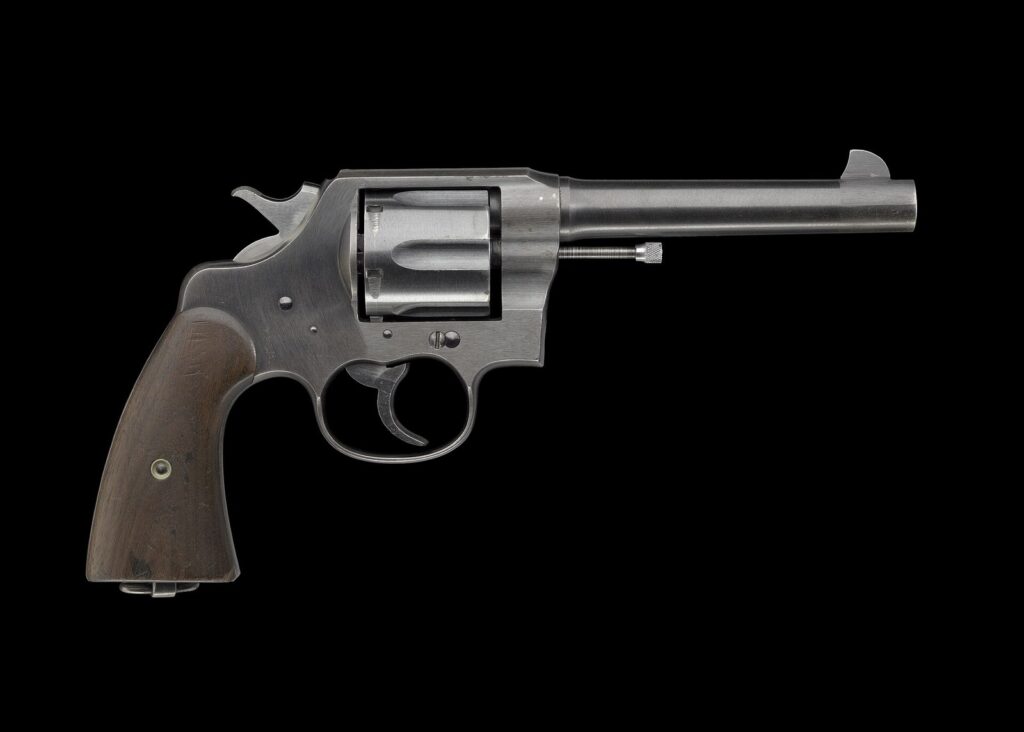
4. M1917 Revolver: The Stopgap Revolver
- Caliber: .45 ACP with half-moon clips
- Action: Double action, swing-out 6-round cylinder
- Made: About 300,000 by Colt and Smith & Wesson, 1917 to 1920
- Own one today: Yes, as an original, C&R eligible
| Category | Rating |
|---|---|
| Historical Impact | 3.5/5 |
| Shootability Today | 4.5/5 |
| Availability | 3/5 |
Pros
- Fires common .45 ACP
- Big, smooth double action
- Colt and S&W versions
Cons
- Needs moon clips for ejection
- Priced high as a collector gun
- Big frame for small hands
The Army couldn’t get enough 1911s in 1917, so Colt and Smith & Wesson adapted their big-frame revolvers to fire the same .45 ACP round, held in half-moon clips. About 300,000 were built, roughly half by each maker. The one in the photo was issued to Charles Hamilton Houston, who later became one of the most important civil rights lawyers in American history.
Originals are collector pieces. The card below shows a Colt 1917 at $1,899.99 on Guns.com. After the war, a rimmed .45 Auto Rim round was made so the revolvers could fire without clips, and both still work.
Shooting one is easy. The double-action pull is long and smooth, and a clip of six empties in one push of the ejector rod. Keep a few moon clips in your range bag and it’s one of the friendliest old guns you’ll shoot.
Best For: Revolver collectors who want a WW1 US martial gun that shoots common ammo.
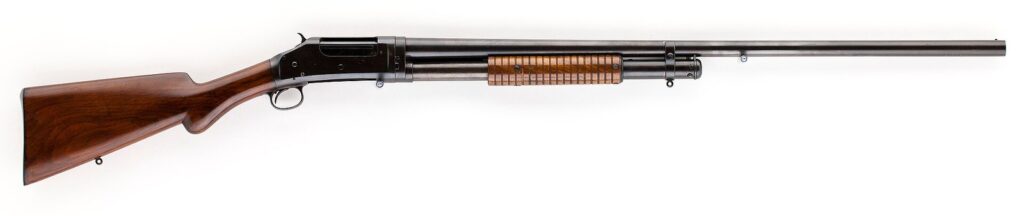
5. Winchester Model 1897 Trench Gun: The Trench Broom
- Gauge: 12 gauge, 20-inch cylinder bore on the trench gun
- Action: Pump action, exposed hammer, 5-round tube
- Made: 1,024,700 of all grades, 1897 to 1957
- Own one today: Yes, civilian Model 97s are common; military trench guns are rare
| Category | Rating |
|---|---|
| Historical Impact | 4/5 |
| Shootability Today | 4/5 |
| Availability | 3/5 |
Pros
- Famous trench warfare shotgun
- Civilian 97s are plentiful
- Slick, fast pump action
Cons
- Military trench guns are rare
- Exposed hammer takes care
- Old chambers are often short
The trench grade Model 97 added a perforated steel heat shield and a bayonet lug to Winchester’s hammer pump gun, and loaded with buckshot it earned the nickname trench broom. It worked so well that the German government lodged a formal protest against American shotguns on September 19, 1918.
Genuine military trench guns are rare and priced as collector pieces. Civilian Model 97s are easy to find, and the card below shows a pre-owned 16 gauge at $1,299.99 on Guns.com. Our Ithaca 37 review covers the pump gun that took its place in later wars.
Shoot an old 97 with light loads only, and have the chamber checked first. Many were made with 2 5/8-inch chambers, shorter than today’s 2 3/4-inch shells. Once that’s done, it’s a smooth, fast pump that still runs like a sewing machine.
Best For: Shotgun collectors, and anyone who wants the most famous close-quarters gun of WW1.
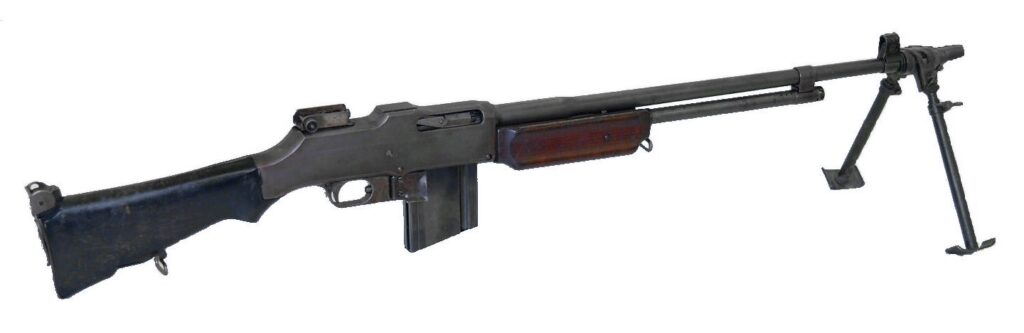
6. Browning Automatic Rifle M1918: The Automatic Rifle
- Caliber: .30-06 Springfield
- Action: Gas-operated, select fire, 20-round magazine
- Designed: 1917 by John Browning; in combat from late 1918
- Own one today: Originals only as registered machine guns; the semi-auto HCAR is sold normally
| Category | Rating |
|---|---|
| Historical Impact | 4.5/5 |
| Shootability Today | 3.5/5 |
| Availability | 2/5 |
Pros
- Browning’s last great WW1 design
- Semi-auto HCAR needs no NFA
- Soft for a .30-06
Cons
- Originals are regulated machine guns
- The HCAR costs over $5,000
- Heavy to carry
![OHIO ORDNANCE WORKS INC HCAR [BLK]](https://www.usa-gun-shop.com/wp-content/uploads/ugs-pc-img/a1dd1593af20bf52a41248ae5076e8a1.jpg)
John Browning designed the BAR in 1917 to replace the French Chauchat and the Benét-Mercié guns the AEF had been using. It fed .30-06 from 20-round magazines and reached the front in late 1918, just in time to see action before the Armistice. It became famous in the next war.
An original select-fire BAR is a machine gun, so the realistic civilian route is Ohio Ordnance’s HCAR, a semi-automatic rifle built on the BAR design. The card below shows it at $5,395 on Guns.com, with Hinterland Outfitters at $5,344.65.
The BAR is heavy, and that weight is exactly why it’s so pleasant to shoot. There’s very little muzzle rise for a full-power rifle round. The photo shows one of the later versions with a bipod, which the original M1918 didn’t have.
Best For: Collectors who want the BAR experience in a legal semi-automatic rifle.
WW1 British and Commonwealth Guns
Britain went to war in 1914 with a small professional army that could shoot very fast, and its rifle and revolver stayed in service long after the war ended. Australian and New Zealand troops carried the same SMLE at Gallipoli in 1915.
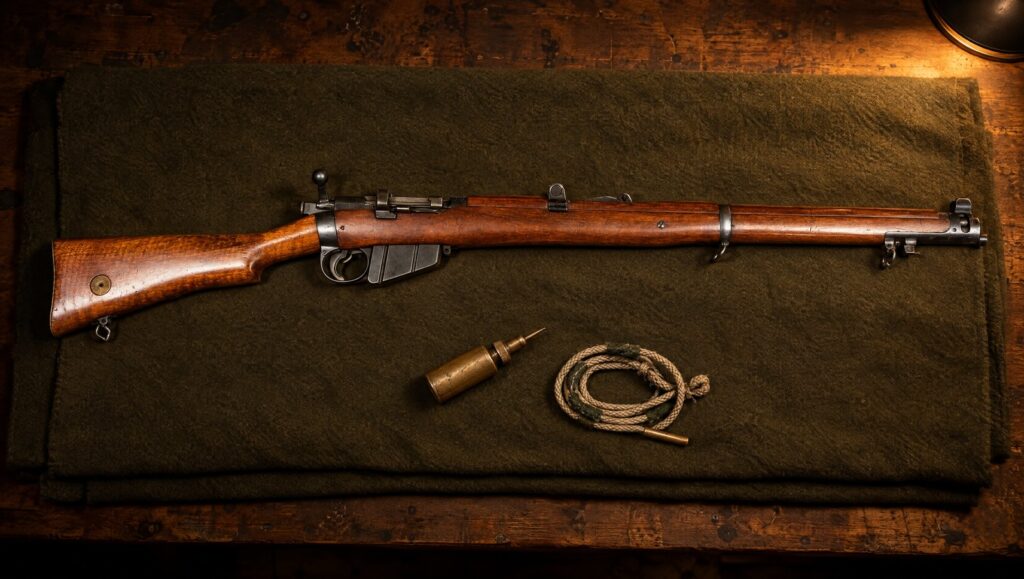
7. Lee-Enfield SMLE Mk III: The Fastest Bolt Action
- Caliber: .303 British
- Action: Rear-locking bolt action, 10-round magazine
- Adopted: January 26, 1907
- Own one today: Yes, as an original, C&R eligible
| Category | Rating |
|---|---|
| Historical Impact | 5/5 |
| Shootability Today | 4.5/5 |
| Availability | 4/5 |
Pros
- Fastest bolt of the war
- Ten-round magazine
- Affordable for a WW1 rifle
Cons
- Check bolt-head headspace
- Far fewer .303 loads than .30-06
- Many were sporterized
The Short Magazine Lee-Enfield Mk III was adopted in January 1907, and it gave Britain the fastest-shooting infantry rifle of the war. Pre-war training drilled the mad minute, at least 15 aimed rounds into a target at 300 yards in one minute, and good shots managed 20 to 30. Some Germans who faced it in 1914 reported running into machine guns.
It’s still one of the cheapest WW1 rifles to buy. The card below shows an SMLE Mk III at $349.99 on Guns.com. Our Lee-Enfield rifle buyer’s guide covers every mark, including the later No. 4.
The rear-locking bolt is short and slick, so you can work it without lifting your head. I shoot mine with modern .303 soft points and it’s a pleasure. Have the headspace checked first, because Enfield bolt heads were swapped around for decades.
Best For: Shooters who want the most practical WW1 bolt action at a sensible price.
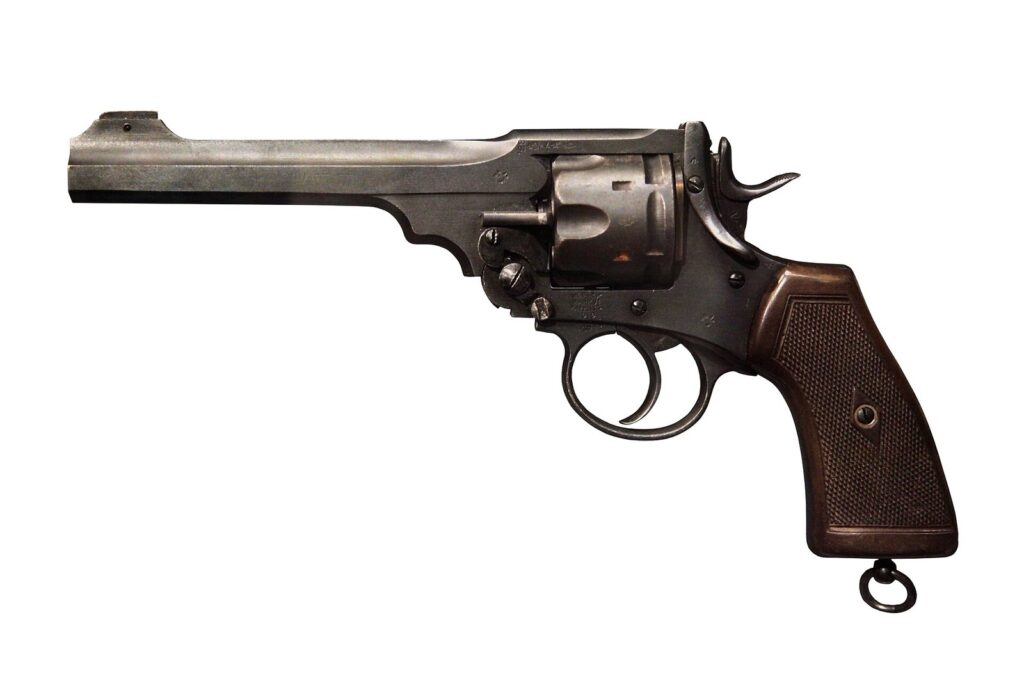
8. Webley Mk VI: The British Revolver
- Caliber: .455 Webley
- Action: Top-break double action, 6 rounds
- Made: 1915 to 1923
- Own one today: Yes, as an original, C&R eligible, but few are for sale
| Category | Rating |
|---|---|
| Historical Impact | 4/5 |
| Shootability Today | 3/5 |
| Availability | 2/5 |
Pros
- Iconic British officer’s revolver
- Fast top-break reloads
- Built extremely tough
Cons
- .455 Webley ammo is scarce
- Many were cut for .45 ACP
- None in stock when checked
The Mk VI arrived in 1915 and became the best-known Webley of all. It was issued to officers, airmen, tank crews and trench raiders, and its top-break frame let you dump all six empties at once, which mattered in a trench.
None of our dealers had one listed when I checked, and .455 Webley ammo is nearly gone, with just two listings, both from Buffalo Bore. Many Webleys imported into the US had their cylinders shaved to take .45 ACP in moon clips. That makes them shootable, but it kills the collector value, so ask before you buy.
A good Mk VI feels solid in the hand, and the double action is heavy but even. It’s a revolver to own for its history first. If you want to shoot it often, look for an unaltered gun and plan to handload.
Best For: Collectors of British military history who are willing to hunt for one.
WW1 German Guns
Germany armed most of the Central Powers, and German WW1 guns are some of the most collected firearms in the world, from the Gewehr 98 to the Luger. Originals are expensive, and restamped or mismatched guns are common, so buy from sellers who describe what they’re selling.
9. Gewehr 98: The German Service Rifle
- Caliber: 8mm Mauser
- Action: Mauser 98 bolt action, 5 rounds
- Made: More than 9 million, 1898 to 1918
- Own one today: Yes, as an original, C&R eligible
| Category | Rating |
|---|---|
| Historical Impact | 5/5 |
| Shootability Today | 4/5 |
| Availability | 3/5 |
Pros
- The original Mauser 98 action
- Distinctive Lange rollercoaster sight
- 8mm ammo still available
Cons
- Clean originals are scarce
- Long and heavy to carry
- Many were rebuilt as Kar98s
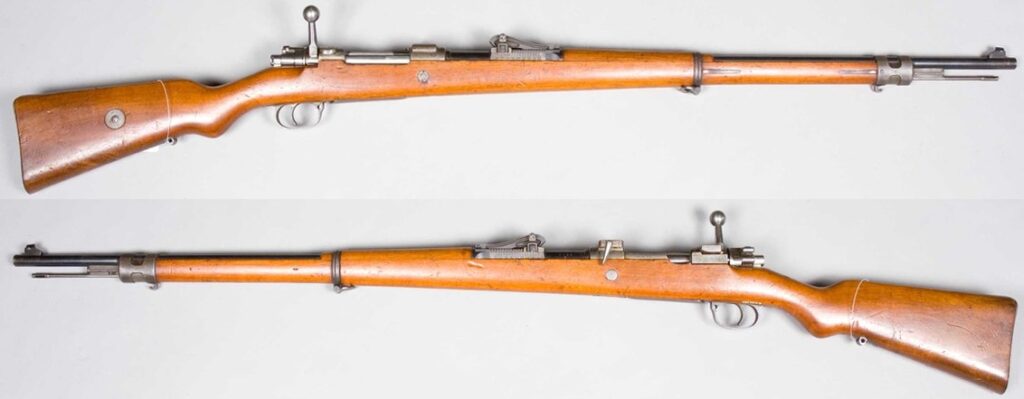
Paul Mauser’s Gewehr 98 armed the German Army through the whole war, and more than 9 million were made. Its Mauser 98 action became the most copied bolt action in the world, and its tall Lange rear sight, nicknamed the rollercoaster, is the easiest way to spot one. German snipers used scoped G98s through the whole of the trench warfare years.
Original G98s are getting hard to find, because so many were shortened into carbines between the wars. The card below shows a 1917-dated J.P. Sauer & Sohn rifle at $1,000.99 on Guns.com and a police trade-in G98 at $699.99 from Sportsman’s Outdoor Superstore. Our Mauser rifle guide covers codes and matching numbers.
It’s a long rifle with a long sight radius, and it shoots well. The steel buttplate reminds you it’s a full-power 8mm. Don’t shoot old surplus rounds of unknown origin in it, and check that the bolt number matches before paying for a matching rifle.
Best For: Serious collectors of German military rifles, and anyone who wants the original Mauser 98.
10. Luger P08: The Iconic German Pistol
- Caliber: 9mm Luger
- Action: Toggle-locked short recoil, 8 rounds
- Made: About 3 million from 1900 to 1953
- Own one today: Yes, as an original, C&R eligible
| Category | Rating |
|---|---|
| Historical Impact | 5/5 |
| Shootability Today | 3.5/5 |
| Availability | 3.5/5 |
Pros
- Gave the world 9mm Luger
- Beautiful grip angle
- Common 9mm ammo
Cons
- Picky with modern ammo
- Dated WW1 guns cost $1,800+
- Mismatched parts are common
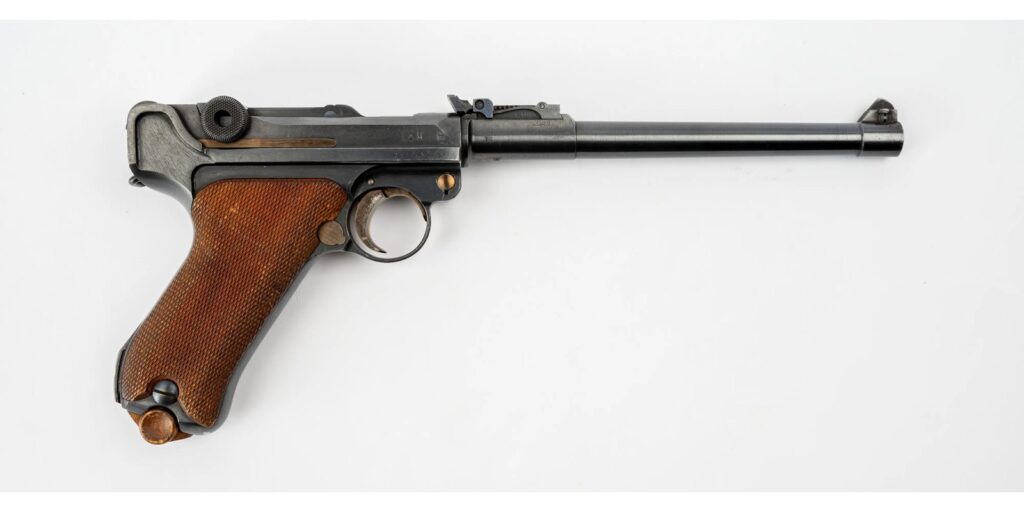
The Luger’s toggle action gave the world the 9mm Luger cartridge, and it was Germany’s standard pistol throughout WW1. The long-barreled Lange Pistole 08 in the photo, the Artillery Luger, had a barrel of almost eight inches and a stock, and its drum magazine was later used on the MP18.
The card below shows a 1917-dated DWM P08 with a 1920 property stamp at $1,850 from Classic Firearms. Our full Luger pistol guide covers makers, dates and the fakes to avoid.
A Luger points like your own finger. Shooting one is fussier, because most want full-power 9mm to cycle the toggle. I run a few magazines at a time through mine and then put it away.
Best For: Collectors who want the most famous German pistol of WW1.
11. Mauser C96 Broomhandle: The Broomhandle
- Caliber: 7.63×25 Mauser, and 9mm Luger on the WW1 Red 9
- Action: Short recoil, 10-round fixed magazine, clip-fed
- Made: About 1 million by Mauser, 1896 to 1937
- Own one today: Yes, as an original, C&R eligible
| Category | Rating |
|---|---|
| Historical Impact | 4/5 |
| Shootability Today | 3/5 |
| Availability | 3/5 |
Pros
- Unmistakable broomhandle grip
- Red 9 takes common 9mm
- Real WW1 contract history
Cons
- 7.63 Mauser ammo is rare
- Awkward to hold and aim
- Stocks and holsters cost extra
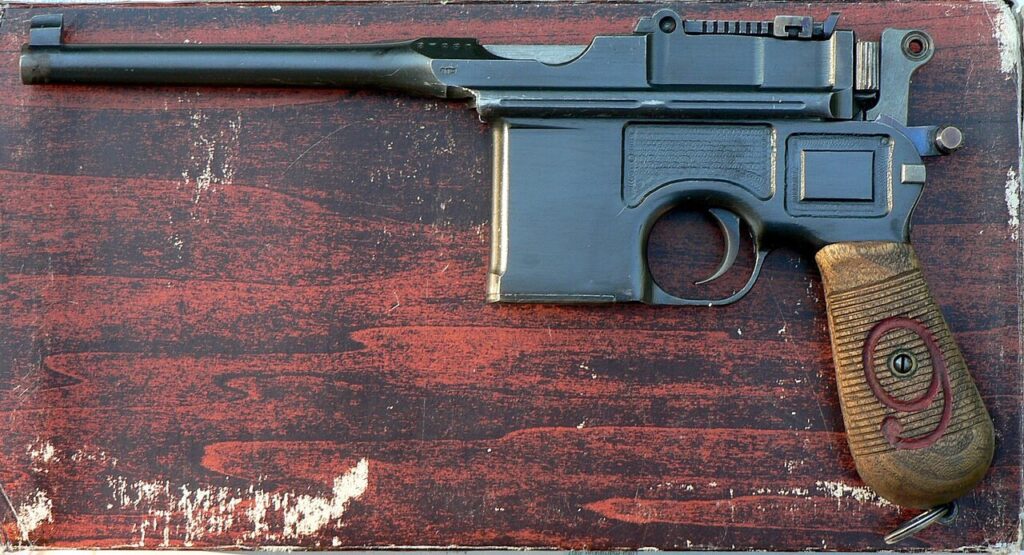
The C96 is the broomhandle pistol with its magazine in front of the trigger. During WW1 the German Army ordered 150,000 of them in 9mm to make up for slow Luger production, and many of those pistols had a large 9 burned into the grips and painted red so nobody loaded them with 7.63 Mauser.
The card below shows a C96 Broomhandle at $1,599.99 on Guns.com. If yours isn’t a Red 9, plan on 7.63 Mauser ammo being hard to get: there was just one listing across our dealers when I checked, from PPU.
It’s front-heavy and the grip feels like a broom handle, which is where the name came from. With the wooden holster fitted as a stock, it’s surprisingly steady. Without it, it’s more fun than accurate.
Best For: Collectors who want one of the most recognizable pistols ever made.
WW1 French Guns
France fought the war with a rifle designed in 1886 and bought pistols wherever it could find them, including huge numbers from Spain and more than 40,000 from Savage in upstate New York.
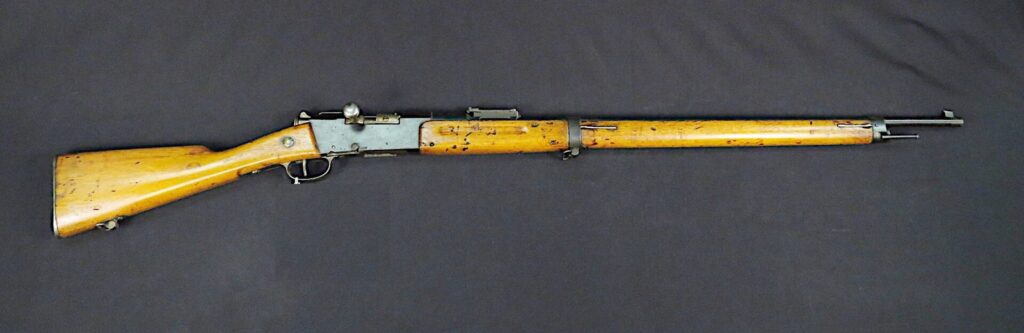
12. Lebel 1886 and Berthier: The French Rifles
- Caliber: 8mm Lebel
- Action: Bolt action; Lebel 8-round tube magazine, Berthier 3 or 5-round clip
- Made: 3,450,000 Lebels and more than 2 million Berthiers
- Own one today: Yes, and pre-1899 Lebels are antiques under federal law
| Category | Rating |
|---|---|
| Historical Impact | 4.5/5 |
| Shootability Today | 2/5 |
| Availability | 2.5/5 |
Pros
- First smokeless powder military rifle
- Affordable for their age
- Early Lebels count as antiques
Cons
- 8mm Lebel ammo is gone
- Slow tube-magazine reloads
- Rarely in dealer stock
The Lebel was the first military rifle to use smokeless powder, and when France adopted it in 1886 it made every other rifle in Europe obsolete overnight. By 1914 its tube magazine was slow to reload, so France issued more and more Berthiers, which took clips, and in 1916 the Berthier clip grew from three rounds to five. French infantry held Verdun in 1916 with these two rifles.
The card below shows a Berthier Mle 1916 at $449.99 on Guns.com. Lebels turn up less often, and a Lebel made in or before 1898 is an antique under federal law, which I cover below.
Here’s the catch. There were no 8mm Lebel listings at all across our dealers when I checked, so unless you handload, a French rifle is a wall hanger. That’s a shame, because they’re good shooting rifles.
Best For: Collectors who want the rifle that started the smokeless powder era.
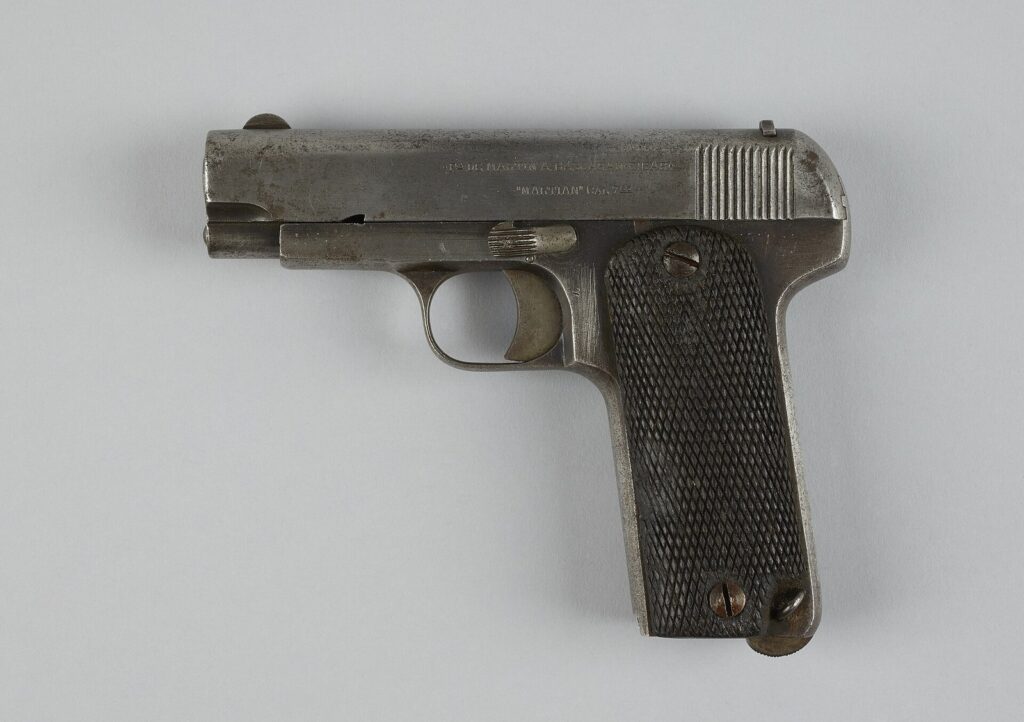
13. Ruby Pistol: The Spanish-Made French Sidearm
- Caliber: .32 ACP, called 7.65mm Browning
- Action: Blowback, 9-round magazine
- Made: At least 750,000 by Gabilondo and about 50 other firms
- Own one today: Yes, as an original, C&R eligible
| Category | Rating |
|---|---|
| Historical Impact | 3.5/5 |
| Shootability Today | 4/5 |
| Availability | 3.5/5 |
Pros
- Cheap WW1 original to buy
- Common .32 ACP ammo
- Nine-round magazine
Cons
- Quality varies by maker
- Magazines rarely interchange
- Small, weak cartridge
France needed pistols fast in 1914, and Spanish makers in Eibar answered with the Ruby, a simple copy of Browning’s 1903 pocket pistol. Gabilondo started it, and about 50 other firms built them under their own names, which is why you’ll see Martian, Alkar and dozens more on the slides.
It went to machine gunners, tank crews, stretcher bearers and rear-echelon troops. The card below shows a Martian-marked Ruby at $349.99 on Guns.com, which makes it one of the cheapest WW1 service pistols you can buy.
It’s a small, flat pistol that shoots gently. Buy one with its original magazine, though. Ruby magazines were made maker by maker, and a spare from another factory probably won’t fit.
Best For: Budget collectors who want a genuine WW1 service pistol they can shoot with common ammo.
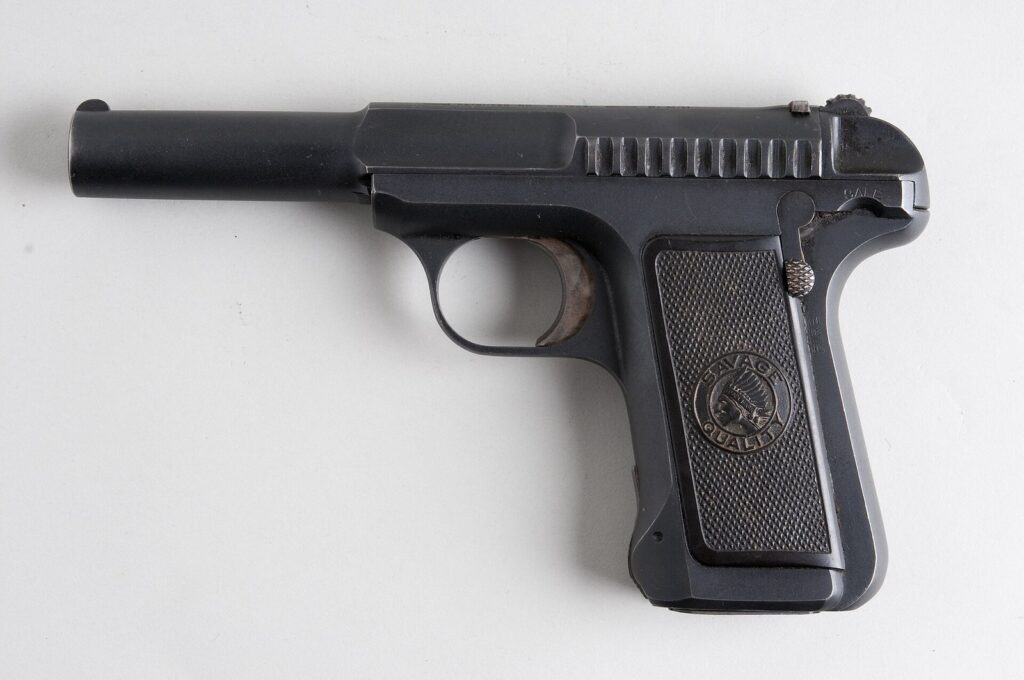
14. Savage Model 1907: The American Pistol France Bought
- Caliber: .32 ACP
- Action: Delayed blowback, striker fired, 10 rounds
- Made: 1907 to 1920
- Own one today: Yes, as an original, C&R eligible
| Category | Rating |
|---|---|
| Historical Impact | 3/5 |
| Shootability Today | 4/5 |
| Availability | 3/5 |
Pros
- Ten rounds of .32 ACP
- Real French military contract
- Unusual rotating-barrel design
Cons
- Hard to spot French contract guns
- Takedown is fiddly
- Small grip
Savage’s 1907 was a slim .32 with a ten-round double-stack magazine and a rotating barrel, and it lost the US Army trials to the 1911. France bought more than 40,000 of them between late 1914 and 1917, and Portugal took another 1,150.
The card below shows a Savage 1907 at $650.99 on Guns.com. Most on the market are civilian pistols, so pay a premium for a French contract gun only when its history is documented.
It’s a comfortable little pistol with a lot of rounds for its size. The cocking lever looks like a hammer but isn’t one, so learn how it works before you load it.
Best For: Collectors who like an American angle on French WW1 history.
WW1 Russian Guns
Russia’s rifle and revolver outlasted the empire that adopted them. Both were still in production in the Second World War, and both are among the cheapest ways into WW1 collecting today.
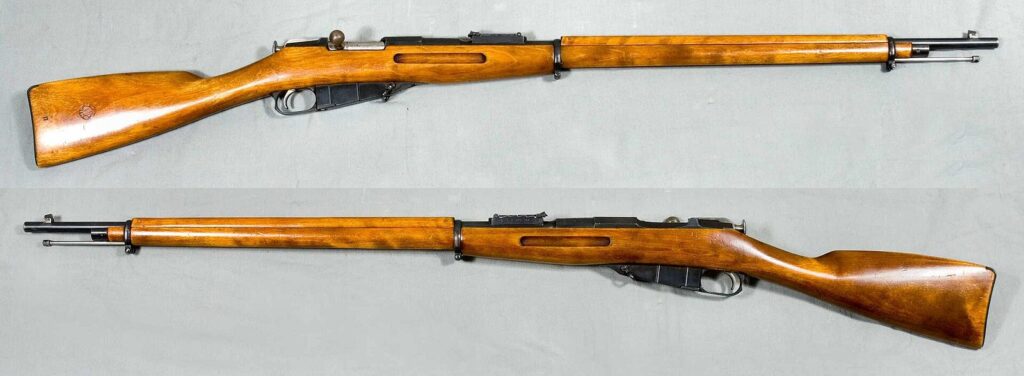
15. Mosin-Nagant M1891: The Russian Service Rifle
- Caliber: 7.62x54R
- Action: Bolt action, 5 rounds
- Made: About 37 million Mosins of all models in Russia and the USSR
- Own one today: Yes, and pre-1899 rifles are antiques under federal law
| Category | Rating |
|---|---|
| Historical Impact | 5/5 |
| Shootability Today | 3.5/5 |
| Availability | 3/5 |
Pros
- American-made WW1 versions exist
- Nearly indestructible
- 7.62x54R still available
Cons
- Long and awkward
- Stiff bolt, heavy trigger
- Most on sale are WW2 M91/30s
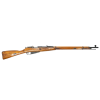
The M1891 was Russia’s WW1 rifle, and demand was so great that in 1915 Russia ordered 1.5 million from Remington and 1.8 million from New England Westinghouse in the US. Remington had built 750,000 when the October Revolution stopped the contract, and the US Army bought about 280,000 of the leftovers.
Many of those American-made rifles were later sold to civilians through the government’s civilian marksmanship office, so they’re an unusual WW1 find on the US market. The card below shows a 1928-dated ex-Dragoon M91 at $800 from Classic Firearms. Our Mosin-Nagant buyer’s guide covers the later M91/30.
The M1891 is longer than the M91/30 most people own, and it’s even more of a pole. It still shoots well once the cosmoline is gone. Don’t judge the bolt until you’ve cleaned the chamber.
Best For: Mosin collectors who want the original WW1 pattern, including the American-built rifles.
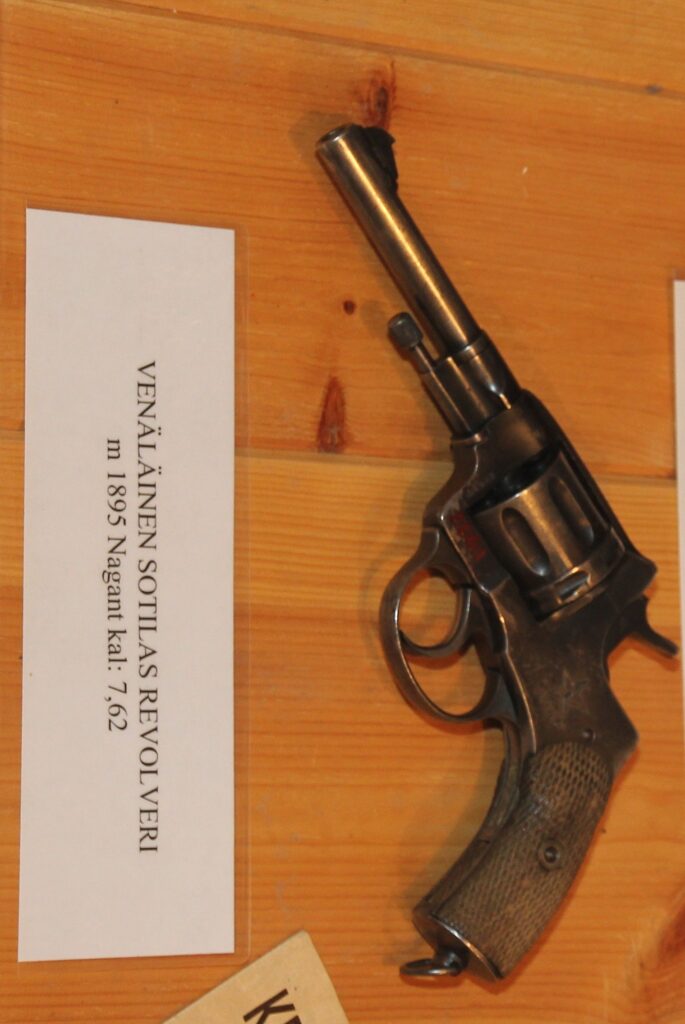
16. Nagant M1895 Revolver: The Gas-Seal Revolver
- Caliber: 7.62x38R
- Action: Double action or single action, 7-round cylinder
- Made: About 2 million, 1895 to 1945
- Own one today: Yes, and pre-1899 revolvers are antiques under federal law
| Category | Rating |
|---|---|
| Historical Impact | 3.5/5 |
| Shootability Today | 3/5 |
| Availability | 4/5 |
Pros
- Unique gas-seal cylinder
- Cheap way into WW1 collecting
- Built like an anvil
Cons
- Brutal double-action pull
- Slow gate loading
- Ammo is scarce
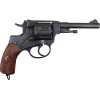
The Nagant’s cylinder slides forward when you cock it, sealing the gap to the barrel, which is rare in a revolver. It was the Russian Army’s sidearm in WW1 and stayed in production until 1945, so most of the ones on the market are later Soviet guns.
The card below lists a Nagant M1895 at $549.99 from Sportsman’s Outdoor Superstore and another at $399.99 from Classic Firearms. Ammo is the problem: there were only six listings of 7.62x38R across our dealers, all Fiocchi.
The double-action pull is the heaviest I’ve felt on any revolver. Cock it single action and it’s a different gun. It’s a history lesson you can shoot, just not one you’ll shoot fast.
Best For: Collectors who want an inexpensive, genuinely odd WW1 handgun.
WW1 Austro-Hungarian Guns
Austria-Hungary built some of the most unusual guns of the war at the Steyr works, including a straight-pull rifle and a pistol loaded from the top with stripper clips.
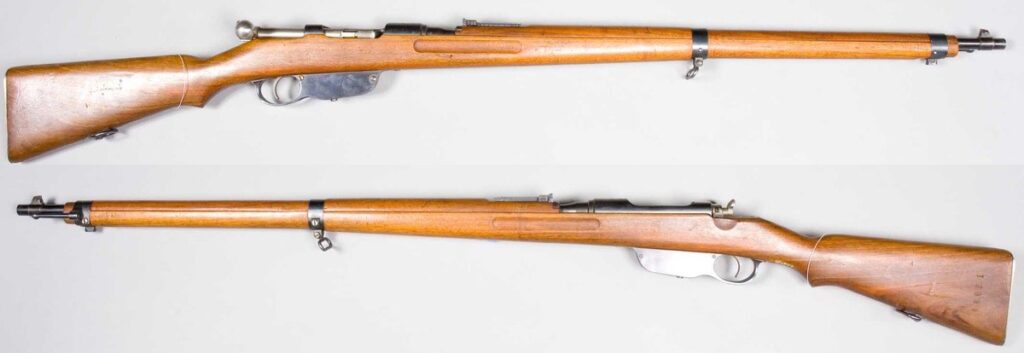
17. Steyr-Mannlicher M95: The Straight-Pull Rifle
- Caliber: 8x50R; most rechambered to 8x56R in the 1930s
- Action: Straight-pull bolt, 5-round en-bloc clip
- Made: About 3.5 million, 1896 to the 1920s
- Own one today: Yes, as an original, C&R eligible
| Category | Rating |
|---|---|
| Historical Impact | 4/5 |
| Shootability Today | 2.5/5 |
| Availability | 3/5 |
Pros
- Fast straight-pull bolt
- Cheap for a WW1 original
- Short Stutzen carbines too
Cons
- 8x56R ammo is gone
- Needs en-bloc clips to feed
- Bolt needs a firm hand
The M95 was the rifle of Austria-Hungary, and its straight-pull bolt comes straight back and forward with no lift, which made it quick to fire. About 3.5 million were made at Steyr and Budapest.
Most were rechambered from 8x50R to the more powerful 8x56R in the 1930s, and there were no 8x56R listings on our dealers when I checked. The card below shows a Steyr M95 at $399.99 on Guns.com, so it’s cheap to own even if it’s hard to feed.
The straight-pull is fun once you get the rhythm, but it needs a firm push, and it won’t feed without its en-bloc clip. Check the chamber marking before you buy ammo, because two cartridges were used.
Best For: Collectors who want the most unusual bolt action of WW1 for very little money.
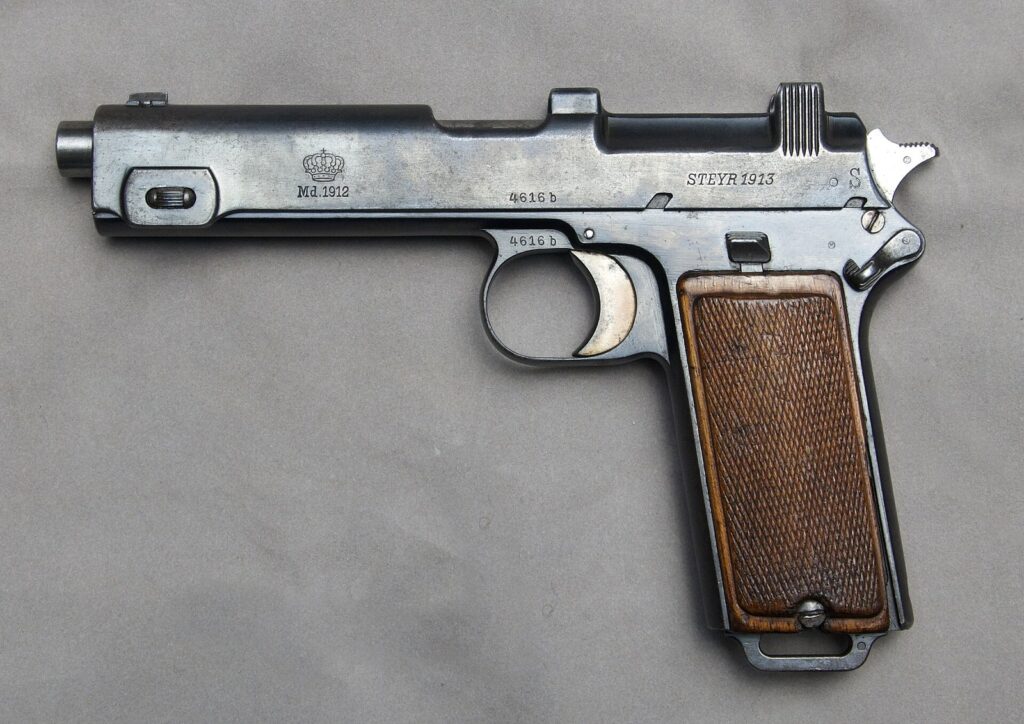
18. Steyr M1912 (Steyr-Hahn): The Clip-Loaded Pistol
- Caliber: 9mm Steyr
- Action: Recoil-operated, 8-round fixed magazine, clip-loaded
- Made: Up to 300,000, 1912 to the 1920s
- Own one today: Yes, as an original, C&R eligible
| Category | Rating |
|---|---|
| Historical Impact | 3.5/5 |
| Shootability Today | 2.5/5 |
| Availability | 2.5/5 |
Pros
- Very strong, simple design
- Loaded from stripper clips
- Chile and Romania contracts too
Cons
- 9mm Steyr ammo is gone
- Can’t top off one round
- Scarce in the US
The Steyr M1912 was Austria-Hungary’s service pistol. It has a fixed magazine in the grip that you load from the top with an eight-round stripper clip, like a rifle, and it fires the 9mm Steyr, a longer round than 9mm Luger.
The card below shows a 1912 Steyr-Hahn made for Romania at $1,799.99 on Guns.com. After 1938 the German police had 60,000 converted to 9mm Luger, and those are easier to feed.
It’s a heavy, well-made pistol that feels solid. The problem is ammo. There were no 9mm Steyr listings at all on our dealers when I checked, so shoot a converted gun or plan to handload.
Best For: Pistol collectors who like engineering oddities with real WW1 service.
WW1 Italian Guns
Italy entered the war in 1915 and fought most of it on the Isonzo and in the Alps against Austria-Hungary, with a rifle it kept until 1945.
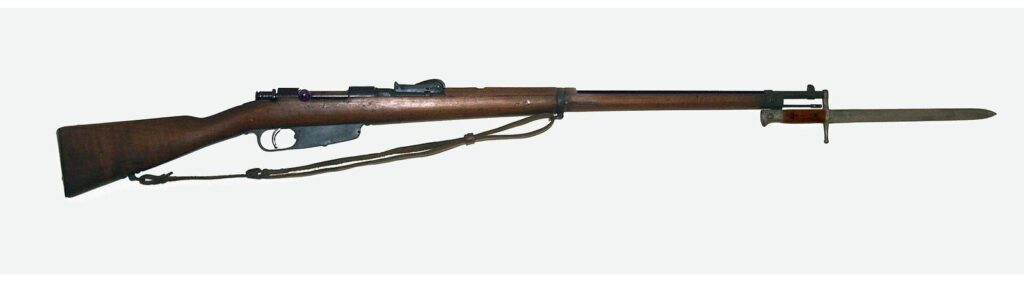
19. Carcano M1891: The Italian Service Rifle
- Caliber: 6.5×52 Carcano
- Action: Bolt action, 6-round en-bloc clip
- Made: 5 to 6 million of all variants, 1892 to 1945
- Own one today: Yes, as an original, C&R eligible
| Category | Rating |
|---|---|
| Historical Impact | 3.5/5 |
| Shootability Today | 3/5 |
| Availability | 3.5/5 |
Pros
- Cheapest WW1 rifle to buy
- Light and handy
- 6.5 Carcano ammo still made
Cons
- Needs clips to feed
- Ammo is limited
- Unfairly poor reputation
Italy fought WW1 in the Alps with the M1891 Carcano, a light 6.5mm bolt action fed from six-round clips. Its poor reputation mostly comes from jokes and one infamous assassination, and a good one is a perfectly serviceable rifle.
It’s also the cheapest rifle on this list. The card below shows a Terni M91 police trade-in at $249.99 from Sportsman’s Outdoor Superstore and a later M38 at $395.99 on Guns.com. Check the receiver date if you want a WW1 rifle rather than a WW2 one.
It’s light and mild to shoot. Buy clips with it, though, because it won’t feed from the magazine without one. You’ll find 6.5×52 from PPU and Sellier & Bellot, with nine listings when I checked.
Best For: Budget collectors who want an original WW1 rifle for the price of a new .22.
WW1 Japanese Guns
Japan was on the Allied side in WW1, and its Type 38 ended up in British navy racks and Russian trenches before most Americans had heard of it.
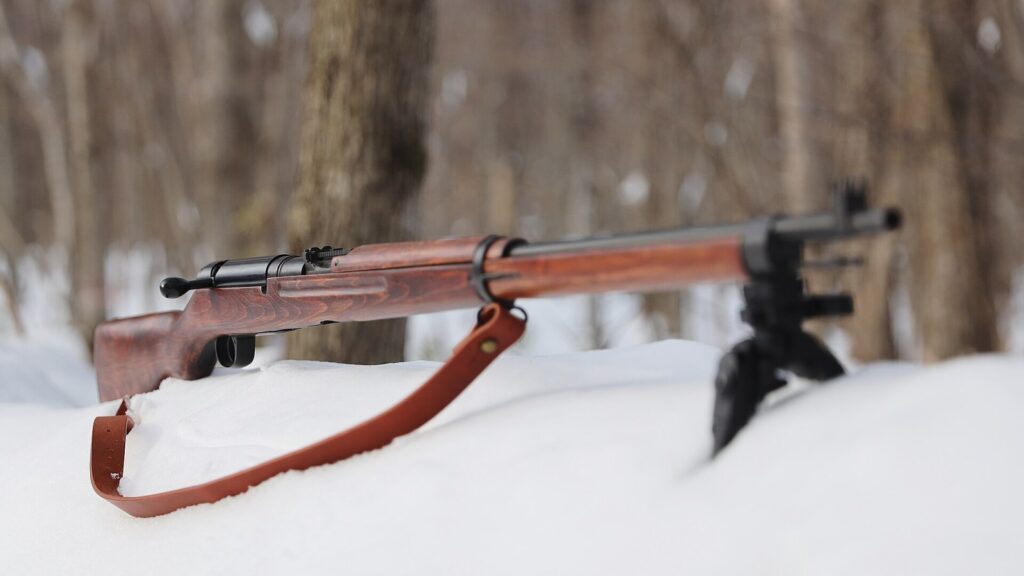
20. Arisaka Type 38: The Rifle Three Allies Used
- Caliber: 6.5x50SR Arisaka
- Action: Bolt action, 5 rounds
- Made: 2,999,200 rifles and 579,300 carbines
- Own one today: Yes, as an original, C&R eligible
| Category | Rating |
|---|---|
| Historical Impact | 3.5/5 |
| Shootability Today | 2.5/5 |
| Availability | 3/5 |
Pros
- Very strong action
- Mild 6.5mm recoil
- Used by Britain and Russia too
Cons
- 6.5 Arisaka ammo is scarce
- Mum often ground off
- Long rifle
The Type 38 was Japan’s rifle from 1906, and in WW1 it served more than one army. Britain bought 150,000 Type 30 and Type 38 rifles early in the war to arm the Royal Navy and free up Lee-Enfields, and Russia bought hundreds of thousands more, directly from Japan and through Britain, to make up its own shortages.
The card below shows a Type 38 at $649.99 on Guns.com and a police trade-in at $249.99 from Sportsman’s Outdoor Superstore. There were no 6.5×50 Arisaka listings on our dealers when I checked, so treat it as a handloader’s rifle.
The action is one of the strongest of the era, and the 6.5mm round is soft on the shoulder. Look for an intact chrysanthemum on the receiver. It adds real value.
Best For: Collectors who want a WW1 rifle with an unexpected Allied story.
WW1 Machine Guns and the First Submachine Gun
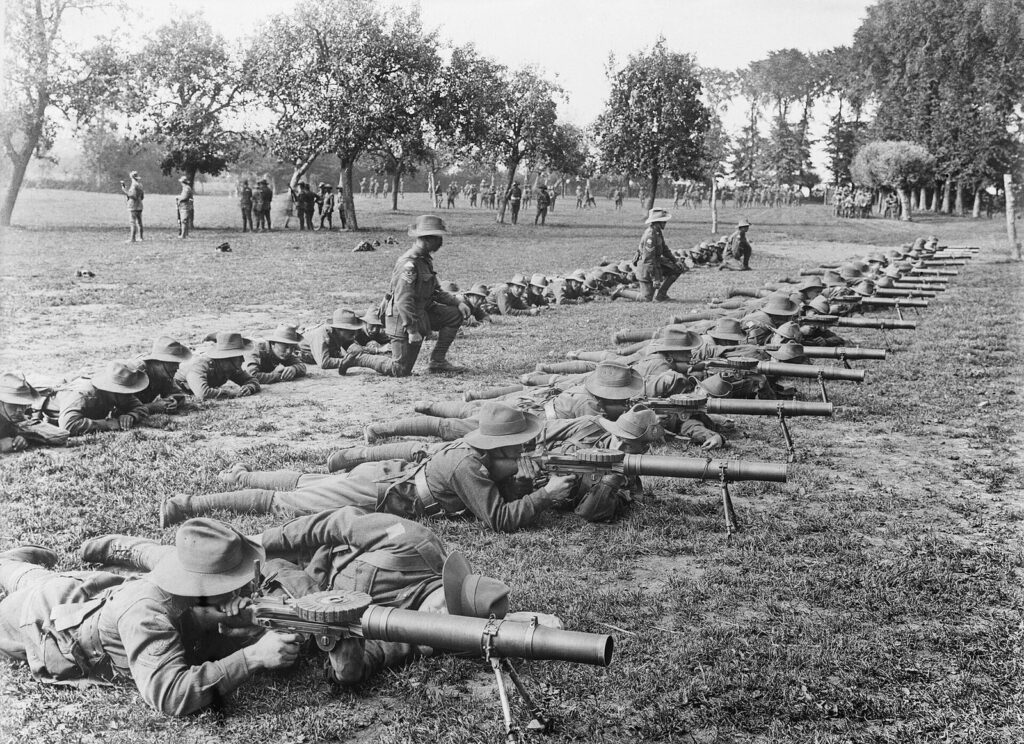
Machine guns defined WW1 more than any rifle. On the first day of the Somme, July 1, 1916, German machine guns caused much of the worst single day of losses in British Army history.
The MG 08, a Maxim design, and the British Vickers fired roughly 450 to 600 rounds a minute from 250-round cloth belts, and the lighter Lewis gun fed from 47 or 97-round pans. France fielded the Hotchkiss M1914 and about 262,000 Chauchats, one of the most criticized guns of the war.
Germany’s answer to trench fighting was the MP18, which reached the army in mid-1918 and is considered the first practical submachine gun. It fired 9mm Luger from a snail drum first made for the Artillery Luger, and most submachine guns built over the next few decades borrowed from it.
Federal law at 18 U.S.C. 922(o) makes it unlawful for a private person to transfer or possess a machine gun, with an exception for one lawfully possessed before the ban took effect in May 1986. That’s why an original Vickers or Lewis sells for many times its value as a gun. The BAR above is the one I can card, through Ohio Ordnance’s semi-automatic HCAR.
Can You Own a WW1 Gun? Antiques, C&R and the 1898 Line
Yes. Every rifle, pistol and shotgun on this list is legal for a US civilian to own, and most are bought through a licensed dealer with a normal background check. Your state and city laws still apply, so check them first.
WW1 guns sit on both sides of an important federal date. Under 18 U.S.C. 921(a)(16), a firearm made in or before 1898 is an antique, which takes it out of the federal definition of a firearm. So an 1893-dated Lebel, an 1897 Steyr M95 or a Nagant revolver made in 1898 can change hands without an FFL transfer under federal law, while the same model made in 1916 can’t.
Everything newer than that is almost always a curio or relic, as long as it’s still in its original configuration. 27 CFR 478.11 covers firearms made at least 50 years before today’s date, and a curio and relic license, $10 a year for three years, lets a collector have C&R guns shipped straight to the door. Check the date stamp before you pay, because the date is what decides which rules apply.
WW1 Ammo You Can Still Buy
Here’s how many listings each WW1 cartridge had across our dealer network on September 27, 2026, and how many different dealers carried it. If you’re shopping WWI rifles for sale, check this table first, because it tells you which of them you can actually feed.
| Cartridge | WW1 guns | Ammo listings | Dealers carrying it |
|---|---|---|---|
| 9mm Luger | Luger P08 | 1,918 | 21 |
| .45 ACP | M1911, M1917 revolver | 857 | 17 |
| .30-06 Springfield | Springfield 1903, M1917 Enfield, BAR | 824 | 16 |
| 12 gauge 00 buckshot | Winchester 1897 | 289 | 16 |
| .32 ACP | Ruby, Savage 1907 | 88 | 13 |
| 8mm Mauser | Gewehr 98 | 82 | 11 |
| .303 British | SMLE Mk III | 73 | 10 |
| 7.62x54R | Mosin-Nagant M1891 | 37 | 11 |
| 6.5×52 Carcano | Carcano M1891 | 9 | 6 |
| 7.62x38R Nagant | Nagant M1895 | 6 | 6 |
| .455 Webley | Webley Mk VI | 2 | 1 |
| 7.63 Mauser | Mauser C96 | 1 | 1 |
| 8mm Lebel | Lebel, Berthier | 0 | 0 |
| 6.5×50 Arisaka | Arisaka Type 38 | 0 | 0 |
| 8x56R Steyr | Steyr-Mannlicher M95 | 0 | 0 |
| 9mm Steyr | Steyr M1912 | 0 | 0 |
The split is stark. The American and German service rounds are everywhere, the British and Russian ones are made by PPU and Sellier & Bellot, and four WW1 cartridges had no listings at all: 8mm Lebel, 6.5 Arisaka, 8x56R and 9mm Steyr. If one of those guns is on your list, budget for reloading dies or plan to display it. Old surplus ammo in any of these calibers is often corrosive, so clean the bore the same day.
Which WW1 Guns Also Fought in WW2?
More than you’d think. The Springfield 1903, M1911, Lee-Enfield, Webley, Luger, Mosin-Nagant, Nagant revolver, Carcano and Arisaka Type 38 all served again in 1939 to 1945, some in updated forms and some unchanged. Our guide to WW2 guns covers the guns that replaced them, and our roundup of the best military surplus rifles covers the cheapest originals from both wars.
How I Picked These 20 WW1 Guns
I started with the standard rifle and pistol of each major army, added the guns that changed how the war was fought, like the Winchester trench gun and the BAR, and then checked what our dealers actually had for sale on September 27, 2026.
If one of our 200+ retailers had one in stock, you’ll see a live price card. The Webley was the only no-show. Over the years I’ve shot most of the rifles and pistols here, and the specs come from military records and our own model guides.
Featured image: a composite built from Swedish Army Museum photos of an M1903 Springfield, public domain, and a Gewehr 98, licensed CC BY 4.0 and modified, with a public-domain Smithsonian photo of a Lebel.
The Bottom Line
If I could only buy one WW1 gun to shoot, it would be an M1917 Enfield or an SMLE Mk III. Of all the WW1 pistols here, a GI-pattern 1911 is the practical choice and a WW1 Luger is the dream. And if you just want to own a genuine piece of the Great War for the least money, a Carcano, a Steyr M95 or a Ruby gets you there for under $400.
Frequently Asked Questions
What guns were used in WW1?
The main WW1 guns were each army's standard rifle and pistol. The US used the Springfield 1903, M1917 Enfield, M1911 and M1917 revolver, Britain the SMLE Mk III and Webley, Germany the Gewehr 98, Luger and Mauser C96, France the Lebel, Berthier and Ruby, Russia the Mosin-Nagant and Nagant revolver, Austria-Hungary the Steyr M95, and Italy the Carcano.
What was the most used rifle in WW1?
The Gewehr 98 and the Mosin-Nagant were built in the largest numbers. More than 9 million Gewehr 98s were made from 1898 to 1918, and Russia ordered millions of M1891 Mosins, including 1.5 million from Remington and 1.8 million from New England Westinghouse in 1915. Among Americans, the M1917 Enfield outnumbered the Springfield in France.
What rifle did American soldiers use in WW1?
Most American soldiers in France carried the M1917 Enfield, not the Springfield 1903. By November 11, 1918, about three quarters of the American Expeditionary Forces in France were armed with M1917s, because Winchester, Remington and Eddystone could build them faster. Sergeant Alvin York used an M1917 on October 8, 1918.
What pistol did the US use in WW1?
The US used the Colt M1911 in .45 ACP, backed up by the M1917 revolver from Colt and Smith & Wesson, which fired the same round from half-moon clips. About 300,000 M1917 revolvers were built between 1917 and 1920 because the Army could not get enough 1911s.
Can civilians own WW1 guns?
Yes. WW1 rifles, pistols and shotguns are ordinary firearms, bought through a licensed dealer with a background check, and nearly all are curio and relic eligible. Guns made in or before 1898 are antiques under federal law. Original machine guns such as the Vickers, Lewis and MG 08 can only be owned if they were lawfully registered before the 1986 federal ban.
Are WW1 guns antiques?
Some are. Federal law defines an antique firearm as one made in or before 1898, so early Lebels, Steyr M95s, Mosin-Nagants and Nagant revolvers can qualify if their date proves it. Most WW1 guns were made between 1914 and 1918, so they are curio and relic firearms rather than antiques.
What was the best pistol of WW1?
The Colt M1911 and the Luger P08 are the two best-known WW1 pistols. The M1911 is still made today and fires the common .45 ACP, while the Luger introduced the 9mm Luger cartridge and was the German standard pistol through the war. The Mauser C96 Red 9 was built as a 9mm stopgap for the German Army.
What shotgun was used in WW1?
The Winchester Model 1897 trench gun was the main shotgun of WW1. It was a 12-gauge pump with a 20-inch cylinder bore barrel, a perforated heat shield and a bayonet lug, loaded with buckshot. The German government formally protested its use on September 19, 1918.
What was the first submachine gun?
The German MP18 is considered the first practical submachine gun. It reached the German Army in mid-1918, fired 9mm Luger and was designed for clearing trenches. It is a machine gun under federal law, so civilians can only own an original that was registered before 1986.
What is the cheapest WW1 gun to buy?
An Italian Carcano, an Arisaka Type 38 or a Ruby pistol is among the cheapest WW1 originals on the market. On our dealers a Carcano M91 police trade-in and an Arisaka Type 38 police trade-in were each $249.99, a Ruby-type pistol was $349.99 and a Steyr M95 was $399.99. All are curio and relic eligible.
Can you still buy ammo for WW1 guns?
For most of them, yes. 9mm Luger, .45 ACP, .30-06, .32 ACP, 8mm Mauser, .303 British and 7.62x54R are all in stock at multiple dealers. But 8mm Lebel, 6.5x50 Arisaka, 8x56R and 9mm Steyr had no listings across our dealers on September 27, 2026, and .455 Webley and 7.63 Mauser had one or two.
5,305+ Gun & Ammo Deals
Updated daily from 200+ top retailers. Filter by category, caliber, action type, and price.