

Last updated November 2, 2026 · By Nick Hall, AR-15 builder who has built rifles from every component on this parts list
This post contains affiliate links. If you click and buy, I may earn a small commission at no extra cost to you. Full disclosure.
Quick Answer: The AR-15 parts list splits into two halves: a lower receiver group (stripped lower, lower parts kit, trigger, buffer system, stock, grip and the small controls) and an upper receiver group (stripped upper, barrel, bolt carrier group, charging handle, gas system, handguard and muzzle device). Built from parts, a budget rifle lands around $498, a mid-range build near $1,000 and a premium one about $2,175, before optics, sights, sling and magazines. Put the money into the barrel, the bolt carrier group and the trigger; the stripped lower, parts kit, muzzle device and charging handle all do their job at mil-spec prices.
- Treat every gun as loaded
- Point the muzzle in a safe direction
- Keep your finger off the trigger until you’re ready to shoot
- Know your target and what’s beyond
Table of Contents
This AR-15 parts list covers every part on the rifle, what each one does, what it costs, and how they fit together. The AR-15 has more individual parts than any other common firearm. That modularity is its greatest strength, since everything is replaceable, and it’s also what confuses most new builders. How many parts are in an AR-15? Depending on how you count, roughly 100. Modern sporting rifles, the category that includes the AR-15, are the most popular centerfire rifles in America, with more than 32 million produced or imported since 1990 by NSSF‘s estimate. For the basics on any gun, see our parts of a gun diagrams.
I’ve built more AR-15s than I can count, from bare receivers to complete rifles. This guide covers every single component, what it does, what it costs, and where you should spend versus save.
AR-15 Parts Diagram
Here is every major part on one rifle. Numbers 1 to 11 are the lower receiver group and 12 to 22 are the upper. This is the right side of the rifle, and parts drawn dashed sit inside it or on the left side.
- Stripped lower receiver
- Trigger (fire control group)
- Pistol grip
- Magazine release
- Bolt catch (left side)
- Safety selector (left side)
- Pivot pin
- Takedown pin
- Buffer tube, buffer and spring
- Stock
- Magazine
- Stripped upper receiver
- Bolt carrier group (inside the upper)
- Charging handle
- Forward assist
- Ejection port cover
- Handguard
- Gas tube (under the handguard)
- Gas block (under the handguard)
- Barrel
- Muzzle device
- Picatinny rail (top of the upper)
AR-15 Parts List and Chart
The same parts in a chart, with what each one does and what it costs. The price ranges run from budget to premium, and the build cost table further down picks one realistic price from each.
| Part | What it does | Price range |
|---|---|---|
| 1. Stripped lower receiver | The serialized part the ATF treats as the firearm | $50 to $515 |
| 2. Trigger group | Trigger, hammer and disconnector; sets pull weight and reset | $35 to $240 |
| 3. Pistol grip | Holds the firing hand | $5 to $35 |
| 4. Magazine release | Drops the magazine | $10 to $25 upgraded |
| 5. Bolt catch | Locks the bolt open on an empty magazine | $20 to $50 upgraded |
| 6. Safety selector | Switches between safe and fire | About $65 ambidextrous |
| 7 and 8. Pivot and takedown pins | Join the upper and lower | In the LPK |
| 9. Buffer tube, buffer and spring | Soaks up the bolt carrier’s travel; holds the stock | $30 to $120 |
| 10. Stock | Shoulder contact; slides on the buffer tube | $30 to $100 |
| 11. Magazine | Holds and feeds the rounds | About $10 for a 30-round PMAG |
| 12. Stripped upper receiver | Houses the bolt carrier group; holds the barrel | $40 to $150 |
| 13. Bolt carrier group | Chambers, fires and extracts each round | $70 to $220 |
| 14. Charging handle | Pulls the bolt back by hand | $15 to $90 |
| 15. Forward assist | Pushes the bolt closed if it stops short | Comes with assembled uppers |
| 16. Ejection port cover | Keeps dirt out of the action | Comes with assembled uppers |
| 17. Handguard | Protects your hand and the gas system; holds accessories | $60 to $300 |
| 18 and 19. Gas tube and gas block | Bleed gas back to cycle the action | $20 to $100 |
| 20. Barrel | Sets accuracy, velocity and the chamber | $100 to $320 |
| 21. Muzzle device | Flash hider, brake or suppressor mount | $8 to $150 |
| 22. Picatinny rail | Optic mount, built into a flat-top upper | Built in |
AR-15 Parts List Checklist: What to Buy and What Has to Match
Work down this list and check off each line. There are three ways to buy: every part on its own, a complete lower plus a complete upper, or a stripped lower plus a build kit. A complete lower and a complete upper are the easy route, because the small pins and springs are already installed.
| Step | Buy | Often comes with | Check before you order |
|---|---|---|---|
| 1 | Stripped lower receiver | Nothing | Ships to an FFL dealer. Check your state’s rules first |
| 2 | Lower parts kit | Grip, selector, bolt catch, mag catch, pins, springs, and a trigger unless it’s sold without one | Buffer retainer and spring may not be in the bag |
| 3 | Trigger, if your kit has none | Hammer, disconnector, springs, pins | Drop-in units may use their own pins |
| 4 | Buffer kit | Tube, buffer, spring, castle nut, end plate, often the retainer | Carbine or rifle length, mil-spec or commercial |
| 5 | Stock, and a grip if your kit’s A2 won’t do | Grip screw with the grip | Stock must match the tube spec |
| 6 | Upper receiver | Sometimes forward assist and port cover | If it’s truly stripped, add an upper parts kit |
| 7 | Barrel | Barrel extension | At least 16 inches on a rifle. Chamber, twist, gas port length, gas journal size, muzzle thread. In California, a barrel goes through a dealer |
| 8 | Handguard | Most free-float rails include their own barrel nut | The rail’s inside diameter must clear your gas block. Won’t slide over a front sight base. Drop-in rails need a standard barrel nut and delta ring |
| 9 | Gas block and gas tube | Set screws or pins, tube roll pin | Block matches the barrel’s journal. Tube matches the gas system length |
| 10 | Muzzle device | Crush washer on many | 1/2×28 is the usual 5.56 thread. Confirm on your barrel |
| 11 | Bolt carrier group | Bolt, carrier, cam pin, firing pin, retaining pin, gas key | Matches the caliber |
| 12 | Charging handle | Latch and spring | AR-15 size, not AR-10 |
| 13 | Magazines, sights or optic, sling | Nothing | Not in any build total below. Check state capacity limits |
| 14 | Tools | See the tools table | Gauge the headspace on a new barrel and bolt pair |
When it’s together, run a function check on the empty rifle before any live round goes near it. Our how to build an AR-15 guide walks through it.
Stripped, Assembled or Complete: What’s in the Box
Sellers use these three words for very different boxes, so here’s what each one gets you and what’s left to buy.
| You buy | You get | You still need |
|---|---|---|
| Stripped upper | The receiver, and sometimes the forward assist and port cover | Forward assist, port cover and everything else |
| Assembled upper | Receiver, forward assist, port cover | Barrel, gas system, handguard, muzzle device, BCG, charging handle |
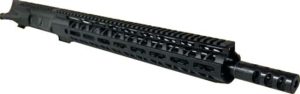
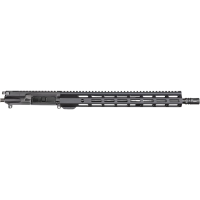
| Complete upper | Receiver, barrel, gas system, handguard, muzzle device | Check the listing. BCG and charging handle aren’t always included |
| Stripped lower | The serialized receiver, through an FFL | LPK, buffer kit, stock, grip |
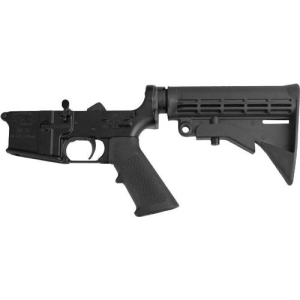
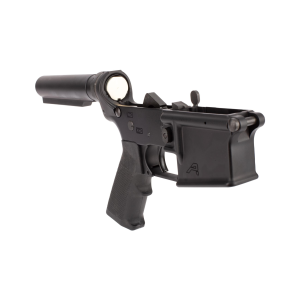
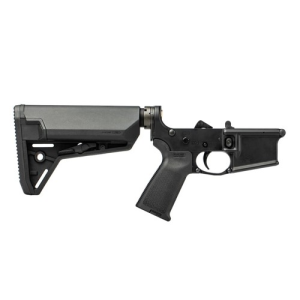
| Complete lower | Receiver, LPK and buffer kit assembled, through an FFL. Many include a stock and grip | An upper and a magazine. Check the listing, since some leave out the stock |
Lower Receiver Group

The lower receiver is the serialized part of the AR-15, and it’s what the ATF considers the firearm, because federal law defines a firearm to include “the frame or receiver of any such weapon.” Most other parts aren’t federally regulated, but a rifle barrel under 16 inches, a suppressor or a machine gun conversion part changes that, and some states go further.
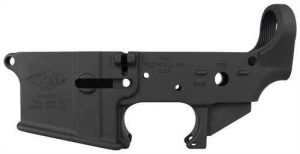
Stripped Lower Receiver

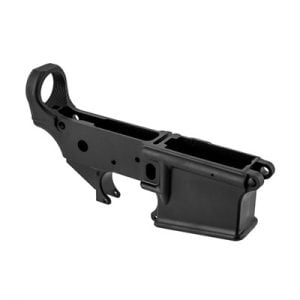
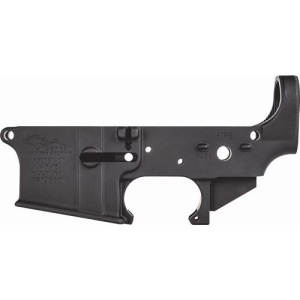
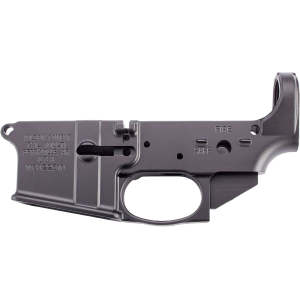
This is the serialized housing that holds the trigger group, magazine, buffer system and stock. Forged 7075-T6 aluminum is the standard. Billet lowers are machined from solid stock and can have enhanced features. For most builds, a quality forged lower at $60-100 from Aero Precision, Anderson or Palmetto State Armory is perfect. Premium options from BCM, LMT and Radian run $200 to about $515. We rank eight in our best AR-15 lower receivers guide.
Lower Parts Kit (LPK)

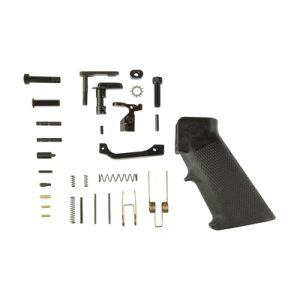
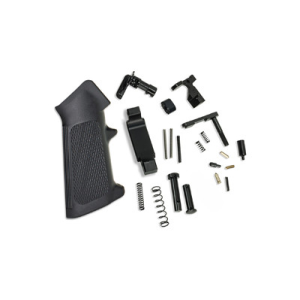
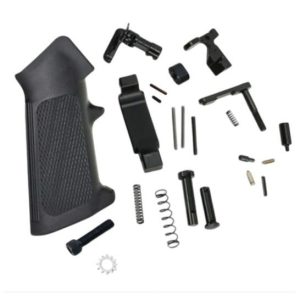
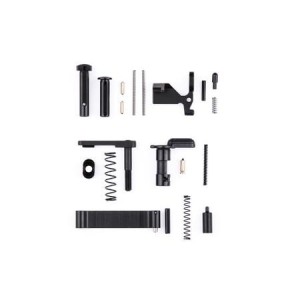
An LPK holds the small parts that go into the lower: trigger, hammer, disconnector, safety selector, bolt catch, magazine release, pivot and takedown pins with their detents and springs, trigger guard and pistol grip. A complete mil-spec LPK runs $30-50. Many builders buy a kit without the fire control group, then add an aftermarket trigger separately.
Trigger

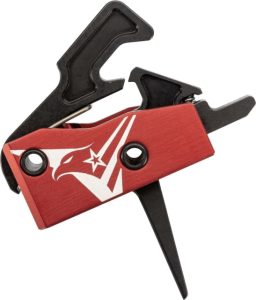
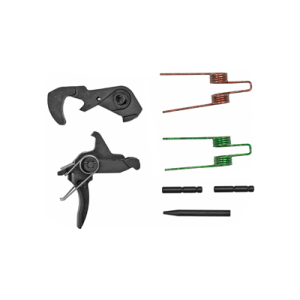
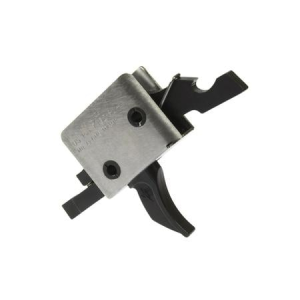
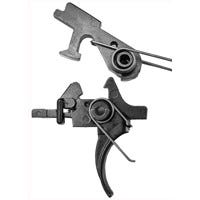
The fire control group is the trigger, hammer and disconnector, and it sets pull weight, feel and reset. Mil-spec triggers run 6-8 pounds with noticeable grit, so an aftermarket trigger is the single biggest improvement you can make. For value, I’d pick the LaRue MBT-2S at $100. For precision work, the Geissele SSA-E at $240 is the one to beat. If you just want a cleaner mil-spec pull, the ALG ACT costs about $80. KNS non-rotating pins are an optional swap for the standard trigger and hammer pins. See our best AR-15 triggers guide, or Geissele vs Timney if you’re down to two.
Buffer System

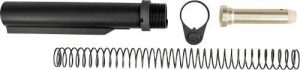
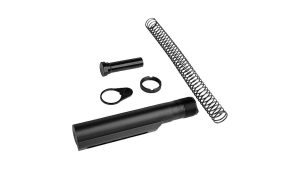
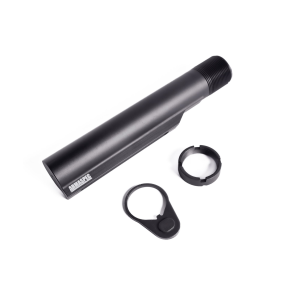
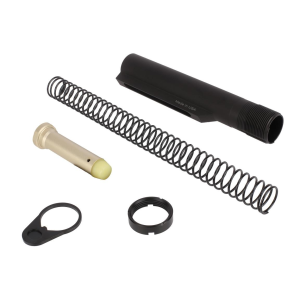
The buffer system is the buffer tube, also called the receiver extension, plus the buffer, buffer retainer, retainer spring, castle nut and end plate. For detailed guidance, see our buffer weight guide. Mil-spec buffer tubes are 7075-T6 aluminum with a 1.148″ outer diameter. Always go mil-spec here. The mil-spec vs commercial guide explains why. Pick the tube length first. Collapsible stocks use a carbine tube, and fixed rifle stocks use a rifle tube with its own longer buffer and spring.
Stock

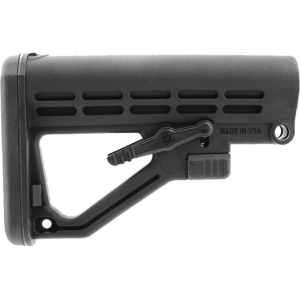
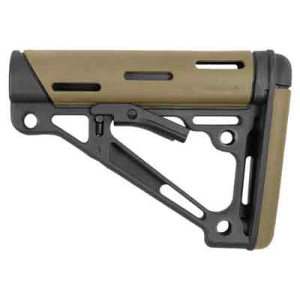
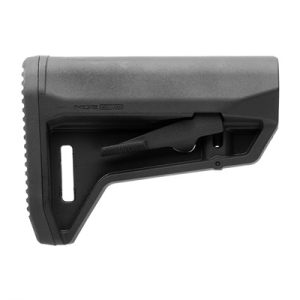
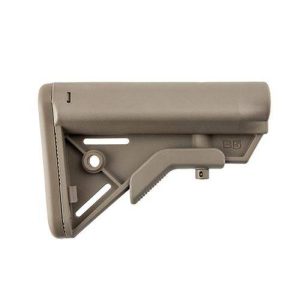
The stock slides onto the buffer tube and gives you your shoulder contact. The Magpul MOE SL at about $60-70, B5 Systems SOPMOD at $60-100 and BCM Gunfighter Stock Mod 0 at $55 are all excellent choices. Make sure you match mil-spec or commercial spec to your buffer tube. For fixed stock builds, the Magpul MOE Rifle Stock or classic A2 stock pair with rifle-length buffer tubes. Our best AR-15 stocks guide ranks eight, and Magpul vs B5 covers two of those names. Magpul’s newest option is the DT-S Carbine Stock, a $94.95 Mil-Spec stock with a friction lock and two waterproof battery tubes.
Pistol Grip

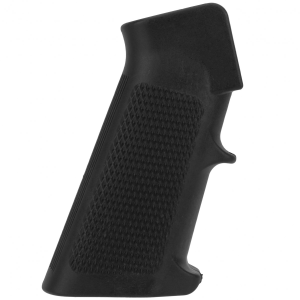
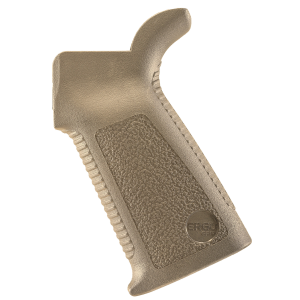
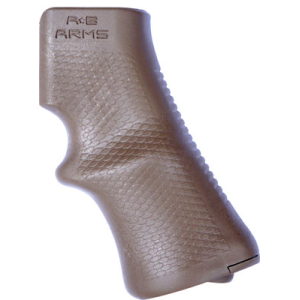
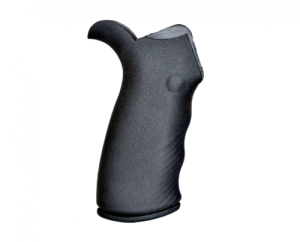
The grip attaches to the bottom of the lower receiver and holds your trigger hand. The A2 grip that comes in most LPKs is serviceable, but its laid-back angle doesn’t suit everyone. The Magpul MOE+ at $20 keeps the traditional 25-degree angle with rubber overmolding, the Magpul K2+ at $22 goes more vertical at 17 degrees, and the BCM Gunfighter Mod 3 at $18 is another popular upgrade.
Magazine Release

This is the button on the right side of the receiver that drops the magazine, pressed with your trigger finger. Standard mil-spec works fine. Extended releases from Magpul, Odin Works and Troy give you a larger, easier-to-reach button for $10-25.
Bolt Catch

The bolt catch holds the bolt open after the last round and releases it to chamber a new one. Mil-spec is adequate. The Geissele Maritime and enhanced catches from Magpul and Phase 5 give you a larger paddle for $20-50. Ambidextrous bolt releases add a catch on the right side for left-handed shooters.
Safety Selector

A standard mil-spec safety is fine if you shoot right-handed. Ambidextrous safeties add a lever on the right side. The Radian Talon runs about $65, and BAD-ASS and Geissele make them too. I think that’s a worthwhile upgrade for most shooters, not just lefties. Check our left-handed AR-15 guide for more ambi options.
Pivot and Takedown Pins

These two pins connect the upper and lower receivers. Push the rear pin and the rifle hinges open. Push both and the upper comes off, no tools. Standard pins are fine. Enhanced versions with captive detents or extended pull tabs make disassembly easier but aren’t necessary. If your receivers feel loose, an accu-wedge at $3 takes up the slop.
Magazine
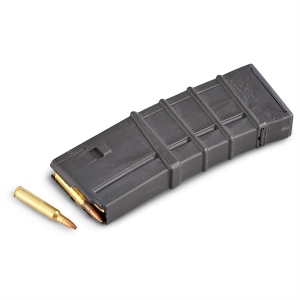
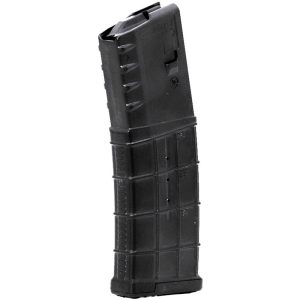
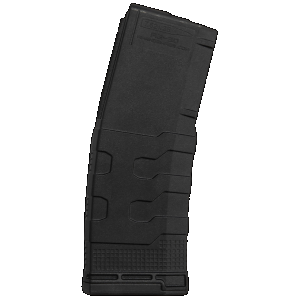
The magazine isn’t in any build kit or the totals below, so add it to the cart yourself. It’s also the first thing I check when an AR starts choking. A 30-round Magpul PMAG runs about $10, and I’d buy several and number them, so you can spot a bad one. Some states cap capacity, so check yours before you order.

Every Part in a Lower Parts Kit
A mil-spec lower parts kit is mostly small springs, detents and pins. Here is what is in the bag, grouped by job. The buffer retainer and its spring come with some kits and with the buffer kit in others, so check before you order.
| Group | Parts |
|---|---|
| Fire control | Trigger, trigger spring, disconnector, disconnector spring, hammer, hammer spring, hammer pin, trigger pin |
| Safety | Safety selector, safety detent, safety detent spring |
| Grip | Pistol grip, grip screw, grip lock washer |
| Bolt catch | Bolt catch, bolt catch spring, bolt catch plunger, bolt catch roll pin |
| Magazine catch | Magazine catch, magazine catch spring, magazine release button |
| Pins | Pivot pin, pivot pin detent, pivot pin spring, takedown pin, takedown pin detent, takedown pin spring |
| Trigger guard | Trigger guard, trigger guard roll pin |
The two parts new builders lose most often are the pivot pin detent and its spring. They launch across the room when you install the pivot pin, so do it inside a clear plastic bag.
Upper Receiver Group

The upper receiver group is the non-serialized half of the rifle, and it holds the barrel, bolt carrier group and gas system. You can swap uppers without a new background check, with one hard limit: a barrel under 16 inches on a rifle lower makes a short-barreled rifle, which is still an NFA firearm. Since October 9, 2026, ATF says it won’t require approval or registration before you make one, but that’s an enforcement policy, not a repeal, and ATF warns enforcement could resume. You still have to file a Form 20 before taking one across state lines, and some states restrict or ban them, so check your state.
Stripped Upper Receiver

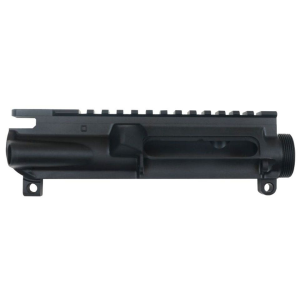
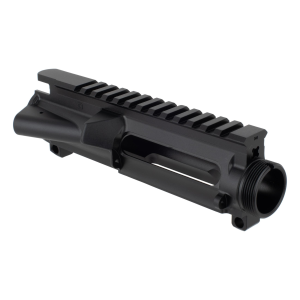
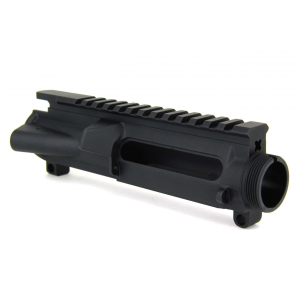
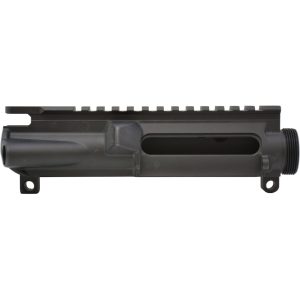
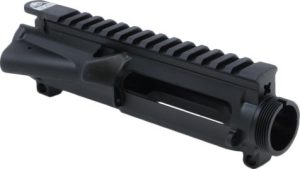
The A3/A4 flat-top is the standard upper. It’s forged from 7075-T6 aluminum with a Picatinny rail on top for optic mounting. Aero Precision at $70, BCM at $100 and FN at $100 make excellent forged uppers. The forward assist housing is part of the forging. The forward assist and ejection port cover are separate parts, so a truly stripped upper needs an upper parts kit, while many sold as stripped already have them fitted. Read the listing. For assembled options, see our best AR-15 upper receivers.
Bolt Carrier Group (BCG)

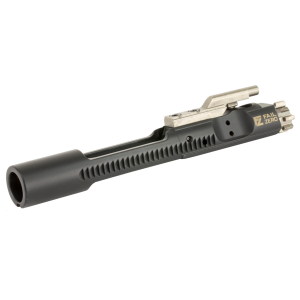
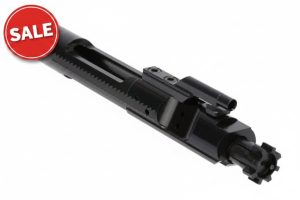
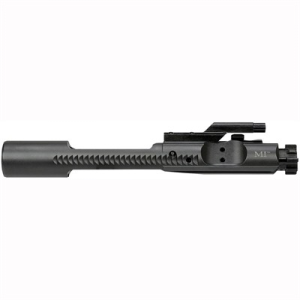
The BCG does the hard work of the rifle. It’s made up of the bolt, carrier, cam pin, firing pin, firing pin retaining pin, gas key and gas key screws, and the bolt carries its own extractor, ejector and gas rings. Mil-spec BCGs use a Carpenter 158 bolt and 8620 carrier with a phosphate coating. Look for MPI and HPT tested bolts and a properly staked gas key. Toolcraft at $100, Microbest at $125 and BCM at $214 are top picks. NiB and DLC coated BCGs run $120-200 and clean much easier. An M16-profile carrier is a full-mass carrier, and buying one doesn’t make a rifle full auto. We compare eight in our best AR-15 BCGs guide.
Inside the Bolt Carrier Group
Seventeen pieces, not counting the insert and O-ring some extractors use.
| Group | Parts |
|---|---|
| Carrier | Bolt carrier, gas key, 2 gas key screws |
| Bolt | Bolt, 3 gas rings, cam pin |
| Extraction | Extractor, extractor pin, extractor spring, insert and O-ring on many bolts |
| Ejection | Ejector, ejector spring, ejector roll pin |
| Firing | Firing pin, firing pin retaining pin |
Gas rings cost a couple of bucks, so keep a set in the bag.
Charging Handle

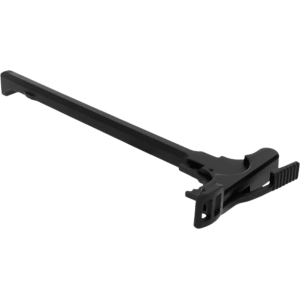
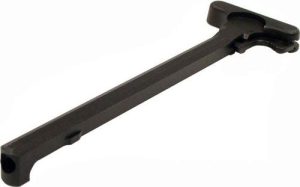
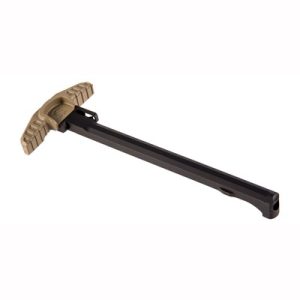
The charging handle sits in the upper receiver and lets you cycle the action by hand. The standard GI handle works but is small and hard to grab. The Radian Raptor at $80 is the upgrade to beat, with ambidextrous latches. The BCM Gunfighter Mod 4 at $60-75 and Breek Arms Warhammer at about $50 are good lower-cost alternatives. We compare seven in our best AR-15 charging handles guide.
Barrel

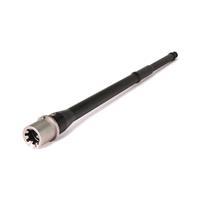
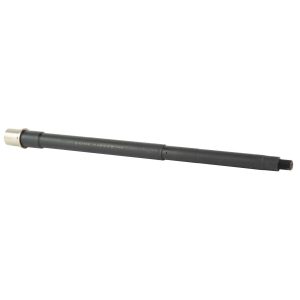
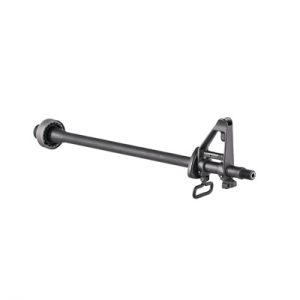
The barrel is the most important accuracy component. The key specs are length, twist rate, chamber, material, profile and finish. Common materials are 4150 CMV and 416R stainless. Profiles include pencil, government, SOCOM and Hanson, and finishes include chrome-lined, nitrided and bare. Our barrel length guide and twist rate guide cover the details. This is where you should spend money: Criterion at $270-320, Faxon at $150-200 and Ballistic Advantage at $140-200 all make quality barrels. We pick eight in our best AR-15 barrels guide.
Start with length, because it’s the legal spec. Stay at 16 inches of barrel and 26 inches overall and the rifle stays out of the NFA. Go shorter on a rifle lower and you’ve made a short-barreled rifle. ATF stopped requiring approval and registration for those on October 9, 2026, as an enforcement policy and not a change in the statute. State bans still apply, and you have to file a Form 20 before crossing state lines.
Twist rate is the spec that trips up most first-time builders. A 1:7 barrel is what you want if you shoot heavy bullets above roughly 69 grains, 1:8 is the most versatile and handles nearly everything you will feed it, and 1:9 is best suited to lighter 55 grain loads.
Chamber matters just as much. A .223 Wylde chamber safely runs both .223 Remington and 5.56 NATO, which is why it is the default choice on most quality builds. A 5.56 NATO chamber also runs both, and you’ll see it on plenty of duty-style barrels. A .223 Remington chamber is not cut for the higher pressure of 5.56 NATO, so do not feed it 5.56.

Gas Block
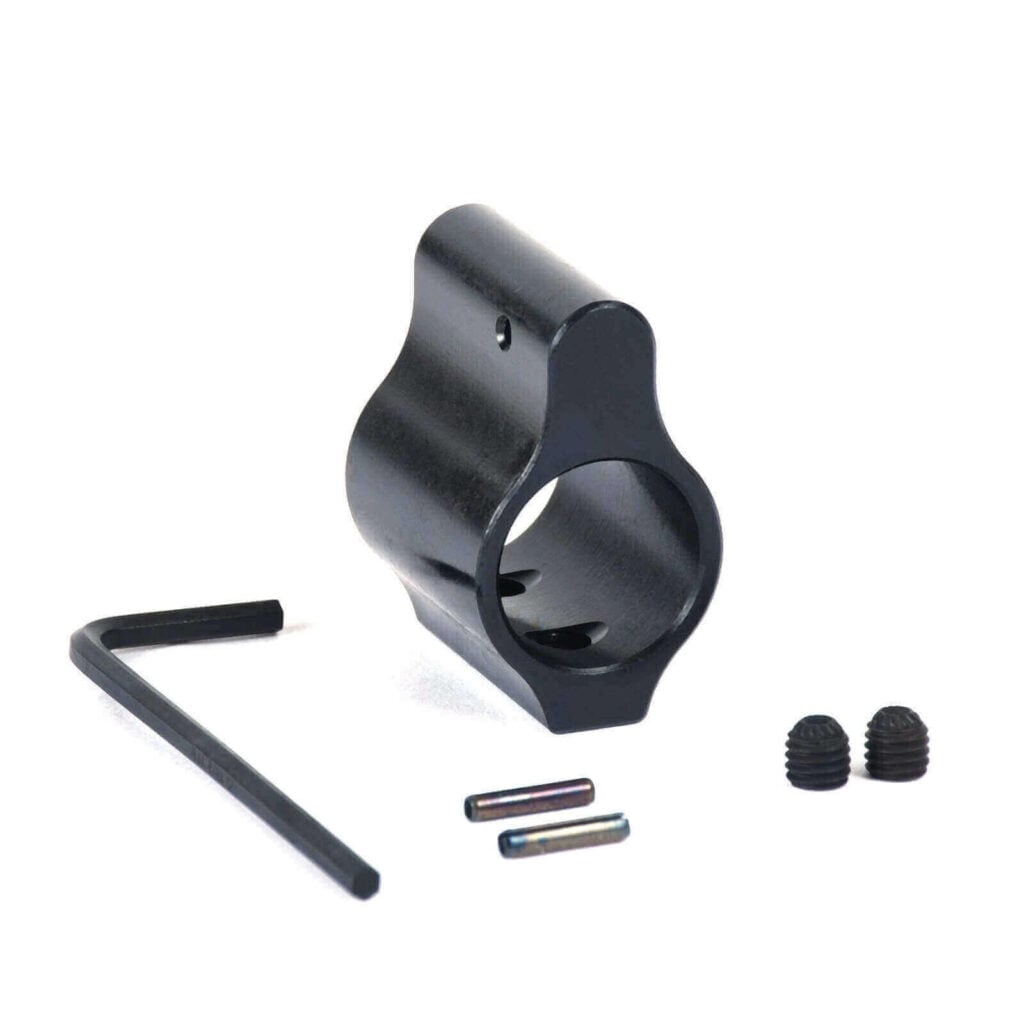
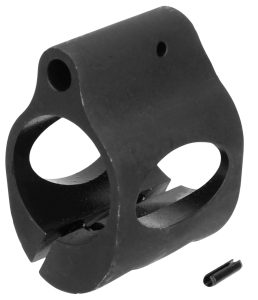
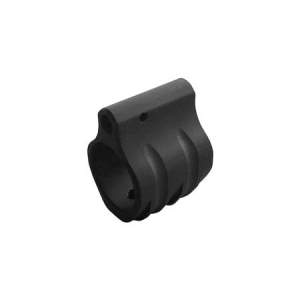
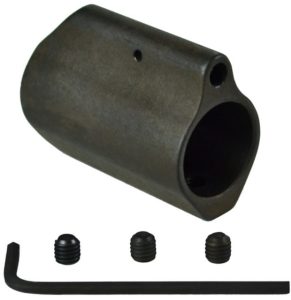
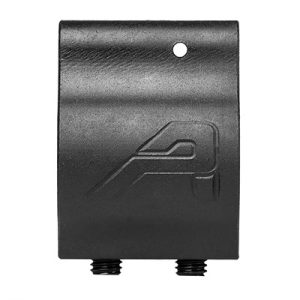
The gas block sits over the gas port on the barrel and directs gas into the gas tube. Fixed low-profile blocks at $13-30 are the standard for free-float builds. Adjustable blocks at $40-100 from Superlative Arms, SLR and Wojtek let you tune gas volume. Pinned front sight bases are the military standard and work with drop-in handguards. Check your barrel’s gas journal before you order. .750 is the common size, .625 turns up on slim barrels, and heavy barrels can run .875 or .936. A block in the wrong size won’t fit.
Gas Tube

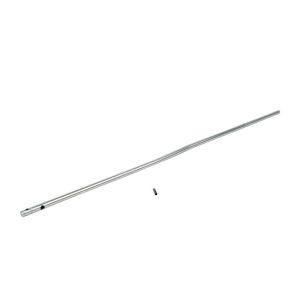
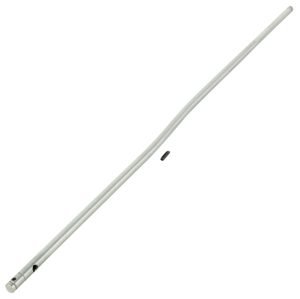
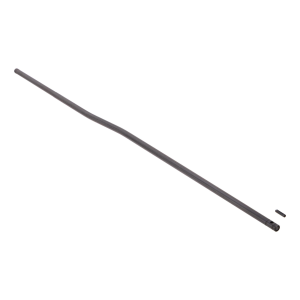
The gas tube is a simple stainless steel tube that carries gas from the gas block back to the upper receiver. Available in pistol, carbine, mid-length, and rifle lengths to match your gas system. These are cheap, about $7-15, and rarely need replacement unless damaged. Our gas system guide explains the lengths.
Handguard

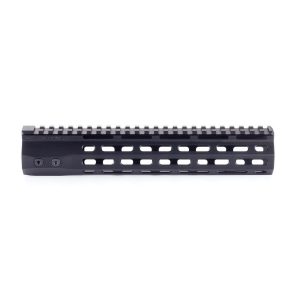
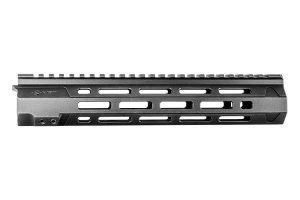
The handguard surrounds the barrel and provides a gripping surface and accessory mounting. Free-float handguards mount only to the barrel nut for better accuracy. Drop-in handguards use the delta ring and are simpler to install. See our free-float vs drop-in guide for the complete comparison. Budget $80-200 for a quality free-float rail, and buy M-LOK unless you already own KeyMod accessories. Our best AR-15 handguards guide ranks eight.
Muzzle Device

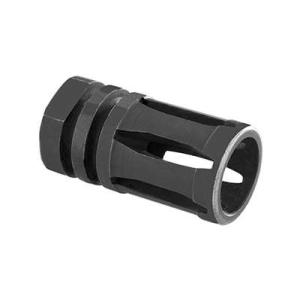
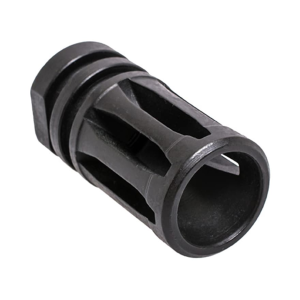
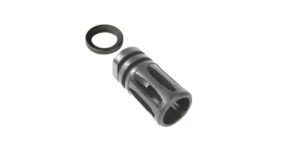
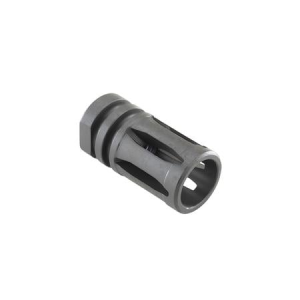
The muzzle device threads onto the barrel and manages recoil, flash or sound. A2 flash hiders at $8 are the standard and do a good job hiding flash. Muzzle brakes at $30-80 reduce felt recoil but increase blast and noise. Compensators at $30-60 reduce muzzle rise for faster follow-up shots. Flash hiders like the SureFire WarComp at $150 and Dead Air KeyMo at $80 double as suppressor mounts. See our best AR-15 muzzle devices.
Forward Assist

The forward assist is a plunger on the right side of the upper that pushes the bolt into battery. It’s controversial, and many experienced shooters consider it unnecessary and prefer slick-side uppers without it. If a round won’t go into battery on its own, find out why before you force it. It’s still part of the mil-spec TDP and comes on most uppers.
Ejection Port Cover (Dust Cover)

The spring-loaded cover over the ejection port that keeps debris out when the rifle is not being fired. It snaps open automatically when you charge the rifle. Keep it. It’s cheap insurance against dirt, sand, and dust getting into the action.
Optics and Sights
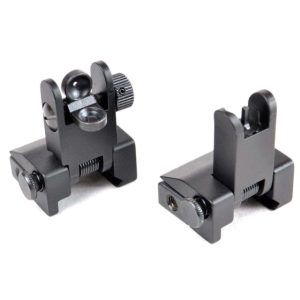
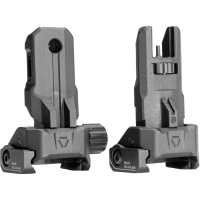
A flat-top upper has no sights on it, so you’re buying one or the other. Most new builders should start with a red dot on the Picatinny rail and add flip-up backup irons when the budget allows. Sights and optics aren’t in the build totals below.
How the Parts of an AR-15 Work Together
Pull the trigger and the hammer falls on the firing pin, which fires the round. As the bullet passes the gas port, gas bleeds into the gas block and runs back through the gas tube into the gas key. The gas expands inside the carrier and drives it back. The cam pin turns the bolt to unlock it, the extractor pulls the empty case, and the ejector kicks it out the port. The carrier cocks the hammer and compresses the buffer spring, and the spring shoves everything forward to strip the next round and lock up. That layout is direct impingement, and it’s what most ARs use. Piston uppers run a rod instead. They run cleaner, but they cost more, weigh more up front, and use proprietary parts.
Complete Build Cost Breakdown
Here’s the AR-15 parts list priced three ways.
| Component | Budget | Mid-Range | Premium |
|---|---|---|---|
| Stripped Lower | $50 | $80 | $300 |
| LPK (minus trigger) | $25 | $35 | $50 |
| Trigger | $35 (mil-spec) | $100 (LaRue) | $240 (Geissele) |
| Buffer Kit | $30 | $50 | $120 |
| Stock | $30 | $55 | $100 |
| Pistol Grip | $5 (A2) | $20 | $35 |
| Upper Receiver | $50 | $80 | $150 |
| BCG | $70 | $120 | $220 |
| Charging Handle | $15 | $50 | $90 |
| Barrel | $100 | $180 | $320 |
| Gas Block + Tube | $20 | $60 | $100 |
| Handguard | $60 | $130 | $300 |
| Muzzle Device | $8 | $40 | $150 |
| TOTAL | $498 | $1,000 | $2,175 |
These prices don’t include optics, sights, sling, light, or magazines. Budget another $200-500 for those essentials, and more if you’re buying a serious optic. The totals also assume your upper already has its forward assist and port cover. If yours is truly stripped, add an upper parts kit, about $17 to $20 when I checked. The budget column prices the kit, trigger and A2 grip separately, and a complete $30-50 mil-spec LPK includes all three, which takes $15 to $35 off that column. For complete build guidance with step-by-step instructions, see our how to build an AR-15 guide. If you’d rather buy a complete rifle, our best AR-15 rifles guide covers every price point.
Where to Spend and Where to Save
Spend More On
- Barrel: The single biggest accuracy factor. Don’t cheap out.
- BCG: Reliability depends on a quality bolt carrier group. Get MPI/HPT tested.
- Trigger: The best bang-for-buck upgrade. A $100 LaRue transforms the rifle.
- Optic: Not listed above but equally important. Buy once, cry once.
Save Money On
- Lower receiver: A $50 Anderson functions identically to a $515 Radian for most purposes.
- Lower parts kit: Springs and detents are cheap parts doing simple jobs, so a mil-spec kit is all you need.
- Muzzle device: The standard A2 flash hider is excellent. Upgrade only if you need a suppressor mount or brake.
- Charging handle: It’s small but it works. Upgrade for convenience, not necessity.
For the full accessory rundown, check our best AR-15 parts and accessories guide. And if you want to see what complete rifles offer at different price points, our guides on cheap AR-15s, AR-15s under $1,000, and AR-15s under $2,000 cover every budget. Upgrading a rifle you own? Follow our AR-15 upgrades in order.
Browse All AR-15 Parts & Upgrades →
Tools You Need to Build an AR-15
| Tool | What it is for |
|---|---|
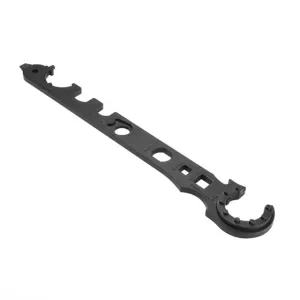
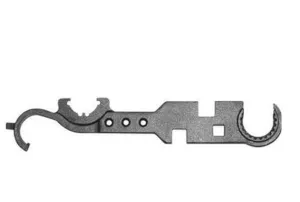
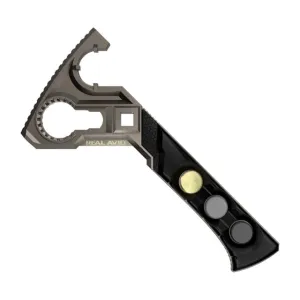
| AR-15 armorer’s wrench | Barrel nut, castle nut, muzzle device |
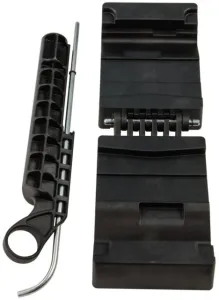
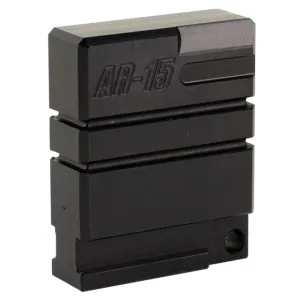
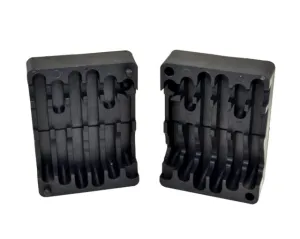
| Upper receiver vise block or reaction rod | Holds the upper while you torque the barrel nut |
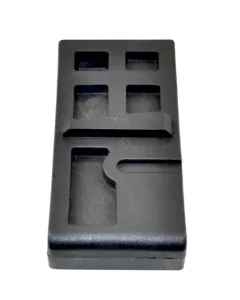
| Lower receiver vise block | Holds the lower for the buffer tube and castle nut |
| Bench vise | Holds the blocks |
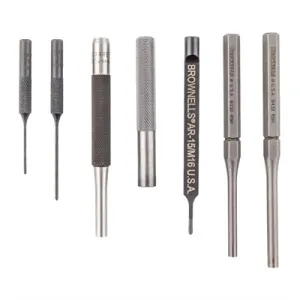
| Roll pin punches and starter punches | Bolt catch and trigger guard roll pins |
| Small brass or nylon hammer | Taps pins without marring the finish |
| Torque wrench | Barrel nut and castle nut |
| Bench block | Supports the receiver while you drive pins |
| Staking punch | Stakes the end plate into the castle nut so it can’t back out |
| Headspace gauges (GO and NO-GO) | Checks a new barrel and bolt pairing |
| Gun grease | Barrel nut threads and the receiver extension |
Torque the barrel nut and castle nut to the spec printed by the maker of your nut and handguard, not a number from a forum. Free-float handguards often use their own barrel nut with their own torque value, and over-tightening one can crack it. If you only buy one specialty tool, buy the vise blocks. They protect the receivers while you work, and a marred receiver is the most common first-build mistake. Budget about $80 to $120 for a basic kit.
Shop AR-15 Build Tools
Best-scored accessories across 200+ retailers · Updated every 4 hours


Frequently Asked Questions
How many parts are in an AR-15?
Approximately 100 individual components. The lower receiver group has about 40 parts and the upper receiver group has about 60 parts.
Which AR-15 part is the firearm?
The stripped lower receiver. It carries the serial number and ATF treats it as the firearm. Buying from a dealer means passing a background check. Federal law allows some private sales within a state, and some states require those to go through a dealer or a permit check. It isn't the only regulated item: a rifle with a barrel under 16 inches, a suppressor and machine gun conversion parts all fall under the NFA, and California routes barrel sales through a dealer.
Is it cheaper to build or buy an AR-15?
At the budget level, buying tends to win. The budget parts list above comes to about $498 before tools. At the mid-range, near $1,000, they're roughly equal. At the premium level, around $2,175, building lets you spec exactly what you want and can save money.
What tools do I need to build an AR-15?
At minimum: an armorer's wrench, upper and lower vise blocks, roll pin punches, a torque wrench, a small brass or nylon hammer and a bench vise. Budget about $80 to $120 for a basic tool kit. Add headspace gauges if you're pairing a new barrel and bolt.
What is the most important part of an AR-15?
For accuracy the barrel. For reliability the bolt carrier group. For shootability the trigger. If you're spending extra anywhere, make it these three.
Can I mix parts from different AR-15 manufacturers?
Yes, most of the time. Most parts follow common mil-spec dimensions, but stocks must match a mil-spec or commercial buffer tube, gas tubes must match the gas system, gas blocks must match the barrel journal, and a new barrel and bolt pairing should be headspaced. Many free-float rails need their own barrel nut.
Do I need a forward assist on my AR-15?
No. Many experienced shooters prefer slick-side uppers without one. If a round won't chamber on its own, find out why before you force it.
What does a lower parts kit include?
A complete LPK includes trigger, hammer, disconnector, springs, pins, safety selector, bolt catch, magazine release, pivot and takedown pins with detents and springs, trigger guard, and pistol grip.
What are the main parts of an AR-15 called?
The lower receiver group (stripped lower, trigger group, pistol grip, magazine release, bolt catch, safety, pivot and takedown pins, buffer system, stock and magazine) and the upper receiver group (stripped upper, bolt carrier group, charging handle, forward assist, ejection port cover, handguard, gas block and tube, barrel, muzzle device and Picatinny rail). Our diagram above numbers all 22.
What parts do I need for an AR-15 upper?
A stripped upper receiver, barrel, barrel nut, gas block, gas tube, handguard, muzzle device, bolt carrier group and charging handle. Buy an assembled upper receiver and the forward assist and ejection port cover come installed. On a truly stripped upper, add an upper parts kit.
How long does an AR-15 barrel have to be?
At least 16 inches on a rifle, with an overall length of at least 26 inches, to stay out of the NFA. Anything shorter on a rifle lower is a short-barreled rifle. Since October 9, 2026, ATF doesn't require approval or registration to make one, but the statute hasn't been repealed, a Form 20 is still needed for interstate travel, and your state may ban it.
What size gas block do I need for an AR-15?
The one that matches your barrel's gas journal. .750 is the common size, but .625, .875 and .936 are all sold, so check the barrel's spec before you order.
Does an AR-15 upper need an FFL?
No. Federal law treats the lower as the firearm, so an upper can ship to your door in most states. Check your state's rules. California sends barrel sales through a dealer, and a barrel under 16 inches on a rifle lower makes a short-barreled rifle.
Should I buy a complete lower and upper instead of every part?
If it's your first build, that's the easy route. You skip the small pins and springs and most of the tools. Buying each part costs more effort but lets you choose every spec.
What comes with a complete AR-15 upper?
Most include the receiver, barrel, gas system, handguard and muzzle device. A bolt carrier group and charging handle aren't always included, so read the listing before you order.
What's the difference between the upper and lower receiver?
The lower is the serialized part that holds the trigger, magazine and buffer tube. The upper holds the barrel, bolt carrier group and charging handle. Two pins join them.
How does an AR-15 work?
Gas from each shot runs back through the gas tube and drives the bolt carrier rearward. It ejects the case and cocks the hammer, then the buffer spring pushes it forward to chamber the next round.
3,152+ Gun & Ammo Deals
Updated daily from 200+ top retailers. Filter by category, caliber, action type, and price.